


Dutch startup to test hearing via brain-computer interface
New Windows 11 24H2 Hardware Requirement: SSE 4.2 Explained
What Is Brave’s ‘Answer With AI’ Feature? How To Disable It?
The EU has decided to open up iPadOS

The EU has given Apple just six months to open up iPads in the same way it’s been forced to open up iPhones in Europe. The decision follows an EU determination that the iPad — which leads but does not dominate the tablet market — should be seen as a “gatekeeper.”
Apple will not have much time to comply.
What’s really interesting, as noted by AppleInsider, is the extent to which the decision to force Apple to open up iPadOS seems to have been made even though the EU’s lead anti-competition regulator, Margrethe Vestiger, says the company doesn’t actually meet the criteria for enforcement.
It doesn’t meet the threshold, so we’ll do it anyway
“Today, we have brought Apple’s iPadOS within the scope of the DMA obligations,” said Vestager. “Our market investigation showed that despite not meeting the thresholds, iPadOS constitutes an important gateway on which many companies rely to reach their customers.”
This triumph of ideology is just the latest poor decision from the trading bloc and comes as Apple gets ready to introduce new software, features, and artificial intelligence to its devices at its Worldwide Developer’s Conference in June.
With that in mind, I expect Apple’s software development teams need Europe’s latest decision about as much as the rest of us need an unexpected utility bill. That said, I imagine the challenge has not been entirely unexpected.
Sour grapes?
To some extent you have to see that Europe is playing defense.
Not only has it lost all advantages in space research to Big Tech firms such as Space X, but the continent has arguably failed to spawn a significant homegrown Big Tech competitor. This leaves Europe reliant on US technology firms, so it’s clear the EU is attempting to loosen the hold US firms have on digital business in Europe by using the Digital Markets Act is being applied.
The EU isn’t alone; US regulators are equally determined to dent the power Apple and other major tech firms hold. Fundamental to many of the arguments made is the claim that consumers will see lower prices as a result of more open competition, but I’m highly doubtful that will happen.
So, what happens next?
Apple will likely attempt to resist the EU call to open up the iPad, but will eventually be forced to comply. Meanwhile, as sideloading intensifies on iPhones, we will see whether user privacy and safety do indeed turn out to be compatible with sideloading.
In an ideal world, the EU would hold off on any action involving iPads pending the results of that experiment. It makes sense for regulators and Apple to work constructively together to protect against any unexpected consequences as a result of the DMA before widening the threat surface.
Perhaps user security isn’t something regulators take seriously, even though government agencies across the EU and elsewhere are extremely concerned at potential risks. Even in the US, regulators seem to want us to believe Apple’s “cloak” of privacy and security is actually being used to justify anti-competitive behavior.
Do the benefits exceed the risks?
Experientially, at least, there’s little doubt that platforms (including the Mac) that support sideloading face more malicious activity than those that don’t. Ask any security expert and they will tell you that in today’s threat environment, it’s only a matter of time until even the most secure systems are overwhelmed. So it is inevitable some hacker somewhere will find a way to successfully exploit Apple’s newly opened platforms.
It stands to reason that ransomware, adware, and fraud attempts will increase and it is doubtful the EU will shoulder its share of the burden to protect people against any such threats that emerge as a result of its legislation.
For most consumers, the biggest benefit will be the eventual need to purchase software from across multiple store fronts, and to leave valuable personal and financial details with a wider range of payment processing firms.
The joy I personally feel at these “improvements” is far from tangible.
Please follow me on Mastodon, or join me in the AppleHolic’s bar & grill and Apple Discussions groups on MeWe.
Apple, Apple App Store, iPad, Mobile
Source:: Computer World
French startup bags €2M to make cancer clinical trials more accessible
OpenAI to train LLMs on Financial Times content — with permission
Q&A: Georgia Tech dean details why the school needed a new AI supercomputer
Like many universities, Georgia Tech has been grappling with how to offer students the training they need to prepare them for a recent sea change in IT job markets — the arrival of generative AI (genAI).
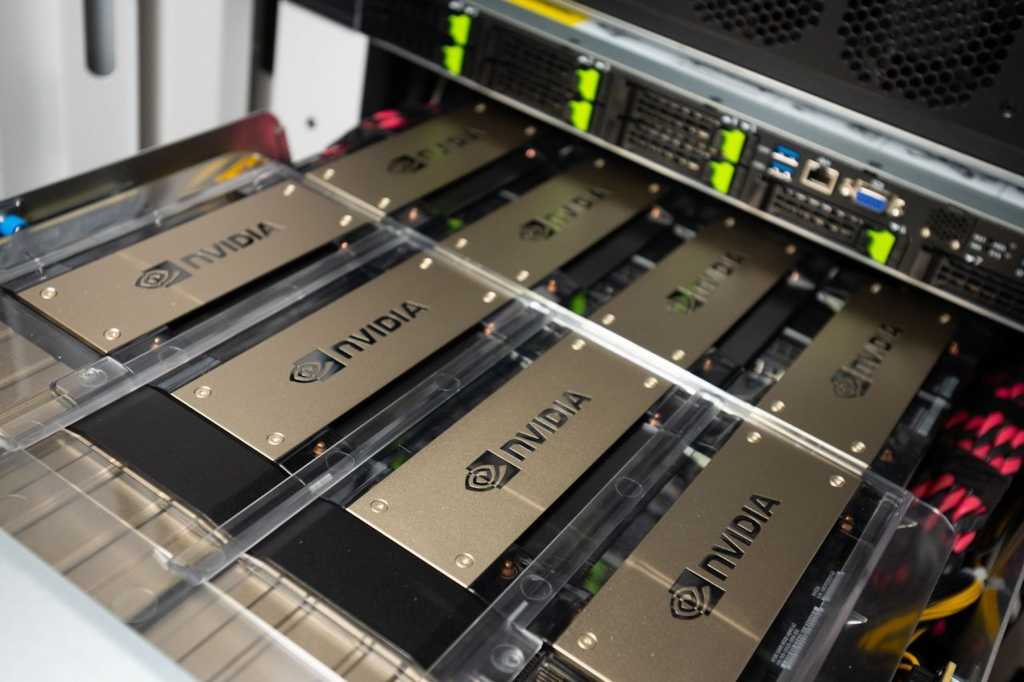
Through a partnership with chipmaker Nvidia, Georgia Tech’s College of Engineering built a supercomputer dubbed AI Makerspace; it uses 20 Nvidia HGX H100 servers powered by 160 Nvidia H100 Tensor Core GPUs (graphics processing units).
Those GPUs are powerful — a single Nvidia H100 GPU would need just one second to handle a multiplication operation that would take the school’s 50,000 students 22 years to achieve. So, 160 of those GPUs give students and professors access to advanced genAI, AI and machine learning creation and training. (The move also spurred Georgia Tech to offer new AI-focused courses and minors.
Announced two weeks ago, the AI Makerspace supercomputer will initially be used by Georgia Tech’s engineering undergraduates. But it’s expected to eventually democratize access to computing resources typically prioritized for research across all colleges.
Computerworld spoke with Matthieu Bloch, the associate dean for academics at Georgia Tech’s College of Engineering, about how the new AI supercomputer will be used to train a new generation of AI experts.
The following are excerpts from that interview:
Tell me about the Makerspace project and how it came to be? “The Makerspace is really the vision of our dean, Raheem Beyah, and the school chair of Electrical and Computer Engineering (ECE), Arijit Raychowdhury, who really wanted to put AI in the hands of our students.
“In 2024 — in the post ChatGPT world — things are very different from the pre-ChatGPT world. We need a lot of computing power to do anything that’s meaningful and relevant to industry. And in a way, the devil is out of the box. People see what AI can do. But I think to get to that level of training, you need infrastructure.
Makerspace’s Nvidia H100 Tensor Core GPUs
Georgia Tech College of Engineering
“The name Makerspace also comes from this culture we have at Georgia Tech of these maker spaces, which are places where our students get to tinker, both within the classroom and outside the classroom. The Makerspace was the idea to bring the tools that you need to do AI in a way that’s relevant to do meaningful things today. So, right now, where we’re at is we’ve partnered Nvidia to essentially offer to students a supercomputer. I mean, that’s what it is.
“What makes it unique is that it’s meant for supporting students. And right now it’s in the classroom. We’re still rolling it out. We’re in phase one. So, the idea is that the students in the classroom can work on AI projects that are meaningful to industry — problems that are interesting, you know, from a pedagogical perspective, but they don’t mean a whole lot in an industry setting.”
Tell me a bit about the projects they’ve been working on with this. “I can give you a very concrete example. ChatGPT is a very typical, a very specific form of AI called generative AI. You know, it’s able to generate. In the case of ChatGPT, [that means] text in response to prompts. You might have seen a generative model that generates pictures. I think these were very popular and whatnot. And so these are the kind of things our students can do right now, …generate anything that would be, say, photo realistic.
“You need a pretty hefty computing power to train your model and then test that it’s working properly. And so that’s what our students can do. Just to give you an idea of how far we’ve come along, before we had the AI Makerspace, our students were relying largely on something called Google CoLab. CoLab is Google making some compute resources freely accessible for use. They’re really giving to us the resources they don’t use or don’t sell to their be clients. So it’s like the crumbs that remain.
“It’s very nice of them [Google] to do that, but you could only work with very [limited resources], say for training on something like 12,000 images. Now you can, for instance, train a generative model on a data set with like one million images. So you can really scale up by orders of magnitude. And then you can start generating these photo-realistic pictures that you could not generate before. That’s the most visual example I can give you.”
Can you tell me a little bit about the genAI projects the students are working on? How good is the technology at producing the results they want? “It’s a complicated question to answer. I mean, it has many layers. We’ve just launched it, like literally, the AI Makerspace was open officially two weeks ago. So right now it’s really used at scale in the classroom. The students in that class are learning how to do machine learning. [The students] have to get the data. [They] have to learn how to train a model. The students have homework projects, which consists of this fairly sophisticated model that they have to train, and that they have to test.
“Now we have a vision beyond that, what we call phase two of the Makerspace. We’re doubling the compute capacity. The idea now is that we’re going to open that to senior design projects. We’re gonna open that to something we call vertically integrated projects, in which are students essentially doing long-term research with faculty advisors over multiple years. Our students are going to do many things — certainly all of [the] engineering [school].
“We’ve given incentives to a lot of faculty to create a lot of new courses throughout the College of Engineering for AI and ML for what matters to their field. For instance, if you’re an electrical engineer, there’s a lot of hardware to it, you know you have a model for that. How do you make the model smaller so that you can put it in hardware? That’s one very tangible question that the students would ask. But if they’re, say, mechanical engineers, they might use it differently. Maybe for them what generative AI could do is help them generate 3D models, think about structures that they would not think about naturally. And you can decline that model. The Makerspace is a massive tool. But how the tool is used is really a function of the specific domain. The goal, of course, is for Makerspace to be available beyond engineering.
“It’s already being used by our College of Computing, and we’re hoping that our co colleagues in, say, the College of Business will see the value, because they haven’t used AI yet — perhaps for financial models, predicting whether to sell or buy a stock. I think the sky is a limit. There’s no one use of AI through Makerspace. It’s an infrastructure that provides the tools. And then these tools find declinations in all different areas of expertise.”
Why is it important to have this technology at the school for students to learn about AI? “The way we’ve come to articulate this is as follows: We’re not deliverers in doomsday scenarios, where AI is going to generate terminators that are going to eradicate humanity. Okay, that’s not how we’re thinking about it.
“AI is definitely going to change things. And we think that AI is certainly going to displace a few people. I think the humans enhanced by AI will start displacing humans who don’t use AI.
“I think the way a lot of the discussion has been shaped since ChatGPT was released to the world, in universities there’s sometimes a lot of fear. Are students cheating on their essays? Are students cheating on this cheating on that? I had these discussions with my colleagues in computing. We have an intro to computing class, where they’re cheating to write their code, which I think is not the right approach to it. But, the devil is out of the box. It’s a tool that’s here, and we have to learn how to use it.
“If I can give you my best analogy: I drive my car. I don’t know how my car really works. I mean, I was never a mechanical or electrical engineer. I sort of know what it takes [for a car to run], but I’m unable to fix it. But that doesn’t mean I can’t drive it. And I think we’re at that stage with AI tools, where one needs to know how to use them because you don’t want to be the person riding a bicycle when everybody else has a car.
“Not everyone needs to be a mechanic, but everyone needs a car. And so I think we want every student at Georgia Tech to know how to use AI, and what that means for them would be different depending on their specialty, their major. But these are tools, and you need to have played with them to really start mastering them.”
In what way has AI expanded Georgia Tech’s curriculum? “We were lucky in the sense that [we’re] building that infrastructure from new. But thinking about AI, Georgia Tech has been doing it for decades. Our faculty is very research focused. They do state-of-the-art research and AI…was always there in the background — the roots of AI. We had a lot of colleagues who actually were doing machine learning without saying it in these terms.
“Then when deep learning started appearing, people were ready to grasp that. So, we were already thinking about doing it in the labs, and the integration in the curriculum was already slowly happening. And so what we decided to do was to accelerate that so the Makerspace…accelerates the other mechanisms we’ve had to give incentives to faculty, to rethink the curriculum with AI and Ml in mind.”
So what AI courses have you launched? “I can give you two examples that we’ve launched, which are, you know, very new. But I I think I’ve been quite successful already. One is we’ve officially launched an AI minor.
“The great thing about this AI minor [is that it] is a way for students to take a series of courses with a coherent and unified team, and they get credit for that on their diploma and their transcript. This minor was designed as a collaboration right now between the College of Engineering and the College of Liberal Arts.
“Then we have the ethics and policy piece. Students need to take a specially designed course on AI Ethics and AI policy. We’re thinking very holistically. AI is a technology play, but if you just train engineers to do the technology piece alone, maybe then the doomsday-Terminator scenario is a likely outcome.
“We want our students to think about the use of AI because it’s technology that can have many uses [and problems associated with it]. We talk about deep fakes. We’re worried about it for all sorts of political reasons.
“The other thing we’ve done in the College of Engineering is essentially incentivized faculty to create new undergraduate courses related to AI and ML but relevant to their own disciplines. I literally [just made the announcement] and the has college approved 10 new courses or significantly revamped courses. So, what that means is that we have courses on machine learning for smart cities, civil environmental engineering, and a course in chemical processes in chemical and bioengineering, where they’re using AI and ML for completely different things. That’s how we’re thinking of AI. It’s a tool. So the courses need to embrace that tool.”
Are students already using genAI to assist in creating applications — so software engineering and development? “Officially or unofficially? I don’t have a good answer, because the truth is, I don’t know. But what I know is that our students are using it with or without us. You know they are using generative AI because I’m willing to bet they all have a subscription to ChatGPT.
“Now in the context of the Makerspace, this is a resource you can start doing all sorts of things. Our students are using it to write lines of code absolutely.”
So what would you say is the most popular use right now of the AI Makerspace? “We haven’t officially launched it at scale for very long, so I can’t attest to that. It’s been used largely in the classroom setting for the kind of homework students could not even dream of doing before.
“We’re going to launch it and use it over the summer for an entrepreneurship program called Create X, that students can use to take ideas and go through prototype and potentially think about building startups out of these. So that’s going to be primary use over the summer, and we’re testing it over these few weeks in the context of a hackathon in partnership with Nvidia, where teams come with big problems that they want to solve. And we want to accelerate their science, to use Nvidia’s words, to by teaching them how to use that Makerspace.”
CPUs and Processors, Education Industry, Generative AI, Natural Language Processing
Source:: Computer World
Top 5 TikTok Alternatives You Should Try Out!
How To Play Retro Games With Delta Emulator On Your TV?
How To Convert VOB Files To MP4 With Movavi Video Converter?
Study shows ‘benevolent sexism’ in startups widens the gender gap
This week in Dutch tech
DJI’s Mini SE 2 drone just got a rare price cut
By Aaron Mamiit

Get into drones with the DJI Mini 2 SE, which is equipped with a Full HD camera and comes with a remote control. Best Buy is selling it for a discounted $280.
Source:: Digital Trends
Dropbox adds end-to-end encryption for team folders

Dropbox now offers end-to-end encryption and key management for customers on certain paid plans, part of a range of updates to the file sharing application announced this week.
Customers files are already encrypted “at rest” using 256-bit Advanced Encryption Standards, said Dropbox, but the end-to-end encryption integrated into team folders offers an added layer of security.
The change means that only the sender and recipient can access content, with “not even Dropbox” able to view customers files, the company said in a blog post Wednesday.
Dropbox said it will also provide customers with access to encryption keys, managed by FIPS 140-2 Level 3 key management services.
Information on how to activate and manage team folder encryption is available on the Dropbox website. The company warned that end-to-end encryption restricts certain features in the app, such as the ability to share files with users outside of a team, and might not be suitable for all files stored in a Dropbox account.
Other security features include the ability to manage team membership and invites from the Dropbox admin dashboard, and an updated Trust Center that contains security and compliance information related to Dropbox products.
The security features are now available to customers on Dropbox Advanced, Business Plus, and Enterprise plans.
Dropbox announced several other new features as part of the latest release.
It will be easier to collaborate with colleagues on certain Microsoft files from within the Dropbox application, with a co-authoring feature that lets multiple users edit Word, Excel, and PowerPoint documents at the same time. Users can also see who’s working on a document and any edits made in real-time. (That feature is currently in beta.)
There’s also an integration between Dropbox Replay and Microsoft OneDrive, which lets users pull files from Microsoft’s file storage platform into the video and audio collaboration tool more easily for reviews and approvals.
Dropbox Replay will also get new features, including the ability to review and approve additional file types such as PDF and PSD files, integration with music production application Avid Pro Tools, and dynamic watermarking to help protect proprietary content.
Other updates include changes to the Dropbox’s website UI, following a revamp last October. The new capabilities let users preview files more easily, pin favorite files to the navigation bar, and access suggest quick actions for files.
Cloud Storage, Collaboration Software, Productivity Software, Vendors and Providers
Source:: Computer World
How to change margins in Google Docs
By Anita George

Adjusting your margins in Google Docs is actually pretty easy once you know how. In this guide, we’ll show you how to change margins in Google Docs in two ways.
Source:: Digital Trends
Cyberattacks on Poland surged after election of pro-Ukraine government, NetScout says
Google can’t seem to quit cookies, delays killing them again

Google this week once again said it will delay plans to eliminate third-party identity tracking software — cookies — from its Chrome browser and from Android OS. Now, it plans to remove them by 2025.
The tech giant said the latest delay is due to “ongoing challenges related to reconciling divergent feedback from the industry, regulators and developers.”
As far back as 2019, Google was telling users it planned to limit third-party cookies and phase them out in Chrome and other Chromium open-source browsers by 2022. In 2020, it delayed its plans to eliminate them through its Privacy Sandbox initiative. Then in 2022, Google pushed back its plans to 2023. And last year, it delayed the plans again — to the second half of 2024.
In January, it again said it would find alternatives to cookies for identifying users and discovering their habits, but was pushing back plans to eliminate trackers.
“We recognize that there are ongoing challenges related to reconciling divergent feedback from the industry, regulators and developers, and will continue to engage closely with the entire ecosystem,” Google wrote in a blog post this week.
“For marketers, the message is clear: get off cookies now,” said said Ken Weiner, chief technology officer at digital advertising platform GumGum. “Most of the industry, including mobile and other browsers like Safari, have already moved away from cookies or never used them in the first place. Don’t wait for Google’s shifting timeline to take action; the transition should be happening now. Keep in mind that regardless of cookies, the web’s future—driven by consumer preferences and regulatory changes—is identity-less. Contextual targeting is the best way forward.”
Google has been working with the UK’s Competition and Markets Authority (CMA) and the Information Commissions Office (ICO) on its plans to use its Privacy Sandbox instead of cookies. The British regulatory authority and others have voiced concerns about Google’s plan, saying it could “unfairly hinder competition” by giving preference to Google’s own advertising products, which would increase the company’s market dominance.
“We remain committed to engaging closely with the CMA and ICO and we hope to conclude that process this year,” the company said. “Assuming we can reach an agreement, we envision proceeding with third-party cookie deprecation starting early next year.”
A cookie is a small file that is downloaded onto a computer when the user visits a website. They can do helpful things, such as remembering preferences, recording what has been added to a shopping basket, and counting the number of people viewing a website. They can also use a person’s identity to allow third parties to bombard users with emails and targeted online ads.
Cookies often ingest and retain sensitive consumer information such as login credentials, personally identifiable information, and browsing history. As a result, the move away from cookies should help reduce some cybersecurity risks.
Over the past few years, the online advertising industry has been undergoing a sea change as regulators restricted how cookies can be used and browser providers moved away from them in response to consumer outcries over privacy. “They often feel surveilled; some even find it ‘creepy’ that a website can show them ads related to their behavior elsewhere,” according to a recent study by the HEC Paris Business School.
Google has said its Privacy Sandbox project will create new standards for websites to access user information without compromising privacy by sharing a subset of user information without relying on third-party cookies. “It will provide publishers with safer alternatives to existing technology, so they can continue building digital businesses while your data stays private,” the company said on its website.
For Android device users, Google will introduce new solutions that operate without cross-app identifiers — including Google Play services’s Advertising ID, which will limit data sharing with third parties and offer a user-resettable, and user-deletable ID for advertising.
Google Chrome, which is used for about 66% of all internet traffic, impacts more consumers than any other browser, so changing the way it tracks users would also have market-changing consequences.
“In the short term, there will be some disruption with advertisers struggling to market themselves effectively,” said Roger Beharry Lall, research director for IDC’s Advertising Technologies and SMB Marketing Applications practice. “This may seem good for consumers who are ‘cookie free.’ However, there will likely just be more irrelevant ads flooding the media trying to find an audience. So, it’s a bit of a double-edged sword.”
Browser Security, Browsers, Chrome, Chrome OS, Privacy
Source:: Computer World
Apple reportedly cuts Vision Pro production due to low demand

Apple has cut Vision Pro production due to low demand for the $3,500 mixed reality headset, according to Ming-Chi Kuo, an Apple analyst at TF International Securities.
Apple reduced shipments to between 400,000 and 500,000 units for the year, despite “market expectations” of around sales of 700,000 to 800,000 units, Kuo said in a blog post Wednesday.
Apple cut orders ahead of a planned international launch for the device, said Kuo,
Because of a sharp fall-off in demand in the US, Kuo had earlier claimed that between 160,000 and 180,000 of the spatial computing devices were sold in preorders before the February launch. But sales quickly slowed after that early burst of interest and Apple now takes a “conservative view” of demand outside of the US, Kuo said this week. (Bloomberg’s Mark Gurman reported this week that demand for Vision Pro demos in Apple stores has also fallen off significantly as interest waned.)
Apple now expects Vision Pro shipments to decline year on year in 2025, Kuo said, prompting Apple to review and adjust its product roadmap; plans for a second Vision Pro in 2025 are now reportedly on hold.
Apple may shed more light on the situation when it releases its Q2 financial results next Thursday.
Wider predictions for Vision Pro sales have varied significantly, and it’s difficult to point to a consensus on market expectations. According to an Ars Technica report in June 2023, Wedbush Securities forecast around 150,000 units in the first year of sales; Morgan Stanley expected sales of around 850,000; and Goldman Sachs predicted sales as high as 5 million.
It was rumored that Apple initially hoped to sell 1 million of the devices in the first year on sale, according to a Financial Times report in 2023; that expectation was later revised down due to production issues.
Morgan Stanley analysts predicted in January that Apple would ship between 300,000 and 400,000 headsets in 2024, according to a CNBC report, while a Wedbush analyst put the figure at 600,000 units for the year, according to Business Insider.
Kuo himself forecast sales of around 500,000 units for 2024, according to a January blog post.
What seems clear is that the Vision Pro will make up a relatively small part of the total market for AR/VR devices, which remains a niche product category.
While the first-generation device is powerful and impressive, said Ramon Llamas, research director with IDC’s devices and displays team, consumers still need to be convinced of its value and utility.
“As a multimedia consumption device, it is pushed up hard against consumers’ large screen televisions and computers,” he said. As a workplace productivity device, he added, it “remains to be seen exactly how it increases efficiency and productivity altogether.
“On top of this, the price most likely makes a lot of people balk,” said Llamas.
The wider market for AR/VR devices is expected to return to growth in 2024, up 44% from the previous year to 9.7 million units, according to IDC data. This follows a tough year in 2023, when headset sales declined 23.5%.
Meanwhile, Apple touted the enterprise potential of the Vision Pro earlier this month.
“There’s tremendous opportunity for businesses to reimagine what’s possible using Apple Vision Pro at work,” Susan Prescott, Apple’s vice president of worldwide developer relations and enterprise marketing, said in a blog post, pointing to VisionOS apps from the likes of SAP, Lowe’s, Porsche, and others.
Apple, Augmented Reality, Virtual Reality
Source:: Computer World
Europe taps deep learning to make industrial robots safer colleagues
Sennheiser Accentum Review: Best Midrange ANC Headphones?


