


8 Free Legal Movie Streaming Sites To Watch Online In 2024

Zoom offers AI-based updates to its Workplace collaboration space

Online meeting platform Zoom this week announced updates to its meeting collaboration space Workplace, adding AI-powered capabilities that include a previously released “assistant” that offers post-meeting summaries and the ability to compose chats and email drafts.
Available through Zoom’s desktop app, the Workplace collaboration platform includes the use of its Zoom AI Companion, which it released last September.
The AI Companion, enabled in the toolbar, uses OpenAI’s ChatGPT generative AI (genAI) features to perform tasks such as presenting a summary of a meeting, identifying action items, and prompting users to share next steps with key meeting members.
The company’s new Zoom Phone capabilities also offer post-call summaries, voice mail prioritization, and task extraction, among other features.
In January, Zoom launched a mixed reality app that works with Apple’s Vision Pro headset to offer users a 3D representation of meeting participants along with three dimensional representations of media and design files. For example, an animator or game designer could collaborate and share the latest character model via Zoom’s 3D object sharing capabilities.
Zoom’s Workplace meeting app offers features such as a combined meetings and calendar view on one tab, along with a new “agenda” view for meeting participants.
Users of Zoom’s desktop app will notice the Workplace name throughout the app, the company said.
Workplace now offers what the company referred to as a “simplified navigation bar” at the top to make it easier for users to organize and find the tabs used most often. Users also can drag and drop tabs into their preferred order.
Workplace also offers a choice of new color themes and to opt for Zoom’s classic dark or light themes in a desktop’s app settings. The toolbar can also be customized by dragging and dropping items (including from the “More” menu) into place.
Finally, Workplace offers a multi-speaker view that will highlight people who are actively speaking in a meeting with more than five participants.
Another feature Zoom said will be available “soon” is the Ask AI Companion, a chatbot that will complete routine user tasks, such as creating meeting preparation materials with relevant content such as meeting summaries and chat threads, drafting agendas, and brainstorming ideas.
“Ask AI Companion will be available throughout Zoom Workplace, so your AI-powered digital assistant is always at your fingertips, helping to elevate your performance and free up your schedule,” Zoom said in a blog post.
Collaboration Software, Generative AI, Productivity Software, Zoom Video Communications
Source:: Computer World
Report: Microsoft-OpenAI ownership might get conditional OK from EU regulators

Microsoft’s $13 billion investment in OpenAI might not trigger EU antitrust restrictions since it is unlikely to be viewed as an “acquisition” in the legal sense in that jurisdiction.
A report Wednesday by Reuters said this means Microsoft would likely avoid more formal investigation procedures and potential regulatory stumbling blocks as a result of its investment in the generative AI LLM provider.
Reached for comment, a European Commission spokesperson said that for a transaction to be “notifiable” to EC as a merger, it has to represent a change in control of the affected company “on a lasting basis.”
The spokesperson did not rule out a more formal and rigorous regulatory approach and said its investigation into the Microsoft-OpenAI deal is ongoing.
“While this transaction has not been formally notified, the Commission has been following very closely the situation of control over OpenAI already before the recent events involving its management, including Microsoft’s role on the OpenAI board and the investment agreements between Microsoft and OpenAI,” the spokesperson said.
The EC has yet to conclude, however, that the relationship between the two companies rises to the level of a “change of control” as a result of Microsoft’s investments.
Reuters’ report on the matter notes that UK and US antitrust regulators are also still in the preliminary stages of approval for the deal, with both the UK’s Competition and Markets Authority and the US Department of Justice and FTC thought to be considering their next steps in terms of formal reviews and probes.
Under EU law, a “concentration,” which would be subject to antitrust review, can take place when the change of control in one company is accomplished. This, according to the Consolidated Jurisdictional Notice, can be done by acquiring “sole control” of a company, in the sense of the controlling entity being able to exercise decisive influence over the other.
Sole control can also, however, be found to exist on a purely legal or factual basis, reflecting the myriad of board, stockholder and voting rights arrangements available to corporations doing business in the EU. A majority of voting rights, for example, could provide effective sole control, while a minority shareholder who is likely to succeed in achieving majorities at shareholders’ meetings could be found to be in de facto control.
UK and EU regulators had warned Microsoft in January that its investments in OpenAI could be subject to review despite the company’s insistence that its position on the board is non-voting and therefore that it had no ownership of OpenAI.
Microsoft declined to comment.
Generative AI, Government, Microsoft, Regulation
Source:: Computer World
‘Just like meaty sausages!’ Europe hosts first cultivated meat tasting
4 in 10 translators are losing work to AI. They want remuneration from devs
How To Install Android 15 Beta 1 On Your Pixel?
TNW Podcast: Caroline Viarouge on EIT Manufacturing and EU-UK collaboration
Whirlpool Statistics By Operational Priorities, Product Revenue, Import and Export
By Barry Elad

Introduction
Whirlpool Statistics: Whirlpool is an American multinational manufacturer and distributor of home appliances. It is mainly committed to being the best brand of kitchen and laundry appliances worldwide. The main vision of Whirlpool Corporation is to improve life at home around the world.
This Whirlpool Statistics will guide you effectively as it includes several segmental analyses and current market trends taken from different insights of recent years. So, if you are thinking of investing in Whirlpool, then the paper will be beneficial for you.
Editor’s Choice
- According to Whirlpool Statistics, the company’s net sales revenue is expected to be $16.9 billion by 2024.
- As of 2023, the overall revenue generated by Whirlpool, the American appliance manufacturer, was around $19.45 billion.
- The sales revenue accounted for by Whirlpool Corporation’s refrigerator and freezer segment remains the highest, resulting in $5.79 billion.
- In 2023, the maximum sale of Whirlpool Corporation was from the North American region, with a share of 59%.
- The company operates over 55 manufacturing and technology research centers within 34 locations across 10 countries globally.
- Whirlpool Statistics also stated that around 59,000 employees were working in Whirlpool in 2023, which has decreased eventually from previous years.
- The company invested almost $1 billion in capital expenditures and R&D in 2023.
- The whirlpool.com website, ranked by traffic in March 2024, received 3.5 million total visits, an increase of 1.12% from last month, and a bounce rate of 54.6%.
- The highest traffic source was captured by Organic search with 56.7%, and LinkedIn holds the highest social media referral rate with 62.08% share.
- In 2024, Whirlpool Corporation is named one of Fortune’s most innovative companies among all others.
Let’s Understand Whirlpool!
The Whirlpool Corporation was founded by Frederick and Louis Upton in 1911 and is headquartered in Benton Harbor, MI. The company mainly manufactures and sells a wide range of home electronic appliances, such as refrigerators, freezers, cooking ranges, ovens, dishwashers, washers, dryers, and many others, that are available globally.
Whirlpool’s other subsidiaries or brands are KitchenAid, Maytag, Consul, Brastemp, Amana, Bauknecht, JennAir, and Indesit. Advanced technological developments have enhanced innovation in other Whirlpool home appliance segments. Not only manufacturing, but the company also maintains a strong commitment to sustainability, from developing energy-efficient appliances to reducing carbon footprints across global operations.
General Whirlpool Statistics
- In the United States, nearly 80% of Whirlpool products are assembled and sold out.
- Around ten Whirlpool production plants are located in the United States.
- Both in the United States and Mexico, Whirlpool remained the most popular washing machine brand.
- By 2023, Whirlpool’s advertising expenses have increased from last year, resulting in $392 million.
- Whirlpool Statistics further explained that Scope 3 emissions are the largest category for Whirlpool emissions, and alone, it can produce 49 million metric tons of carbon dioxide (mtCO2e) by the end of 2023.
(Reference: statista.com)
- The above graph is taken from a Statista report covering the overall Whirlpool’s operating profit analyses from 2008 to 2023.
- By the end of 2023, the operating profit had turned out to be $1,015 million.
- Whirlpool Statistics also explained that in scopes 1 and 2, the company reduced its GHG emissions by 25% in 2023 compared with the previous year.
- Meanwhile, the Scope 3 category allowed a 7% reduction and expects to reduce emissions by 20% by the end of 2030.
- The company maintained a good relationship with Habitat for Humanity, thus contributing $144 million and 1.23 million products.
- The company donated 388 refrigerators in the United States as a segment of its Feel Good Fridge Program.
- The program was working to fight food insecurity, and thus, the company expects to install 500 fridges by 2025.
Whirlpool Statistics By Operational Priorities

(Source: cloudfront.net)
- As per Whirlpool’s annual report in 2023, the company has delivered up to approximately $800 million through decisive actions and a disciplined approach for balancing the cost structure after $2.5 billion of cost inflation in the last two years.
- Whirlpool Corporation’s total revenue turned out to be $19.5 billion in 2023.
- On the other hand, nearly $0.4 billion in cash has been returned to shareholders.
- The ongoing EBIT was $1.2 billion, and the ongoing EBIT margin resulted in a 6.1% share.
Whirlpool’s Earning Statistics
- As mentioned in Whirlpool Statistics, net sales were $5,088 million in the 4th quarter of 2023.
- Meanwhile, net sales excluding currency were $4,999 million, GAAP net earnings (loss) available to Whirlpool were $491, and ongoing EBIT was $266.
- However, GAAP earnings (loss) per diluted share were $8.90, and ongoing earnings per diluted share were $3.85.
Market Capitalization of Whirlpool

(Source: companiesmarketcap.com)
- Analyses driven out from Whirlpool Statistics state that in 2023, the global market cap of Whirlpool received $6.67 billion, which has decreased by 13.33% from 2022.
- On 10th April 2024, the market cap was reduced by 9.43%, resulting in $6.04 billion.
Whirlpool Statistics by Region
- Whirlpool Corporation’s maximum sales came from the North American region, with a share of 59% in 2023.
- Moreover, only 19% of the sales share was generated by Europe, the Middle East, and Africa.
- Whirlpool’s sales shares in other regions are in Latin America (17%) and Asia (5%).
- According to Whirlpool Statistics, in Q4 of 2023, North America generated net sales revenue of $2,881 million and EBIT ($242 million).
- Other regions’ sales revenue and EBIT are followed by Europe, the Middle East, and Africa ($995 million and $33 million), Latin America ($4974 million and $58 million), and Asia ($28 million and $3 million).
Whirlpool Statistics By Product Revenue

(Reference: statista.com)
- According to a report published by Statista on Whirlpool Statistics, in 2023, the sales revenue accounted for by Whirlpool Corporation’s refrigerator and freezer remained highest at $5.79 billion.
- Furthermore, it was followed by other Whirlpool products’ sales revenue, such as laundry appliances ($5.33 billion), cooking appliances ($4.72 billion), dishwashing ($1.73 billion), spare parts, and warranties ($0.95 billion).
- Other products collectively made sales revenue of $0.93 billion by 2023.
By Product Share
- Sales share of Whirlpool’s products segments in 2023 were 30% (refrigerator and freezer) and 27% (laundry appliances).
- Other category shares are laundry appliances (24%) and dishwashing and others (19%).
Whirlpool’s Product Innovation
- Whirlpool is the first company to introduce SlimTech insulation technology to different home appliances.
- This technology reduces the thickness of refrigerator walls by 66% and provides 25% more capacity.
- Some cordless kitchen appliances, such as a hand mixer, choppers, hand blenders, personal blenders, coffee grinders, and a kitchen vacuum, were introduced in 2023; the same rechargeable 12-volt battery can operate them.
- The next-generation garbage disposal is
- Another innovation is the Flush Built-In Microwave Hood Combination, which enables multiple cooking meals and an easy cleanup facility.
Refrigerator Brand Statistics

(Reference: statista.com)
- In September 2023, Whirlpool captured 5th position among other refrigerator brands in the United States of America, with an 11% share.
- Meanwhile, rest brands of refrigerator share are Frigidaire (17%), GE (17%), LG (12%), Samsung (11%), Kenmore (7%), Kitchen Aid (3%), Bosch (2%), Maytag (2%), Electrolux (1%), Haier (1%), Hitachi (1%), other (3%), and don’t know (12%).
Washing Machine Brand Statistics

(Reference: statista.com)
- Per Whirlpool Statistics, in the United States, Whirlpool is the most used washing brand, with a share of 16% by December 2023.
- Moreover, brand shares of other washing machines are GE (15%), LG (14%), Samsung (13%), Maytag (9%), Kenmore (8%), Amana (3%), Frigidaire (3%), Black and Decker (2%), Bosch, Electrolux, Fisher and Paykel, Haier, Hotpoint, SpeedQueen (1% each).
The Website Traffic of Appliance Statistics
By Country

(Source: similarweb.com)
- As explained by Whirlpool Statistics in March 2024, the United States had 69.67% of total traffic on whirlpool.com, but it was reduced by 0.31% in total website visitors.
- Furthermore, other countries recorded the following contribution in total traffic: Brazil = 4.65% (-20.37%), Mexico = 3.82% (-2.57%), India = 3.15% (+14.79%), and Canada = 2.76% (-7.92%).
- Other countries collectively made up around 15.95% of the visitor share.
By Demographics

(Reference: similarweb.com)
- The users shared on the whirlpool.com website are male (50.47%) and female (49.53%).
- Appliances Statistics by age group states that the highest number of website users observed is between 25 and 34 years old, resulting in 23.12%.
- 20% of website users are aged from 35 to 44 years.
- 66% and 18.55% belong to 45 to 54 years and 55 to 64 years, respectively.
- 66% of users are 65 years and above.
- Only 9.02% of user shares contributed from the age group of 18 to 24 years.
By Device

(Reference: semrush.com)
- As per Whirlpool Statistics, in March 2024, 30.38% and 69.62% visited whirlpool.com through desktop and mobile devices, respectively.
- 15% of total appliance users belong to the United States, resulting in 3.93 million, in which desktop and mobile users share accounted for 31% and 69%, respectively.
- Canada has 158.38K users, resulting in a 3.19% traffic share, of which 28.3% share comes from desktop and 71.7% from mobile.
- Out of the total players, 2.26% of traffic came from the United Kingdom, resulting in 112.05K. Desktop and mobile user share was 22.48% and 77.52%, respectively.
- India and Singapore have 99.26K users (2% share) and 94.35K users (1.9%), respectively.
- Meanwhile, desktop and mobile users in India (34.61% and 65.39%) and Turkey (2.56% and 97.44%), respectively.
By Traffic Source

(Reference: similarweb.com)
- Whirlpool Statistics further states that organic search accounted for the highest traffic rate towards whirlpool.com, resulting in a 56.7% share in March 2024.
- Moreover, 31.32% of the traffic share is accounted for by direct search, while 4.1% is from Referrals.
- In addition, other traffic sources shares included are paid searches (3.22%), social (2.55%), mail (1.39%), and display (0.73%).
By Social Media Traffic Rate

(Reference: similarweb.com)
- On the whirlpool.com website, LinkedIn recorded the highest social networking share, 62.08%.
- Facebook and Reddit contribute 25.13% and 9.13% of social traffic share, respectively.
- Other social media traffic shares are Youtube (3.49%) and Facebook Messenger (0.17%),
Whirlpool Statistics By Import and Export
- In a report analyzed by Volza, the worldwide shipment of Whirlpool recorded around 115.1K, which were imported by 3,353 global buyers and exported by 3,286 suppliers.
- In December 2023, the Exporting Countries of Whirlpool products were China (34,490 shipments), the United States (21,713 shipments), and India (12,275 shipments).
- Whirlpool’s top three export product categories are HSN Code 84182100, HSN Code 8450900000, and HSN Code 8450200000.
- The importer countries of Whirlpool were the United States (29,698 shipments), Peru (19,620 shipments), and Ukraine (12,401 shipments).
- The top 3 import product categories are HSN Code 84182100, HSN Code 8450200000, and HSN Code 8450900000.
- Whirlpool Statistics also states that global buyers’ shipments of Whirlpool products were from Vietnam (678), the United States (395), Costa Rica (288), India (246), Ukraine (128), Peru (118), Bhutan (100), Ecuador (79), Uganda (77), Chile (62), Kenya (62), Nepal (57), Pakistan (57), Ghana (55), and Sri Lanka (50).
- Meanwhile, Suppliers countries were Vietnam (6422), India (6146), Argentina (5057), Philippines (2452), Guatemala (2107), Colombia (1863), Russia (1213), Chile (994), Sri Lanka (746), Bhutan (682), Ghana (597), Bolivia (575), Bangladesh (515), etc.
Top 5 Whirlpool Refrigerators
- Whirlpool 19.4 Cu. Ft. 4-Door French Door (best four-door refrigerator): $2,340
- Whirlpool 21.4 Cu. Ft. Side-by-Side (best for side-by-side refrigerator): $1,530
- Whirlpool 28.4 Cu. Ft. Side-by-Side (best for large capacity refrigerator): $1,890
- Whirlpool 11.6 Cu. Ft. Top-Freezer (best small capacity refrigerator): $630
- Whirlpool 19.7 Cu. Ft. French Door (best three-door refrigerator): $2,070
Best Whirlpool Washing Machines
- Whirlpool 9.5 kg Fully-Automatic Top Loading Washing Machine
- Whirlpool Whitemagic Classic 6.5 Kg GenX Fully Automatic Top Load Washing Machine
- Whirlpool 11Kg Semi-Automatic Top Loading Washing Machine
- Whirlpool 7.5 Kg 5 Star Fully-Automatic Top Loading Washing Machine
- Whirlpool 8 kg 5 Star Semi-Automatic Top Loading Washing Machine
Smart Appliances of Whirlpool
- 4 cu. Ft. Smart top-load gas dryer ($1,124)
- 8 cu. Ft. Smart top load washer ($1,034)
- 0 cu. Ft. Smart front load washer with load and go, XL plus dispenser ($1,529)
- 4 cu. Ft. Smart freestanding electric range with frozen bake technology ($1,574)
- 0 cu. Ft. Single wall oven with air fry when connected ($1,599)
- 0 Total cu. Ft. Double wall oven with air fry when connected ($2,699)
Conclusion
Whirlpool is famous worldwide for manufacturing, distribution, and selling of refrigerators, washing machines, and other home appliances. The business venture has grown enormously over the years and has become the global market leader for refrigerators. The company operates over 55 manufacturing units and technology research centers within 34 locations across 10 countries globally. T
his article on Whirlpool statistics includes many effective statistics about the company’s market share, revenue earned, developments, the best products to buy in 2024, and many others.
Source:: Coolest Gadgets
LinkedIn Statistics By Users, Demographics And Audience Reach
By Barry Elad

Introduction
LinkedIn Statistics: Nowadays, job posting and searching have become easy. LinkedIn offers millions of job postings by companies all around the world. Job seekers can apply for jobs with a single click in any country they want. Moreover, with the rising popularity of remote work, multiple companies are offering such jobs with the highest salary packages.
However, since people can easily apply for jobs, a single job posting receives thousands of applications, which may reduce the chances of getting hired easily. These recent LinkedIn Statistics will shed some light on the current trends in the market.
Editor’s Choice
- As of today, there are more than 900 million users on the LinkedIn platform around the world.
- Brands or influencers that post every week experience a two times more engagement rate.
- LinkedIn Statistics by Demographics 2024 show that, as of January 2024, 51.5% of the users belonged to the 25 to 34-year-old age group.
- According to a survey by Statista in February 2024, most LinkedIn users (31%) live in large cities, while 21% reside in medium-sized towns and 13% in small towns.
- As of January 2023, the platform was the third most important social media network for marketers, with 21% of respondents.
- As of 2023, Rosetta Stone, Babbel, and LinkedIn Learning were the top three leading online education services among Americans, with brand awareness of 61%, 51%, and 45%, respectively.
- The majority of the women who reported receiving romantic or inappropriate messages received those occasionally (monthly), representing 30.23%.
- As of 2024, LinkedIn has 76% brand awareness, 23% popularity, and 22% usage. There are 18% loyal users who are active on the platform regularly. Around 18% of Americans were buzzing about LinkedIn.
- In the USA, in 2023, 55% of LinkedIn users have a high monthly household income. In addition, 29% of users belong to middle-income households, while 16% belong to low-income households.
- According to LinkedIn Statistics 2024, the United States of America had the largest audience size as of January 2024, contributing 220 million.
General LinkedIn Statistics
- As of today, there are more than 1 billion users on the LinkedIn platform around the world.
- The average open rate of sponsored InMail messages is 52%.
- 91% of leaders prefer LinkedIn for professional content.
- According to LinkedIn Statistics, the platform is considered the most effective for B2B advertising.
- 62% of B2B prospective consumers are likely to respond to those salespeople who connect with them.
- According to 79% of B2B marketers, LinkedIn is the best source for finding leads.
- Every week, LinkedIn generates more than 9 billion impressions for posts and videos around the world.
- LinkedIn Statistics show that posting every week will have a faster growth rate, contributing 7x.
- As of June 2023, 29% of women and 69% of men were employed in technical roles worldwide.
- In addition, LinkedIn is a male-driven brand, with 56.4% of its employees being male and 43.6% being female.
- Every week, around 49 million individuals search for Jobs on LinkedIn.
- Around 134.5 million audiences, which makes up 16.2% of total users, are active daily on the platform.
- Around 9 million LinkedIn users have creator mode accounts.
- LinkedIn Statistics show that 3 million users post on the platform weekly, and 2 million posts, articles, and videos are published daily.
- 45% of the article readers are working in C-level positions, VPs, Directors, and managers.
- LinkedIn live streams have a 437% year-on-year increase in total views.
- 2% of users on the platform have yet to join any group.
- The United States, India, Brazil, the United Kingdom, and France are, respectively, the leading countries for the highest traffic on LinkedIn within the last six months, including 2024.
By Recruiting
- Every 60 seconds, six people are hired on LinkedIn profiles from around the world.
- Every second, 77 people send applications on LinkedIn, which makes 6,646,400 applications per day.
- 67% of hiring managers agreed that people hired through LinkedIn are of high quality.
By Engagement Rate
- Brands or influencers that post every week experience a two times more engagement rate.
- Furthermore, posts that include links are likely to receive 45% more engagement.
- LinkedIn pages that contain complete information are 30% more likely to get views.
- LinkedIn Statistics show that the platform has a 7.2% visitor-to-lead conversion rate.
- LinkedIn InMail has, on average, a 300% response rate compared to general email.
- Content that is published along with images received 2x more engagements than those without it.
- Compared to regular videos, live streams are more popular in terms of engagement.
Countries Based On LinkedIn Audience Size
(Reference: statista.com)
According to LinkedIn Statistics 2024, the United States of America had the largest audience size as of January 2024, contributing 220 million. India and Brazil contributed 120 million and 68 million, respectively. China, the United Kingdom, France, Indonesia, Canada, Mexico, and Italy had the highest number of users.
LinkedIn Brand Profile In The USA
 (Reference: statista.com)
As of 2024, LinkedIn has 76% brand awareness, 23% popularity, and 22% usage. There are 18% loyal users who are active on the platform regularly. Around 18% of Americans were buzzing about LinkedIn.
By Demographics
By User Education

(Reference: statista.com)
As per LinkedIn Statistics by Demographics 2023, 33% of users have a bachelor’s degree or equivalent, 26% have a master’s degree or equivalent, 15% have technical or vocational training, and only 6% and 2% have gained doctoral degrees and secondary education, respectively.
By Income
 (Reference: statista.com)
In the USA, in 2023, 55% of LinkedIn users have a high monthly household income. In addition, 29% of users belong to middle-income households, while 16% belong to low-income households.
By Age Group
 (Reference: statista.com)
LinkedIn Statistics by Demographics 2024 show that, as of January 2024, 51.5% of the users belonged to the 25 to 34-year-old age group. Furthermore, 24.7% of the age group was between 18 and 24 years old. 2% and 3.7% of users were aged between 35 and 54 and 55 years and above.
By Generation
 (Reference: statista.com)
As of September 2023, in the USA, 47% of LinkedIn users were millennials. 29% of the audience were Gen X, while 15% belonged to Gen Z. 10% of users were Baby Boomers.
By Urbanity
 (Reference: statista.com)
According to a survey by Statista in February 2024, most LinkedIn users (31%) live in large cities, while 21% reside in medium-sized towns and 13% in small towns. Only 9% of audiences were found to be living in rural areas. There are 26% of users living in cities with more than 6 million inhabitants collectively.
LinkedIn Workforce By Ethnicity
 (Reference: statista.com)
LinkedIn’s workforce includes most Asian individuals, representing 40.7% of the total employees. In addition, white ethnicity people also have a majority, contributing 36.4%. However, other races include less than 10% of the workforce, with Latino, black, multi-racial, and other ethnicities. On the other hand, 5.7% of employees have not disclosed their background.
Social Network Usage By Brand In The USA
 (Reference: statista.com)
In the USA in 2023, the top 3 social networks by usage were Facebook, YouTube and Instagram. However, LinkedIn is one of the top 10 most-used social networks in 2023 with a 20% usage rate.
Leading Social Media Platforms In The USA
 (Reference: statista.com)
As of 2023, in the USA, LinkedIn was one of the top 10 leading social media networks by brand awareness, representing 76%. However, YouTube, Facebook, and Instagram were the top 3 brands with more than 90% brand awareness.
Significant Incidents Of Data Breach Worldwide
 (Reference: statista.com)
In November 2023, LinkedIn faced the biggest data breaches, affecting 11.46 million user accounts. In the same list, other companies with significant data breaches in 2023 include Chitai-Gorod, Book24, Gloria Jeans, SberSpasibo, and Duolingo.
Percentage of Women Receiving Inappropriate LinkedIn Messages
 (Reference: statista.com)
In the USA, around 91% of women received romantic or inappropriate messages on LinkedIn in May 2023. However, only 9% of women said the opposite.
Share Of Women Receiving Inappropriate Messages By Frequency
 (Reference: statista.com)
The majority of the women who reported receiving romantic or inappropriate messages received those occasionally (monthly), representing 30.23%. Unfortunately, 24.39% of women in the USA said they received it very often (daily or every other day). On the other hand, 17.01% rarely reported receiving such messages, while 20.8% reported such events weekly.
Most Important Social Media Platforms For Marketers Globally
 (Reference: statista.com)
According to LinkedIn Statistics, as of January 2023, the platform was the third most important social media network for marketers, with 21% of respondents. Facebook and Instagram are recorded as the leading social media platforms for marketers, with 45% and 22% votes, respectively.
Leading Online Education Services By Brand Awareness
 (Reference: statista.com)
As of 2023, Rosetta Stone, Babbel, and LinkedIn Learning were the top three leading online education services among Americans, with 61%, 51%, and 45% brand awareness, respectively. Other well-known platforms include Duolingo, Khan Academy, Coursera, Harvard Extension School, MasterClass, Stanford Online, and Skillshare.
Leading Social Media Websites By Share Of Visits
 (Reference: statista.com)
In the USA, as of 2023, the majority of the users went to Facebook, with the highest traffic contributing 49.9%, followed by Instagram at 15.85% and Pinterest at 14.69%. X, YouTube, and Reddit showed comparatively more website traffic than LinkedIn and Tumbler, with only 0.62% and 0.36% share, respectively.
Countries With Highest LinkedIn Audience Reach
 (Reference: statista.com)
As of January 2024, the Cayman Islands, Bermuda, and U.A.E recorded the highest LinkedIn audience reach with 112.3%, 109.8%, and 100.4%, respectively. U.S. Virgin Islands, Andorra, Iceland, Netherlands, USA, and Singapore were the top 10 countries in the same segment.
LinkedIn: Mastering The Platform For Career Success
LinkedIn continues to reign supreme in the professional networking world in 2024. Let’s dive into the latest trends, explore why it’s the go-to platform for jobs, and equip you with strategies to stand out.
Top LinkedIn Trends In 2024
- Amp Up Your Brand and Social Selling: This year is all about building a strong online presence. Share your expertise, engage in discussions, and showcase your achievements. It’s about becoming a trusted source in your field, which can attract potential employers and clients.
- Community Power: LinkedIn groups and communities are thriving. Join relevant groups to connect with like-minded professionals, participate in discussions, and learn from others. This is a fantastic way to expand your network and establish yourself as a thought leader.
- The Rise of AI and Smart Content: Expect LinkedIn to leverage AI for a more personalized experience. Content recommendations will be tailored to your interests, and features like smart summaries may appear, giving you the gist of articles quickly.
- Short-Form Video Takes Center Stage: Just like other platforms, short, engaging videos are capturing attention on LinkedIn. Share quick tips, industry insights, or behind-the-scenes glimpses to connect with your audience on a deeper level.
- Rise of the LinkedIn Micro-Influencer: Individuals with niche expertise and engaged followings are becoming valuable assets. Companies may partner with them to promote content or reach targeted audiences.
Why LinkedIn Is King For Jobs
LinkedIn offers a unique blend of features that make it the top choice for both job seekers and employers:
- Targeted Reach: Job postings are tailored to specific skills and experience, ensuring a good fit for both parties.
- Extensive Network: With millions of professionals on the platform, the chances of finding the right candidate or the perfect job are significantly higher.
- Credibility and Reputation: LinkedIn profiles showcase a candidate’s experience, skills, and endorsements, fostering trust and credibility for both employers and job seekers.
Free vs. Paid Features On LinkedIn
LinkedIn offers a robust free service with features like:
- Building and editing your professional profile
- Connecting with colleagues and classmates
- Searching for jobs and companies
- Joining industry groups and discussions
Upgrading To A Premium Membership Unlocks Additional Benefits:
- Advanced People Search: Filter candidates or potential employers based on specific criteria.
- InMail Messages: Send direct messages to anyone on LinkedIn, even if you’re not connected.
- Job Insights: See how you stack up against other applicants and get insights into salary ranges.
- Premium Profile Badges: Highlight your accomplishments and skills with badges like “Top Skill” or “Course Completion.”
Premium Membership Costs (as of April 2024):
- LinkedIn Premium Career: ~$29.99/month
- LinkedIn Business: ~$59.99/month
- LinkedIn Sales Navigator: ~$89.99/month
LinkedIn’s Winning Strategies
Several key strategies have cemented LinkedIn’s position at the top:
- Focus on Professional Networking: It’s a platform designed specifically for career development and professional connections.
- Content is King: LinkedIn prioritizes high-quality content that educates, informs, and engages users.
- Prioritizing User Experience: Features like personalized recommendations and AI-powered tools make using LinkedIn efficient and valuable.
- Mobile-First Approach: The platform is optimized for mobile devices, allowing users to stay connected on the go.
Grab Hiring Manager Attention: Job Application Tips
Here’s how to make a strong impression when applying for jobs on LinkedIn:
- Optimize Your Profile: Use relevant keywords throughout your profile to ensure you show up in searches. Tailor your summary and experience sections to the specific job you’re applying for.
- Craft a Compelling Cover Letter: Don’t rely solely on the generic “Apply” button. Write a personalized cover letter highlighting how your skills and experience align with the job requirements.
- Network, Network, Network: Use LinkedIn to connect with people at the company you’re interested in. Reach out with a polite message requesting informational interviews or simply expressing your interest in the company.
- Engage with Company Content: Follow the company page, like, and comment on its posts to demonstrate your genuine interest in its work.
By following these trends and tips, you can leverage LinkedIn’s power to advance your career in 2024 and beyond. Remember, it’s an ongoing process. Stay active, engage with your network, and continuously update your profile to showcase your evolving skillset.
Conclusion
In conclusion, LinkedIn Statistics show how the company is leading the job search market worldwide. Hiring professionals agree with how flexible the platform is in hiring the perfect applicant according to the requirements. Not only this but it is also stated that hiring from LinkedIn gives them a talented workforce compared to the non-LinkedIn hiring process.
Brands can connect with potential customers and increase their sales and revenue. Moreover, the LinkedIn Learning platform helps many professionals improve their skills and promote their careers to the next level through certificate courses. There is no doubt that LinkedIn has been, is, and will continue to lead the digital job search and hiring market in the world.
Source:: Coolest Gadgets
Apple sidles into sideloading in the EU

While Apple didn’t rush to embrace sideloading, developers can get ready for it in the EU, as support for this is now live in the latest iOS 17.5 beta.
This is the first big improvement Apple has made to its originally stated plans to bring its business in line with Europe’s Digital Markets Act (DMA). Web Distribution lets authorized developers distribute their iOS apps to users in the European Union (EU) directly from a website owned by the developer.
Apple announced its initial approach to DMA compliance in March, spoke in Europe about its plans a little later, and received lots of feedback, which it is now acting on. Europe has also begun looking into its compliance with the DMA, suggesting Apple’s tweaks reflect the company’s ongoing dialog with EU regulators.
The basic idea is that developers can choose to offer their own apps to customers through their websites, though they must agree to various checks and must also handle customer support, tech support, taxation and more. In some cases, a fee may be payable. But users will want to know how the change will impact them.
What is the user experience?
Customers have become accustomed to the App Store, so it seems likely most people will want to keep using it. However, as developers peel away from the App Store, it’s possible some important apps will become solely available via independent portals, including developer websites. We must wait and see the extent to which this will complicate the user experience and dilute platform integrity.
But, when it comes to web distribution, we can at least see how the system works by considering the customer journey Apple has described. That journey is far from being the miserable experience some of the company’s big-mouthed critics have said it is; it has been designed to inform and protect customers, as I see it.
According to Apple, when a customer chooses to download an iOS app from a developer’s website:
- The first time they choose to download an app from a new developer they must navigate a series of prompt screens in which the significance of the decision is explained.
- They then authenticate with Face ID to agree to give the developer permission to install apps on their device.
- They go through a three-step process to install the app itself.
- And those who want to download other apps from that developer’s website will go directly to the last three steps, as permission will already have been provided.
Apple’s app notarization process actually benefits all parties in this. It does so by requiring the developer to provide clear information and screenshots to explain what the app does and how it works. That means customers should know what they are installing, while notarization means they can be reasonably secure the app has at least received some security vetting — albeit not to the same extent as the App Store.
Who can distribute apps on the web?
To distribute apps via their websites, developers must live in or be registered in the EU, or have a subsidiary incorporated there. They must also have been a member of the Apple Developer Program for two continuous years or more and have an app that had more than a million first annual installs on iOS in the EU in the preceding 12 months.
If they qualify, developers must agree to Apple’s new business terms. Among other things, this includes taking responsibility for customer support and refunds and agreeing to the Alternative Terms Addendum for Apps in the EU.
What about the small print?
With all that in place, developers must:
- Only offer apps from their developer account.
- Respond in timely fashion to questions from Apple concerning distributed apps, particularly around fraud, malware, or anything that could impact the safety and security of users or the platforms.
- Agree to submit their apps to Apple’s notarization process, which aims to protect the company’s platform and its customers.
- Publish transparent data collection policies and offer users control over how their data is collected and used.
- Follow applicable laws, such as GDPR, taxation, and government enquiries.
What support does Apple provide?
Once a qualified developer has set up for business this way, Apple will supply the following resources to enable web distribution of apps:
- Access to a series of APIs Apple has built to enable web distribution, integrate with system functionality, and back-up and restore apps.
- Developers can only sell their apps via App Store Connect registered sites.
- They must also agree to pay Apple a Core Technology Fee of €0.50 for each first annual install of an app once installations exceed one million in 12 months. (Most developers don’t move apps at that scale.)
- A free exemption to non-profits, educational institutions, or government entities based in the EU that have been approved for a fee waiver.
Once set up, developers can download signed binary assets that they can then host for sale and distribution through their own website.
What else has changed?
Changes to Apple’s original proposals include:
- Web distribution of iOS apps.
- A loosening of the rules so larger corporate developers don’t need to handle quite as much bureaucracy.
- The ability of developers who want to build their own app marketplace to qualify without providing a stand-by letter of credit.
- Allowing developers to switch back to Apple’s traditional App Store business model one time. This is designed to protect developers against unexpected business changes, such as in the event a developer’s app sees downloads increase faster than expected.
What else is new?
Apple has promised a range of additional changes to bring its App Store business into strong compliance with the DMA. Among other things, the company will make it possible to delete Safari in favor of other browsers and will provide solutions to make it easier to migrate to other smartphone platforms.
Please follow me on Mastodon, or join me in the AppleHolic’s bar & grill and Apple Discussions groups on MeWe.
Apple, Apple App Store, iOS
Source:: Computer World
China still ASML’s biggest market, but falling sales cause drop in profit
The webcam privacy guide for Windows PCs
Is someone watching your PC’s webcam? Modern laptops are packed with webcam LEDs, privacy shutters, and even switches that physically disconnect the webcam to ensure you have control. Windows has a variety of useful settings, too — but those software options aren’t perfect.
This is complicated on Windows 11 and Windows 10 PCs because Windows software was designed to have deep access to the operating system. It’s not like on a modern Android phone or iPhone, where the apps have to request access to your camera. No, applications on your system can generally just start using your webcam whenever they like. That’s fine with well-behaved software you trust, but it’s a problem if your computer is infected with remote access Trojans (RATs) or other types of malware.
Modern laptop webcam privacy solutions
Modern laptops — especially business laptops and premium consumer laptops — have built-in webcam privacy solutions:
- Webcam LEDs are common on most laptops with webcams. A physical LED light will appear on or near the webcam when it’s activated. If the LED is on and you’re not using the webcam, that’s a clue something is up.
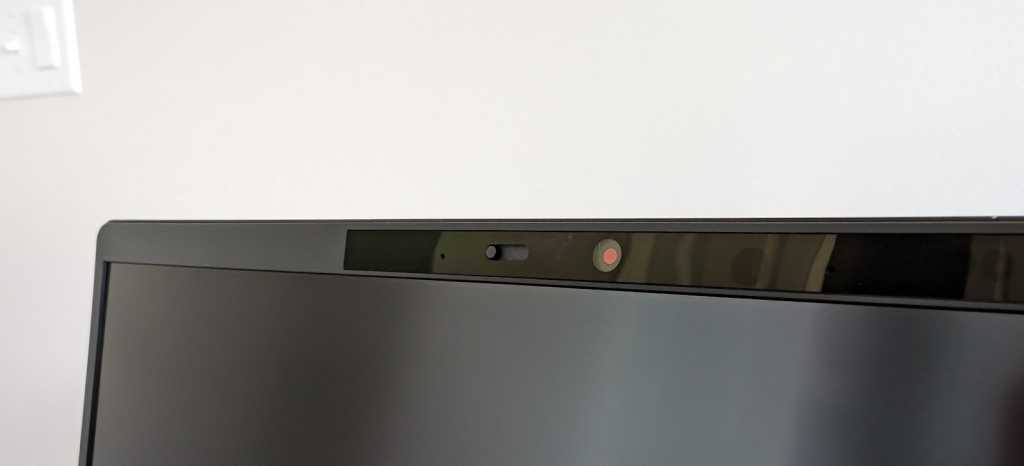
- Privacy shutters are becoming more common, too. You physically slide a shutter in front of the webcam, and the shutter blocks it from recording.
- Physical webcam shutoff switches are also popping up. You flip a physical switch somewhere on your laptop — perhaps on the side, near the power button or ports — and the laptop disconnects the webcam. It no longer appears as a connected device to Windows, and software on your PC can’t access it until you flip that switch and reconnect it.
If webcam privacy is important to you, be sure you buy a laptop with a shutter that physically blocks the webcam or a switch that disconnects it. Some laptops have function keys that turn off their webcam on the keyboard, but these don’t generally disconnect the webcam — they just send a signal to the operating system to turn it off. Malware running on your PC could reactivate the webcam if you disable it in this way.
Business laptops often have physical privacy shutters — no taping over your webcam necessary.
Chris Hoffman, IDG
How to see which apps have used your PC’s webcam
Windows 10 and 11 both will tell you which applications recently used your PC’s webcam.
[Boost your Windows IQ with my free Windows Intelligence newsletter — three things to know and try every Friday and a free Windows Field Guide to start!]
Unfortunately, this convenience isn’t foolproof. Microsoft’s own documentation points out that some applications might not appear in this list. While this access log is nice to have, sophisticated malware running on your PC could certainly dodge it.
To find the list of apps that recently accessed your webcam:
- On Windows 11, open the Settings app and select “Privacy & security” in the left pane. Scroll down and click “Camera” under App permissions. Scroll down again and click “Recent Activity” to see which applications have used your camera in the last seven days.
- On Windows 10, open the Settings app and select “Privacy.” Choose “Camera” under App permissions in the left pane. Examine the list of apps, especially the desktop apps at the bottom — Windows will show you the date and time each app last accessed your webcam.
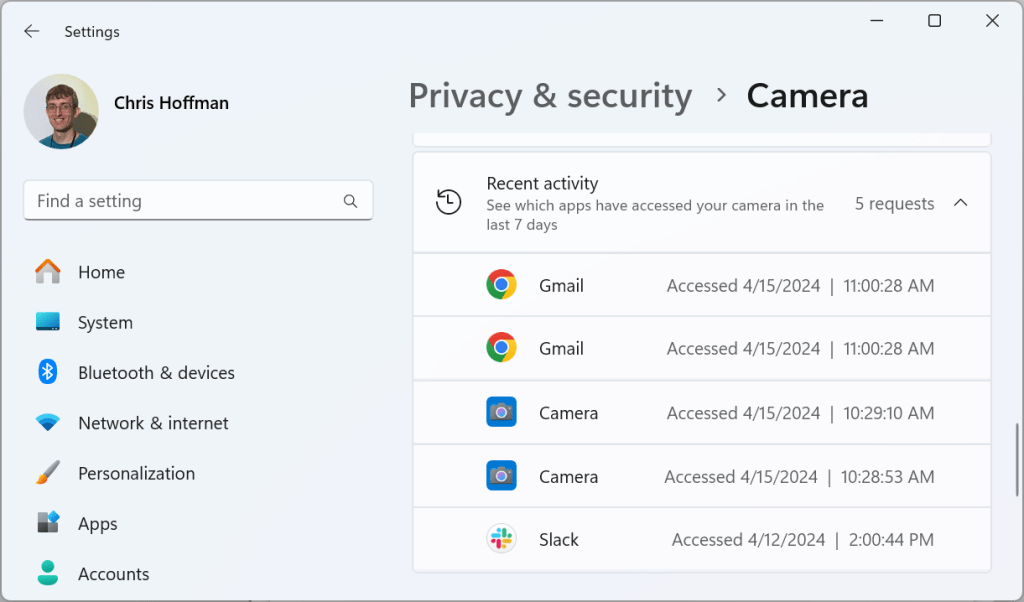
Windows has a lot of options for seeing and controlling webcam access. But they’re not foolproof, and malware can get around them.
Chris Hoffman, IDG
You might see your web browser here, too. Websites can access your webcam, but only if you let them — your web browser controls which sites have access to it. You can check which sites in your browser’s settings:
- In Google Chrome, click menu > Settings. Select “Privacy and security, “ click “Site settings,” and click “Camera.” Look at the “Allowed to use your camera” list here — you can remove sites if you don’t want them to have access to your camera.
- In Microsoft Edge, click menu > Settings. Select “Cookies and site permissions,” and click “Camera” under All Permissions. Look at the list of sites in the “Allow” list — these are the sites that have access to your webcam.
- In Mozilla Firefox, click menu > Settings. Select “Privacy & Security.” Scroll down to the Permissions section and click “Settings” to the right of Camera. You’ll see a list of sites that have been given access to your webcam here.
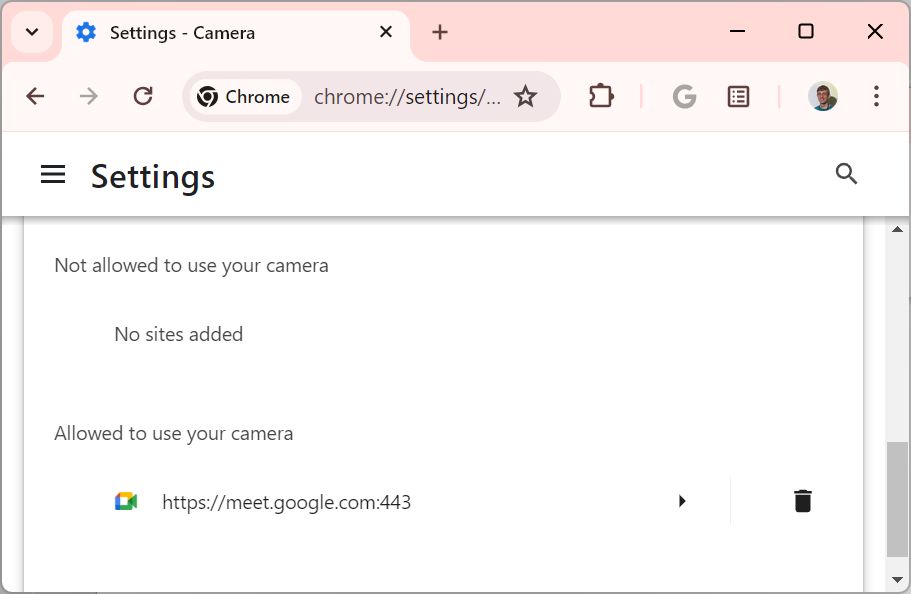
Your web browser gives you complete control over which websites get access to your PC’s camera.
Chris Hoffman, IDG
How to see if your webcam is being used right now
Windows relies on the camera’s status LED to turn on to indicate your camera is being used. For devices without physical camera LEDs, Windows will show on-screen “Camera on” and “Camera off” messages.
You can activate these on-screen messages on any Windows PC with the “NoPhysicalCameraLED” registry hack, if you like.
Other ways to disable your PC’s webcam
While many modern laptops have great solutions for disabling your webcam — all those shutters and switches — some don’t. You still have options:
- Unplug your webcam: If you use an external webcam, you can just unplug its USB cable from your computer when you aren’t using it.
- Turn it off in the UEFI or BIOS: If your laptop has a built-in webcam you’re not using, you could boot into its UEFI firmware settings screen — this is the modern replacement for the traditional BIOS settings screen. You can boot to this interface from the Windows Recovery Menu. From here, you can usually find an option to deactivate the webcam. It won’t function again until someone reboots into this screen and activates it once again — that’s inconvenient if you frequently use the webcam, but it’s a nice privacy upgrade if you never do.
- Tape or cover your webcam: The traditional method of covering your laptop’s webcam with tape or some other kind of cover still works! It became extra famous when Mark Zuckerberg revealed he tapes his webcam back in 2016. Now, most of us aren’t billionaires, and Zuckerberg certainly faces privacy threats most people don’t. But even this low-tech solution works for him. (These days, hopefully Zuckerberg has a modern laptop with a built-in webcam privacy cover or disconnect!)
By the way, you’ll also find options to turn off your webcam at Settings > Privacy & security > Camera on Windows 11 and Settings > Privacy > Camera on Windows 10. You can use these options if you like, but don’t rely on them: As the interface itself says on Windows 11, “Some desktop apps might not appear on this page or be affected by these settings.”
As with the list of apps that have recently accessed your webcam, traditional Windows desktop apps could get around this setting, even if you turned off the microphone — and it’s likely the most dangerous malware applications would be designed to do so. If you’re concerned about privacy, it’s much better to physically cover or disconnect the webcam — or at least disable it at a low level in your system’s UEFI settings.
Wait, what about microphone privacy?
There’s a huge elephant in the room here — and that’s microphones. Laptops have integrated microphones. Those microphones don’t have status LEDs and there are no physical switches to turn them off.
Picture a conference room full of laptops with excellent webcam privacy solutions: Each laptop has the shutter closed. Malware running on any of those laptops could still listen in. Of course, that would require at least one of those laptops to be infected with malware — and malware on a laptop could capture all kinds of other sensitive information, from passwords and payment details to sensitive correspondence.
Still, as PCWorld pointed out in 2019, laptop manufacturers haven’t offered the kind of microphone privacy switches we see in smart speakers. Hopefully that will be a focus going forward.
For now, you could perhaps boot into UEFI firmware settings and disable your laptop’s integrated microphone from there if you’re concerned. Or, you could just tape over your microphone. When Mark Zuckerberg revealed he tapes over his laptop’s webcam, he also revealed he tapes over his laptop’s microphone hole, too. Of course, you can prevent many of these threats with good security practices, too. As long as your computer isn’t infected by malware, you don’t have to worry about someone listening in on you.
Still, it usually pays to be extra careful — especially if you’re a billionaire like Mark Zuckerberg.
Want even more practical Windows knowledge? Check out my free Windows Intelligence newsletter to get the best Windows tips in your inbox — and get a free Windows Field Guide just for subscribing.
Desktop PCs, Privacy, Windows, Windows 10, Windows 11
Source:: Computer World
Anthropic’s latest version of Claude comes to Amazon Bedrock

The most up-to-date version of Anthropic’s Claude AI, Claude 3 Opus, is now available on Amazon’s Bedrock managed AI service, bringing higher performance on more open-ended tasks to enterprise developers who rely on Amazon for generative AI model access.
According to an announcement today from Amazon, Claude 3 Opus roughly doubles the accuracy of the AI’s responses to difficult, novel and open-ended questions. By offering Claude 3 Opus via Bedrock, Amazon said it is trying to enable enterprise developers to build more robust, feature-rich applications based on generative AI, like complex financial forecasting and R&D.
Task automation, research, and even high-level tasks like formulating strategy are all within the reach of Claude 3 Opus, Amazon said. “As enterprise customers rely on Claude across industries like healthcare, finance and legal research, improved accuracy is essential for safety and performance,” the statement said.
Amazon is also a direct investor in Anthropic, having announced a $2.75 billion funding contribution to the company late last month, which brings its total investment in Anthropic to $4 billion.
Claude 3 Opus was released in March, and its inclusion in Bedrock – a cloud platform designed to let developers work with a range of different generative AI models through a common API – continues the trend of Amazon bringing the latest models from Anthropic to its platform. The latest and most robust version of Claude, Opus provides fewer hallucinations, better visual processing and fewer incorrect refusals to perform harmless tasks, Anthropic said at the time.
“It exhibits near-human levels of comprehension and fluency on complex tasks, leading the frontier of general intelligence,” the company said.
Amazon’s stated strategy with generative AI is shifting, CEO Andy Jassy said last week in an annual shareholder letter, moving away from in-house, consumer-facing AI applications and towards systems like Bedrock, allowing it to sell services via the web to business users.
It’s an area where huge hyperscalers like Amazon have a key advantage, according to experts; actually operating the LLMs that underpin generative AI and its associated applications requires the type of vast computing infrastructure that only major platform providers and the largest corporations can afford.
Bedrock competes with similar offerings from other hyperscalers, including Azure AI Studio from Microsoft and Vertex AI Generative AI Studio, from Google. It lacks the same access to OpenAI models that Azure AI Studio possesses, and has fewer AI models available overall, but the costs of prompt engineering and certain types of app development tend to be lower on Amazon’s platform.
Artificial Intelligence, Cloud Computing, Generative AI
Source:: Computer World
Windows 10 Insider Previews: A guide to the builds
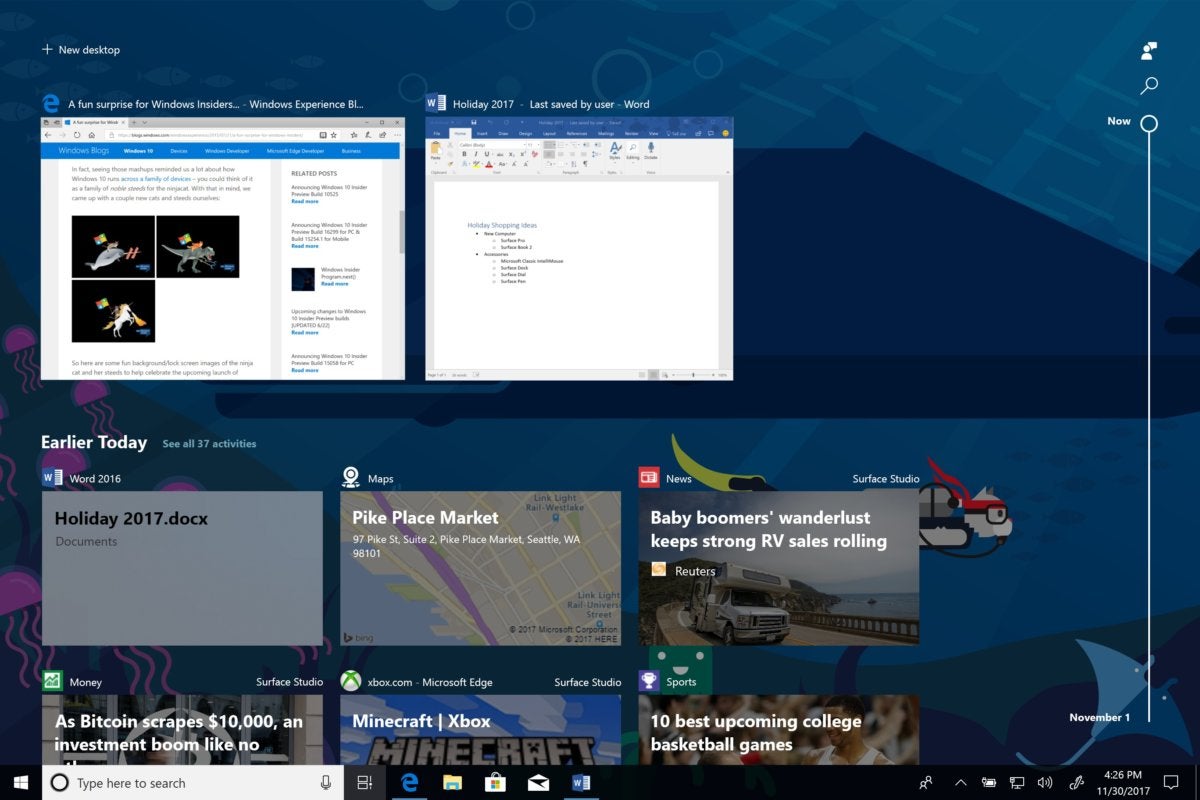
Microsoft never sleeps. In addition to its steady releases of major and minor updates to the current version of Windows 10, the company frequently rolls out public preview builds to members of its Windows Insider Program, allowing them to test out — and even help shape — upcoming features.
Windows Insiders can choose to receive preview builds in one of four channels: the Canary, Dev, Beta, or Release Preview Channel. Insiders in the Canary, Dev, and Beta Channels are now testing Windows 11 builds.
The Release Preview Channel typically doesn’t see action until shortly before a new feature update is rolled out; it’s meant for final testing of an upcoming release and is best for those who want the most stable builds. This is the only Insider channel that is currently receiving Windows 10 builds.
Below you’ll find information about recent Windows 10 preview builds. For each build, we’ve included the date of its release, which Insider channel it was released to, a summary of what’s in the build, and a link to Microsoft’s announcement about it.
Note: If you’re looking for information about updates being rolled out to all Windows 10 users, not previews for Windows Insiders, see “Windows 10: A guide to the updates.”
Releases for Windows 10 version 22H2
Windows 10 22H2 Build 19045.4353 (KB5036979)
Release date: April 15, 2024
Released to: Release Preview Channel
This build introduces account-related notifications for Microsoft accounts in Settings > Home. A Microsoft account connects Windows to your Microsoft apps. This feature displays notifications across the Start menu and Settings. You can manage your Settings notifications in Settings > Privacy & security > General.
A wide variety of bugs have been fixed, including one in which when your device resumed from Modern Standby you might have gotten the stop error, “0x9f DRIVER_POWER_STATE_FAILURE, and another in which the Windows Local Administrator Password Solution’s (LAPS) Post Authentication Actions (PAA) did not happen at the end of the grace period. Instead, they occurred at restart.
(Get more info about Windows 10 22H2 Build 19045.4353.)
Windows 10 22H2 Build 19045.4233 (KB5035941)
Release date: March 14, 2024
Released to: Release Preview Channel
This build adds Windows Spotlight, which displays new images as your desktop wallpaper. If you want to know more about an image, click or tap the Learn More button, which takes you to Bing. To turn on this feature, go to Settings > Personalization > Background > Personalize your background and choose Windows spotlight. The update also adds sports, traffic, and finance content to the lock screen. To turn it on, go to Settings > Personalization > Lock screen. Note that these two features will roll out to users gradually.
In addition, in Windows Hello for Business IT admins can now use mobile device management (MDM) to turn off the prompt that appears when users sign in to an Entra-joined machine. To do it, turn on the “DisablePostLogonProvisioning” policy setting. After a user signs in, provisioning is off for Windows 10 and Windows 11 devices.
A wide variety of bugs have been fixed, including one in which some applications that depend on COM+ component had stopped responding. Also fixed was a deadlock issue in CloudAP that occurred when different users signed in and signed out at the same time on virtual machines.
(Get more info about Windows 10 22H2 Build 19045.4233.)
Windows 10 22H2 Build 19045.4116 (KB5034843)
Release date: February 15, 2024
Released to: Release Preview Channel
In this build, using Windows share, you can now directly share URLs to apps like WhatsApp, Gmail, Facebook, and LinkedIn. Sharing to X (formerly Twitter) is coming soon.
The build fixes several bugs, including one in which you weren’t able to use Windows Hello for Business to authenticate to Microsoft Entra ID on certain apps when using Web Access Management (WAM).
(Get more info about Windows 10 22H2 Build 19045.4116.)
Windows 10 22H2 Build 19045.3992 (KB5034203)
Release date: January 11, 2024
Released to: Release Preview Channel
This update adds eye control system settings. You can back up these settings from the former device while you set up a new device. Then those settings will install automatically on the new device so you can use them when you reach the desktop.
The build fixes a wide variety of bugs, including one in which an MDM service such as Microsoft Intune might not get the right data from BitLocker data-only encryption, and another in which some single-function printers are installed as scanners.
(Get more info about Windows 10 22H2 Build 19045.3992 (KB5034203).)
Windows 10 22H2 Build 19045.3757 (KB5032278)
Release date: November 20, 2023
Released to: Release Preview Channel
This update begins the rollout of the preview version of AI-powered Copilot in Windows 10. Windows Insiders in Release Preview with eligible devices running Windows 10, version 22H2 who are interested in installing it Windows as soon as possible can change their settings so that it will automatically install on their PCs. To do it, go to Settings > Update & Security > Windows Update, turn on Get the latest updates as soon as they’re available, and then check for updates. It will be a phased launch via controlled feature rollout (CFR) in the coming months.
There are three known issues in this build. In one, if you install Copilot for Windows you may see some instability after clicking the Refresh button in Copilot. Clicking links inside Copilot or closing Microsoft Edge or Copilot may cause Copilot and Edge to crash.
(Get more info about Windows 10 22H2 Build 19045.3757.)
Windows 10 22H2 Build 19045.3754 (KB5032278)
Release date: November 16, 2023
Released to: Release Preview Channel
In this update, you can change your settings so that when the preview version of AI-powered Copilot in Windows is ready for Windows 10, it will automatically install on your PC. To do it go to Settings > Update & Security > Windows Update, turn on Get the latest updates as soon as they’re available and then check for updates. It will be a phased launch via controlled feature rollout (CFR) in the coming months.
The update also fixes a variety of bugs, including one in which the cursor’s movement lagged in some screen capture scenarios, and another in which the Windows LAPS PasswordExpirationProtectionEnabled policy failed to turn on the setting.
(Get more info about Windows 10 22H2 Build 19045.3754.)
Windows 10 22H2 Build 19045.3391 (KB5029331)
Release date: August 10, 2023
Released to: Release Preview Channel
This update improves how Windows detects your location to give you better weather, news, and traffic information. It also expands the rollout of notification badging for Microsoft accounts on the Start menu, which gives you quick access to important account-related notifications. You can also add extra security steps to keep from being locked out of your account.
The update also fixes a variety of bugs, including one in which Group Policy Service did not wait for 30 seconds, the default wait time, for the network to be available. Because of this, policies were not correctly processed.
(Get more info about Windows 10 22H2 Build 19045.3391.)
Windows 10 22H2 Build 19045.3269 (KB5028244)
Release date: July 13, 2023
Released to: Release Preview Channel
This update fixes a wide variety of bugs, including one in which certain display and audio devices were missing after your system resumed from sleep, another in which some VPN clients were unable to make connections, and one in which Windows failed when you used BitLocker on a storage medium with a large sector size.
(Get more info about Windows 10 22H2 Build 19045.3269.)
Windows 10 22H2 Build 19045.3154 (KB5027293)
Release date: June 22, 2023
Released to: Release Preview Channel
This update adds many new features and improvements to Microsoft Defender for Endpoint. For details, see Microsoft Defender for Endpoint. It also lets you authenticate across Microsoft clouds. This feature satisfies Conditional Access checks if they are needed.
It also fixes a wide variety of bugs, including one that stopped the onscreen keyboard from opening after you lock the machine, and another that could have deleted all the registry settings under the Policies paths when you did not rename the local temporary user policy file during Group Policy processing.
(Get more info about Windows 10 22H2 Build 19045.3154.)
Windows 10 22H2 Build 19045.3030 (KB5026435)
Release date: May 11, 2023
Released to: Release Preview Channel
This update brings back a redesigned search box on the taskbar. If you have a top, bottom, regular, or small icons taskbar, you will see the search box. It offers access to apps, files, settings, and more from Windows and the web. You will also have access to the latest search updates, such as search highlights. To restore the previous search box, use the taskbar context menu or respond to a dialog that appears when you use search.
The build also fixes a wide variety of bugs, including one that stopped you from accessing the Server Message Block (SMB) shared folder, and another that did not let you apply signed Windows Defender Application Control (WDAC) policies to the Secure Kernel when you enabled Secure Boot.
(Get more info about Windows 10 22H2 Build 19045.3030.)
Windows 10 22H2 Build 19045.2908 (KB5025297)
Release date: April 13, 2023
Released to: Release Preview Channel
This build lets you change firewall settings by configuring application group rules and adds the ability to sync language and region settings when you change your Microsoft account display language or regional format.
It also fixes a wide variety of bugs, including one in Microsoft Edge IE mode in which the Tab Window Manager stopped responding, and another that caused rendering issues that affected the search box gleam (an animated icon). The issue occurred in wide, narrow, or small taskbar mode.
(Get more info about Windows 10 22H2 Build 19045.2908.)
Windows 10 22H2 Build 19045.2670 (KB5022906)
Release date: March 16, 2023
Released to: Release Preview Channel
This build fixes a wide variety of bugs, including one in which lsass.exe stopped responding when it sent a Lightweight Directory Access Protocol (LDAP) query to a domain controller that had a very large LDAP filter, and another in which Windows classified USB printers as multimedia devices even though they are not.
(Get more info about Windows 10 22H2 Build 19045.2670 (KB5022906).)
Windows 10 22H2 Build 19045.2670 (KB5022906)
Release date: February 16, 2023
Released to: Release Preview Channel
This build fixes a wide variety of bugs, including one that stopped hyperlinks from working in Microsoft Excel, another in which using a provisioning package for bulk provisioning Azure Active Directory (Azure AD) failed, and another in which virtual machines (VMs) stopped responding when you added a new disk to a storage pool in thin provisioning scenarios.
(Get more info about Windows 10 22H2 Build 19045.2670.)
Windows 10 Build 19045.2301 (KB5020030)
Release date: November 10, 2022
Released to: Release Preview Channel
In this build, the search box now appears by default on the taskbar when the taskbar is at the top of your screen or when you turn on small taskbar button mode. The build also fixes a variety of bugs, including one that affected the reliability of app installation on some devices installed by enterprises, and another that caused some applications that run on the Windows Lock Down Policy (WLDP) to stop working.
(Get more info about Windows 10 Build 19045.2301.)
Releases for Windows 10 version 21H2
Windows 10 Insider Build 19044.2192
Release date: October 18, 2022
Released to: Release Preview Channel
This build fixes a wide variety of bugs, including one in which applications stopped responding due to input queue overflows, and another in which Microsoft Azure Active Directory (AAD) Application Proxy connector was unable to retrieve a Kerberos ticket on behalf of the user. It returned the error message, “The handle specified is invalid (0x80090301).”
(Get more info about Windows 10 Insider Build 19044.2192.)
Windows 10 Build 19044.1947
Release date: August 15, 2022
Released to: Release Preview Channel
The build enhances Microsoft Defender for Endpoint’s ability to identify and intercept ransomware and advanced attacks, and gives IT admins the ability to remotely add languages and language-related features.
It also fixes a wide variety of bugs, including one that generated error 0x1E when shutting down or restarting a device, another that degraded BitLocker performance, and another that prevented virtualized App-V Microsoft Office applications from opening or causes them to stop working.
(Get more info about Windows 10 Insider Preview 21H2 Build 19044.1947.)
Windows 10 Build 19045.1865 (KB5015878)
Release date: July 28, 2022
Released to: Release Preview Channel
Microsoft has now released Build 19045.1865 (KB5015878) to the Release Preview Channel. The company says it is the first preview build of Windows 10 22H2 and is ready for testing by corporate IT departments. (Note that KB5016878 has been previously released via the regular Windows 10 Update channel, labeled as a Windows 10 Preview.)
Commercial devices configured for the Release Preview Channel via the Windows Insider Program Settings page or via Windows Update for Business policy, whether through Microsoft Intune or through Group Policy, will automatically be offered Windows 10, version 22H2 as an optional update. Windows 10, version 22H2 is also now available via Windows Server Update Service and Azure Marketplace.
(Get more info about KB5015878.)
Windows 10 Build 19044.1862 (21H2)
Release date: July 18, 2022
Released to: Release Preview Channel
This build lets you agree to receive urgent notifications when focus assist is on. It also fixes a variety of bugs, including one that caused certain docking stations to lose internet connectivity when waking from Sleep mode, and another that could have caused Windows to stop working when you enabled Windows Defender Application Control with the Intelligent Security Graph feature turned on.
(Get more info about Windows 10 Build 19044.1862.)
Windows 10 Build 19044.1806 (21H2)
Release date: June 24, 2022
Released to: Release Preview Channel
This build adds IP address auditing for incoming Windows Remote Management (WinRM) connections in security event 4262 and WinRM event 91. This addresses an issue that fails to log the source IP address and machine name for a remote PowerShell connection. The build also introduces a wide variety of Print and Scan features, including IPP over USB support.
The build also fixes a wide variety of bugs, including one that affected the Cloud Clipboard service and prevented syncing between machines after a period of inactivity.
(Get more info about Windows 10 Build 19044.1806.)
Windows 10 Build 19044.1741 (21H2)
Release date: June 2, 2022
Released to: Release Preview Channel
The build fixes one bug, which prevented the file system control code (FSCTL_SET_INTEGRITY_INFORMATION_EX) from handling its input parameter correctly.
(Get more info about Windows 10 Build 19044.1741.)
Windows 10 Build 19044.1739 (21H2)
Release date: May 23, 2022
Released to: Release Preview Channel
The build fixes a wide variety of bugs, including one that failed to display the Application Counters section in the performance reports of the Performance Monitor tool, a memory leak issue that affected Windows systems that are in use 24 hours each day of the week, and one that caused file copying to be slower.
(Get more info about Windows 10 Build 19044.1739.)
Windows 10 Build 19044.1679 (21H2)
Release date: April 14, 2022
Released to: Release Preview Channel
The build adds improvements for servicing the Secure Boot component of Windows and fixes a wide variety of bugs, including one that caused a remote desktop session to close or a reconnection to stop responding while waiting on the accessibility shortcut handler (sethc.exe); another that caused the news and interest panel to appear when you haven’t clicked, tapped, or moused over it; and another that caused Windows to stop working when you applied a Windows Defender Application Control (WDAC) policy that doesn’t require a restart.
(Get more info about Windows 10 Build 19044.1679.)
Windows 10 Build 19044.1618 (21H2)
Release date: March 14, 2022
Released to: Release Preview Channel
This build introduces search highlights, which display notable moments about each day, including holidays, anniversaries, and other events globally and in your region. To see more details at a glance, hover or click on the illustration in the search box.
There are also a variety of small new features, including a new policy that expands an app’s top three notifications by default in the Action Center for apps that send notifications using Windows notifications. It displays multiple notifications that you can interact with simultaneously.
In addition, there are a wide variety of bug fixes, including for one that stopped Microsoft Outlook’s offline search from returning recent emails, and another that prevented the User Account Control (UAC) dialog from correctly showing the application that is requesting elevated privileges
(Get more info about Windows 10 Build 19044.1618.)
Windows 10 Insider Preview Build 19044.1499 (21H2)
Release date: January 14, 2022
Released to: Release Preview Channel
This build fixes a wide variety of bugs, including one that prevented the Windows Subsystem for Linux 2 (WSL2) localhost relay from starting when Fast Startup is enabled, another that prevented certain surround sound audio from playing in Microsoft Edge, and another in Microsoft UI Automation that could cause Microsoft Outlook to stop working.
(Get more info about Windows 10 Insider Preview Build 19044.1499.)
Windows 10 Build 19044.1381 (21H2)
Release date: November 18, 2021
Released to: Release Preview Channel
This build includes all the changes in Windows 10 Build 19044.1379 (21H2) and also fixes an additional bug that affected devices that use Windows Hello for Business and are joined to Azure Active Directory (AD). These devices had issues when they accessed on-premises resources, such as file shares or websites.
(Get more info about Windows 10 Build 19044.1381.)
Windows 10 Build 19044.1379 (21H2)
Release date: November 16, 2021
Released to: Release Preview Channel
This build fixes a wide variety of bugs, including one that failed to apply machine Group Policy objects automatically at startup or in the background to devices on a domain that have certain processors, and another that incorrectly renders some variable fonts.
(Get more info about Windows 10 Build 19044.1379.)
Windows 10 Insider Preview Build 19044.1320 (21H2)
Release date: October 26, 2021
Released to: Release Preview Channel
This build includes all the features from Build 19044.1319 and also fixes a bug that prevented the successful installation of printers using the Internet Printing Protocol (IPP).
(Get more info about Windows 10 Insider Preview Build 19044.1320.)
Windows 10 Insider Preview Build 19044.1288 (21H2)
Release date: October 21, 2021
Released to: Release Preview Channel and via ISO
Microsoft says that it believes “Build 19044.1288 is the final build for the November 2021 Update.” Insiders in the Release Preview Channel can go to Settings > Update & Security > Windows Update and choose to download and install Windows 10, version 21H2. It can also be downloaded via ISO. Microsoft didn’t announce any new features or bug fixes in this build.
(Get more info about Windows 10 Insider Preview Build 19044.1288.)
Windows 10 Insider Preview Build 19044.1319 (21H2)
Release date: October 19, 2021
Released to: Release Preview Channel
This build fixes a wide variety of bugs, including one that prevented subtitles from displaying for certain video apps and streaming video sites, and another in which the use of App-V intermittently caused black screens to appear when signing in on the credentials page.
(Get more info about Windows 10 Insider Preview Build 19044.1319.)
Windows 10 Insider Preview Build 19044.1263 (21H2)
Release date: September 23, 2021
Released to: Release Preview Channel
This build fixes several dozen bugs, including one that caused News and Interests to appear in the context menu even when you have disabled it on a device, and another that caused distortion in the audio that Cortana and other voice assistants capture.
(Get more info about Windows 10 Insider Preview Build 19044.1263.)
Windows 10 Insider Preview Build 19044.1202 (21H2)
Release date: August 31, 2021
Released to: Release Preview Channel
This build fixes a bug that caused the Windows Update settings page to stop responding after you download an optional update.
(Get more info about Windows 10 Insider Preview Build 19044.1202.)
Windows 10 Insider Preview Build 19044.1200 (21H2)
Release date: August 18, 2021
Released to: Release Preview Channel (only for Insiders who were moved from the Beta Channel to the Release Preview Channel because their PC did not meet the hardware requirements for Windows 11)
Note: This build is only available for those who seek it out by going to Settings > Update & Security > Windows Update and choosing to download and install 21H2.
This build adds WPA3 H2E standards support for enhanced Wi-Fi security, and a new deployment method, cloud trust, which supports simplified passwordless deployments for a deploy-to-run state within a few minutes.
It includes a wide variety of bug fixes, including for one that caused an external monitor to display a black screen after hibernation and another in Windows Defender Exploit Protection that prevented some Microsoft Office applications from working on machines that have certain processors.
(Get more info about Windows 10 Insider Preview Build 19044.1200.)
Windows 10 Insider Preview Build 19044.1147 (21H2)
Release date: July 15, 2021
Released to: Release Preview Channel (only for Insiders who were moved from the Beta Channel to the Release Preview Channel because their PC did not meet the hardware requirements for Windows 11)
Note: This build is only available for those who seek it out by going to Settings > Update & Security > Windows Update and choosing to download and install 21H2.
This build focuses almost solely on a wide variety of bug fixes, including for a bug that caused File Explorer to stop working after reaching 99% completion when deleting many files on a mapped network drive, and another that caused System Integrity to leak memory.
(Get more info about Windows 10 Insider Preview Build 19044.1147.)
Releases for Windows 10 version 21H1
Windows 10 Build 19043.1381 (21H1)
Release date: November 18, 2021
Released to: Release Preview Channel
This build includes all the changes in Windows 10 Build 19043.1379 (21H1) and also fixes an additional bug that affected devices that use Windows Hello for Business and are joined to Azure Active Directory (AD). These devices had issues when they accessed on-premises resources, such as file shares or websites.
(Get more info about Windows 10 Build 19043.1381.)
Windows 10 Build 19043.1379 (21H1)
Release date: November 16, 2021
Released to: Release Preview Channel
This build fixes a wide variety of bugs, including one that failed to apply machine Group Policy objects automatically at startup or in the background to devices on a domain that have certain processors, and another that incorrectly renders some variable fonts.
(Get more info about Windows 10 Build 19043.1379.)
Windows 10 Insider Preview Build 19044.1320 (21H1)
Release date: October 26, 2021
Released to: Release Preview Channel
This build includes all the features from Build 19043.1319 and also fixes a bug that prevented the successful installation of printers using the Internet Printing Protocol (IPP).
(Get more info about Windows 10 Insider Preview Build 19043.1320.)
Windows 10 Insider Preview Build 19043.1319 (21H1)
Release date: October 19, 2021
Released to: Release Preview Channel
This build fixes a wide variety of bugs, including one that prevented subtitles from displaying for certain video apps and streaming video sites, and another in which the use of App-V intermittently caused black screens to appear when signing in on the credentials page.
(Get more info about Windows 10 Insider Preview Build 19043.1319.)
Windows 10 Insider Preview Build 19043.1263 (21H1)
Release date: September 23, 2021
Released to: Release Preview Channel
This build fixes several dozen bugs, including one that caused News and Interests to appear in the context menu even when you have disabled it on a device, and another that caused distortion in the audio that Cortana and other voice assistants capture.
(Get more info about Windows 10 Insider Preview Build 19043.1263.)
Windows 10 Insider Preview Build 19043.1202 (21H1)
Release date: August 31, 2021
Released to: Release Preview Channel
This build fixes a bug that caused the Windows Update settings page to stop responding after you download an optional update.
(Get more info about Windows 10 Insider Preview Build 19043.1202.)
Windows 10 Insider Preview Build 19043.1200 (21H1)
Release date: August 18, 2021
Released to: Release Preview Channel
This build includes a wide variety of bug fixes, including for one that caused an external monitor to display a black screen after hibernation and another in Windows Defender Exploit Protection that prevented some Microsoft Office applications from working on machines that have certain processors.
(Get more info about Windows 10 Insider Preview Build 19043.1200.)
Windows 10 Build 19043.1147 (21H1)
Release date: July 15, 2021
Released to: Release Preview Channel
Note: Windows Insiders in the Beta Channel on 21H1 will not receive this update. Microsoft says they will soon receive Windows 11 Insider Preview builds.
This build focuses almost solely on a wide variety of bug fixes, including for a bug that caused File Explorer to stop working after reaching 99% completion when deleting many files on a mapped network drive, and another that caused System Integrity to leak memory.
(Get more info about Windows 10 Build 19043.1147.)
Windows Feature Experience Pack 120.2212.3740.0
Release date: June 22, 2021
Released to: Beta and Release Preview Channels
This build has a single change: It fixed a bug that didn’t allow the touch keyboard to be displayed when invoked.
Microsoft is releasing only very minor changes to its Windows Feature Experience Packs for now, because it’s testing the process of distributing them. Over time, more features will be released more frequently. Eventually the packs will be delivered via Windows update the way all other updates are delivered.
(Get more info about Windows Feature Experience Pack 120.2212.3740.0.)
Windows 10 Build 19043.1081 (21H1)
Release date: June 17, 2021
Released to: Beta and Release Preview Channels
This build offers a wide variety of bug fixes, including for one that caused blurry text on the news and interests button on the Windows taskbar for some display configurations, and another in which signing into Windows using a PIN failed.
(Get more info about Build 19043.1081.)
Windows 10 Build 19043.1052 (21H1)
Release date: June 8, 2021
Released to: Beta and Release Preview Channels
This build includes a variety of security updates for the Microsoft Scripting Engine, Windows App Platform and Frameworks, Windows Input and Composition, Windows Management, Windows Cloud Infrastructure, Windows Authentication, Windows Fundamentals, Windows Virtualization, Windows Kernel, Windows HTML Platform and Windows Storage and Filesystems.
For more details, see Microsoft’s Security Update Guide.
What IT needs to know: Because this is a security update, it should be applied relatively soon. Over the next few weeks, check for reports about problematic issues, and if all seems well, apply the update.
(Get more info about 21H1 Build 19043.1052.)
Windows 10 Build 19043.1023 (21H1)
Release date: May 21, 2021
Released to: Beta Channel and Release Preview Channel
This build includes a wide variety of small bug fixes, including one that displayed items on the desktop after they have been deleted from the desktop, and another that caused configuration problems with devices configured using mobile device management (MDM) RestrictedGroups, LocalUsersAndGroups, or UserRights policies.
(Get more info about 21H1 Build 19043.1023.)
Windows 10 Insider Preview Build 19043.985 (21H1)
Release date: May 11, 2021
Released to: Beta and Release Preview Channels
This build includes a variety of security updates for Windows App Platform and Frameworks, the Windows Kernel, Windows Media, the Microsoft Scripting Engine, and the Windows Silicon Platform. For more details, see Microsoft’s Security Update Guide.
What IT needs to know: Because this is a security update, it should be applied relatively soon. Over the next few weeks, check for reports about problematic issues, and if all seems well, apply the update.
(Get more info about Insider Preview Build 19043.985.)
Windows Feature Experience Pack 120.2212.3740.0
Release date: April 28, 2021
Released to: Beta and Release Preview Channels
This build has a single change: It removes nonfunctional hyperlinks from being displayed in the Input Method Editor (IME) candidate window.
Microsoft is releasing only very minor changes to its Windows Feature Experience Packs for now, because it’s testing the process of distributing them. Over time, more features will be released more frequently. Eventually the packs will be delivered via Windows update the way all other updates are delivered.
(Get more info about Windows Feature Experience Pack 120.2212.3740.0.)
Windows 10 Insider Preview Build 19043.962 (21H1)
Release date: April 19, 2021
Released to: Beta and Release Preview Channels
This build offers new personalization options for news and interests on the taskbar. A new button links to a page that lets you choose specific topics that you’re interested in. You can search for topics or publishers you want to follow, and also browse through more than a dozen categories, including different types of news, entertainment, and sports.
There are also a wide variety of bug fixes, including for one that caused blank tiles to appear on the Start menu with names such as “ms-resource:AppName” or “ms-resource:appDisplayName,” and another that caused Azure Active Directory authentication to fail after signing in on Windows Virtual Desktop machines.
(Get more info about Insider Preview Build 19043.962.)
Windows 10 Insider Preview Build 19043.928 (21H1)
Release date: April 13, 2021
Released to: Beta and Release Preview Channels
This build includes a variety of security updates for Windows App Platform and Frameworks, Windows Apps, Windows Input and Composition, Windows Office Media, Windows Fundamentals, Windows Cryptography, the Windows AI Platform, Windows Kernel, Windows Virtualization, Internet Explorer, and Windows Media. For more details, see Microsoft’s Security Update Guide website.
There are several security updates in addition to those, including fixing a potential elevation of privilege vulnerability in the way Azure Active Directory web sign-in allows arbitrary browsing from the third-party endpoints used for federated authentication.
What IT needs to know: Because this is a security update, it should be applied relatively soon. Over the next few weeks, check for reports about problematic issues, and if all seems well, apply the update.
(Get more info about Insider Preview Build 19043.928.)
Windows 10 Insider Preview Build 19043.899 (21H1)
Release date: March 15, 2021
Released to: Beta Channel
This update fixes a wide variety of bugs, including one that caused Remote Desktop sessions to end unexpectedly, another that caused systems to stop working when no Trusted Platform Module (TPM) was present, and another that froze devices if files or folders that OneDrive syncs were deleted.
(Get more info about Insider Preview Build 19043.899.)
Windows 10 Insider Preview Build 19043.867 (21H1)
Release date: March 9, 2021
Released to: Beta Channel
This update includes a wide variety of security updates for the Windows Shell, Windows Fundamentals, Windows Management, Windows Apps, Windows User Account Control (UAC), Windows Virtualization, the Windows Kernel, the Microsoft Graphics Component, Internet Explorer, Microsoft Edge Legacy, and Windows Media. For details, see the Microsoft Security Update Guide.
What IT needs to know: Because this is a security update, it should be applied relatively soon. Over the next few weeks, check for reports about problematic issues, and if all seems well, apply the update.
(Get more info about Insider Preview Build 19043.867.)
Windows Feature Experience Pack 120.2212.3030.0
Release date: February 23, 2021
Released to: Beta Channel
This build has a single change: It improves the reliability of the handwriting input panel.
Windows Feature Experience Pack updates are delivered to Insiders in the Beta Channel via Windows Update just like builds and cumulative updates. If you want to install one, go to Settings > Update & Security > Windows Update and check for updates. You’ll have to reboot to enable it. To check your Windows Feature Experience Pack version, go to Settings > System > About.
(Get more info about Windows Feature Experience Pack 120.2212.3030.0.)
Windows 10 Insider Preview Build 19043.844 (21H1)
Release date: February 17, 2021
Released to: Beta Channel
This build is the first version of the next Windows 10 feature update, version 21H1. In order to get it, Insiders in the Beta Channel need to go to Settings > Update & Security > Windows Update and choose to download and install 21H1. Once you’ve installed 21H1, you’ll receive preview builds for 21H1 moving forward; those who don’t install it will continue to receive 20H2 builds for the time being.
The build includes all the fixes in Insider Build 19042.844 for version 20H2 as well as several minor bug fixes and tweaks. Bug fixes include resolving an issue that caused a one-minute or more delay when you opened a Microsoft Defender Application Guard (WDAG) Office document. Feature tweaks include having Windows Hello multicamera support set the default as the external camera when both external and internal Windows Hello cameras are present.
For more details about 21H1, see this blog post from John Cable, Vice President, Program Management, Windows Servicing and Delivery.
(Get more info about Insider Preview Build 19043.844.)
Releases for Windows 10 version 20H2
Windows Feature Experience Pack 120.2212.3740.0
Release date: June 22, 2021
Released to: Beta and Release Preview Channels
This build has a single change: It fixed a bug that didn’t allow the touch keyboard to be displayed when invoked.
Microsoft is releasing only very minor changes to its Windows Feature Experience Packs for now, because it’s testing the process of distributing them. Over time, more features will be released more frequently. Eventually the packs will be delivered via Windows update the way all other updates are delivered.
(Get more info about Windows Feature Experience Pack 120.2212.3740.0.)
Windows 10 Build 19042.1081 (20H2)
Release date: June 17, 2021
Released to: Release Preview Channel
This build offers a wide variety of bug fixes, including for one that caused blurry text on the news and interests button on the Windows taskbar for some display configurations, and another in which signing into Windows using a PIN failed.
(Get more info about Build 19042.1081.)
Windows 10 Insider Preview Build (20H2) Build 19042.1023
Release date: May 21, 2021
Released to: Release Preview Channel
This build, for Insiders on 20H2, includes a wide variety of small bug fixes, including one that displayed items on the desktop after they have been deleted from the desktop, and another that caused configuration problems with devices that were configured using mobile device management (MDM) RestrictedGroups, LocalUsersAndGroups, or UserRights policies.
(Get more info about (20H2) Build 19043.1023 (KB5003214).
Windows 10 Insider Preview Build 19042.962 (20H2)
Release date: April 19, 2021
Released to: Release Preview Channel
This build offers new personalization options for news and interests on the taskbar. A new button links to a page that lets you choose specific topics that you’re interested in. You can search for topics or publishers you want to follow, and also browse through more than a dozen categories, including different types of news, entertainment, and sports.
There are also a wide variety of bug fixes, including for one that caused blank tiles to appear on the Start menu with names such as “ms-resource:AppName” or “ms-resource:appDisplayName,” and another that caused Azure Active Directory authentication to fail after signing in on Windows Virtual Desktop machines.
(Get more info about Insider Preview Build 19042.962.)
Windows Feature Experience Pack 120.2212.3030.0
Release date: February 23, 2021
Released to: Beta Channel
This build has a single change: It improves the reliability of the handwriting input panel.
Windows Feature Experience Pack updates are delivered to Insiders in the Beta Channel via Windows Update just like builds and cumulative updates. If you want to install one, go to Settings > Update & Security > Windows Update and check for updates. You’ll have to reboot to enable it. To check your Windows Feature Experience Pack version, go to Settings > System > About.
(Get more info about Windows Feature Experience Pack 120.2212.3030.0.)
Windows 10 Insider Preview Build 19042.844 (20H2)
Release date: February 17, 2021
Released to: Release Preview and Beta Channels
This update fixes a wide variety of bugs, including one that caused video playback to flicker when rendering on certain low-latency capable monitors, and another that prevented certain Win32 apps from opening as a different user when you use the runas command.
There are also a few minor feature tweaks, including enabling Windows to retrieve updated printer capabilities to ensure that users have the proper set of selectable print options.
(Get more info about Insider Preview Build 19042.844.)
Windows 10 Insider Preview Build 19042.804 (20H2)
Release date: February 9, 2021
Released to: Release Preview and Beta Channels
This release fixes a bug and includes a variety of security updates. The bug fixed could damage the file system of some devices and prevent them from starting up after running chkdsk /f.
Security updates are provided for Windows App Platform and Frameworks, Windows Apps, Windows Input and Composition, Windows Cloud Infrastructure, Windows Management, Windows Authentication, Windows Fundamentals, Windows Cryptography, Windows Virtualization, Windows Core Networking, and Windows Hybrid Cloud Networking. For details, see the Microsoft Security Update Guide.
What IT needs to know: Because this is a security update, it should be applied relatively soon. Over the next few weeks, check for reports about problematic issues, and if all seems well, apply the update.
(Get more info about Insider Preview Build 19042.804.)
Windows 10 Insider Preview Build 19042.789 (20H2)
Release date: February 2, 2021
Released to: Release Preview and Beta Channels
This update includes all the fixes in Windows 10 Insider Preview Build 19042.782 (20H2), plus three additional ones:
- One fixes an issue with Microsoft Exchange accounts and some Surface Hub devices that occurred after updating to Windows 10 version 20H2. The message “Something went wrong” appeared, with error code 0x80131500.
- Another fixes an issue with Windows Update scans that occurred when an authenticated proxy was used as a fallback for the sync service after the previous proxy setting fails.
- The third fixes an issue that caused an update from Windows 10, version 1703 to Windows 10, version 20H2 to fail on a Surface Hub device. The message “Getting ready…” remained on the screen indefinitely.
(Get more info about Insider Preview Build 19042.789.)
Windows Feature Experience Pack 120.2212.2020.0
Release date: January 26, 2021
Released to: Beta Channel
Microsoft says this build improves the reliability of screen snipping, particularly for apps that often access the clipboard. It also removes the ability to copy and paste a screen snip directly into a folder in File Explorer. That feature was removed because of a bug. Microsoft plans to turn the feature back on in a future update.
Windows Feature Experience Pack updates are delivered to Insiders via Windows Update just like builds and cumulative updates. If you want to install one, go to Settings > Update & Security > Windows Update and check for updates. Note that Insiders in the Beta Channel will need to have 20H2 Build 19042.662 or higher installed if they want to get it. You’ll have to reboot to enable it. To check your Windows Feature Experience Pack version, go to Settings > System > About.
This Experience Pack build contains barely any new features because Microsoft is still testing out the process of delivering new features outside of major Windows 10 feature updates. Microsoft expects to expand the scope and the frequency of releases in the future. Eventually, Windows Feature Experience Pack updates will be folded into the existing servicing process for Windows 10 and delivered through Windows Update.
(Get more info about Windows Feature Experience Pack 120.2212.2020.0.)
Windows 10 Insider Preview Build 19042.782 (20H2)
Release date: January 21, 2021
Released to: Release Preview and Beta Channels
This update includes fixes for a wide variety of bugs, including one that prevented you from opening a document on the Windows desktop and generates the error “The directory name is invalid,” another that sometimes caused Alt-Tab to switch to the wrong window, and another that caused the upload of diagnostic logs to a management service, such as Microsoft Intune, to fail.
It also includes a few minor new features, including one that allows administrators to disable standalone Internet Explorer using a Group Policy while continuing to use Microsoft Edge’s IE Mode, and another that lets you configure certain policies that support Microsoft Edge IE Mode using mobile device management (MDM).
(Get more info about Insider Preview Build 19042.782.)
Windows 10 Build 19042.746 (20H2)
Release date: January 12, 2021
Released to: Beta and Release Preview Channels
This build fixes a variety of security vulnerabilities, including one with HTTPS-based intranet servers, and a security bypass vulnerability in the way the Printer Remote Procedure Call (RPC) binding handles authentication for the remote Winspool interface.
There are also security updates to Windows App Platform and Frameworks, Windows Media, Windows Fundamentals, Windows Kernel, Windows Cryptography, Windows Virtualization, Windows Peripherals, and Windows Hybrid Storage Services. For details, see the Microsoft Security Update Guide.
There are two known issues in this update, including one in which system and user certificates might be lost when updating a device from Windows 10 version 1809.
What IT needs to know: Because this is a security update, it should be applied relatively soon. Over the next few weeks, check for reports about problematic issues, and if all seems well, apply the update.
(Get more info about Build 19042.746.)
Windows 10 Insider Preview Build 19042.685 (20H2)
Release date: December 8, 2020
Released to: Release Preview and Beta Channels
This build fixes a security vulnerability by preventing applications that run as a SYSTEM account from printing to “FILE:” ports. It also has security updates for the legacy version of Microsoft Edge, the Microsoft Graphics Component, Windows Media, Windows Fundamentals, and Windows Virtualization. For details, see the Microsoft Security Update Guide.
What IT needs to know: Because this is a security update, it should be applied relatively soon. Over the next few weeks, check for reports about problematic issues, and if all seems well, apply the update.
(Get more info about Insider Preview Build 19042.685.)
Windows 10 Feature Experience Pack 120.2212.1070.0
Release date: November 30, 2020
Released to: Beta Channel
This is the first build of a Microsoft Experience Pack, which offers a set of new features to Windows users outside the normal twice-yearly Windows 10 feature updates. This first early build was done more to test the process of releasing experience packs than to add any significant new features. Microsoft notes, “By testing this process first with Windows Insiders, we hope to expand the scope and the frequency of releases in the future.”
There are only two, minor new features in the build:
- You can now use Windows 10’s built-in screen snipping tool (press Windows key + Shift + S) to create a screenshot and save it in the folder you choose in File Explorer.
- Split keyboard mode is now supported when you use the touch keyboard in portrait orientation on a 2-in-1 touch device.
To receive this update, Insiders in the Beta Channel must have 20H2 Build 19042.662 installed. To get the update, they’ll have to go to Settings > Update & Security > Windows Update and check for updates. Once they’ve installed the update, they’ll have to reboot to turn on the new features. They can check their Windows Feature Experience Pack version by going to Settings > System > About.
(Get more info about Feature Experience Pack 120.2212.1070.0.)
Windows 10 Insider Preview Build 19042.662 (20H2)
Release date: November 23, 2020
Released to: Release Preview and Beta Channels
This build has a wide variety of minor bug fixes and updates, including fixing an issue that caused a system to stop working during startup when the CrashOnAuditFail policy is set to 1 and command-line argument auditing is turned on, and fixing another issue that caused the Microsoft Management Console (MMC) Group Policy application to stop working when you are editing the Group Policy Security settings.
(Get more info about Insider Preview Build 19042.662.)
Windows 10 Insider Preview Build 19042.630 (20H2)
Release date: November 10, 2020
Released to: Release Preview and Beta Channels
This build updates the 2020 DST start date for the Fiji Islands to December 20, 2020 and includes security updates to the Microsoft Scripting Engine, Windows Input and Composition, Microsoft Graphics Component, the Windows Wallet Service, Windows Fundamentals, and the Windows Kernel. For details see the release notes for November 2020 Security Updates.
What IT needs to know: Because this is a security update, it should be applied relatively soon. Over the next few weeks, check for reports about problematic issues, and if all seems well, apply the update.
(Get more info about Insider Preview Build 19042.630.)
Windows 10 Insider Preview Build 19042.610 (20H2)
Release date: October 29, 2020
Released to: Release Preview and Beta Channels
This update for insiders on the 20H2 Windows 10 October 2020 Update includes all the fixes in the 20H2 Build 19042.608 build, plus one minor additional fix. It fixes a bug that caused the Docker pull operation to fail due to a Code Integrity (CI) Policy that blocks the import of a Windows container image.
(Get more info about Insider Preview Build 19042.610.)
Windows 10 Insider Preview Build 19042.608 (20H2)
Release date: October 22, 2020
Released to: Release Preview and Beta Channels
This update makes it easier to connect to others in Skype, using Meet Now from the taskbar. In addition, there are a wide variety of bug fixes, including for a bug that displayed the incorrect CPU frequency for certain processors, and another that displayed nothing on the screen for five minutes or more during a Remote Desktop Protocol (RDP) session.
(Get more info about Insider Preview Build 19042.608.)
Windows 10 Insider Preview Build 19042.572 (20H2)
Release date: October 13, 2020
Released to: Beta and Release Preview Channels
This build for Insiders who are on version 20H2 (the October 2020 Update) fixes a few minor bugs and includes a variety of security updates. Among the items fixed are an issue with creating null ports using the user interface, and another issue with a possible elevation of privilege in win32k.
Security updates were issued for Windows App Platform and Frameworks, Microsoft Graphics Component, Windows Media, Windows Fundamentals, Windows Authentication, Windows Virtualization, and Windows Kernel. For details, see the Release Notes for October 2020 Security Updates.
What IT needs to know: Because this is a security update, it should be applied relatively soon. Over the next few weeks, check for reports about problematic issues, and if all seems well, apply the update.
(Get more info about Insider Preview Build 19042.572.)
Windows 10 Insider Preview Build 19042.546 (20H2)
Release date: September 30, 2020
Released to: Beta and Release Preview Channels
This build for Insiders who are on version 20H2 (the Windows 10 October 2020 Update) includes all of the fixes included as part of 20H2 Build 19042.541, plus two minor bug fixes, one that had prevented a device from entering Modern Standby, and the other a reliability issue in Microsoft Edge that occurs when you open multiple windows or tabs.
(Get more info about Insider Preview Build 19042.546.)
Windows 10 Insider Preview Build 19042.541 (20H2)
Release date: September 22, 2020
Released to: Beta and Release Preview Channels
This build for Insiders who are on Windows 10 20H2 (the October 2020 Update) fixes a wide variety of bugs, including one in which the Windows Subsystem for Linux (WSL) failed to start with an “Element not found” error, another that caused random line breaks when you redirected PowerShell console error output, and another that prevented Microsoft Intune from syncing on a device using the virtual private network version 2 (VPNv2) configuration service provider (CSP).
(Get more info about Insider Preview Build 19042.541.)
Windows 10 Insider Preview Build 19042.508 (20H2)
Release date: September 18, 2020
Released to: Release Preview Channel
Microsoft says this build, previously released to the Beta Channel on Sept. 8., will be the final build for the Windows 10 October 2020 Update, barring unforeseen consequences. To get it, Insiders in the Release Preview Channel need to go to Settings > Update & Security > Windows Update and choose to download and install 20H2.
(Get more info about Build 19042.508.)
Windows 10 Insider Preview Build 19042.508 (20H2)
Release date: September 8, 2020
Released to: Beta Channel
This build includes security updates for Windows App Platform and Frameworks, Microsoft Graphics Component, Windows Input and Composition, Windows Media, Windows Shell, Windows Cloud Infrastructure, Windows Fundamentals, Windows Management, Windows Kernel, Windows Virtualization, Windows Storage and Filesystems, the Microsoft Scripting Engine, and the Microsoft JET Database Engine.
For details, see the Release Notes for September 2020 Security Updates.
The build also fixes a security vulnerability issue with user proxies and HTTP-based intranet servers, and addresses an issue with a possible elevation of privileges in windowmanagement.dll.
What IT needs to know: Because this is a security update, it should be applied relatively soon. Over the next few weeks, check for reports about problematic issues, and if all seems well, apply the update.
Note: Microsoft is releasing 20H2 to commercial customers in the Beta Channel and Release Preview Channel for pre-release validation. Get details in this blog post.
(Get more info about Insider Preview Build 19042.508.)
Windows 10 Insider Preview Build 19042.487 (20H2)
Release date: August 26, 2020
Released to: Beta and Release Preview Channel (commercial customers)
The build fixes a wide variety of bugs, including one in which add-ins caused Microsoft Outlook to become unresponsive, another in which a black screen was displayed to Windows Virtual Desktop (WVD) users when they attempted to sign in, and another in which Dynamic Data Exchange (DDE) caused a memory leak when multiple clients connected to the same server.
Note: Microsoft is releasing this build to commercial customers in the Beta Channel and Release Preview Channel for pre-release validation. Get details in this blog post.
(Get more info about Insider Preview Build 19042.487.)
Windows 10 Insider Preview Build 19042.450 (20H2)
Release date: August 11, 2020
Released to: Beta Channel
This build includes security updates for the Microsoft Scripting Engine, Internet Explorer, Windows Graphics, Microsoft Graphics Component, Windows Kernel, Windows Input and Composition, Windows Media, Windows Shell, the Windows Wallet Service, Microsoft Edge Legacy, Windows Cloud Infrastructure, Windows Authentication, the Windows AI Platform, Windows Fundamentals, Windows Storage and Filesystems, Windows Update Stack, Windows File Server and Clustering, Windows Hybrid Storage Services, Windows App Platform and Frameworks, the Microsoft JET Database Engine, and Windows SQL components.
For details, see the Release Notes for August 2020 Security Updates.
The build also fixes an issue in Universal Windows Platform (UWP) apps that allows single sign-on authentication when an app does not have the Enterprise Authentication capability.
What IT needs to know: Because this is a security update, it should be applied relatively soon. Over the next few weeks, check for reports about problematic issues, and if all seems well, apply the update.
(Get more info about Insider Preview Build 19042.450.)
Windows 10 Insider Preview Build 19042.423 (20H2)
Release date: August 5, 2020
Released to: Beta Channel
This build is a re-release of 20H2 19042.421 (see below), released on July 24 to the Beta Channel. It was released in order to bring it to parity with the KB4568831 update for Windows 10 version 2004.
(Get more info about Insider Preview Build 19042.423.)
Windows 10 Insider Preview Build 19042.421 (20H2)
Release date: July 24, 2020
Released to: Beta Channel
The update includes a minor change to the look of the Start menu, removing the solid color backplates behind the logos in the apps list and giving a partially transparent background to the tiles. In addition, all of your open tabs in Microsoft Edge will appear when you use Alt-Tab, not just the active one in each browser window.
The update also includes a new feature for Microsoft Edge, in which when you pin a web site to the taskbar, when you click it, all the open tabs for the site will display in Edge. Note that existing sites on your taskbar will not use this new behavior until you remove and re-pin them.
New users of Windows will also get a more personalized, less cluttered taskbar. The taskbar will automatically adjust itself to the way in which you use Windows. You can also now more easily dismiss notifications, by clicking the X at the upper right of their screens.
More settings information has been moved from Control Panel into the Settings app. Links that used to open the System page in Control Panel now direct you to About in Settings.
There are also many bug fixes, including one that could cause Microsoft browsers to incorrectly bypass proxy servers, and another that caused the Settings page to close unexpectedly, preventing default applications from being set up properly.
There are no known issues in this build.
(Get more info about Insider Preview Build 19042.421.)
Windows 10 Insider Preview Build 19042.388 (20H2)
Release date: July 14, 2020
Released to: Beta Channel
This update offers a few minor bug fixes and multiple security updates. It fixes an issue that can cause certain games and applications to have visual distortions when resizing in windowed mode or switching from full screen to window mode, and another that might prevent some older devices with older apps and legacy file system drivers from connecting to OneDrive using the OneDrive app.
This build has security updates for Microsoft Scripting Engine, Windows App Platform and Frameworks, the Microsoft Store, Windows Graphics, Windows Input and Composition, Windows Media, Windows Shell, Windows Fundamentals, Windows Management, Windows Kernel, Windows Hybrid Cloud Networking, Windows Storage and Filesystems, Windows Update Stack, Windows MSXML, Windows File Server and Clustering, Windows Remote Desktop, Internet Explorer, Microsoft Edge Legacy, and the Microsoft JET Database Engine. For details, see this page about the July 2020 Security Updates.
What IT needs to know: Because this is a security update, it should be applied relatively soon. Over the next few weeks, check for reports about problematic issues, and if all seems well, apply the update.
(Get more info about Insider Preview Build 19042.388.)
Windows 10 Insider Preview Build 19042.330 for 20H2
Release date: June 16, 2020
Released to: Beta Channel (formerly called the Slow ring)
This is the first Windows Insider Preview build for the next Windows 10 upgrade, code-named 20H2. It includes fixes from the KB4557957 (OS Build 19041.329) build for the Windows 10 May 2020 Update, as well as the new Microsoft Edge based on Chromium.
In order to get the build, you’ll have to go to Settings > Update & Security > Windows Update and choose to download and install 20H2. Once you’ve updated your PC to 20H2, you will continue to receive 20H2 updates through Windows Update.
(Get more info about Insider Preview Build 19042.330.)
Preview builds for the Dev Channel
Windows 10 Insider Preview Build 21390
Release date: May 26, 2021
Released to: Dev Channel
This build primarily fixes a number of minor issues, including one in which when using dark mode, the text in the File Explorer search box was black on a black background, and another in which Task Manager showed the incorrect icon for some processes.
There are several known issues in this build, including one in which the Windows Camera App does not respect the default brightness setting set via the new Camera Settings page, and another in which search results are no longer following the dark theme.
(Get more info about Insider Preview Build 21390.)
Windows 10 Insider Preview Build 21387
Release date: May 21, 2021
Released to: Dev Channel
This build has more than a dozen bug fixes, including one that caused the Windows Update page becoming unresponsive after Pause Updates was clicked, and two that caused problems when printing to USB printers.
The build has a number of known issues, including one in whichthe Windows Camera App does not use the default brightness setting set via the new Camera Settings page, and another in which elements of Search (including the search box in File Explorer) are no longer displaying correctly in the dark theme.
(Get more info about Insider Preview Build 21387.)
Windows 10 Insider Preview Build 21382
Release date: May 14, 2021
Released to: Dev Channel
This build includes a feature that lets creative and artistic apps that use International Color Consortium (ICC) display color profiles, such as Adobe Photoshop, Adobe Lightroom Classic, and CorelDraw, get accurate color and access the full gamut of HDR displays.
There are more than a dozen fixes, including one that caused pixilation when a colored mouse pointer was set to be a large size, and another that caused some devices to be listed twice on the Printers and Scanners page in Settings.
The build has a number of known issues, including one in which Windows Camera App does not use the default brightness setting set via the new Camera Settings page, and another in which elements of search (including the search box in File Explorer) no longer display correctly in the dark theme.
(Get more info about Insider Preview Build 21382.)
Windows 10 Insider Preview Build 21376
Release date: May 6, 2021
Released to: Dev Channel
This build makes several small updates to improve the drag-and-drop default cursor design in scenarios like dragging and dropping into Outlook, among other minor tweaks.
There are more than two dozen fixes, including for a bug in which the Windows Update icon would not display in the notification area when an update was pending reboot, and another that could result in apps hanging after the user pressed Alt-Shift.
The build has a number of known issues, including one in which Windows Camera App does not use the default brightness setting set via the new Camera Settings page, and another in which elements of Search (including the search box in File Explorer) are no longer displaying correctly in the dark theme.
(Get more info about Insider Preview Build 21376.)
Windows 10 Insider Preview Build 21370
Release date: April 29, 2021
Released to: Dev Channel
This build makes Bluetooth audio streaming easier, tweaks icons in File Explorer’s address bar, and improves the touch keyboard launch animation to make it smoother.
There are more than a dozen fixes, including for a bug in which broken characters appeared in text across Settings, and another in which Cortana didn’t launch from the taskbar after its icon was clicked.
The build has a number of known issues, including one in which the update process hangs for extended periods of time when attempting to install a new build, and another in which elements of Search (including the search box in File Explorer) are no longer displaying correctly in dark theme.
(Get more info about Insider Preview Build 21370.)
Windows 10 Insider Preview Build 21364
Release date: April 21, 2021
Released to: Dev Channel
This build offers the first preview of support for GUI applications in the Windows Subsystem for Linux. You’ll be able to run GUI editors, tools, and applications in order to develop, test, build, and run Linux apps.
Task Manager now supports process classification to identify resource consumption under Microsoft Edge. Task Manager also gets a new, experimental Eco mode that lets you throttle apps that use high system resources so you can give priority to other apps, leading to faster foreground responsiveness and better energy efficiency.
There are more than two dozen fixes, including for a bug in which the About page in Settings sometimes appeared blank, and another in which Windows Firewall unexpectedly reported an error when updating existing rules to Block.
The build has a number of known issues, including one in which the update process hangs for extended periods of time when attempting to install a new build, and another in which elements of Search (including the search box in File Explorer) no longer display correctly in the dark theme.
(Get more info about Insider Preview Build 21364.)
Windows 10 Insider Preview Build 21359
Release date: April 14, 2021
Released to: Dev Channel
This build has a new option under the Start menu’s Power menu to restart apps after signing in when you reboot your device.
There are more than two dozen bug fixes, including one in which Windows Update Settings might unexpectedly display two separate strings saying that updates are managed by your organization, and another in which after upgrading to recent builds you couldn’t connect using remote desktop until you rebooted your PC.
The build has a number of known issues, including one in which the update process hangs for extended periods of time when attempting to install a new build, and another in which the Windows Camera App does not use the default brightness setting set via the new Camera Settings page.
(Get more info about Insider Preview Build 21359.)
Windows 10 Insider Preview Build 21354
Release date: April 7, 2021
Released to: Dev Channel
This build offers new personalization options for news and interests on the taskbar. A new button links to a page that lets you choose specific topics that you’re interested in. You can search for topics or publishers you want to follow, and also browse through more than a dozen categories, including different types of news, entertainment, and sports.
In addition, you can now turn off content adaptive brightness control (CABC), which improves battery performance but decreases image quality. There’s also a new camera settings page so you can easily add and remove cameras and configure the default image settings of each one.
There are also more than two dozen bug fixes, including for one in which all folders pinned to Quick Access in File Explorer disappeared, and another in which the tooltip text for items in Start’s Power button menu wasn’t displaying correctly.
The build has a number of known issues, including one in which the update process hangs for extended periods of time when attempting to install a new build, and another in which elements of Search (including the search box in File Explorer) are no longer displaying correctly in the dark theme.
(Get more info about Insider Preview Build 21354.)
Windows 10 Insider Preview Build 21343
Release date: March 24, 2021
Released to: Dev Channel
This build introduces colorful new icons for File Explorer and improves Windows Sandbox and Microsoft Defender Application Guard (MDAG).
There are also a half dozen bug fixes, including for an issue that caused some devices with Realtek network adapters running driver version 1.0.0.4 to experience an intermittent loss of network connectivity, and another that caused a memory leak when interacting with the Recycle Bin.
The build has a number of known issues, including one in which the update process hangs for extended periods of time when attempting to install a new build, and another in which all folders pinned to Quick Access in File Explorer disappear.
(Get more info about Insider Preview Build 21343.)
Windows 10 Insider Preview Build 21337
Release date: March 17, 2021
Released to: Dev Channel
This build includes new capabilities for controlling virtual desktops, including reordering and customizing the backgrounds for each virtual desktop. File Explorer also gets some minor design changes.
There are also nearly two dozen bug fixes, including for one that caused the Windows Security icon in the taskbar to become unresponsive, and another in which Search didn’t open after clicking the search box in the taskbar.
The build has a number of known issues, including one in which the update process hangs for extended periods of time when attempting to install a new build, and another in which some devices with Realtek network adapters running driver version 1.0.0.4 may experience intermittent loss of network connectivity.
(Get more info about Insider Preview Build 21337.)
Windows 10 Insider Preview Build 21332
Release date: March 10, 2021
Released to: Dev Channel
This build has nearly two dozen bug fixes, including fixing an issue in which clipboard history did not update to display the latest entries, and another in which some Settings search results were missing.
The build has a number of known issues, including one in which the update process hangs for extended periods of time when attempting to install a new build, and another in which some devices with Realtek network adapters running driver version 1.0.0.4 may experience intermittent loss of network connectivity.
(Get more info about Insider Preview Build 21332.)
Windows 10 Insider Preview Build 21327
Release date: March 3, 2021
Released to: Dev Channel
With this build, the news and interest feature on the taskbar gets a new design. It includes more color and more frequent updates, as well as “cards” that let you see article text at a glance.
There are more than a dozen bug fixes, including fixing an issue that made Start and certain apps less reliable, and another that caused some upgrades to get stuck at 88%.
The build has a number of known issues, including one in which the update process hangs for extended periods of time when attempting to install a new build, and another in which “up to date” status is not displayed under Settings > Update & Security > Windows Update.
(Get more info about Insider Preview Build 21327.)
Windows 10 Insider Preview Build 21322
Release date: February 24, 2021
Released to: Dev Channel
This build has only a few minor changes, including one in which the 3D Objects folder will no longer be shown as a special folder in File Explorer. If you need to access this folder, you can do so by typing %userprofile% in File Explorer or through the navigation pane option Show all folders.
There are ten bug fixes, including for a bug that caused your PC to bug check when switching between users, and another that caused deleted files to unexpectedly remain visible on the desktop until the desktop was refreshed.
The build has a number of known issues, including one in which the update process hangs for extended periods of time when attempting to install a new build, and another in which the Start menu layout may reset.
(Get more info about Insider Preview Build 21322.)
Windows 10 Insider Preview Build 21318
Release date: February 19, 2021
Released to: Dev Channel
With this build, you can copy text-based entries in your clipboard history in plain text, without formatting such as font, color, or size. That will allow an entry to match the formatting of the destination document.
In addition, the notification when pairing supported Bluetooth devices will now stay on the screen a little longer, giving you the chance to interact with it before it goes away.
There are also a wide range of bug fixes, including for one in which the right side of the quick actions area of the Action Center was truncated, and another in which Reset my PC with the “Keep my files” option selected was failing.
The build has a number of known issues, including one in which the update process hangs for extended periods of time when attempting to install a new build, and another in which domain networks appear with the wrong firewall profile, which may block some local network services.
(Get more info about Insider Preview Build 21318.)
Windows 10 Insider Preview Build 21313
Release date: February 12, 2021
Released to: Dev Channel
In this build the Chromium version of Microsoft Edge replaces the previous version of the browser (which Microsoft calls Microsoft Edge Legacy). All future Windows 10 Insider builds will come with the Chromium version of Edge rather than Microsoft Edge Legacy. Those who are interested in trying out new features in the Chromium version of Edge before they are officially released can sign up for it in the Microsoft Edge Insider website.
The build includes a wide variety of bug fixes, including for one in which some Insiders experienced an IRQL_NOT_LESS_OR_EQUAL bug check when attempting to upgrade to a newer build, and another in which the text on the taskbar button could look pixelated on high-resolution screens.
The build has a number of known issues, including one in which the update process hangs for extended periods of time when attempting to install a new build, and another in which Domain networks appear with the wrong firewall profile, which may block some local network services.
(Get more info about Insider Preview Build 21313.)
Windows 10 Insider Preview Build 21301
Release date: January 27, 2021
Released to: Dev Channel
This build improves the touch keyboard in several minor ways. When the keyboard is undocked, it now switches to the Small keyboard layout, making it easier to move the keyboard around using the gripper region at the top of the keyboard. Small and split layouts now feature an updated symbol’s view based on the default layout. And the settings menu now has a nested structure for improved clarity and less clutter.
Note that this feature is being rolled out initially only to a subset of Insiders in the Dev Channel, to test it for performance and reliability. Eventually, it will be rolled out to all Insiders in the Dev channel.
In addition, there are several small overall changes, including one in which when you right-click locally saved files displayed in jump lists, you now have an Open File Location option, in addition to Open.
There are also more than a dozen bug fixes, including for one that could result in VPN repeatedly connecting and disconnecting in a loop, and another that caused Task Manager to crash when switching to the Details tab.
There are more than a dozen known issues, including one in which Miracast users may experience very low frame rates, and another in which the update process hangs for extended periods of time when attempting to install a new build.
(Get more info about Windows 10 Insider Preview Build 21301.)
Windows 10 Insider Preview Build 21296
Release date: January 21, 2021
Released to: Dev Channel
This build rolls out changes to clipboard history first detailed in Windows 10 Insider Preview Build 20206 and the ability to manage and create Storage Spaces from Settings described in Windows 10 Insider Preview Build 21286.
In addition, there are nine bug fixes, including for a bug that caused the Program Compatibility Assistant to unexpectedly use up a large amount of CPU resources, and another in which the Windows Security app showed both a “check for updates” button and link at the same time.
The build has more than a dozen known issues, including the update process hanging for extended periods of time when attempting to install a new build and another in which some 32-bit systems may lose network connection after installing the build. If you are running a 32-bit version of Windows, Microsoft says you may wish to pause updates until the issue is resolved.
(Get more info about Insider Preview Build 21296.)
Windows 10 Insider Preview Build 21292 (RS_PRERELEASE)
Release date: January 13, 2021
Released to: Dev Channel
This build adds fixes a wide variety of bugs in a feature introduced in Build 21286 that lets you get a customizable feed of news, weather and other updates via the taskbar.
In addition, there are several other bug fixes, including for an issue in which explorer.exe was hanging and or crashing, particularly after interacting with audio/video, and another in which it wasn’t possible to sort processes in Task Manager by status.
The build has nearly two dozen known issues, including rendering and graphic issues after resizing certain app windows, and the update process hanging for extended periods of time when attempting to install a new build.
(Get more info about Insider Preview Build 21292.)
Windows 10 Insider Preview Build 21286 (RS_PRERELEASE)
Release date: January 6, 2020
Released to: Dev Channel
This build introduces a feature that lets you get a customizable feed of news, weather, and other updates via the taskbar. In addition, you can now manage all of your storage locations via the Settings app. There’s also a new tool named DiskUsage that lets you get information about your disk usage via the command line.
The build has a wide variety of bug fixes, including for a bug that caused some printers to get stuck when connecting via Settings, and another that could unexpectedly sign you out of apps and websites after rebooting your PC.
The build has more than two dozen known issues, including rendering and graphic issues after resizing certain app windows, as well as the update process hanging for extended periods of time when attempting to install a new build.
(Get more info about Insider Preview Build 21286.)
Windows 10 Insider Preview Build 20279 (FE_RELEASE)
Release date: December 14, 2020
Released to: Dev Channel
This build is, in the words of Microsoft, is “largely the same as Build 20277” (see below). Microsoft released it in order to test its ability to quickly follow one build with another. Windows Insiders who updated to Build 21277 (RS_PRERELEASE) are not being offered this build because they are on a newer build.
(Get more info about Insider Preview Build 20279.)
Windows 10 Insider Preview Build 21277 (RS_PRERELEASE)
Release date: December 10, 2020
Released to: Dev Channel
For now, Microsoft is automatically pushing FE_RELEASE builds to Windows Insiders in the Dev Channel. Build 20277 (see below) is an FE_RELEASE. All Dev Channel Insiders will be moved to the RS_PRERELEASE branch sometime after the holidays.
If you want to move to the RS_PRERELEASE branch now, however, you can choose to install Build 21277, which is being offered as an optional update through the “seeker” experience in Windows Update. Once you install Build 21277, you will continue to receive RS_PRERELEASE builds.
Note that once you to install a RS_PRERELEASE build, you cannot move back to the FE_RELEASE branch. However, you will still have the option to roll back to a previous version for up to 10 days or until you take another build.
Build 21277 introduces x64 emulation in preview for Windows 10 on ARM PCs and adds support for Unicode Emoji 12.1 and 13.0. There are also a wide variety of bug fixes, including for a bug that caused Microsoft Edge windows to be unexpectedly grouped with File Explorer in the taskbar, and another in which limiting a search in File Explorer to a specific folder was unexpectedly returning results from the subfolders.
There are also a number of minor changes and improvements, including a smoother animation when opening or closing a window and the ability to uninstall the Snipping Tool.
There are five known issues in the build, including one in which the update process may hang for extended periods of time when attempting to install a new build, and another in which no drives appear under Settings > System > Storage > Manage Disks and Volumes. As a workaround, you can manage your disks using the classic Disk Management tool.
(Get more info about Insider Preview Build 21277.)
Windows 10 Insider Preview Build 20277 (FE_RELEASE)
Release date: December 10, 2020
Released to: Dev Channel
Build 20277 is being offered to Windows Insiders in the Dev Channel as part of the FE_RELEASE branch. You may alternatively seek out and install Build 21277 (see above), which is from the RS_PRERELEASE branch. If you do, you will continue to receive RS_PRERELEASE builds. If you choose to remain in the FE_RELEASE branch, you will continue to receive automatic FE_RELEASE updates until sometime after the holidays, when all Dev Channel Insiders will be moved to the RS_PRERELEASE branch.
The build fixes two issues, one that could result in the WinRE volume label being lost after multiple upgrades and another that could result in apps failing to update with error code 0x80073D02.
There are five known issues in the build, including one in which the update process may hang for extended periods of time when attempting to install a new build, and another in which no drives appear under Settings > System > Storage > Manage Disks and Volumes. As a workaround, you can manage your disks using the classic Disk Management tool.
(Get more info about Insider Preview Build 20277.)
Windows 10 Insider Preview Build 20270
Release date: December 3, 2020
Released to: Dev Channel
This build lets those who sign into Cortana with their corporate credentials use Cortana to open and search for files by natural-language spoken and typed queries, such as “Hey Cortana, find my recent PDFs.”
The build also fixes several minor issues, including one in which some dialog boxes, such as Properties, displayed black text on dark backgrounds, and another in which certain apps unexpectedly closed when clicking the Maximize button.
There are five known issues with this build, including one in which the update process may hang for extended periods of time when attempting to install a new build, and another in which no drives appear under Settings > System > Storage > Manage Disks and Volumes. As a workaround, you can manage your disks using the classic Disk Management tool.
(Get more info about Insider Preview Build 20270.)
Windows 10 Insider Preview Build 20262
Release date: November 18, 2020
Released to: Dev Channel
This build has 10 minor bug fixes, including for a bug in which certain apps unexpectedly launched transparently, with no content visible, and another in which Settings could crash when navigating to Storage Sense.
There are six known issues with this build, including one in which the update process may hang for extended periods of time when attempting to install a new build, and another in which no drives appear under Settings > System > Storage > Manage Disks and Volumes. As a workaround, you can manage your disks using the classic Disk Management tool.
(Get more info about Insider Preview Build 20262.)
Windows 10 Insider Preview Build 20257
Release date: November 11, 2020
Released to: Dev Channel
This build makes changes to the Your Phone app, which now lets you run multiple Android mobile apps side by side on your Windows 10 PC on supported Samsung devices. Apps launch in separate windows, allowing you to interact with multiple apps at the same time even if the Your Phone app is not open. You can pin your apps to Favorites, the Windows 10 taskbar, or the Start menu for easy access to them. You can also search for your previously pinned apps via Windows search from within your Start app list.
There are also a variety of minor bug fixes, including for a bug in which the windows.old folder was not completely deleted when performing disk cleanup, and another in which apps wouldn’t launch from browser links.
There are six known issues with this build, including one in which the update process may hang for extended periods of time when attempting to install a new build, and another in which no drives appear under Settings > System > Storage > Manage Disks and Volumes. As a workaround, you can manage your disks using the classic Disk Management tool.
(Get more info about Insider Preview Build 20257.)
Windows 10 Insider Preview Build 20251
Release date: November 4, 2020
Released to: Dev Channel
This update has nine minor bug fixes, including for one that caused the background of some dialogs to unexpectedly appear gray instead of white, another that could cause the Settings app to hang when checking for updates right after an upgrade, and another that sometimes caused the Settings app to send a notification that just said “new notification.”
There are eight known issues with this build, including one in which the update process may hang for extended periods of time when attempting to install a new build, and another in which Arm PCs such as the Surface Pro X won’t allow Windows PowerShell to launch. As a workaround, you can use “Windows PowerShell (x86)” or “Windows PowerShell ISE (x86)” from the Start menu, or else download the new PowerShell 7, which runs natively on Arm.
(Get more info about Insider Preview Build 20251.)
Windows 10 Insider Preview Build 20246
Release date: October 29, 2020
Released to: Dev Channel
This update temporarily removes several features that debuted in earlier Dev Channel builds, including an emoji picker, a redesigned touch keyboard, and voice typing. The update adds a new automatic Linux distro installation to the wsl.exe –install command; typing wsl.exe –install into the command line now installs a fully set-up Windows Subsystem for Linux instance ready to go, including a Linux distro of choice.
The build includes a variety of bug fixes, including for one that caused Settings to crash sometimes when clicking the Update and Security category, another that caused Storage Settings to unexpectedly show incorrect category sizes (a higher number than what was visible in File Explorer), and another in which some devices experienced a KMODE_EXCEPTION bugcheck when using certain virtualization technologies.
There are seven known issues with this build, including one in which the update process may hang for extended periods of time when attempting to install a new build, and another that could cause a crash when disconnecting certain audio devices while playing audio.
(Get more info about Insider Preview Build 20246.)
Windows 10 Insider Preview Build 20241
Release date: October 21, 2020
Released to: Dev Channel
This update introduces theme-aware splash screens for Universal Windows Platform (UWP) apps. When an app is launched, the splash screen color will match your default app mode. So if you have the light theme turned on, you’ll see a light theme splash screen, and if you have the dark theme turned on, you’ll see a dark theme splash screen.
In addition, when you defragment your hard drives (Settings > System > Storage > Optimize Drives), there are several new options, including the ability to see all volumes, including hidden ones.
There are also a variety of bug fixes, including for one in which robocopy wouldn’t preserve the directory dates when using the move command, and another in which the System Information window (msinfo32) crashed on launch.
There are 10 known issues with this build, including one in which the update process may hang for extended periods of time when attempting to install a new build, and another in which some devices experience a KMODE_EXCEPTION bug check when using certain virtualization technologies.
(Get more info about Insider Preview Build 20241.)
Windows 10 Insider Preview Build 20236
Release date: October 14, 2020
Released to: Dev Channel
This update lets you change the refresh rate of your display, via Settings > System > Display > Advanced display settings. It also tweaks the Windows Search Box in several ways, including showing the last four items that you’ve searched for and opened, including apps, files, settings, and direct-nav URLs (for example, “computerworld.com”).
There are also many bug fixes, including for an issue in which some Office applications were crashing or missing after updating to a new build, and another in which File Explorer sometimes crashed when renaming a file.
There are 11 known issues with this build, including one in which the update process may hang for extended periods of time when attempting to install a new build, and another in which some devices experience a KMODE_EXCEPTION bug check when using certain virtualization technologies.
(Get more info about Insider Preview Build 20236.)
Windows 10 Insider Preview Build 20231
Release date: October 7, 2020
Released to: Dev Channel
This update gives enterprise customers the ability to modify file associations on a per-user or per-device basis. That means IT administrators can use Group Policy to set which apps will automatically open various file types or links. The feature is first being rolled out to a subset of Insiders in the Dev Channel, to help Microsoft identify issues that may impact performance and reliability. It will gradually roll out to everyone in the Dev Channel.
The update also has a wide variety of fixes, including for a bug that caused Action Center and notification buttons to vanish after switching between High Contrast Black and High Contrast White, and another in which Settings hung at launch for some Insiders.
There are 10 known issues with this build, including one in which the update process may hang for extended periods of time when attempting to install a new build, and another in which some Office applications crashed or were missing after updating to a new build.
(Get more info about Insider Preview Build 20231.)
Windows 10 Insider Preview Build 20226
Release date: September 30, 2020
Released to: Dev Channel
This update adds a new feature, Storage health monitoring, which is designed to detect hardware abnormalities for NVMe SSDs and notify users with enough time for them to act on them. Click the notification or go to the drive properties page in Storage Settings (Settings > System > Storage > Manage disks and volumes > Properties) for more details about any issue.
There is also a new settings page for the Your Phone app that lets you link a new device, remove an old device, and switch between active devices.
There are also a variety of small changes, including one in which in File Explorer if you right-click on a zipped OneDrive file set to online-only, you’ll now see an Extract All option, the same as if the file was available locally on the PC. In addition, there are several bug fixes, including for one that impacted taskbar performance and reliability on 2-in-1 convertible devices.
There are eight known issues with this build, including one in which the update process may hang for extended periods of time when attempting to install a new build, and another in which some Office applications crash or go missing after updating to a new build.
(Get more info about Insider Preview Build 20226.)
Windows 10 Insider Preview Build 20221
Release date: September 23, 2020
Released to: Dev Channel
This update adds a “Meet Now” feature to the taskbar, allowing you to quickly connect to others via Skype. The Your Phone app also lets you pin notifications from your phone to Windows 10.
There are also a variety of bug fixes, including for one in which the new Manage Disks and Volumes section in Settings wasn’t blocking the ability to change the drive letter of the system volume, and another in which the Start menu and Action Center became transparent when certain apps were open in the background.
There are eight known issues with this build, including one in which the update process may hang for extended periods of time when attempting to install a new build, and another in which some Office applications crashed or were missing after updating to a new build.
(Get more info about Insider Preview Build 20221.)
Windows 10 Insider Preview Build 20215
Release date: September 16, 2020
Released to: Dev Channel
This update adds dark theme search results to Windows 10 search. It also has a small number of bug fixes, including for one that could cause the Windows Security app to hang, and another that impacted voice typing reliability.
There are 10 known issues with this build, including one in which the update process may hang for extended periods of time when attempting to install a new build, and another in which some Office applications crash or are missing after updating to a new build.
(Get more info about Insider Preview Build 20215.)
Windows 10 Insider Preview Build 20211
Release date: September 10, 2020
Released to: Dev Channel
This update allows you to search the lists of file types, protocols, and apps when setting a default app for a certain task — a feature that was previously made available to some Windows Insiders and is now rolling out to all Insiders in the Dev Channel.
The update also allows users of the Windows Subsystem for Linux (WSL) to attach and mount a physical disk inside of a WSL 2 distro. This enables them to access file systems that aren’t natively supported by Windows (such as ext4). And the update also lets the Your Phone app to drag and drop files between your PC and Samsung smartphones that include the smart screen feature.
The build fixes several bugs, including one that could result in Start menu tiles continuing to display an “app update in progress” progress bar after an app had already finished updating, and another that could result in the lock screen hanging.
There are 11 known issues with this build, including one in which the update process may hang for extended periods of time when attempting to install a new build, and another in which some Office applications crashed or were missing after updating to a new build.
(Get more info about Insider Preview Build 20211.)
Windows 10 Insider Preview Build 20206
Release date: September 2, 2020
Released to: Dev Channel
This update makes changes to the Windows Emoji Picker by introducing an updated design in keeping with Fluent Design principles, improving searching for emojis, and offering animated GIF support.
The update also introduces voice typing, an enhanced version of Windows dictation. It’s optimized for touch keyboards and has an updated back end that Microsoft says will improve accuracy. Some people will also get a new design of Windows’ touch keyboard with new animations and sounds, more labels and an easy way to use voice typing.
The build also fixes several bugs, including one that sometimes resulted in the Narrator Home crashing when using the back button, and another that could cause Task Manager to erroneously indicate that a non-UWP app had been suspended.
There are seven known issues with this build, including one in which the update process may hang for extended periods of time when attempting to install a new build, and another in which some Office applications crashed or were missing after updating to a new build.
(Get more info about Insider Preview Build 20206.)
Windows 10 Insider Preview Build 20201
Release date: August 26, 2020
Released to: Dev Channel
This minor update has several bug fixes, including for a bug in which the min/max/close buttons were stuck in their original positions after resizing a UWP app, and another in which HDR monitors appeared black when HDR was enabled.
There are 10 known issues with this build, including one in which the update process may hang for extended periods of time when attempting to install a new build, and another in which pinned sites don’t show all open tabs for a domain.
(Get more info about Insider Preview Build 20201.)
Windows 10 Insider Preview Build 20197
Release date: August 21, 2020
Released to: Dev Channel
With this update, you can now manage your hard disks in the Settings app. You’ll be able to view disk information, create and format volumes, and assign drive letters. To do it, go to Settings > System > Storage and click Manage Disks and Volumes.
There are also a variety of very small changes, including the way Alt + Tab works with Microsoft Edge tabs. It now has a default of displaying at most five tabs. You can change that by going to Settings > System > Multitasking.
There are also a number of bug fixes, including one in which pinned File Explorer folders in Start appeared with a darker background than other tiles in light mode, and another in which Font Settings and Themes Settings were displaying the old style of Microsoft Store icon.
There are seven known issues with this build, including one in which the update process may hang for extended periods of time when attempting to install a new build, and another in which pinned sites don’t show all open tabs for a domain.
(Get more info about Insider Preview Build 20197.)
Windows 10 Insider Preview Build 20190
Release date: August 12, 2020
Released to: Dev Channel
This update tweaks the Graphics section of Settings to let you specify a default high-performance GPU and to pick a specific GPU on a per-application basis.
In addition, there are eight bug fixes, including for one that could result in explorer.exe being unresponsive on touch-capable devices after resuming from hibernation, and another in which when Narrator was enabled it could result in the on-screen PIN pad unexpectedly appearing when focus was set to the login screen.
There are nine known issues with this build, including one in which the update process may hang for extended periods of time when attempting to install a new build, and another in which some Microsoft Store games protected with Easy Anti-Cheat may fail to launch.
(Get more info about Insider Preview Build 20190.)
Windows 10 Insider Preview Build 20185
Release date: August 5, 2020
Released to: Dev Channel
The build makes several changes to the Network section in Settings, including making DNS settings more accessible and letting you configure encrypting DNS controls in Settings. In addition, the Your Phone app can now run your Android applications on your PC from your phone.
The build also includes a wide variety of bug fixes, including for one in which the “close all windows” action in the taskbar didn’t always close all of the open tabs for pinned sites, and another in which dragging and dropping an app from Start menu’s “all apps” list over to the tile grid to pin it wasn’t working for certain apps.
There are nine known issues in this build, including one in which some Microsoft Store games protected with Easy Anti-Cheat may fail to launch, and another in which Alt + Tabbing to a browser tab sometimes moves the previously active browser tab to the front of the Alt + Tab list.
(Get more info about Insider Preview Build 20185.)
Windows 10 Insider Preview Build 20180
Release date: July 29, 2020
Released to: Dev Channel
This update turns on new features first announced in the 20161 Insider build on July 1, including theme-aware tiles on the Start menu. Until now, only a small subset of Insiders have received those features.
Aside from that, the build it has only a few fixes and changes, including one that shrinks the new folder icon in the Start menu’s “All apps” list so it better aligns with the size of the other icons, another that fixes issues that could cause crashes when using Alt-Tab to switch to browser tabs.
There are ten known issues in this build, including one in which some Microsoft Store games protected with Easy Anti-Cheat may fail to launch, and another in which Alt-Tabbing to a browser tab sometimes moves the previously active browser tab to the front of the Alt-Tab list.
Note: Insider Preview Builds 20161 and below will expire on July 31st. To avoid the expiration, update to Insider Preview Build 20170 or newer.
(Get more info about Insider Preview Build 20180.)
Windows 10 Insider Preview Build 20175
Release date: July 22, 2020
Released to: Dev Channel
This update includes a new feature for Microsoft Edge, in which when you pin a web site to the taskbar, clicking it displays all the open tabs for the site in Edge. Note that existing sites pinned to your taskbar will not use this new behavior until you remove and re-pin them. The build also includes new icons for Sticky Notes and Snip & Sketch.
There are also a number of bug fixes, including for one in which tiles sometimes flashed unexpectedly in the Start menu when animating, and another in which Search didn’t close after selecting certain items in the search results.
There are ten known issues in this build, including one in which the update process may hang for extended periods of time when attempting to install a new build, and another in which live preview doesn’t work for pinned site tabs.
Note: Insider Preview Build 20161 and earlier builds will expire on July 31st. To avoid the expiration, update to Insider Preview Build 20170 or newer.
(Get more info about Insider Preview Build 20175.)
Windows 10 Insider Preview Build 20170
Release date: July 15, 2020
Released to: Dev Channel
This update makes changes to the Windows search bar. There’s a new two-column layout that lets you do searches more quickly and offers easier access to Quick Searches, which display local weather, top news, and other information.
In addition, you can now manage your sound devices in Settings, rather than in Control Panel. Go to Settings > System > Sound > Manage sound devices to see which sound device is the default and to set up a new default device or default communication device.
There are also a number of bug fixes, including for one in which the master volume slider in Sound Settings wouldn’t work after removing and re-pairing certain Bluetooth devices, and another in which modifier keys like Shift and Ctrl sometimes were dropped over a remote desktop connection.
There are six known issues with this build, including one in which the update process may hang for extended periods of time when attempting to install a new build, and another in which Task Manager reports 0.00 GHz CPU usage in the Performance tab.
The notes about the build also include a link to the just-released Microsoft Launcher v6, a launcher app for Android phones. Download it here.
Note: Windows Insiders with PCs that have AMD processors are not being offered this build because of a bug that affects the overall usability of these PCs. Microsoft expects the issue will be resolved by the time the next build is released.
(Get more info about Insider Preview Build 20170.)
Windows 10 Insider Preview Build 20161
Release date: July 1, 2020
Released to: Dev Channel
This update offers a variety of new features, including what Microsoft calls “freshening up the Start menu.” The colors behind app logos in the apps list have been removed, and tiles now have partially transparent backgrounds. In addition, in Microsoft Edge all open tabs will now appear when you use Alt + Tab. Microsoft is also taking information previously shown only in the Control Panel and displaying it in System > Settings > About.
There are a variety of bug fixes, including for one that caused some games and applications to crash at launch or fail to install, and another that caused some Bluetooth devices to no longer show their battery level in Settings.
There are seven known issues with this build, including one in which the update process may hang for extended periods of time when attempting to install a new build, and another in which Task Manager reports 0.00 GHz CPU usage in the Performance tab.
(Get more info about Insider Preview Build 20161.)
Preview builds prior to June 2020
Windows 10 Insider Preview Build 19645
Release date: June 10, 2020
Released to: Fast ring
This minor update fixes seven very minor bugs, including one in which some devices booting from eMMC storage bug checked when resuming from hibernate, another in which taskbar preview thumbnails weren’t rendering consistently (showing a blank area), and another in which Windows Hello Setup would crash if facial recognition was already set up and you chose the Improve Recognition button.
There are two known issues with this build, one in which the update process may hang for extended periods of time when attempting to install a new build, and the other in which under Settings > Privacy, the Documents and Downloads sections show a broken icon next to their page name.
(Get more info about Insider Preview Build 19645.)
Windows 10 Insider Preview Build 19640
Release date: June 3, 2020
Released to: Fast ring
This extremely minor update disables the option to have Storage Sense automatically clear out your Downloads folder on a cycle if your Downloads folder is synced to a cloud provider. It also updates Windows’ login logic, so if your PC is set up so you need to type in your username when logging in, accidentally starting your username with a space will no longer result in an error.
There are several known issues with this build, including one in some devices booting from eMMC storage may bug check when resuming from hibernate, and another in which under Settings > Privacy the Documents and Downloads sections show a broken icon next to their page name.
(Get more info about Insider Preview Build 19640.)
Windows 10 Insider Preview Build 19635
Release date: May 28, 2020
Released to: Fast ring
This extremely minor update fixes several issues, including one that caused constant display flashing on certain devices, and another that caused Settings to crash when changing the display orientation or resolution.
There are several known issues with this build, including one in which some devices booting from eMMC storage may bug check when resuming from hibernate, and another in which under Settings > Privacy, the Documents and Downloads sections show a broken icon next to their page name.
(Get more info about Insider Preview Build 19635.)
Windows 10 Insider Preview Build 19631
Release date: May 21, 2020
Released to: Fast ring
This extremely minor update fixes several issues, including one that caused a device’s IIS configuration to be set to default after installing a new build, and another that made Remote Desktop less reliable.
There are several known issues with this build, including one in which some devices booting from eMMC storage may bug check when resuming from hibernate, and another in which in Settings > Privacy, the Documents and Downloads sections show a broken icon next to their page name.
(Get more info about Insider Preview Build 19631.)
Windows 10 Insider Preview Build 19628
Release date: May 13, 2020
Released to: Fast ring
This extremely minor update adds a new feature that lets you opt in to have Windows use encryption when making DNS queries. It also fixed an issue that caused some devices to fail to update with error code 0xc0000409.
There are several known issues with this build, including one in which Narrator and NVDA users who seek the latest release of Microsoft Edge based on Chromium may experience some difficulty when navigating and reading certain web content, and another in which the update process may hang when a new build is installed.
(Get more info about Insider Preview Build 19628.)
Windows 10 Insider Preview Build 19624
Release date: May 6, 2020
Released to: Fast ring
This minor build offers a variety of small changes and bug fixes, including fixing an issue that caused unexpected flickering across Windows shell surfaces and apps in the last two builds, and another that resulted in certain Bluetooth mice being very slow to reconnect to devices after they have been asleep.
There are several known issues in this build, including one in which Narrator and NVDA users who seek the latest release of Microsoft Edge based on Chromium may experience some difficulty when navigating and reading certain web content, and another in which Windows Security’s Core Isolation doesn’t work on some devices.
(Get more info about Insider Preview Build 19624.)
Windows 10 Insider Preview Build 19619
Release date: April 29, 2020
Released to: Fast ring
This minor build lets you control your music and audio from inside the Your Phone app and makes it easy to keep up with the latest news about the coronavirus pandemic using Windows Search. To do keep updated, select “View interactive map” or “See headlines” to get local, national and international news about the pandemic.
The build also offers a variety of fixes, including for a bug that had caused Insiders to have bug checks with the error DPC WATCHDOG VIOLATION, and another that resulted in some unexpected characters showing up in the text strings of intl.cpl’s Additional Settings > Currency.
There are six known issues in this build, including one in which Narrator and NVDA users that seek the latest release of Microsoft Edge based on Chromium may experience some difficulty when navigating and reading certain web content, and another in which the Documents and Downloads sections under Privacy show a broken icon next to their page name.
(Get more info about Insider Preview Build 19619.)
Windows 10 Insider Preview Build 19613
Release date: April 22, 2020
Released to: Fast ring
This minor build turns on Bing Answers in Cortana for a wide variety of regions and languages. It also has nine fixes, including for a bug that caused app icons in the taskbar to display incorrectly, including defaulting to the .exe icon. This issue also caused some Insiders to have more reliability issues with explorer.exe.
There are six known issues in this build, including one in which Narrator and NVDA users that seek the latest release of Microsoft Edge based on Chromium may experience some difficulty when navigating and reading certain web content, and another in which Settings crashes when installing a font.
(Get more info about Insider Preview Build 19613.)
Windows 10 Insider Preview Build 19608
Release date: April 15, 2020
Released to: Fast ring
This build includes a new feature for the Your Phone app that lets your drag and drop files between a PC and a phone. For now, it only works on certain Samsung smartphones.
In addition, when you’re setting default apps for your PC, you can now search by file types, protocols, and apps.
There are half a dozen bug fixes in the build, including for one in which Sticky Notes windows couldn’t be moved, and another that caused the Snip & Sketch App to launch in the background instead of the foreground (and be on top of all windows) when the app was invoked via pen click.
There are seven known issues in this build, including one in which Narrator and NVDA users that seek the latest release of Microsoft Edge based on Chromium may experience some difficulty when navigating and reading certain web content, and another in which the Documents and Downloads sections under Privacy show a broken icon next to their page name.
(Get more info about Insider Preview Build 19608.)
Windows 10 Insider Preview Build 19603
Release date: April 8, 2020
Released to: Fast ring
This build integrates File Explorer with the Windows Subsystem for Linux (WSL). When you launch File Explorer, you’ll see a Linux folder, which you can browse. There’s also a new feature in Storage Settings that displays your unused files and apps, so you can more easily clean your hard disk.
The build also introduces the beta of a new Windows 10 app, Microsoft News Bar, which displays the latest news and stock information. Eventually, weather and sports information will be added as well.
A wide variety of bugs were fixed, including one in which some devices experienced a bug check (GSOD) during the reboot to install an update, and another in which files could not be dragged and dropped onto the root of a network share folder.
There are nine known issue in this build, including one in which the Documents section under Privacy has a broken icon and another in which Narrator and NVDA users that seek the latest release of Microsoft Edge based on Chromium may experience some difficulty when navigating and reading certain web content.
(Get more info about Insider Preview Build 19603.)
Windows 10 Insider Preview Build 19592
Release date: March 25, 2020
Released to: Fast ring
The primary improvement in this build gives people with 2-in-1 convertibles a tweaked desktop interface, primarily designed for touch. It includes these changes:
- The taskbar icons are spaced out
- The Search box on the taskbar is collapsed into icon-only mode
- The touch keyboard auto invokes when you tap a text field
- File Explorer elements have a little more padding, to make them comfortable to interact with using touch
There are also eight bug fixes in the release, including for one that could have resulted in the Optional Features page in Settings appearing blank, and another in which the corruption repair (DISM) process stopped at 84.9%.
There are several known issue in this build, including one in which the update process hangs for extended periods of time when attempting to install a new build, another in which the Documents section under Privacy has a broken icon, and another in which Narrator and NVDA users that seek the latest release of Microsoft Edge based on Chromium may experience some difficulty when navigating and reading certain web content.
(Get more info about Insider Preview Build 19592.)
Windows 10 Insider Preview Build 19587
Release date: March 18, 2020
Released to: Fast ring
This build has a small number of minor bug fixes and changes. Your PC’s volume now won’t unmute when using the hardware keyboard volume keys until you raise the volume (or manually unmute). Among the bugs fixed are one in which the new icon next to “Scan with Microsoft Defender” in File Explorer’s context menu didn’t have a transparent background, and another that could result in the search box being missing from some apps.
There are several known issue in this build, including one in which the update process hangs for extended periods of time when attempting to install a new build, and another in which Narrator and NVDA users that seek the latest release of Microsoft Edge based on Chromium may experience some difficulty when navigating and reading certain web content.
(Get more info about Insider Preview Build 19587.)
Windows 10 Insider Preview Build 19582
Release date: March 12, 2020
Released to: Fast ring
This build has new settings pages for Eye Control, which lets you control Windows with eye movements. In addition, a variety of features have been added to the Your Phone app for Samsung Galaxy S20 and Galaxy Z Flip, including Rich Communication Service messaging and copying and pasting text and images between devices.
There are also a variety of fixes, including for an issue caused some attempts to update to a build to result in error 0x8007042, and another that caused Task Manager to show “Unavailable” DPI Awareness for all processes.
There are seven known issues in this build, including one in which Narrator and NVDA users who use the Chromium version Microsoft Edge may experience difficulty when navigating and reading certain web content.
(Get more info about Insider Preview Build 19582.)
Windows 10 Insider Preview Build 19577
Release date: March 5, 2020
Released to: Fast ring
This build makes a minor change to how commercial customers can customize any diagnostic Windows data they opt to send Microsoft. They now have more granular controls over the data they can choose to share. The build also includes an updated version of PowerToys with minor changes, including almost 300 additional unit tests to increase stability and prevent regressions.
There are also a wide variety of fixes, including for an issue in which input stopped working in some places if clipboard history was dismissed without pasting anything, and another in which when using Storage Sense to clean up Windows.old, not all of the data was removed.
There are 10 known issues in this build, including one in which Narrator and NVDA users that use the Chromium version Microsoft Edge may experience difficulty when navigating and reading certain web content, and another in which the Documents section under Privacy has a broken icon.
(Get more info about Insider Preview Build 19577.)
Windows 10 Insider Preview Build 19569
Release date: February 20, 2020
Released to: Fast ring
This build updates the icons for built-in apps including Alarms & Clock, Calculator, Mail, and Calendar, an initial step toward updating all Windows icons. For more details, see this post from the Microsoft Design Team.
The build also fixes several issues and bugs, including one that affected Start menu reliability, and another that stopped OneDrive from working and also using an unexpectedly high amount of CPU for some users.
There are a number of known issues in this build, including one in which Narrator and NVDA users may experience difficulty when navigating and reading certain web content in the new Chromium version of Microsoft Edge, and another in which the Documents section under Privacy has a broken icon.
(Get more info about Insider Preview Build 19569.)
Windows 10 Insider Preview Build 19564
Release date: February 12, 2020
Released to: Fast ring
This build offers a preview of a new version of the Windows 10 Calendar app. The app has more than 30 new themes; adds an agenda pane to the month view, letting you see a day’s events at a glance; a simpler way to create a new event; and a smaller account navigation pane, so there’s more room to see a day’s events. To see the new app preview, go to the Calendar app and toggle it on. You can toggle it off when you want to go back to the old version of the app.
The build also has an updated Graphics settings page, giving you more control over which GPU apps run on.
There are also nearly two dozen bug fixes, including for one that caused some devices to not sleep on idle and another that could result in a deadlock (in which everything freezes) when using your PC.
There are seven known issues in this build, including one in which the Documents section under Privacy has a broken icon (just a rectangle), and another in which the update process hangs for extended periods of time when attempting to install a new build.
(Get more info about Insider Preview Build 19564.)
Windows 10 Insider Preview Build 19559
Release date: February 5, 2020
Released to: Fast ring
This minor build has only small bug fixes, including for one that resulted in explorer.exe crashing when backing out of folders containing .heic or RAW files, and another that caused some people to get a green screen with the error message KMODE EXCEPTION NOT HANDLED.
There are 10 known issues in this build, including one in which the Documents section under Privacy has a broken icon (just a rectangle), and another in which some devices are no longer sleeping on idle.
(Get more info about Insider Preview Build 19559.)
Windows 10 Insider Preview Build 19555
Release date: January 30, 2020
Released to: Fast ring
This minor build has only small bug fixes, including for one in which when certain external USB 3.0 drives are attached, they stopped responding with Start Code 10, and another that resulted in the Start menu and apps not opening until explorer.exe had been restarted after locking and then unlocking a computer while listening to music.
There are eight known issues in this build, including one in which the Documents section under Privacy has a broken icon and another in which some devices are no longer sleeping on idle.
(Get more info about Insider Preview Build 19555.)
Windows 10 Insider Preview Build 19551
Release date: January 23, 2020
Released to: Fast ring
This minor build has only small bug fixes, including for one in which snipping was not working on secondary monitors, one in which Remote Desktop Connection was crashing when attempting to connect to multiple sessions, and another in which the Optimize Drives Control Panel was incorrectly showing that optimization hadn’t run on some devices.
There are nine known issues in this build, including one in which when certain external USB 3.0 drives are attached, they stop responding with Start Code 10, and another in which the Documents section under Privacy has a broken icon (just a rectangle).
(Get more info about Insider Preview Build 19551.)
Windows 10 Insider Preview Build 19546
Release date: January 16, 2020
Released to: Fast ring
This build introduces graphing mode for Windows Calculator. Previously, the calculator didn’t have the ability to create graphs. Graphing mode allows one or more equations to be plotted on a graph, lets you add equations with secondary variables, and allows you to analyze graphs.
There are also four minor bug fixes in the build, including for a bug that had resulted in Timeline not showing any activities, and another in which Outlook wasn’t working for some people.
There are nearly a dozen known issues in this build, including one in which when certain external USB 3.0 drives are attached, they stop responding with Start Code 10, and another in which Remote Desktop Connection crashes when attempting to connect to multiple sessions.
(Get more info about Insider Preview Build 19546.)
Windows 10 Insider Preview Build 19541
Release date: January 8, 2020
Released to: Fast ring
This build lets you set timers with Cortana and adds Bing’s Instant Answers capabilities to Cortana; for instance, you can ask when Seattle’s Space Needle was built and receive an answer instantly in Cortana without being taken to a web search. In addition, an icon now appears in the Notification Area when an app is using your location.
The build also fixes a number of problems, including one that made Systems Settings less reliable and another that could cause the update speed in Task Manager to unexpectedly be set to Paused.
There are nine known issues in this build, including one in which when certain external USB 3.0 drives are attached, they stop responding with Start Code 10, and another that doesn’t allow Timeline to show any activities.
(Get more info about Insider Preview Build 19541.)
Windows 10 Insider Preview Build 19536
Release date: December 16, 2019
Released to: Fast ring
This build lets those with Android phones see all of their phone’s pictures on their Windows 10 PCs. You can now also more easily find new hardware drivers and update them. Instead of having to go the Device Manager, you can ask Windows Update to keep your drivers up to date.
The build also introduces a consumer-oriented feature called “People in my family” that makes it easier to set up devices that can be used by multiple family members. Not everyone who gets the build will have the feature enabled.
The build also offers a variety of bug fixes, changes and improvements. It fixed an issue that resulted in Task Manager’s icon not appearing in the notification area of the taskbar even though if it had been enabled in Settings. In addition, an issue was fixed that caused the Bluetooth battery level displayed in Settings to get stuck, reducing its accuracy.
There are five known issues in this build, including one in which when certain external USB 3.0 drives are attached, they stop responding with Start Code 10.
(Get more info about Insider Preview Build 19536.)
Preview builds for Windows 10 May 2020 Update (20H1, version 2004)
Windows 10 Insider Preview Build 19041.264
Release date: May 12, 2020
Released to: Slow and Release Preview rings
This cumulative update fixes several minor bugs and includes many security updates. It fixes a performance issue in Windows Mixed Reality (WMR) that prevented it from working correctly for many users, and another issue that prevented cleaning tools, such as Disk Cleanup, from removing previously installed updates.
The security updates are for Internet Explorer, the Microsoft Scripting Engine, Windows App Platform and Frameworks, Microsoft Graphics Component, Windows Input and Composition, Windows Media, Windows Shell, Microsoft Xbox, Microsoft Edge, Windows Fundamentals, Windows Cryptography, Windows Authentication, Windows Kernel, Windows Virtualization, Windows Update Stack, Windows Core Networking, Internet Information Services, Windows Network Security and Containers, Windows Active Directory, Windows Server, and the Microsoft JET Database Engine. For details, see the Release Notes for May 2020 Security Updates.
There is one known issue in this build, in which Narrator and NVDA users who seek the latest release of Microsoft Edge based on Chromium may experience some difficulty when navigating and reading certain web content.
What IT needs to know: Because this is a security update, it should be applied relatively soon. Over the next few weeks, check for reports about problematic issues, and if all seems well, apply the update.
(Get more info about Insider Preview Build 19041.264.)
Windows 10 Insider Preview Build 19041.208
Release date: April 30, 2020
Released to: Release Preview ring
This is the same build that Microsoft released to the Slow ring last week; the company expects it will be the final build of the Windows 10 May 2020 Update. Previously, Microsoft had thought that 10 Insider Preview Build 19041.207 would be the final, but it decided to make one more fix. The only change from the previous build is the fix of an issue that failed to send NPLogonNotify API notifications from the credential provider framework.
There are several known issue in this build, including one in which Windows Mixed Reality may not work correctly for many users. Because of that, Microsoft recommends that people who regularly use Mixed Reality should hold off installing this build.
(Get more info about Insider Preview Build 19041.208.)
Windows 10 Insider Preview Build 19041.208
Release date: April 22, 2020
Released to: Slow ring
This cumulative update includes all the fixes from Build 19041.207, plus one additional fix, an issue that failed to send NPLogonNotify API notifications from the credential provider framework.
(Get more info about Insider Preview Build 19041.208.)
Windows 10 Insider Preview Build 19041.20
Release date: April 17, 2020
Released to: Release Preview ring
This build is likely the final one for the Windows 10 May 2020 Update. The cumulative update includes all the new features in that update, as well as a variety of small fixes and security updates, including fixing an issue that caused the Remote Procedure Call (RPC) service (rpcss.exe) to close unexpectedly and stop the device from working, and an issue that might prevent the rear camera flash from functioning as expected on devices that have a rear camera.
There are also security updates for the Microsoft Scripting Engine, Windows Kernel, Windows App Platform and Frameworks, Microsoft Graphics Component, Windows Media, Windows Shell, Windows Management, Windows Cloud Infrastructure, Windows Fundamentals, Windows Authentication, Windows Virtualization, Windows Core Networking, Windows Storage and Filesystems, Windows Update Stack, and the Microsoft JET Database Engine. For details, see the Release Notes for April 2020 Security Updates.
What IT needs to know: Because this is a security update, it should be applied relatively soon. Over the next few weeks, check for reports about problematic issues, and if all seems well, apply the update.
(Get more info about Insider Preview Build 19041.20.)
Windows 10 Insider Preview Build 19041.207
Release date: April 14, 2020
Released to: Slow ring
This cumulative update includes several small bug fixes and security updates, including for a bug that caused the Remote Procedure Call (RPC) service (rpcss.exe) to close unexpectedly and stopped your device from working, and another that could prevent the rear camera flash from functioning as expected.
The security updates are for the Microsoft Scripting Engine, Windows Kernel, Windows App Platform and Frameworks, Microsoft Graphics Component, Windows Media, Windows Shell, Windows Management, Windows Cloud Infrastructure, Windows Fundamentals, Windows Authentication, Windows Virtualization, Windows Core Networking, Windows Storage and Filesystems, Windows Update Stack, and the Microsoft JET Database Engine. For more details, see the April 2020 Security Updates Release Notes.
There is one known issue in this build, in which Narrator and NVDA users who seek the latest release of Microsoft Edge based on Chromium may experience some difficulty when navigating and reading certain web content.
What IT needs to know: Because this is a security update, it should be applied relatively soon. Over the next few weeks, check for reports about problematic issues, and if all seems well, apply the update.
(Get more info about Insider Preview Build 19041.207.)
Windows 10 Insider Preview Build 19041.173
Release date: April 9, 2020
Released to: Slow ring
This build includes the fix previously released in Build 19041.172 (see below) plus several other fixes, including for a bug that failed to allocate resources during device initialization, which caused some USB mass storage devices to stop working, and another that prevented the mute button from working on certain devices with the Your Phone app.
There is one known issue in this build, in which Narrator and NVDA users who seek the latest release of Microsoft Edge based on Chromium may experience some difficulty when navigating and reading certain web content.
(Get more info about Insider Preview Build 19041.173.)
Windows 10 Insider Preview Build 19041.172
Release date: March 26, 2020
Released to: Slow ring
This build fixes a single issue that prevented the Windows logo key + J keyboard shortcut from giving focus to certain Windows tips.
There is one known issue in this build, in which Narrator and NVDA users who seek the latest release of Microsoft Edge based on Chromium may experience some difficulty when navigating and reading certain web content.
(Get more info about Insider Preview Build 19041.172.)
Windows 10 Insider Preview Build 19041.153
Release date: March 13, 2020
Released to: Slow ring
This Cumulative Update includes a variety of minor bug fixes and fixes security holes throughout Windows. Among the issues fixed are one that can cause Microsoft browsers to bypass proxy servers and another that might prevent ActiveX content from loading.
The build includes security updates for Windows Server, the Microsoft Scripting Engine, Windows App Platform and Frameworks, Windows Graphics, Windows Input and Composition, Windows Media, Windows Silicon Platform, Microsoft Edge, Windows Fundamentals, Windows Authentication, Windows Cryptography, Windows Kernel, Windows Core Networking, Windows Storage and Filesystems, Windows Peripherals, Windows Network Security and Containers, and Windows Update Stack. For details, see the March 2020 Security Updates Release Notes.
There is one known issue in this build, in which Narrator and NVDA users that seek the latest release of Microsoft Edge based on Chromium may experience some difficulty when navigating and reading certain web content.
What IT needs to know: Because this is a security update, it should be applied relatively soon. Over the next few weeks, check for reports about problematic issues, and if all seems well, apply the update.
(Get more info about Insider Preview Build 19041.153.)
Windows 10 Insider Preview Build 19041.113
Release date: February 27, 2020
Released to: Slow ring
This build has a variety of minor updates and bug fixes, including fixing an issue that prevented some users from signing out because the user session stops responding, and another issue that caused some systems to stop responding at sign-in because several background services were being hosted in the same service host process.
(Get more info about Insider Preview Build 19041.113.)
On February 26, Microsoft released Windows 10 Insider Preview Build 19041.84, detailed below, to Windows Server Update Services (WSUS). The build includes all updated features, fixes, and security updates previously announced for 20H1 and is designed to help organizations prepare for releasing Windows 10 version 2004 in their organizations. See below for more information on Build 19041.84.
Windows 10 Insider Preview Build 19041.84
Release date: February 11, 2020
Released to: Slow ring
This cumulative update includes security updates for Microsoft Edge, Internet Explorer, Windows App Platform and Frameworks, Microsoft Graphics Component, Windows Input and Composition, Windows Media, Windows Shell, the Microsoft Scripting Engine, Windows Fundamentals, Windows Management, Windows Virtualization, Windows Peripherals, Windows Network Security and Containers, Windows Storage and Filesystems, and Windows Server. For details, see the February 2020 Security Updates Release Notes.
The build also fixes an issue an issue in which in certain cases, after Windows runs a scheduled task during a maintenance window, a PC may get into an unbootable state after installing Build 19041.21.
There is one known issue in this build, in which Narrator and NVDA users that use the Chromium version Microsoft Edge may experience difficulty when navigating and reading certain web content.
What IT needs to know: Because this is a security update, it should be applied relatively soon. Over the next few weeks, check for reports about problematic issues, and if all seems well, apply the update.
(Get more info about Insider Preview Build 19041.84.)
Windows 10 Insider Preview Build 19041.21
Release date: January 14, 2020
Released to: Slow ring
This build includes security updates to Windows App Platform and Frameworks, Windows Input and Composition, Windows Graphics, Microsoft Scripting Engine, .NET Framework, Windows Cryptography, Windows Subsystem for Linux, Windows Peripherals, Windows Storage and Filesystems, and Windows Server. For details, see the January 2020 Security Updates Release Notes.
What IT needs to know: Because this is a security update, it should be applied relatively soon. Over the next few weeks, check for reports about problematic issues, and if all seems well, apply the update.
(Get more info about Insider Preview Build 19041.21.)
Windows 10 Insider Preview Build 19041 for 20H1
Release date: December 10, 2019
Released to: Fast and Slow rings
This minor build brings the Fast Search feature from Build 19018 to multiple countries (not just the U.S.), including Australia, China, India and others. It also includes a handful of minor bug fixes, including fixing an issue that caused some win32 apps to cause an unexpected increase in CPU usage if left idle after having opened the Common File Dialog.
There are four known issues in this build, including one in which when certain external USB 3.0 drives are attached, they stop responding with Start Code 10.
(Get more info about Insider Preview Build 19041.)
Windows 10 Insider Preview Build 19037 for 20H1
Release date: December 6, 2019
Released to: Fast and Slow rings
This minor build includes only one change — Windows PowerShell ISE is now a Feature on Demand and installed by default.
There are five known issues in this build, including one in which when certain external USB 3.0 drives are attached, they stop responding with Start Code 10.
(Get more info about Insider Preview Build 19037.)
Windows 10 Insider Preview Build 19035 for 20H1
Release date: December 4, 2019
Released to: Fast and Slow rings
This minor build fixes a variety of issues, including one that prevented some apps from starting the first time you tried to launch them after resetting the app via Settings, and another that prevented Fingerprint from being offered as a sign-in option after waking a fingerprint-enabled device from sleep.
There are five known issues in this build, including one in which when certain external USB 3.0 drives are attached, they stop responding with Start Code 10.
(Get more info about Insider Preview Build 19035.)
Windows 10 Insider Preview Build 19033 for 20H1
Release date: November 27, 2019
Released to: Fast and Slow rings
This minor build fixes a variety of minor issues, including one that caused the Start menu to crash on launch if a Windows update was pending restart, and another in which some paired Bluetooth audio devices unexpectedly displayed a cellphone icon in Bluetooth Settings.
In the notes for this build, Microsoft confirmed that the 20H1 Windows update will be officially known as version 2004.
There are four known issues in this build, including one in which when certain external USB 3.0 drives are attached, they stop responding with Start Code 10.
(Get more info about Insider Preview Build 19033.)
Windows 10 Insider Preview Build 19030 for 20H1
Release date: November 22, 2019
Released to: Fast ring
This build introduces several changes to Cortana. The beta of the Cortana app has now been undocked from the taskbar and can be moved or resized like any other app, and has several new skills, including better ways to create and query about meetings. Go here for more details about the Cortana beta.
There are also a handful of small changes and fixes, including fixing an issue that caused certain apps to not fully fill the screen.
There are five known issues in this build, including one in which when certain external USB 3.0 drives are attached, they stop responding with Start Code 10 or 38.
(Get more info about Insider Preview Build 19030.)
Editor’s note: On Nov. 20, Microsoft released Insider Preview Build 19025 for 20H1 to Insiders in the Slow ring; it had previously released the same build to the Fast ring. See our writeup below for more information on Build 19025.
Windows 10 Insider Preview Build 19028 for 20H1
Release date: November 19, 2019
Released to: Fast ring
This minor build includes only a handful of small bug fixes, including for a bug in which Settings crashed when docking or undocking a device and another in which Windows Update history in Settings reported a Cumulative Update required a reboot, despite it already being installed.
There are five known issues in this build, including one in which when certain external USB 3.0 drives are attached, they stop responding with Start Code 10 or 38.
(Get more info about Insider Preview Build 19028.)
Windows 10 Insider Preview Build 19025 for 20H1
Release date: November 15, 2019
Released to: Fast ring
This build was also released to the Slow ring on Nov. 20, 2019.
This build improves search by cut down on its disk and CPU usage and speeding it up. The build also has a variety of minor bug fixes, including for one that could cause could cause VPN Settings to hang and another that caused certain modern UI components (including notifications and the network flyout) to scale either too large or too small after attaching an external monitor or remoting into the machine from a monitor with a different DPI.
There are four known issues in this build, including one in which when certain external USB 3.0 drives are attached, they stop responding with Start Code 10 or 38.
(Get more info about Insider Preview Build 19025.)
Editor’s note: On Nov. 11, Microsoft released Insider Preview Build 19013 for 20H1 to Insiders in the Slow ring; it had previously released the same build to the Fast ring. See our writeup below for more information on Build 19013.
Windows 10 Insider Preview Build 19018 for 20H1
Release date: November 5, 2019
Released to: Fast ring
This build introduces four pre-built, quick searches into Windows Search: Weather, Top News, Today in History, and New Movies, which shows movies playing near your location. Search also gets a slightly tweaked web preview in search results.
The build also has a variety of bug fixes, including for one in which Cortana didn’t respond to “Hey, Cortana,” another in which the Settings app was hanging or crashing when accessing the System or Ease of Access sections, and another in which if a new account profile picture synced from the cloud, your old one might not be listed in the picture history in Accounts Settings.
There are four known issues in this build, including one in which Settings isn’t available outside of being launched via the URI (ms-settings:) for some Insiders, and another in which after some people successfully install printer drivers from the Optional Updates section, the same driver is still showing as being available for installation.
Note that with this build, Windows Insiders who have opted into Skip Ahead are being migrated back into the Fast ring. So Skip Ahead will no longer be reflected under Settings > Update & Security > Windows Insider Program. Going forward, Microsoft will not for the time being offer Skip Ahead as an option for Insiders.
(Get more info about Insider Preview Build 19018.)
Windows 10 Insider Preview Build 19013 for 20H1
Release date: October 29, 2019
Released to: Fast ring
This build was also released to the Slow ring on Nov. 11, 2019.
This build introduces more kaomoji and special characters, which you can get to by pressing either the Windows key + . or Windows key + ; keyboard shortcuts. It also tweaks the Your Phone app for Android phones by removing the dependency the Phone screen has on Bluetooth connectivity.
The build also has a variety of minor bug fixes, including for an issue in which some Bluetooth devices didn’t reconnect after closing and then reopening their lids, and another in which Wi-Fi Settings got stuck saying “Connecting,” even though the network flyout (correctly) indicated that the user was connected.
There are three known issues in this build, including one in which if you use the remote desktop connection and the target PC is on this build, within about an hour or sooner, DWM may start crashing and the session window will go black or experience black flashes, or you may get signed out of the remote desktop session altogether.
Microsoft also announced that PowerToys v0.12 is now available on GitHub.
(Get more info about Insider Preview Build 19013.)
Windows 10 Insider Preview Build 19008 for 20H1
Release date: October 22, 2019
Released to: Fast ring
This build fixes several minor bugs, including one in which when optional updates were available, Insiders with the Settings header might see the Windows Update indicator in a warning state, even though the main page of Windows Update Settings showed that everything was up to date.
There are seven known issues in this build, including one in which Bluetooth devices may not reconnect as expected after closing the device lid for certain devices, and another in which initiating “Reset this PC” with the cloud download option isn’t working on this build or the previous one when started from Windows RE.
(Get more info about Insider Preview Build 19008.)
Windows 10 Insider Preview Build 19002 for 20H1
Release date: October 17, 2019
Released to: Fast ring
This minor build has only small changes, improvements and bug fixes, including fixing an issue that could result in the brightness getting stuck at 0% or 100% and requiring a reboot before it can be changed, and another that could result in upgrades failing with error 0x8007042b.
There seven known issues in this build, including one in which older versions of anti-cheat software used with games may crash some PCs after updating to the latest 19H1 Insider Preview build, and another in which when using the dark theme, the hardware keyboard text prediction candidate window is unreadable due to black text on a dark gray background.
(Get more info about Insider Preview Build 19002.)
Windows 10 Insider Preview Build 18999 for 20H1
Release date: October 8, 2019
Released to: Fast ring
This build introduces the new Calls feature to the Your Phone app for Android phones. Calls lets you answer incoming calls on your PC, initiate calls on your PC, decline calls on your PC, access your recent call history on your PC and transfer calls between your phone and PC.
There are two dozen bug fixes and minor changes in the build, including improving the reliability of the VPN, fixing an issue in the Search bar in either Control Panel or File Explorer where the box becomes grey and prevents input, and fixing another in which the text cursor indicator did not adjust to show in the correct location after content was scrolled.
There is one known issue in this build, in which older versions of anti-cheat software used with games may crash some PCs after updating to the latest 19H1 Insider Preview build.
(Get more info about Insider Preview Build 18999.)
Windows 10 Insider Preview Build 18995 for 20H1
Release date: October 3, 2019
Released to: Fast ring
This build adds Windows Hello PIN sign-in support to Safe mode, so that you no longer have to use a password when troubleshooting your device. It also includes several minor improvements to the Windows Subsystem for Linux (WSL). And it introduces several new features to users of some Samsung Galaxy phones and Samsung Fold devices, including Link to Windows, which lets you easily send messages, manage notifications, sync photos, and mirror your phone on your PC.
There are several dozen bug fixes and minor changes, including for an issue in which some users frequently saw a notification saying their account needed to be fixed, but the Settings page that opened showed no action was necessary, and another in which calendar events created from the taskbar clock and calendar flyout didn’t have a default 15-minute reminder set.
There are nine known issues in this build, including one in which certain 2D apps (like Feedback Hub, Microsoft Store, 3D Viewer) are incorrectly being treated as having protected content within Windows Mixed Reality, and another in which when using the Search bar in either Control Panel or File Explorer, its box becomes gray and prevents input.
(Get more info about Insider Preview Build 18995.)
Windows 10 Insider Preview Build 18990 for 20H1
Release date: September 24, 2019
Released to: Fast ring
This minor build allows you to have Universal Windows Platform apps (a.k.a. Metro apps) automatically restart from the previous session when you log into Windows. Minor improvements have also been made to the Xbox Game Bar and the Windows Subsystem for Linux (WSL).
There are also several dozen bug fixes and minor changes, including fixing an issue in which right-clicking on File Explorer’s search box didn’t bring up a context menu that could be used to paste clipboard contents, and a change that improves the legibility of Magnifier’s reading highlighting rectangle.
There are four known issues in this build, including one in which certain 2D apps (like Feedback Hub, Microsoft Store, and 3D Viewer) are incorrectly treated as having protected content within Windows Mixed Reality, and another in which when you view optional drivers in the new section on the Windows Update page, older drivers show as being available for download. If you choose to update to them, they will attempt to install and fail to do so.
(Get more info about Insider Preview Build 18990.)
Windows 10 Insider Preview Build 18985 for 20H1
Release date: September 19, 2019
Released to: Fast ring
This build makes Bluetooth pairing simpler and faster by cutting down on the number of notifications during the pairing process and eliminating the need to go to the Settings app to finish pairing. You can now also see all of your Windows 10 updates, including driver updates, in one place. Previously, in order to see driver updates, you had to browse the Device Manager.
In addition, there are a nine bug fixes, including one in which the Reset this PC cloud download option did not calculate the correct amount of space you needed to free up if you did not have enough disk space to proceed, and another in which Task Manger unexpectedly showed 0% CPU usage in the Performance tab.
There are four known issues in this build, including one in which certain 2D apps (like Feedback Hub, Microsoft Store, 3D Viewer) are incorrectly being treated as having protected content within Windows Mixed Reality, and another in which when you view optional drivers in the new section on the Windows Update page, older drivers show as being available for download. If you choose to update to them, they will attempt to install and fail to do so.
(Get more info about Insider Preview Build 18985.)
Also note: Separately from Build 18985, version 10.1907 of the Snip & Sketch app is being rolled out to Insiders in the Release Preview ring. It lets you zoom in on screenshots so you can annotate them and closes the previous snip when you click New.
Windows 10 Insider Preview Build 18980 for 20H1
Release date: September 11, 2019
Released to: Fast ring
This minor build introduces a new Cortana icon and adds small changes to the Windows Subsystem for Linux (WSL). In addition, there are a wide variety of bug fixes, including fixing an issue that could result in certain app thumbnails going unexpectedly blank when you right-clicked them in Task View, and another fix that helps improve performance of the Apps & Features page in Settings when searching.
There are seven known issues in this build, including one in which some Realtek SD card readers are not functioning properly, and another in which the Reset this PC cloud download option doesn’t calculate the correct amount of space you need to free up if you do not have enough disk space to proceed. To work around it until a fix is available, Microsoft says you should free up an extra 5GB beyond what is prompted.
(Get more info about Insider Preview Build 18980.)
Windows 10 Insider Preview Build 18975 for 20H1
Release date: September 6, 2019
Released to: Fast ring
This build introduces PowerToys for Windows 10, a version of the utility suite that was popular with power users of Windows 95 through Windows XP. In this early version, there are only two utilities, one that gives you a set of new keyboard shortcuts that are suited for open windows and the desktop, and another called FancyZones that makes it easy to arrange open windows into pre-set layouts, and snap them into place — for example, arranging multiple windows into columns, rows, grids and so on. Get more details about PowerToys here.
The build also lets you move the Cortana window wherever you’d like (previously, it was only in one specific location). You can also now rename virtual desktops. And there are a variety of reliability improvements for the Windows Subsystem for Linux.
The build also has a long list of bug fixes and minor changes, including fixing an issue that caused the minimize, maximize, and close title bar buttons to not work for certain apps, and another in which the “Bluetooth and Other Devices” and “Printers and Scanners” didn’t render correctly in the last two builds.
There are nine known issues in this build, including one in which some Realtek SD card readers are not functioning properly, and another in which the Reset this PC cloud download option doesn’t calculate the correct amount of space you need to free up if you do not have enough disk space to proceed. To work around it until a fix is available, Microsoft says you should free up an extra 5GB beyond what is prompted.
(Get more info about Insider Preview Build 18975.)
Windows 10 Insider Preview Build 18970 for 20H1
Release date: August 29, 2019
Released to: Fast ring
This build introduces some changes in the tablet interface for 2-in-1 convertible PCs. In the new interface, the Search box on the taskbar has been collapsed into an icon, there is greater spacing between taskbar icons, File Explorer switches to a touch-optimized layout, and when you tap a text field, the touch keyboard launches. Also, when you fold back your keyboard, the device automatically launches into tablet mode.
There’s also a new option for resetting your PC. You can now choose to speed up the reset process by downloading Windows from the cloud and installing it that way, rather than using a compressed backup Windows copy in a hidden partition on your PC.
The build also has a number of bug fixes and minor changes, including fixing two issues that could result in Settings crashing when interacting with options on the Search page, and fixing a DWM memory leak that affected the previous two builds.
There are several known issues in this build, including one in which some Realtek SD card readers are not functioning properly, and another in which text on Devices pages in Settings for “Bluetooth and Other Devices” and “Printers and Scanners” isn’t rendering correctly.
(Get more info about Insider Preview Build 18970.)
Windows 10 Insider Preview Build 18965 for 20H1
Release date: August 21, 2019
Released to: Fast ring
This minor build lets you control which apps will be automatically restarted every time you sign into Windows 10. There are also a handful of bug fixes, including for one in which the taskbar sometimes unexpectedly hid when you launched the touch keyboard, and another that caused background tasks to stop working in certain apps.
There are several known issues in this build, including one in which some Realtek SD card readers are not functioning properly, and another in which text on Devices pages in Settings for “Bluetooth and Other Devices” and “Printers and Scanners” isn’t rendering correctly.
(Get more info about Insider Preview Build 18965.)
Windows 10 Insider Preview Build 18963 for 20H1
Release date: August 16, 2019
Released to: Fast ring
This build introduces several new features, including giving Task Manager the ability to monitor and display the temperature of a dedicated GPU card. Other new features include letting you rename virtual desktops, and minor improvements to the Optional Features page in Settings.
You can also now set your mouse cursor speed from inside Settings. The spell checker in Windows Search can now detect and fix more typing errors when you type in a search —
for example, “powerpiont” or “exce.”
There are also more than a dozen bug fixes, including one in which the Network status would show that some users connected via cellular or ethernet were not connected, even though they were.
There are several known issues in this build, including one in which some Realtek SD card readers are not functioning properly.
(Get more info about Insider Preview Build 18963.)
Windows 10 Insider Preview Build 18956 for 20H1
Release date: August 7, 2019
Released to: Fast ring
This build introduces a new Network Status page in Settings, which offers more information at a glance about your device’s connectivity in a single location rather than being spread out over several pages. All available connections are shown on the page. It shows how much data is being used by a network, and other important details.
In addition, the Calculator app has been updated, notably with a new ability to put the calculator in Always on Top mode.
There are also a variety of minor fixes, changes and improvements, including fixing an issue that caused the taskbar search to crash right after login for some users. Also, Tamper Protection is being turned on by default for all Insiders. This change will take several weeks to roll out for everyone.
There are four known issues with the build, including one in which Some Realtek SD card readers are not functioning properly.
(Get more info about Insider Preview Build 18956.)
Windows 10 Insider Preview Build 18950 for 20H1
Release date: July 31, 2019
Released to: Fast ring
This build includes minor improvements to the Snip & Sketch screen capture and markup program. When you retake snips multiple times to get the right one, you can now save them in your current window, instead of opening each in its own separate window, making it easier to manage them. You still have the choice to have each snip in its own window. And you can also now zoom in on snips. Note that these features won’t be immediately available to everyone; they’re being implemented in a phased rollout.
There are also a few minor bug fixes, including for one that that caused the OneNote app to intermittently act as if the Ctrl key was pressed when it wasn’t. There are several known issues, including one in which Tamper Protection may be turned off for some people in Windows Security after updating to this build. It can be turned back on.
(Get more info about Insider Preview Build 18950.)
Windows 10 Insider Preview Build 18945 for 20H1
Release date: July 26, 2019
Released to: Fast ring
This build includes a beta of a new Cortana chat-based interface that lets you speak or type natural language when asking Cortana questions. Cortana now also has both light and dark themes, and sports a smaller, less-intrusive screen than previously. Microsoft also claims that Cortana’s new speech and language models have improved their performance and reliability.
Also in the build are accessibility improvements, including one that makes it easier for Narrator to read newsletters and marketing content. File Explorer gets a new search interface in which a drop-down box appears with suggestions as you type.
There are also more than a dozen bug fixes, including for one in which the Performance tab of Task Manager wouldn’t expand from a collapsed state if you double-clicked on the text, and another that could cause Windows to hang after resuming from hibernation.
There are several known issues in the build, including one in which Tamper Protection may be turned off for some people in Windows Security after updating to this build. It can be turned back on.
(Get more info about Insider Preview Build 18945.)
Windows 10 Insider Preview Build 18941 for 20H1
Release date: July 18, 2019
Released to: Fast ring
This extremely minor build updates the Korean and Chinese Input Method Editors (IMEs), and has only few minor bug fixes, including one in which explorer.exe crashed if you started a File Explorer search while in a OneDrive folder, and another in which some users experienced a great deal of lag when using the previous build.
There are five known issues in the build, including one in which people experience installation failures with the error code c1900101 when trying to install Build 18936 or Build 18941, and another in which Tamper Protection may be turned off for some people in Windows Security after updating to this build. It can be turned back on.
(Get more info about Insider Preview Build 18941.)
Windows 10 Insider Preview Build 18936 for 20H1
Release date: July 10, 2019
Released to: Fast ring
With this build, you can turn on passwordless sign-in on your Microsoft accounts, using Windows Hello face, fingerprint, or PIN. (Note that this feature is being rolled out slowly to Insiders, so may not be available yet on your PC.)
You can also now create an event quickly from the taskbar. Clicking the date in the taskbar brings up a form that lets you create the event.
And this build makes the phone screen feature of the Your Phone app, in which a PC mirrors the display of an Android phone, available to more PCs via a driver update. The feature is now available for Microsoft’s Surface Laptop, Surface Laptop 2, Surface Pro 4, Surface Pro 5, Surface Pro 6, Surface Book, and Surface Book 2.
There are a variety of bug fixes, including for an issue that caused failures when installing games via the Xbox app, and another in which the emoji panel crashed when high contrast was enabled.
There are several known issues in the build, including one in which older versions of anti-cheat software used with games may cause some PCs to crash, and another in which some Realtek SD card readers do not function properly.
(Get more info about Insider Preview Build 18936.)
Windows 10 Insider Preview Build 18932 for 20H1
Release date: July 3, 2019
Released to: Fast ring
This build has a variety of minor improvements and new features, including for Eye Control accessibility capabilities. You can now perform drag-and-drop operations using Eye Control, and the Pause feature has been improved. New settings let you customize more Eye Control features.
In addition, the build makes it easier to turn off and fine-tune Windows notifications. Also, the Your Phone app now lets you interact with your phone using a single tap and a long press if you have a touch-enabled Windows 10 device. Windows notifications now also integrate with Your Phone.
The build also has a wide variety of fixes and small changes, including fixing an issue that caused Task Manager to show 0% CPU usage in the Performance tab, and another that could result in a black remote desktop window for a few seconds when disconnecting from a remote desktop session.
There are four known issues in the build, including one in which older versions of anti-cheat software used with games may cause some PCs to crash, and another in which some Realtek SD card readers do not function properly.
(Get more info about Insider Preview Build 18932.)
Windows 10 Insider Preview Build 18922 for 20H1
Release date: June 19, 2019
Released to: Fast ring
This build includes only minor changes and bug fixes. Changes to Language Settings makes it easier to see the state of your language settings in a single glance. The interface of Windows Ink Workspace also gets tweaked slightly.
There are also a variety of bug fixes and small improvements, including fixing an issue in which the Action Center background was unexpectedly opaque in the quick action section, and another in which some Insiders received Windows Update error 0x80010105 when updating to recent builds.
There are half-a-dozen known issues in this build, including one in which in the Home edition, some devices might not be able to see the “download progress %” change on the Windows Update page. In addition, some Realtek SD card readers don’t work properly, and there’s also a noticeable lag when dragging the emoji and dictation panes. In addition, you may get an error code when you download this build.
(Get more info about Insider Preview Build 18922.)
Windows 10 Insider Preview Build 18917 for 20H1
Release date: June 12, 2019
Released to: Fast ring
This build includes several new features, notably new control over download throttling options for delivery optimization, which allows you to control the bandwidth used to download Windows builds in order to reduce the impact on a network. The throttling options are already available for IT Pros who use Group Policies or MDM policies to configure Delivery Optimization. Now, though, they can be more easily set, using Settings > Update & Security > Delivery Optimization > Advanced Options.
A new version of the architecture that powers the Windows Subsystem for Linux has been released, Windows Subsystem for Linux 2. And Windows Ink Workspaces has been slightly revamped to take up less screen real estate, and to have a direct link to the Microsoft Whiteboard app.
There are also a variety of bug fixes and small improvements, including fixing an issue where some users experienced a 0x8007000E error code while downloading the build due to high RAM consumption, and updating the new File Explorer search to be dark when used in dark theme.
There are eight known issues in this build, including one in which in the Home edition, some devices might not be able to see the “download progress %” change on the Windows Update page. In addition, some Realtek SD card readers don’t work properly, and there’s also a noticeable lag when dragging the emoji and dictation panes. In addition, you may get an error code when you download this build.
(Get more info about Insider Preview Build 18917.)
Windows 10 Insider Preview Build 18912 for 20H1
Release date: June 5, 2019
Released to: Fast ring
This build includes only one extremely minor improvement: The Narrator can now read out the title of the page to which a hyperlink goes, so that you can know the page’s title before deciding whether to visit it.
In addition, there are a dozen Windows bug fixes, including for a bug in which the Settings application crashed when you navigate to the Graphics Setting page, and another in which double-clicking the update icon in the taskbar launched Settings, which would then immediately crash.
There are eight known issues in this build, including one in which in the Home edition, some devices might not be able to see the “download progress %” change on the Windows Update page. In addition, some Realtek SD card readers don’t work properly and there’s also a noticeable lag when dragging the emoji and dictation panes. In addition, you may get an error code when you download this build.
(Get more info about Insider Preview Build 18912.)
Windows 10 Insider Preview Build 18908 for 20H1
Release date: May 29, 2019
Released to: Fast ring
This build brings a variety of new features to the Your Phone app. Included are new accessibility capabilities for screen reading and keyboard and mouse input. You can now also send and receive MMS messages, as well as sync mobile data with your PC – including photos, messages, and notifications – without having to connect your Android phone to your Wi-Fi network.
There are also several Windows bug fixes, including one in which certain devices with fast startup enabled color profiles/gamma wouldn’t turn on until after a restart, and another in which Microsoft Paint selection moved in unexpectedly large steps per keypress when using the arrow keys.
There are 11 known issues in this build, including one in which in the Home edition some devices might not be able to see the “download progress %” change on the Windows Update page. In addition, some Realtek SD card readers don’t work properly, and there’s also a noticeable lag when dragging the emoji and dictation panes.
(Get more info about Insider Preview Build 18908.)
Windows 10 Insider Preview Build 18898 for 20H1
Release date: May 15, 2019
Released to: Fast ring
This build includes a minor new feature: You can now see the disk type (SSD, for example) for each disk listed in Task Manager’s performance tab. In addition, there are several minor bug fixes, including one in which a pcshell.dll issue in recent builds resulted in explorer.exe crashing.
There are ten known issues in this build, including one in which some Realtek SD card readers don’t work properly and another in which there’s a noticeable lag when dragging the emoji and dictation panes.
(Get more info about Insider Preview Build 18898.)
Windows 10 Insider Preview Build 18895 for 20H1
Release date: May 10, 2019
Released to: Fast ring
This build includes only one minor fix: The Your Phone app now works. There are nearly a dozen known issues in this build, including one in which some Realtek SD card readers don’t work properly and another in which there’s a noticeable lag when dragging the emoji and dictation panes.
(Get more info about Insider Preview Build 18895.)
Windows 10 Insider Preview Build 18894 for 20H1
Release date: May 8, 2019
Released to: Fast ring
This build introduces improvements to File Explorer, including integrating it with Windows Search and OneDrive online files. When you type into File Explorer’s search box, you’ll see a drop-down list with files you might be looking for. Click any to open it.
There are also a variety of bug fixes, including for one in which Narrator read at a low volume that could not be increased, and another in which the mouse wheel and touchpad were not working reliably.
There are more than half a dozen known issues in this build, including one in which the Your Phone app won’t work, and another in which there’s a noticeable lag when dragging the emoji and dictation panes.
(Get more info about Insider Preview Build 18894.)
Windows 10 Insider Preview Build 18890 for 20H1
Release date: May 1, 2019
Released to: Fast ring
This build has only minor bug fixes, including one that could cause the desktop to refresh slowly, and another in which you would not be able to access network shares if you booted into Safe Mode with Networking.
There are more than half a dozen known issues in this build, including one in which scrolling with the mouse wheel or touchpad may stop working in certain places, and another in which on certain devices with fast startup enabled, night light doesn’t turn on until after a restart.
(Get more info about Insider Preview Build 18890.)
Windows 10 Insider Preview Build 18885 for 20H1
Release date: April 26, 2019
Released to: Fast ring
This build includes changes to the Your Phone app that links Windows 10 to Android devices. A new Notifications feature has been added to it that will allow Android notifications to appear on Windows devices. Additionally, the dictation feature has been expanded to support more languages and regions.
There are also a variety of changes, improvements and bug fixes, including for a bug in which USBs and SD cards were assigned a different drive letter after upgrading. There are more than half a dozen known issues with this build, including one in which some Realtek SD card readers don’t function properly.
(Get more info about Insider Preview Build 18885.)
Windows 10 Insider Preview Build 18875 for 20H1
Release date: April 10, 2019
Released to: Fast ring
With this build, Microsoft merged the Skip Ahead group back in with the Fast ring and began releasing 20H1 previews to Insiders in the Fast ring.
This build only has minor changes and bug fixes, including fixing an issue that could result in a freeze on the lock screen if you interacted with the touch keyboard and then switched keyboard layouts, and another in which Settings sporadically crashed. There are more than half a dozen known issues, including one in which some Realtek SD card readers don’t function properly.
(Get more info about Insider Preview Build 18875.)
Windows 10 Insider Preview Build 18865 for 20H1
Release date: March 27, 2019
Released to: Skip Ahead group
The build only has minor changes and bug fixes, including for an issue in which duplicate empty copies of certain folders were created for some users, and another in which Narrator read “has finished loading” multiple times when loading a new page in Chrome. There are three known issues, including one in which launching games that use anti-cheat software may trigger a bug check (GSOD).
(Get more info about Insider Preview Build 18865.)
Windows 10 Insider Preview Build 18860 for 20H1
Release date: March 20, 2019
Released to: Skip Ahead group
The build expands support for SwiftKey to 39 languages. It also has a variety of minor changes and bug fixes, including one in which Microsoft Edge crashed when interacting with combo boxes in PDF forms, and another in which night light was skipping the fade transition when it was turned off.
It has four known issues, including one in which when performing Reset this PC and selecting Keep my files on a device that has Reserved Storage enabled, you will need to initiate an extra reboot to ensure Reserved Storage is again working properly.
(Get more info about Insider Preview Build 18860.)
Windows 10 Insider Preview Build 18855 for 20H1
Release date: March 13, 2019
Released to: Skip Ahead group
The build only has a handful of minor changes and bug fixes, including enabling the microphone in Windows Sandbox and fixing an issue that caused Explorer.exe to crash for some Insiders when Jump list content was updated. It has half a dozen known issues, including one in which launching games that use anti-cheat software may trigger a bug check (GSOD).
(Get more info about Insider Preview Build 18855.)
Windows 10 Insider Preview Build 18850 for 20H1
Release date: March 6, 2019
Released to: Skip Ahead group
The build tweaks and fixes bugs in the Snip & Sketch screen capture and markup app, including fixing an issue that could result in snips being blurry after saving or copying to the clipboard, and adding Narrator (screen reader) confirmations when a snip is copied to the clipboard.
The build also fixes more than dozen bugs, including one in which Microsoft Edge sometimes crashed when editing or tabbing through PDFs. The build has more than half a dozen known issues, including one in which the mouse pointer color was switched to white after signing out and signing back in.
(Get more info about Insider Preview Build 18850.)
Windows 10 Insider Preview Build 18845 for 20H1
Release date: February 28, 2019
Released to: Skip Ahead group
The build hooks up keywords to Emoji 12.0 emoji. It also fixes more than dozen bugs, including one that caused the Bluetooth Hands-Free audio driver to hang, and another that caused DWM to crash after enabling high contrast. The build also has more than half a dozen known issues, including one in which launching games that use anti-cheat software may trigger a bug check (GSOD).
(Get more info about Insider Preview Build 18845.)
Windows 10 Insider Preview Build 18836 for 20H1
Release date: February 14, 2019
Released to: Skip Ahead group
The build fixes than dozen bugs, including one in which turning off Location from the Action Center might take multiple clicks to react, and another in which newly installed apps might not show up in search results.
(Get more info about Insider Preview Build 18836.)
Preview builds for the Windows 10 November 2019 Update (19H2, version 1909)
Windows 10 Insider Preview Build 18363.418 for 19H2
Release date: October 8, 2019
Released to: Release Preview ring
Microsoft says in an announcement that this is the final build for the upcoming November 2019 Update (version 1909) for Windows 10. The build combines the security updates in KB4517389 (OS Build 18362.418) for the Windows 10 May 2019 Update (version 1903) with the changes that have already been released to Insiders for the November 2019 Update.
Microsoft notes that if you are in the Insider Slow ring, you will soon start receiving builds for 20H1 instead of 19H2. If you’d like to remain on 19H2, switch to the Release Preview ring now, and you will be moved to Build 18363.418 “in the coming weeks.”
(Get more info about Insider Preview Build 18363.418.)
Windows 10 Preview Build 18362.10022 for 19H2
Release date: September 25, 2019
Released to: Slow ring
This build has the improvements and fixes from KB4515384 (OS Build 18362.356), which was released to users of Windows 10, version 1903 (also called 19H1). It also has, in Microsoft’s words, “general improvements to the overall quality of 19H2.”
(Get more info about Insider Preview Build 18362.10022.)
Windows 10 Insider Preview Build 18362.385 for 19H1 and 18363.385 for 19H2
Release date: September 23, 2019
Released to: Release Preview ring
This build is being used to test Microsoft’s throttled approach for rolling out 19H2 once it’s ready; it contains no new features. It will be automatically installed on 10% of PCs in the Release Preview ring. Windows Insiders in the Release Preview ring who are on 19H1 Build 18362.329 will get 19H1 Build 18362.385, and Windows Insiders in the Release Preview ring who are on 19H2 Build 18363.329 will get 19H2 Build 18363.385.
Those in the Release Preview ring who do not get it automatically installed can go to Settings > Update & Security > Windows Update and see if the update is available for them to install.
(Get more info about Insider Preview Build 18362.385 and 18363.385.)
Windows 10 Insider Preview Build 18362.10019 for 19H2
Release date: September 5, 2019
Released to: Slow ring
This build contains a variety of minor features, including allowing third-party digital assistants to voice activate above the Lock screen, the ability to create an event straight from the Calendar flyout on the taskbar, and a new “Manage notifications” button at the top of the Action Center that launches the main “Notifications & actions” Settings page.
Those who received Build 18362.10014 with 19H2 features turned off by default will receive Build 18362.10019 with all 19H2 features turned on. Those who received Build 18362.10015 with 19H2 features turned on by default will also receive Build 18362.10019 with all 19H2 features turned on. And those on the Windows 10 May 2019 Update just joining their PCs into the Slow ring to take 19H2 updates will also receive Build 18362.10019 with all 19H2 features turned on.
(Get more info about Insider Preview Build 18362.10019.)
Windows 10 Insider Preview Build 18363.327 for 19H2
Release date: August 26, 2019
Released to: Release Preview ring
This build is available only for about 10% of the Windows Insiders in the Release Preview ring, and is being used only to test out Microsoft’s throttled approach for rolling out 19H2 once it’s ready. Insiders in the Release Preview ring can go to Settings > Update & Security > Windows Update to see if there is a Windows 10, version 1909 update available. They can then choose to install it or ignore it. If they install it, they will be on 19H2 Build 18363.327.
19H2 Build 18363.327 contains no new features, and in fact has fewer features than the current latest version of 19H2 in the Slow ring.
(Get more info about Insider Preview Build 18363.327.)
Windows 10 Insider Preview Builds 18362.10014 & 18362.10015 for 19H2
Release date: August 19, 2019
Released to: Slow ring
These two builds are nearly identical, except that 18362.10014 has new features turned off and 18362.10015 has them turned on. Microsoft did that because it’s testing its ability to turn on features via a controlled feature rollout. So over time, users who download 18362.10014 will eventually see the new features. Whether you’ll download 18362.10014 or 18362.10015 depends on your current build. Those on 19H2 Build 18362.10012 will receive 18362.10014 (which has the features turned off) and those on 19H2 Build 18362.100013 will get 18362.10015, which has them turned on.
There are only a few very minor changes in these builds. The search box in File Explorer is now powered by Windows Search. Enterprises can supplement the Windows 10 in S Mode policy to allow traditional Win32 (desktop) apps from Microsoft Intune. Windows Defender Credential Guard for ARM64 devices now has additional protection against credential theft for enterprises deploying ARM64 devices in their organizations.
(Get more info about Insider Preview Builds 18362.10014 and 18362.10015.)
Windows 10 Insider Preview Builds 18362.10012 and 18362.10013 for 19H2
Release date: August 8, 2019
Released to: Slow ring
These two builds are nearly identical, except that 18362.10012 has new features turned off and 18362.10013 has them turned on. Microsoft did that because it’s testing its ability to turn on features via a controlled feature rollout. So over time, users who download 18362.10012 will eventually see the new features. Whether you’ll download 18362.10012 or 18362.10013 depends on your current build. Those on 19H2 Build 18362.10005 will receive 18362.10012 (which has the features turned off) and those on 19H2 Build 18362.10006 will get 18362.10013, which has them turned on.
The primary new feature is the ability to create an event straight from the Calendar flyout on the taskbar. There are other minor changes as well, including that the navigation pane on the Start menu now expands when you hover over it with your mouse, so you can better see where clicking goes. In addition, general battery life and power efficiency improvements have been made for PCs with certain processors.
(Get more info about Insider Preview Builds 18362.10012 and 18362.10013.)
Windows 10 Insider Preview Build 18362.10005 for 19H2
Release date: July 15, 2019
Released to: Slow ring
This build includes all the fixes released in KB4507453 for the Windows 10 May 2019 Update (version 1903) as well as a handful of very minor changes, including a new feature called Key-rolling or Key-rotation for MDM-managed AAD devices that will help prevent accidental recovery password disclosures as part of manual BitLocker drive unlocks done by users. There is also a change that will let third-party digital assistants voice-activate above the lock screen.
Note that the changes in this build are turned off by default, so users will not see them immediately. Microsoft will turn them on in controlled rollouts at some point.
(Get more info about Insider Preview Build 18362.10005.)
Windows 10 Insider Preview Build 18362.10000 for 19H2
Release date: July 1, 2019
Released to: Slow ring
This first build for the 19H2 version of Windows 10, the update due sometime this fall, is being released only to the Insider Slow ring. (Those in the Fast ring will continue to get builds for 20H1, due the first half of 2020.)
Insiders will see no changes in this build. Instead, the update contains what Microsoft calls “two behind-the-scenes changes designed for OEMs.” It is being used, according to Microsoft, “to test our process and servicing pipeline for delivering these updates to customers.”
Although Insiders won’t see changes, there is significant news in the Microsoft announcement. Reading between the lines of the Microsoft description of the build and a blog post about 19H2 in general, it appears that the upcoming fall update will contain very few new features, and will be more like what Microsoft used to call a Service Pack — a rollup of multiple changes, delivered in a single build rather than in multiple ones.
In addition, the update won’t be delivered as the company’s twice-annual feature updates have been up until now. Instead, it will be delivered in the same way as a Windows 10 monthly update.
(Get more info about Insider Preview Build 18362.10000.)
Preview builds for the Windows 10 May 2019 Update (19H1, version 1903)
Windows 10 Insider Preview Build 18362
Release date: March 20, 2019
This minor build has a single fix, for an issue in which the Connect app crashed on launch for some Insiders.
There are fewer than a half-dozen known issues in this build, including one in which launching games that use anti-cheat software may trigger a bug check (GSOD), and another in which Creative X-Fi sound cards do not work properly.
(Get more info about Insider Preview Build 18362.)
Windows 10 Insider Preview Build 18358
Release date: March 15, 2019
This minor build has only minor fixes. Among the bugs fixed are one in which Game Mode degraded game streaming and recording quality, and another in which some Insiders had green screens with the error KERNEL_SECURITY_VIOLATION.
There are fewer than a half-dozen known issues in this build, including one in which launching games that use anti-cheat software may trigger a bug check (GSOD), and another in which Creative X-Fi sound cards do not work properly.
Separate from this build, Microsoft also is releasing Windows Defender Application Guard extensions for Google Chrome and Mozilla Firefox. Get the Google Chrome extension here, and the Mozilla Firefox extension here.
(Get more info about Insider Preview Build 18358.)
Windows 10 Insider Preview Build 18356
Release date: March 12, 2019
This minor build adds a new feature to Windows 10’s Your Phone app: the ability to mirror your Android phone’s screen directly to your PC. You’ll get access to your phone apps from your PC, such as for getting rides, checking social updates and so on. Note that it may take a few days for every Insider to get this feature.
There are also a variety of minor fixes and small improvements. Among the fixes is for a bug in which Microsoft Edge crashed when interacting with combo boxes in PDF forms, and another in which using the slider to adjust the night light strength could result in the night light getting stuck on.
There are fewer than a half-dozen known issues in this build, including one in which launching games that use anti-cheat software may trigger a bug check (GSOD), and another in which Creative X-Fi sound cards do not work properly.
(Get more info about Insider Preview Build 18356.)
Windows 10 Insider Preview Build 18353
Release date: March 8, 2019
This minor build includes only small fixes and improvements. One fix is for an issue in which bug checks were launched when a laptop lid was closed or a monitor was plugged into a PC or unplugged from it. The small improvements are all related to Windows Sandbox, including one that turns on the Ctrl + Alt + Break key sequence in Windows Sandbox to allow a PC to enter or exit full-screen mode.
There are fewer than a half-dozen known issues in this build, including one in which launching games that use anti-cheat software may trigger a bug check (GSOD), and another in which Creative X-Fi sound cards do not work properly.
(Get more info about Insider Preview Build 18353.)
Windows Insider Preview Build 18348
Release date: March 1, 2019
This minor build has only one new feature, a first look at Emoji 12.0 emoji. Press WIN+(period) or WIN+(semicolon), all and you’ll be able to search keywords to find the emoji you want. Keywords include otter, sloth, waffle, ballet shoes and many other.
In addition, there are a variety of fixes, including for a bug in which in Microsoft Edge sometimes crashed when users edited or tabbed through PDFs, and another in which if high contrast mode was enabled during Windows setup, that state wouldn’t persist after the first logon.
There are fewer than a dozen known issues in this build, including one in which launching games that use anti-cheat software may trigger a bug check (GSOD), and another in which the mouse pointer color might be incorrectly switched to white after signing out and signing back in.
(Get more info about Insider Preview Build 18348.)
Windows 10 Insider Preview Build 18346
Release date: February 26, 2019
This extremely minor build offers only small fixes, including one for a bug in which the Bluetooth hands-free audio driver would hang and another in which the taskbar search box text became a black background.
There are fewer than a dozen known issues in this build, including one in which launching games that use anti-cheat software may trigger a bug check (GSOD), and another in which navigating to the Narrator settings in Windows Sandbox crashes the Settings app.
(Get more info about Insider Preview Build 18346.)
Windows 10 Insider Preview Build 18343
Release date: February 22, 2019
This extremely minor build has only one notable feature: It allows PCs with Intel64 Family 6 Model 142 and Intel64 Family 6 Model 158 processors to get insider builds. PCs with those processors could not download the previous build, 18342.
The build also fixes an issue that required an additional reboot when performing Reset this PC and selecting Keep my files on a device that has Reserved Storage enabled.
There are fewer than a dozen known issues in this build, including one in which in which if you try to navigate to the Narrator settings In Windows Sandbox, the Settings app crashes.
(Get more info about Insider Preview Build 18343.)
Windows 10 Insider Preview Build 18342
Release date: February 20, 2019
This build fixes a variety of bugs in Windows gaming technology and offers fixes and workarounds for the game State of Decay. In addition, the build also lets people access Linux files in a WSL distro from Windows. The files can be accessed through the command line. Windows apps including File Explorer, VSCode and others can also interact with the Linux files.
The build includes an assortment of fixes and small changes, including fixing an issue in which Windows Sandbox would not start on localized builds, and another in which right-clicking the desktop would bring up a light-colored context menu in dark theme.
The build has fewer than a dozen known issues, including one in which launching games that use anti-cheat software may trigger a bug check (GSOD), and another in which if you try to navigate to the Narrator settings in Windows Sandbox, the Settings app crashes.
Microsoft also says that the features for what it calls inbox apps — the Windows 10 apps that ship with the next Windows 10 upgrade — are now set and will not change any further. So you may notice some differences in those apps compared to previous versions, notably that some features have disappeared.
Note that PCs with certain processor model numbers (Intel64 Family 6 Model 142 and Intel64 Family 6 Model 158) will not receive this build because of an issue with Connected Standby. To check the model number of your processor, take the following steps:
- Open Device Manager by right-clicking on the Start button on your taskbar.
- Open the Processors group and right-click on one of the processors listed. (You will see “multiple” for each core of the processor in your PC.)
- Click Properties and go to the Details tab.
- Choose “Hardware Ids” in the property drop-down. This will give you the model number of your processor.
(Get more info about Insider Preview Build 18342.)
Windows 10 Insider Preview Build 18329
Release date: February 1, 2019
This minor build allows desktop (Win32) applications run in Windows Mixed Reality in the same way that Microsoft Store apps can, although the feature is likely to be buggy. Also included are small changes to Mail and Calendar, including the ability to run in dark mode. And when you open Search Home on the Start screen, you’ll find icons for the apps you run most frequently.
There are also an assortment of fixes and small changes and improvements, including fixing an issue in which video playback went black after rotating a device from landscape to portrait, and fixing another issue in which Win32 apps had unexpectedly long launch times.
The build has more than a dozen known issues, including one in which the Windows Security app shows an unknown status for the “Virus & threat protection” area or doesn’t refresh properly and others in which Windows Sandbox may launch to a black screen and in which launching games that use anti-cheat software may trigger a bug check.
(Get more info about Insider Preview Build 18329.)
Windows 10 Insider Preview Build 18323
Release date: January 24, 2019
This minor build improves Windows 10’s support for the RAW image format used by digital cameras. You’ll now be able to view RAW image thumbnails, previews and camera metadata of previously unsupported RAW files from inside File Explorer. You can also view your RAW images at full resolution in any Windows app that uses Windows Imaging Component framework to decode raw images, such as the built-in Photo app.
Windows 10’s Light Theme gets a variety of fixes and small tweaks, including solving an issue in which the text in the battery flyout can become unreadable in the Light Theme because the text is white.
There’s also the usual assortment of fixes and small changes and improvements, including fixing an issue in which closing an open Excel window from the taskbar might cause Excel to become non-responsive, and another in which the quick actions section of Action Center was sometimes missing.
The build has more than a dozen known issues, including one in which launching games that use anti-cheating software may trigger a bug check, another in which the Windows Security app shows an unknown status for the “Virus & threat protection” area, or doesn’t refresh properly, and another in which Windows Sandbox may launch to a black screen.
(Get more info about Insider Preview Build 18323.)
Windows 10 Insider Preview Build 18317
Release date: January 16, 2019
This build makes one major change to Windows 10 — Cortana and Windows’ search capabilities have now been separated. When you do a search by typing into the search box, it no longer activates and uses Cortana. Instead, it uses Windows’ basic search. If you want to use Cortana, you instead click a new Cortana button to the right of the search bar.
The build also improves font handling with new options in Settings, including the ability to drag and drop font files from File Explorer to Settings > Fonts in order to install them. Microsoft also claims it has improved Start reliability. And Windows Console has received a variety of small fixes, including fixing an issue in which consoles grow in height if scroll-forward is disabled.
There are also a variety of other fixes, including for a bug in which Windows Sandbox wouldn’t launch on PCs with multiple GPUs, and another in which File Explorer locked USB drives when trying to safely eject them.
The build has more than a dozen known issues, including one in which the quick actions section may be missing from Action Center, another in which launching games that use anti-cheating software may trigger a bug check, and another in which the Windows Security app shows an unknown status for the “Virus & threat protection” area, or doesn’t refresh properly.
(Get more info about Insider Preview Build 18317.)
Windows 10 Insider Preview Build 18312
Release date: January 9, 2019
This build makes a significant change in how Windows 10 manages disk space — a move Microsoft says it’s making to improve Windows performance and reliability. With this build, Windows sets aside reserved storage space to be exclusively used by updates, apps, temporary files, and system caches. Without enough disk space, when a PC’s storage is used up, applications and Windows itself can be unreliable. (For more information about PC performance and disk space, see the Microsoft blog post, “Reserving disk space to keep Windows 10 up to date.”)
Note that this feature will only be turned automatically on in PCs that come with the next version of Windows 10 (which Microsoft refers to as 19H1) pre-installed or on PCs in which 19H1 was clean installed. However, Windows Insiders can go here and follow the instructions, and reserved storage will be turned on in the next insider preview build.
Apart from that, there are only very minor changes in this build, including improvements to the Windows Subsystem for Linux command line such as importing a distribution for easy sideloading including to non-system drives.
There are also a variety of fixes, including for a bug that made the Edge browser unreliable and another in which the Network shares page in File Explorer used black text in dark theme.
The build has more than a dozen known issues, including one in which launching games that use anti-cheating software may trigger a bug check, and another in which the Windows Security app shows an unknown status for the Virus & threat protection area or doesn’t refresh properly.
(Get more info about Insider Preview Build 18312.)
Windows 10 Insider Preview Build 18309
Release date: January 3, 2019
This minor build has only a few new features. It’s now easier to reset your Windows Hello PIN, and you can sign into Windows with a phone number rather than a password. Both of these features were in the previous build for Windows 10 Home users only, but now work with all Windows 10 editions. In addition, the Narrator has gotten a few small improvements, including additional voices.
There are also a variety of small improvements and fixes, including fixing an issue that caused explorer.exe to crash when right-clicking a network printer, and fixing another in which changes to Mouse Keys settings in Settings would not persist.
Known issues in this build include the Windows Security app showing an unknown status for the Virus & threat protection area, or not refreshing properly.
(Get more info about Insider Preview Build 18309.)
Windows 10 Insider Preview Build 18305
Release date: December 19, 2018
This build includes a wide variety of new features and changes. The biggest change to the interface is a new, simplified default Start layout for new devices, new user accounts, and clean installs. It’s now a one-column design with fewer top-level tiles and is sleeker-looking than the existing layout. Note that the new layout won’t immediately appear when updating to this build. Instead, it will default to whatever you’ve already been using.
Windows Clipboard also gets a facelift, notably making it far more compact than the version introduced in the October 2018 Windows 10 Update.
This build also introduces a new security feature, Windows Sandbox, which can run desktop applications in isolation so they can’t harm your PC if they’re malicious or have been infected with malware. Microsoft describes it as “an isolated desktop environment where you can run untrusted software without the fear of lasting impact to your device. Any software installed in Windows Sandbox stays only in the sandbox and cannot affect your host. Once Windows Sandbox is closed, all the software with all of its files and state are permanently deleted.”
The Windows Security app has also gotten a tweak, mainly by revamping its protection history listings, offering more details about each action, as well as new information such as controlled folder access blocks.
Windows will now automatically recommend troubleshooting to keep your PC running more smoothly, for example by recommending turning off a setting than can cause an app to crash. And symbols and Kaomoji (faces created with only text characters) can now be inserted with a hotkey.
With this build, Microsoft continues to work on eliminating passwords and using other means of account verification. In this build, if your Microsoft account has a phone number, you’ll be able to use an SMS code to sign in and set up your Windows 10 account. You can then use a variety of ways to sign into Windows 10, including using Windows Hello facial recognition, a fingerprint, or a PIN.
For enterprises, Microsoft introduces Automatic Restart and Sign On (ARSO), which automatically signs in a user after an update to finish setting up and then locks the PC. It’s only available on PCs that have these security requirements:
- BitLocker enabled and is not suspended during the upgrade
- TPM 2.0
- SecureBoot
Cortana also gets a little bit smarter in this build: It can add your reminders and tasks to your Microsoft To-Do lists. All lists and reminders in Microsoft To-Do, Cortana, and tasks in Outlook are now available in the Microsoft To-Do app. The app can be accessed on Android phones, iPhones, Cortana, the web and your PC.
The build also introduces a new Office app that lets you see all of your Microsoft Office files and launch any Office application. Check out this Office 365 blog post for more details.
There are also a wide variety of small improvements and fixes, including adding shadows throughout the user interface following Microsoft’s Fluent Design guidelines, a slightly revamped Settings homepage, and a new default date format in Windows Explorer.
Known issues in this build include Windows Security showing an unknown status for the Virus & threat protection area, or not refreshing properly, and USB printers appearing twice in the Devices and Printers under Control Panel. Reinstalling the printer resolves the issue.
(Get more info about Insider Preview Build 18305.)
Windows 10 Insider Preview Build 18298
Release date: December 10, 2018
This build includes a variety of minor additions throughout Windows. You can now set up a security key for signing into Windows in the Settings app, and the default sorting display for downloaded files has been changed to the most recently downloaded. There’s also a new context menu choice for unpinning groups and folders on the Start menu.
The touch keyboard received several improvements, including one that those with errant fingers will appreciate: The “hit target” of each key (where the key is typically pressed) will change based on prediction of what letter will most likely be typed next. This is expected to result in more accurate typing.
The Notepad gets several small changes, including one in which it shows an asterisk in the title bar in front of the document’s name to indicate that the document has unsaved changes. The Narrator has also seen several improvements, including the new Narrator Home, a one-stop shop for Narrator instructions, tips and settings. Users are sent to Narrator Home every time Narrator is started. And Snip & Sketch gets several bug fixes and reliability improvements, including fixing an issue in which the bottom of a snip gets truncated.
There are also a wide variety of small improvements and fixes, including fixing an issue in which Settings crashed when clicking “Check for Updates,” and another in which the handwriting panel might crash when a pen was used for input into win32 apps.
Known issues in this build include the Settings page crashing when users click on the “View storage usage on other drives” option under System > Storage, and another in which USB printers may appear twice in the Devices and Printers under Control Panel. Reinstalling the printer resolves the issue.
(Get more info about Windows 10 Insider Preview Build 18298.)
Windows 10 Insider Preview Build 18290
Release date: November 28, 2018
This build includes only relatively minor additions, such as incorporating Microsoft’s Fluent design guidelines into the Start menu with the use of new icons. You can now also tell which app is using your microphone by hovering your mouse over the microphone icon in the taskbar. There’s also a new landing page for when you perform searches. Microsoft To-Do has also been added to Mail & Calendar.
There are also a wide variety of small improvements and fixes, including fixing an issue in which PDFs opened in Microsoft Edge did not display correctly, and making Narrator more compatible with Chrome.
Known issues in this build include the Settings page crashing after the account password or PIN is changed. Settings will also crash when opening Speech Settings or clicking on the “View storage usage on other drives” option under System > Storage.
Note that the builds previous to this one have a built-in expiration date that Microsoft calls a “timebomb.” The timebomb is set to go off on December 14, after which those builds will no longer work. Insiders need to update to Build 18290 or later before then to avoid that.
(Get more info about Windows 10 Insider Preview Build 18290.)
Windows 10 Insider Preview Build 18282
Release date: November 14, 2018
This build adds a new light theme, created to provide more contrast to the Windows dark theme. In the new light theme, the taskbar, Start menu, Action Center, touch keyboard and other interface elements are light instead of dark. Additionally, the OneDrive flyout now supports the Windows dark theme.
There are also new features added to the Snip & Sketch screen capture tool, including a delayed mode and the ability to capture individual windows. Windows Update has received minor improvements, including making it easier to pause updates and having Windows detect the best hours to perform updates. And Narrator has gotten a variety of additions, including making read-by-sentence commands available via a braille display.
There are also a variety of small improvements and fixes, including fixing an issue that caused File Explorer to freeze when interacting with video files, and another in which x86 apps and games had blurry text rendering.
Known issues in this build include the Settings page crashing after changing the account password or PIN, and PDFs opened in Microsoft Edge not displaying correctly – they’re too small, instead of using the entire space.
(Get more info about Windows 10 Insider Preview Build 18282.)
Windows 10 Insider Preview Build 18277
Release date: November 7, 2018
This build includes only minor changes, including the ability to customize the way Action Center works from directly within it instead of having to go through Settings, and the ability to use Focus Assist, which lets you turn off alerts, while you’re in full screen mode. The build also shows off the emoji Microsoft has designed so far in preparation for the release of Emoji 12.
There are also a variety of small improvements and fixes, including fixing an issue that resulted in Timeline crashing explorer.exe if you pressed Alt-F4 while it was visible, and another that affected Emoji Panel reliability.
Known issues in this build include the Settings page crashing after changing the account password or PIN, and PDFs opened in Microsoft Edge not displaying correctly — they’re too small, instead of using the entire space.
(Get more info about Insider Preview Build 18277.)
Windows 10 Insider Preview Build 18272
Release date: October 31, 2018
This build will please fans of Windows Hello, a feature that lets people sign into Windows using a fingerprint, facial recognition or a PIN instead of a password. Microsoft admits in its note on the build that the sign-in screen for Windows Hello had been cluttered and confusing. So it’s redesigned it, by condensing sign-in options into a list that explains what each option does, and its next step for setup.
The Snip & Sketch screen capture and markup tool has been improved in a variety of ways, including an option to add borders to a screenshot so that it stands out when copied into a document. You can also now print screenshots, and you can save screenshots in .jpg and .gif formats.
There are also several small improvements and fixes, including for an issue that could result in Settings crashing when navigating to Data Usage, and one in which enhancements selected under Speaker Properties > Enhancements wouldn’t persist on upgrade.
Known issues in this build include Task View failing to show the + button under New Desktop after creating two Virtual Desktops, and PDFs opened in Microsoft Edge not displaying correctly — they’re too small instead of using the entire space.
(Get more info about Insider Preview Build 18272.)
Windows 10 Insider Preview Build 18267
Release date: October 24, 2018
This minor build adds a new enhanced mode for the search indexer. You can now tell Windows to search all your folders and drives, instead of limiting the search to Documents, Pictures, Videos, and Desktop by default. Beyond that, there are a few small accessibility improvements, including Narrator working better with Chrome. In addition, there are several small improvements and fixes, including for an issue that caused Settings to crash when invoking actions in certain places, including under Windows Security.
There are a handful of known issues in this build, including one in which when you change Task Manager settings, the next time Task Manager is opened it will revert to the default.
(Get more info about Insider Preview Build 18267.)
Windows 10 Insider Preview Build 18262
Release date: October 17, 2018
This minor build adds a new optional column to the Details tab of Task Manager so you can find out the DPI awareness per process. DPI awareness properly displays fonts and applications when the resolution of a monitor changes. The build also allows users to easily uninstall some preinstalled Windows applications such as Calendar, Mail and Calculator via the context menu.
There are a variety of other changes, improvements and fixes, including a fix for a bug in which Task Manager’s icon in the notification area of the taskbar did not stay visible while Task Manager was open. There are several known issues with the build, including one in which Settings crashes when taking actions on certain pages.
(Get more info about Insider Preview Build 18262.)
Windows 10 Insider Preview Build 18252
Release date: October 3, 2018
This minor build has only a few small changes. For instance, you can now configure advanced Ethernet IP settings in the Settings app, including support for a static IP address and configuring a preferred DNS server. Previously, you could only make these changes in Control Panel. It’s part of Microsoft’s ongoing effort to consolidate settings in one location rather than several.
There’s also the usual variety of fixes, including for a bug that caused Task Manager to report inaccurate CPU usage, and another where the arrows to expand “Background processes” in Task Manager used to “blink constantly and weirdly,” in Microsoft’s words.
In its description of the build, Microsoft warned, “As is normal with builds early in the development cycle, builds may contain bugs that might be painful for some…If this makes you uncomfortable, you may want to consider switching to the Slow ring.”
Among the known issues with this build are one in which Settings crashes when invoking actions on certain pages.
(Get more info about Insider Preview Build 18252.)
Windows 10 Insider Preview Build 18247
Release date: September 26, 2018
This build has only a handful of small fixes, including one for a bug in which app icons sometimes became invisible in the taskbar and another in which WebView controls did not respond to the keyboard.
There are also several known issues, including one in which File Explorer’s context menu has an unexpectedly thick white border. The problem in the previous build with arrows that expand “Background processes” in Task Manager “blinking constantly and weirdly” remains in this build as well.
(Get more info about Insider Preview Build 18247.)
Windows 10 Insider Preview Build 18242
Release date: September 18, 2018
This build has only small fixes, including for a bug in which the back button in Settings and other apps became white text on a white background if you hovered over it, and another that caused some apps to crash when you tried to save a file from the app.
There are three known issues in this build, including one in which Task Manager is not reporting accurate CPU usage, and another in which the arrows used to expand “Background processes” in Task Manager “are blinking constantly and weirdly,” in Microsoft’s words.
(Get more info about Insider Preview Build 18242.)
Windows 10 Insider Preview Build 18237
Release date: September 12, 2018
This build adds the acrylic translucent texture from Microsoft’s Fluent Design to the Windows sign-in screen. There’s also a wide variety of fixes, including for an issue where Task Manager couldn’t be resized, and another where if you opened one of the taskbar flyouts (like network or volume), and then quickly tried to open another, it wouldn’t work.
There are three known issues in this build, including one in which Narrator sometimes does not read in the Settings app when you navigate using Tab and arrow keys.
(Get more info about Insider Preview Build 18237.)
Windows 10 Insider Preview Build 18234
Release date: September 6, 2018
This build adds support for handwritten input into the Microsoft To-Do app. There’s also an update to the Sticky Notes app, which syncs notes across devices, among other improvements. The Snip & Sketch screen capture and annotation tool gets new options, including the ability to delay screen capture a certain amount of time.
Aside from that, there are several dozen fixes and changes, including for an issue in which logging out of your user profile or shutting down your PC would cause the PC to perform a bug check (GSOD), and another that caused Start to be unreliable.
There are half-a-dozen known issues in this build, including one in which the background of notifications and the Action Center lose color and become transparent, and another in which when you use the Ease of Access Make Text bigger setting, you might see text clipping issues or find that text is not increasing in size everywhere.
(Get more info about Insider Preview Build 18234.)
Windows 10 Insider Preview Build 18219
Release date: August 16, 2018
This build includes improvements to the Narrator, including increased reliability and improved Braille usage. There’s also a variety of changes and fixes, including for an issue in which the icons in the Microsoft Edge extension pane were drawing unexpectedly close to the toggles and one in which minimized apps had squished thumbnails in Task View.
There are 11 known issues in this build, including one in which the taskbar flyouts (network, volume, etc.) no longer have an acrylic background.
(Get more info about Insider Preview Build 18219.)
Windows 10 Insider Preview Build 18214
Release date: August 10, 2018
This build includes the Your Phone app introduced with the Windows 10 October 2018 update. Aside from that, it only has minor fixes, such as fixing an issue in which Timeline’s scrollbar didn’t work with touch and one in which the Windows Security icon in the taskbar system tray would become a little bit blurrier every time there was a resolution change.
There are more than a dozen known issues in this build, including one in which in Narrator’s automatic dialog reading the title of the dialog is spoken more than once.
(Get more info about Insider Preview Build 18214.)
Windows 10 Insider Preview Build 18204
Release date: July 25, 2018
This is the first preview for 19H1. It includes no new features — it’s the same as the Preview Build 17723 for Redstone 5.
(Get more info about Insider Preview Build 18204.)
Preview builds for the Windows 10 October 2018 Update (Redstone 5, version 1809)
Windows 10 Insider Preview Build 17763
Release date: September 18, 2018
This minor build has no new features and offers fixes for a half-dozen small issues. Among them are one in which touching a Flash element in Microsoft Edge with two or more fingers may result in the tab crashing, and another where thumbnails and icons might not be rendered if there were any video files saved to the desktop.
There are two known issues in this build: Task Manager does not report accurate CPU usage, and the arrows that expand “Background processes” in Task Manager are, in Microsoft’s words, “blinking constantly and weirdly.”
(Get more info about Insider Preview Build 17763.)
Windows 10 Insider Preview Build 17760
Release date: September 14, 2018
This minor build has no new features and offers fixes for a half-dozen small issues. Among them are rendering issues in certain types of PDFs in Microsoft Edge, crashes that occurred when using swipe to navigate back in Microsoft Edge, and apps that use .NET 4.7.1 not working correctly.
There are no known issues in this build.
(Get more info about Insider Preview Build 17760.)
Windows 10 Insider Preview Build 17758
Release date: September 11, 2018
This minor build has no new features; it offers fixes for a handful of small issues. Among them are an issue that caused the back button in Settings and other apps to become white text on a white background if you hovered over it, and another in which certain apps crashed when you tried to save a file from the app.
In the description of this build, Microsoft announced that starting with Build 17720, it updated the Storage Sense feature by letting it automatically free up disk space by turning older, unused, locally available files in OneDrive into online-only files. The “What’s new in Storage Sense?” blog post has more details.
There is one known issue in this build, in which Narrator sometimes does not read in the Settings app when you navigate using Tab and arrow keys.
(Get more info about Windows 10 Insider 17758.)
Windows 10 Insider Preview Build 17755
Release date: September 7, 2018
This minor build has no new features and only three fixes for problems: One that had resulted in slower resume from hibernation on some devices, another that had caused HDR video being unexpectedly clipped in certain situations, and a third in which Windows Hello spent more time in the “Getting Ready” state in recent builds.
There are two known issues in this build, including one in which when you use the Ease of Access Make Text bigger setting, you might see text clipping issues or find that text is not increasing in size everywhere. The two issues are the same as in the previous build, 17754.
(Get more info about Insider Preview 17755.)
Windows 10 Insider Preview Build 17754
Release date: September 5, 2018
This minor build has a variety of fixes for small problems, another sign that the Windows 10 October 2018 Update is close to being done. Among the issues fixed are one that caused the Action Center to work with reduced reliability, another in which clicking on web links in progressive web apps such as Twitter didn’t open the browser, and a third in which using the pen to ink in Microsoft Edge’s web notes caused crashes.
There are two known issues in this build, including one in which when you use the Ease of Access Make Text bigger setting, you might see text clipping issues or find that text is not increasing in size everywhere.
(Get more info about Insider Preview Build 17754.)
Windows 10 Insider Preview Build 17751
Release date: August 31, 2018
This build is a minor one and shows that Microsoft is coming closer to finalizing the code for the Windows 10 October 2018 Update, as the upcoming release is now officially named. The main thing you’ll notice is that there’s no longer a watermark on the lower right-hand corner of the desktop. That doesn’t mean it’s the final build, but it does mean that Microsoft is “beginning the phase of checking in final code to prepare for the final release,” in Microsoft’s words.
Apart from that, the build has only minor fixes and changes. Among the issues fixed are one in which you would get an error saying no supported app is installed after clicking some activities in Timeline, even though a supported app was installed, and another in which explorer.exe crashed if you were in Tablet Mode and opened Task View while in portrait orientation.
There are three known issues in this build, including one in which clicking on web links in progressive web apps such as Twitter doesn’t open the browser.
(Get more info about Insider Preview Build 17751.)
Windows 10 Insider Preview Build 17746
Release date: August 24, 2018
This build, as is the case with the last several builds, is a very minor one with only a handful of small changes, improvements and fixes. Expect it to be that way for most, if not all, of the remaining builds before final release of Redstone 5. There are only five small changes and fixes in this build, including for a bug in which Narrator would incorrectly report some standard combo boxes as “editable combo box” instead of “combo box,” and another in which Windows Mixed Reality caused motion controllers to need to be re-paired after the initial setup before appearing in the headset.
There are three known issues in this build, including one in which you may experience a bug check (GSOD) when logging out of your user profile or shutting down your PC.
(Get more info about Insider Preview Build 17746.)
Windows 10 Insider Preview Build 17744
Release date: August 21, 2018
This very minor build includes only a handful of small changes, improvements and fixes, including resolving an issue in which the contents of the Microsoft Edge window became offset from its window frame, and another in which certain apps crashed when they sent their Timeline activities.
There are four known issues in this build, including one in which you may experience a bug check (GSOD) when logging out of your user profile or shutting down your PC, and another in which after setting up a Windows Mixed Reality headset for the first time with motion controllers, the controllers may need to be paired a second time before appearing in the headset.
(Get more info about Insider Preview Build 17744.)
Windows 10 Insider Preview Build 17741
Release date: August 17, 2018
This very minor build includes a new desktop icon that, when clicked, launches the Your Phone app for Android phones, which lets people see and copy photos from Android phones to their PCs. The app was introduced back in build 17730; only the desktop icon for launching it is new in this build.
Apart from that, there are more than a dozen minor changes, improvements and bug fixes, including fixing an issue which caused PCs to bug check (GSOD) when deleting a local folder that was synced to OneDrive, and another issue in which when Settings was open to “Bluetooth & Other Devices” and then minimized to the taskbar, when you tried to resume the app, Settings would crash.
There are three known issues in this build, including one in which after setting up a Windows Mixed Reality headset for the first time with motion controllers, the controllers may need to be re-paired before appearing in the headset.
(Get more info about Insider Preview Build 17741.)
Windows 10 Insider Preview Build 17738
Release date: August 14, 2018
This very minor build introduces no new features. It has more than a dozen bug fixes and minor changes and improvements, including fixing an issue that hurt the Start menu’s performance and reliability, and another in which Microsoft Edge’s Settings and More menu became truncated when the option to increase text size was enabled in Settings.
There are a half-dozen known issues in this build, including one in which a PC will perform a bug check (GSOD) when deleting a local folder that is synced to OneDrive, and another in which after setting up a Windows Mixed Reality headset for the first time with motion controllers, the controllers may need to be paired a second time before appearing in the headset.
(Get more info about Insider Preview Build 17738.)
Windows 10 Insider Preview Build 17735
Release date: Aug. 10, 2018
This very minor build introduces no new features, and has fewer than a dozen bug fixes and minor changes and improvements, including fixing an issue in which links that launched one app from another app were not working, and another in which in Windows Mixed Reality the voice command, “Flashlight on,” would fail to activate the flashlight feature.
There are a number of known issues in this build, including your PC performing a bugcheck (GSOD) when deleting a local folder that is synced to OneDrive, and another in which the taskbar flyouts (network, volume, etc.) no longer have an acrylic background.
(Get more info about Insider Preview Build 17735.)
Windows 10 Insider Preview Build 17733
Release date: Aug. 8, 2018
This very minor build introduces only one very small feature, a dark theme in File Explorer. In addition, Narrator received more than a dozen fixes, including one in which Narrator couldn’t access all the emoji in the Touch Keyboard’s emoji panel, and another in which Narrator couldn’t read the label of the Word document recovery dialog. A few overall fixes were also made for Windows 10 itself, including one in which the touch keyboard became invisible on the screen, and another in which – if you reset certain devices and chose to keep files – the Sound Settings page would be unresponsive after logging back into Windows.
There are a number of known issues in this build, including potential Start reliability and performance issues, and one in which after setting up a Windows Mixed Reality headset for the first time with motion controllers, the controllers may need to be re-paired a second time before appearing in the headset.
(Get more info about Insider Preview Build 17733.)
Windows 10 Insider Preview Build 17730
Release date: Aug. 3, 2018
This build introduces the new Your Phone App that will let people with Android phones see and copy photos from those phones to their PCs. To install it, click the Your Phone app icon, and you’ll then get an app that has to be installed on the phone. The iOS version links an iPhone to a PC, so that when you surf the web on your phone, you’ll be able to send the webpage to your PC and pick up where you left off on the phone.
The build also lets the Edge browser take advantage of HTTP/2 as supported in Windows Server 2019. For details, see Top 10 Networking Features in Windows Server 2019: #8 A Faster, Safer Internet.
In addition, there are the usual small changes and fixes, including resolving an issue that caused the volume slider in certain apps to perform poorly with touch, and another in which in certain apps, including Twitter, stopped rendering content when navigating after a while.
There are a number of known issues in this build, including one in which clicking a link to launch one app from another app may not work, and potential Start reliability and performance issues.
(Get more info about Insider Preview 17730.)
Windows 10 Insider Preview Build 17728
Release date: July 31, 2018
This minor build makes a number of changes to the Narrator, including better reading and navigating in Scan mode, improved reliability, and better use of Braille commanding when using the Narrator key from the Braille display.
Microsoft also announced that in the next few weeks, Windows Insiders will be able to use the new Your Phone App to let people with Android devices see content from those devices on their PCs. It will do things such as let someone take pictures on an Android phone and then view the photos on a PC. The app will let users with iOS devices link their phones to their PCs to do things such as surf the web on their phones, then send the webpage to their PCs so they can pick up where they left off.
In addition, there are the usual small changes and fixes, including an issue in which the Clock & Calendar flyout sometimes did not appear until the Start or the Action Center was clicked, and another in which Find on Page in Microsoft Edge would stop working for open PDFs once the PDF was refreshed.
There are a number of known issues in this build, including one that affects WDAG, Remote Desktop and Hyper-V. In it, Remote Desktop Client (mstsc.exe) users will see a misleading error dialog warning about low virtual memory when a connection is being established.
(Get more info about Insider Preview 17728.)
Windows 10 Insider Preview Builds 17723 and 18204
Release date: July 25, 2018
This build serves double-duty. It’s both a preview (17723) for Redstone 5 as well as the first build for testers (18204) who have opted into Skip Ahead for Redstone 6.
Emoji fans will be pleased to see that there are now 157 new emoji, including superheroes, redheads, a softball, a pirate flag and a llama. That’s because Unicode 11 has been incorporated into the build. Access them via the Emoji Panel (WIN + .) or the touch keyboard.
Also new is what Microsoft is calling a mixed reality flashlight, which lets you easily bypass the mixed reality world when you’re wearing a mixed reality headset, and instead look at the real world. So no longer will you have to remove your headset when you want to peek at something nearby or reach for a drink or phone, for example. You’ll be able to do it via the Start menu, a button shortcut or a voice command.
Microsoft Edge has gotten a few tweaks, including new Group Policies and MDM settings for IT administrators to manage it. There’s also an easier way for device administrators to set up their PCs as a kiosk or digital sign.
In addition, there are a variety of small changes and fixes, including one in which some laptops underwent a CRITICAL PROCESS DIED bug check when the PC was put to sleep by closing the lid and the connected power disconnected. There are also a variety of known issues, including one in which the clock & calendar flyout may not appear until bringing up Start or Action Center, and they will then both appear at the same time. The same issue may result in notifications not appearing until Start or Action Center is opened.
(Get more info about Insider Preview Build 17723 and 18204.)
Windows 10 Insider Preview Build 17711
Release date: July 6, 2018
No big news in this build. Microsoft Edge gets a few minor additions, including new themes and a new consent box for saving autofill data. Microsoft also continues to add new Fluent design elements throughout Windows, including shadows for popup controls. There’s also a new Windows HD Color page, available under Display Settings. The Registry Editor has been improved with more useful input tools.
There is also a wide variety of very small fixes, including for a bug in which attempting to pin Settings categories to the Start menu would either crash Settings or do nothing, and another in which creating a system image from backup and restore in the control panel would fail on x86 machines.
(Get more info about Insider Preview Build 17711.)
Windows 10 Insider Preview Build 17704
Release date: June 27, 2018
The big news in this build is that the Sets feature, which lets you group documents, web pages, files and apps in tabs, and then work with them, has been pulled — with no word about when it might be reinstated. This means that it may not ship with Redstone 5.
Sets was originally scheduled to be released as part of the Windows 10 April 2018 Update (Redstone 4), but Microsoft pulled it due to a variety of problems. The company included Sets in Redstone 5 builds starting with Build 17618 on March 7, 2018 — even before the Windows 10 April 2018 Update was released. And now, in Build 17704, Microsoft has pulled it again.
Microsoft explained the decision this way in its description of this latest build: “Starting with this build, we’re taking Sets offline to continue making it great. Based on your feedback, some of the things we’re focusing on include improvements to the visual design and continuing to better integrate Office and Microsoft Edge into Sets to enhance workflow. If you have been testing Sets, you will no longer see it as of today’s build, however, Sets will return in a future WIP flight.”
No date was set for the feature’s return, so there’s no guarantee it will be included in Redstone 5, due this fall. If you’ve been following the build notes for Redstone 5, you might not be that surprised about what Microsoft has done, because Microsoft has continually reported issues with the feature in its notes about each build.
Aside from pulling Sets, Microsoft has done a fair amount of work on Microsoft Edge in this build, including incorporating more Fluent Design elements into it, adding redesigned settings and the ability to customize the toolbar, as well as giving users control over whether media should automatically play on web pages.
The Skype for Windows 10 app gets a serious update with a variety of new features, including easier screen sharing, a new layout making it easier to find contacts, customizable themes and more. Check here for more details from Microsoft.
The Diagnostic Data Viewer, available as a separate download, has gotten tweaks, including the ability to view problem reports that have been or will be sent to Microsoft. However, it remains an extremely difficult-to-use tool that even programmers will struggle to understand.
There have also been a several improvements to Windows Security, including new protections and settings such as to block suspicious behaviors and to manage the various types of anti-malware, firewall and other security software running on your PC.
Other changes include allowing non-admin users to install fonts, and new columns for Task Manager that show power usage and power trends. There is also a long list of fixes, including for a bug that caused the lock screen to crash in a loop when Picture Password was selected, and another in which when Cortana search results were clicked, nothing would happen.
And there are a small number of known issues, including one in which Windows Mixed Reality might get stuck after going to sleep and display an error message in Mixed Reality Portal or a “Wake up” button that doesn’t work.
(Get more info about Insider Preview Build 17704.)
Windows 10 Insider Preview Build 17692
Release date: June 14, 2018
This build introduces an easier way to use the Windows 10 touchscreen keyboard with the addition of SwiftKey, which lets you enter text by dragging your fingers. SwiftKey, previously available only for iOS and Android, also improves the accuracy of autocorrections and text-input predictions.
In addition, there have been improvements to a number of Windows features. You can now search for text using Narrator’s new Find feature, and Narrator will also automatically read the contents of a dialog box when brought to the foreground, among other additions. New audio controls have been added to the Game Bar that let you change your default audio output device and mute or adjust the volume of games and apps running. Windows Mixed Reality has gotten several improvements, including the ability to stream audio to both a headset and PC speakers simultaneously.
There are the usual variety of minor changes and fixes, including for a bug that resulted in audio glitching on systems with lots of firewall rules, and another in Microsoft Edge where if both images and text were selected, right-clicking on the image and selecting copy wouldn’t work.
There is a long list of known issues with this release, including one in which launching Start causes reliability and performance issues, and another in which some settings in Settings may be unexpectedly missing and/or missing their labels. The Game Bar may also crash on x86 machines.
(Get more info about Insider Preview Build 17692.)
Windows 10 Insider Preview Build 17686
Release date: June 6, 2018
This minor build makes several minor improvements to Windows Mixed Reality, including adjustments to the mixed reality video capture experience to make it easier to stop videos from the Start menu. Also, the Windows Settings app gets a new Region page that lets you override default regional format settings such as Calendar, First day of the week, Dates, Times, and Currency. To use it, go to Settings > Time & Language > Region.
There are the usual variety of minor changes and fixes, including one in which Paint and WordPad settings and recent files weren’t migrated during upgrades, and another in which taskbar flyouts (network, volume, etc.) didn’t have a shadow. There are also a number of known issues that haven’t been fixed, including increased reliability and performance issues when launching Start. The new Sets feature continues to have problems working with Microsoft Office; for instance, there’s a bug in which tiling and cascading windows, including features like “View Side by Side” in Word, will not work for inactive tabs.
(Get more info about Insider Preview Build 17686.)
Windows 10 Insider Preview Build 17682
Release date: May 31, 2018
This build includes several minor changes, notably to the new Sets feature. Microsoft has tweaked Sets’ tab page to make it more obvious that apps can be launched from it. Now, when you click the plus button in a Sets window, apps will be included in the frequent destinations list. The “all apps” list has also been integrated into the page so you can browse your apps, instead of having to use the search box.
Microsoft Edge now includes a preview of the new Web Authentication API for developers, which provides an open, scalable and interoperable solution for authentication, and replaces passwords.
Wireless projection gets some tweaks designed to help you know when you’re wirelessly projecting and how to disconnect, particularly if your session was begun in File Explorer or an app. A new control banner at the top of the screen tells you the state of your connection and allows you to quickly disconnect or reconnect. You can also use it to tune the connection based on what you are doing.
There’s the usual variety of minor changes and fixes, including fixing an issue that resulted in some apps missing pinned and recent items when you right-clicked their icons in the taskbar. There are also a number of known issues that have yet to be fixed, including reliability and performance issues when launching Start. The new Sets feature continues to have a variety of problems working with Microsoft Office, many of which have also been present in past builds, including one in which the top of some Win32 desktop app windows may appear slightly underneath the tab bar when maximized. To work around the issue, restore and re-maximize the window.
(Get more info about Insider Preview Build 17682.)
Windows 10 Insider Preview Build 17677
Release date: May 24, 2018
This build includes a variety of minor changes. Microsoft Edge’s “Settings and more” menu has been reorganized into groups to make options easier to find, and with icons placed next to each menu option. You can now also see your most visited sites on the Windows taskbar or Start menu. Right-click the Microsoft Edge icon to see a list of most visited sites and pin any you want. Right-click on an entry to remove it from the list. You can also more easily organize groups of tabs. In addition, new options (“Show in folder” and “Copy link”) have been added to the right-click menu for downloads in the “Downloads” pane.
The Windows Narrator has been improved and supports selecting content in Edge, Word, Outlook, Mail and most text applications. Mobile Broadband (LTE) connectivity on Windows gets a makeover in this build, and includes a new, more reliable network driver model. In addition, Task Manager’s memory reporting has been improved, and the Windows kernel now has support for IPv6 to KDNET.
There are several minor fixes, including for a bug in which the Home and End keys did not work in Edge. The build also has a variety of known issues, including one in which if you right-click apps in the taskbar, you might find that the jump list is missing pinned and recent items. And the new Sets feature has a variety of problems working with Microsoft Office, including one in which the top of some Win32 desktop app windows may appear slightly underneath the tab bar when maximized. To work around the issue, restore and re-maximize the window.
(Get more info about Insider Preview Build 17677.)
Windows 10 Insider Preview Build 17672
Release date: May 16, 2018
This build has only very minor changes and fixes. In it, the Windows Security Center (WSC) service now requires that third-party antivirus programs run as protected processes, or else they won’t show up in the Windows Security interface, and Windows Defender Antivirus will run side by side with them. You can, however, disable the behavior by creating the following registry key and rebooting:
HKLMSOFTWAREMicrosoftSecurity CenterFeature DisableAvCheck (DWORD) = 1
Note that the key won’t work when the next version of Windows 10 is closer to being released.
There’s also a variety of minor changes and fixes, including one in which PCs appeared to be stuck at “Preparing to install…” between 80% and 100% in Windows Update when attempting to install a new build.
The build has a variety of known issues, including one in which Narrator reads extra text when Alt + Tab is pressed. And the new Sets feature has a variety of problems working with Microsoft Office, including one in which tiling and cascading windows will not work for inactive tabs.
(Get more info about Insider Preview Build 17672.)
Windows 10 Insider Preview Build 17666
Release date: May 9, 2018
This build adds a variety of new features, including additions to the Sets feature. Sets now uses more Fluent Design standards, including an acrylic title bar. You can also mute web pages in Sets that play audio. And using Alt -Tab will show all recent Edge tabs when you switch between apps, not just the active one.
Windows Clipboard has been powered up. You can now paste previous items from the Clipboard’s history. And your Clipboard will roam across all of your devices, so you can clip items from a device other than the one you’re currently using.
There are a variety of other improvements, including the addition of a dark theme to File Explorer and improved search. A variety of bugs have been fixed, including one in which the VPN wasn’t working, and another in which a .dll would cause explorer.exe to crash every few minutes. There are, however, a number of known issues, including one in which your PC appears to be stuck on “Preparing to install” when it gets to 80% to 100% of updating. It will take 30 minutes or more to complete the installation from that point.
(Get more info about Insider Preview Build 17666.)
Windows 10 Insider Preview Build 17661
Release date: May 3, 2018
This build adds a variety of new features, including tweaks to screen capture in Windows 10. Screen Sketch, which lets you annotate screen captures and was originally part of Windows Ink, is now its own app. In addition, pressing WIN + Shift + S brings up a toolbar that lets you capture a rectangle, free-form snip or the entire screen. (In the current version of Windows, that key combination only lets you capture a rectangle.) You’ll also get a notification that, when clicked on, lets you open the snip in Screen Sketch for annotation and sharing.
There are a number of other minor improvements, including one in which Microsoft’s Fluent Design is being extended to Task View, whose background gets a new soft blur look. This build also adds to support for the High Efficiency Image File Format (HEIF), introduced in Build 17623, and lets you do things such as rotate HEIF images.
There’s also the usual assortment of changes and fixes, including fixing an issue in which using arrow and Page Up / Page Down keys didn’t work to scroll webpages in Microsoft Edge. There are a number of known issues with this build, including one in which some notifications from Action Center may cause regular Explorer.exe crashes.
(Get more info about Insider Preview Build 17661.)
Windows 10 Insider Preview Build 17655
Release date: April 25, 2018
This extremely minor build has only one new feature: Mobile Broadband (LTE) connectivity on Windows is getting a makeover. Microsoft says that its new Net Adapter framework “introduces a new, more reliable, network driver model that inherits the goodness of the Windows driver framework while bringing an accelerated data path.” Only PCs that support Mobile Broadband — that is, use cellular networks — will use the new framework.
Aside from that, there are only two changes and fixes. The brightness toggle in the Battery flyout in the Notification Area of the taskbar has been removed. Microsoft says that will make for an improved user experience. The build also fixes in issue in which Microsoft Edge didn’t work when dragging a favorite from one folder to another.
There are a variety of known issues in this build, including one in which the mouse cursor may disappear when hovering over certain user interface elements and text fields, and another in which the arrow and Page Up / Page Down keys don’t work to scroll web pages in Microsoft Edge. There are also a variety of issues with the new Sets feature, and with Microsoft Office working properly with this build.
(Get more info about Insider Preview Build 17655.)
Windows 10 Insider Preview Build 17650
Release date: April 19, 2018
This very minor build gives the Windows Defender Security Center a design refresh using Microsoft’s Fluent Design elements, including adjusting the spacing and padding around it and dynamically sizing the categories on the main page if more room is needed for extra info. In addition, the Windows Defender Firewall now supports Windows Subsystem for Linux (WSL) processes.
There’s also the usual assortment of changes and fixes, including an issue in which File Explorer would always open with the Ribbon minimized, rather than remembering how you’d left it. There are a number of known issues with this build, including one in which when a PC resumes from sleep, the desktop may be momentarily visible before the lock screen displays as expected.
(Get more info about Insider Preview Build 17650.)
Windows 10 Insider Preview Build 17643
Release date: April 12, 2018
This minor build introduces integration between the Microsoft Office and the new Sets feature that lets you group documents, web pages, files and apps in tabs, and then work with them. In addition, if you use a SIM on a mobile device, it will tell you how much data you use while you’re roaming. There are also the usual improvements and fixes, including fixing an issue in which Reveal would sometimes not appear if you moved your mouse over and off an element repeatedly, and another in which there was noticeable screen flicker when the screen adjusts after a device is rotated.
There are number of known issues with this build, including one in which if you open Settings and click on any links to the Microsoft Store or links in tips, Settings will crash, and another in which when a computer resumes from sleep, the desktop may be momentarily visible before the Lock screen displays as expected.
(Get more info about Insider Preview Build 17643.)
Windows 10 Insider Preview Build 17639
Release date: April 4, 2018
The big news in this build is the new features added to the Sets tool that let you group documents, web pages, files and apps in tabs, and then work with them. You can now drag and drop apps between tabs and use Alt + Tab to switch between tabs. Sets also gets its own section in Settings, available via Settings > System > Multitasking. There are also new context menu options when you right-click on a tab set, including “close other tabs,” “move to new window” and “close tabs to the right.”
Beyond that there’s an assortment of changes, improvements and fixes, including a fix for an issue that caused duplicate entries in Disk Management, and one in which some Windows apps silently terminated when minimized.
There are several known issues with this build, including one in which if you open the Settings app and click any links to the Microsoft Store or links in tips, Settings will crash.
(Get more info about Insider Preview Build 17639.)
Windows 10 Insider Preview Build 17634
Release date: March 29, 2018
In this build, search is now available in the Windows 10 calendar. You can search by name, location, people included, or words in the event body. It works for Outlook, Hotmail, Live and Office 365 accounts, but not yet Exchange Server, Gmail, Yahoo or other IMAP calendars. In the build, Cortana Show Me supports voice commands, such as for updating Windows, uninstalling an app, discovering Bluetooth devices and more. There is also an assortment of minor fixes and improvements, including for a bug in which Microsoft Edge could crash when certain extensions were turned off, and another in which typing in the Microsoft Edge URL bar immediately after opening a new tab sometimes resulted in the letters appearing out of order.
(Get more info about Insider Preview Build 17634.)
Windows 10 Insider Preview Build 17627
Release date: March 21, 2018
This very minor build includes only small bug fixes, including for one in which an emoji panel wasn’t working, and another where if you tried to open an online-only file from OneDrive that hadn’t been previously downloaded to your PC, your PC might perform a bug check.
(Get more info about Insider Preview Build 17627.)
Windows 10 Insider Preview Build 17623
Release date: March 16, 2018
This build rolls out the High Efficiency Image File Format (HEIF), a container that uses modern codecs like HEVC to improve image quality, compression and capabilities compared to earlier formats like JPEG, GIF and PNG. In addition to single images, HEIF supports encoding image sequences, image collections, auxiliary images like alpha or depth maps, live images and video, audio, and HDR. The Windows Defender Application Guard (WDAG) also gets performance improvements.
There are also the usual minor changes and fixes, including for an issue that crashed the touch keyboard when focus was moved to certain password fields, and another in which touch couldn’t be used to interact with the Timeline scrollbar.
(Get more info about Insider Preview Build 17623.)
Windows 10 Insider Preview Build 17618
Release date: March 7, 2018
This preview reintroduces a major new Windows 10 feature, Sets, that lets you group webpages, documents, files and applications on individual tabs in Windows Explorer. (Sets made a brief appearance in the preview builds for the April 2018 Update but was pulled because it wasn’t ready for general release.) Apps such as Mail, Calendar, OneNote, MSN News, Windows and Microsoft Edge can be grouped. Microsoft says support for more apps will come in the future.
Windows Mixed Reality is buggy in this build. Microsoft notes that it “runs at a very low frame rate (8-10fps) that could result in some physical discomfort. And there are multiple crashes at startup that will cause Windows Mixed Reality to not work.”
There are also the usual minor changes, improvements and fixes, including for a bug in which three- and four-finger gestures on the touchpad were unresponsive, and another in which navigating to Themes Settings crashed Settings.
(Get more info about Insider Preview Build 17618.)
Windows 10 Insider Preview Build 17604
Release date: February 14, 2018
This is the first preview for Redstone 5, and includes no new features — it’s essentially the same as the Preview Build 17101 for Redstone 4. However, Microsoft warns that this and other early Redstone 5 builds may be buggy, and adds, “So, things will likely be a little rough as they normally are at the beginning of the development cycle for a new Windows 10 release. If this concerns you or makes you uncomfortable, you may want to consider opting out of Skip Ahead.”
(Get more info about Insider Preview Build 17604.)
Preview builds for the Windows 10 April 2018 Update (Redstone 4, version 1803)
Windows 10 Insider Preview Build 17134
Release date: April 16, 2018
This build fixes problems Microsoft discovered just prior to its planned rollout of Redstone 4. According to Dona Sarkar, head of the Windows Insider Program, the company discovered reliablity issues that could have led to Blue Screens of Death in some cases. “Instead of creating a Cumulative Update package to service these issues, we decided to create a new build with the fixes included,” Sarkar wrote in a blog post.
(Get more info about Insider Preview Build 17134.)
Windows 10 Insider Preview Build 17133
Release date: March 27, 2018; updated April 10, 2018
Note: The final version of Redstone 4 was expected to begin rolling out to the public on April 10, but that didn’t happen. Industry watchers believe the company discovered a bug severe enough to prevent the release.
Instead, Microsoft on April 10 released an update to 17133, called Insider Preview Build 17133.73, to Insiders in the Fast, Slow, and Release Preview rings. The build issues security updates to Internet Explorer, Edge, Microsoft scripting engine, Windows kernel, Microsoft graphics component, Windows Server, Windows cryptography, and Windows datacenter networking and squashes a final few bugs, including a PDF security issue in Edge and a glitch in IE’s identification of custom controls, before the spring feature update is released.
The scarcity of changes in this latest build shows that the release of Redstone 4 is likely very close. It has fixes for only three small issues: One in which certain devices with BitLocker enabled unexpectedly booted into BitLocker recovery; another in which the display resolution couldn’t be changed when there were four or more monitors connected; and another in which clicking suggested search terms when typing in the Microsoft Edge URL bar didn’t do anything. There are no known issues in this build. Microsoft notes: “We are in the phase of checking in final code to prepare for the final release.”
(Get more info about Insider Preview Build 17133.)
Windows 10 Insider Preview Build 17128
Release date: March 23, 2018
With this build, Microsoft seems to be getting exceedingly close to the final version of the next major update to Windows 10. The only difference between it and the previous build, 17127, is that the watermark at the lower right-hand corner of the desktop has disappeared. This is frequently a sign that a build is the final one, but Microsoft says that’s not the case this time, noting that “This does not mean this is the final build as we are not done yet…we’ve got more fixes being checked in for the next flight.” However, Microsoft also writes that “We’re just now beginning the phase of checking in final code to prepare for the final release.”
(Get more info about Insider Preview Build 17128.)
Windows 10 Insider Preview Build 17127
Release date: March 20, 2018
The main additions in this build are some minor changes to Cortana. It now has a profile page where you can add and edit your favorite places. When you add a place, you’ll get traffic updates for your commutes, and be able to quickly set reminders for when you arrive at or leave places. Microsoft also claims that Cortana’s notebook feature has been sped up. Also, when you want to add new skills to Cortana, you’ll get suggested questions on the best ways to add them.
There are also the usual variety of changes, improvements and fixes, although this time around it’s a small list. Included is fixing a problem that caused Microsoft Edge to crash when turning off certain extensions, and another in which the page up and page down keys weren’t working when using Microsoft Edge in Reading View.
(Get more info about Insider Preview Build 17127.)
Windows 10 Insider Preview Build 17123
Release date: March 16, 2018
Little has changed with this latest build, as the release of the next major update to Windows 10 gets closer. The Windows 10 Photos app now supports the High Efficiency Image File Format (HEIF), which uses new codecs such as HEVC and which Microsoft says offers superior compression and features than older formats such as JPEG, GIF and PNG. To see it in action, you’ll have to join the Windows App Preview Program for the Photos app and be running the March release of the Photos app (Version 2018.18022.13740.0 or newer).
Microsoft continues to squash bugs with Windows Mixed Reality, including making sure that launching the Microsoft Store from Movies & TV no longer crashes either app. It’s also trying to fix other problems with Windows Mixed Reality, including looking into whether it experiences a performance regression on hybrid laptops.
In addition, there are a few very minor changes and fixes, including for a bug in which some older drives didn’t load properly.
(Get more info about Insider Preview Build 17123.)
Windows 10 Insider Preview Build 17120
Release date: March 13, 2018
The march towards the release of the Windows 10 Spring Creators Update (the likely name for the next big Windows 10 upgrade) continues with another minor build. It includes some small changes to Windows Defender Application Guard (WDAG). Microsoft says its performance has been significantly improved, including faster loading times. It also now allows enterprise users to download files when using the Edge browser in a WDAG browsing session.
The notes for the release also point out that new Windows Mixed Reality features added in the previous build, 17115, have a variety of bugs, including poor performance on hybrid laptops and the 360 viewer failing to launch from the Store app when you click on the “Launch” button after installing the 360 Viewer Edge extension.
In addition, there are a variety of very minor changes and bug fixes, including for one in which the UAC dialog did not render correctly in the last several builds, and another in which the touch keyboard crashed when focus was moved to certain password fields.
(Get more info about Insider Preview Build 17120.)
Windows 10 Insider Preview Build 17115
Release date: March 6, 2018
This minor build includes a redesign of the privacy settings screen, including two new settings for Inking & Typing and Find my device. For details about the changes, see the blog post “Windows Insiders get first look at new privacy screen settings layout coming to Windows 10.”
In addition, there are a variety of very minor changes and bug fixes, including for one in which the Microsoft Store might be completely broken or gone after upgrading, and another in which at the first user-prompted reboot or shut-down after installation, in a small number of devices Windows 10 didn’t load properly and entered a reboot loop state.
(Get more info about Insider Preview Build 17115.)
Windows 10 Insider Preview Build 17112
Release date: March 2, 2018
This build is another in Microsoft’s sprint towards the final release of the next major Windows update. It includes no new features, only a variety of minor bug fixes, including for one in which you got a permanently black window if you dragged a tab out of a Microsoft Edge window, pulled it to the top edge of the screen, moved it back down and then released it.
Be warned, however: The build introduces serious problems with running Windows Mixed Reality. Microsoft reports that in this build, “Windows Mixed Reality runs at a very low frame rate (8-10fps) that could result in some physical discomfort. And there are multiple crashes at startup that will cause Windows Mixed Reality to not work.” Microsoft suggests that those who want to pause Insider Builds until the issues are fixed should go to Settings > Update & Security > Windows Insider Program, click the “Stop Insider Preview builds” button and choose “Pause updates for a bit.”
Other known issues with this build include one in which the Microsoft Store may disappear or be completely broken. Microsoft has posted a workaround to fix the problem.
(Get more info about Insider Preview Build 17112.)
Windows 10 Insider Preview Build 17110
Release date: February 27, 2018
This build focuses primarily on minor improvements for enterprise customers. In it, enterprises can now run custom actions during Windows 10 feature updates, allowing them to customize installations. Setup allows the actions to be run during the pre-install phase, which happens before all the system and device compatibility scans run, and also during the pre-commit phase, just before the system reboots into the offline phase. Setup will also migrate the scripts for future updates.
In addition, in this build /postrollback scripts can be run in an admin context or a system context. This is useful because in some enterprises most employees don’t have admin privileges. So users can now run /postrollback scripts, even if they don’t have admin privileges.
There are also the usual minor changes, improvements and fixes, including one in which pressing and holding on a card in the new Timeline feature would open the corresponding app, rather than bringing up a context menu.
(Get more info about Insider Preview Build 17110.)
Windows 10 Insider Preview Build 17107
Release date: February 23, 2018
As Microsoft continues its sprint to release the next big Windows upgrade, it has stopped introducing new features, and new builds include mainly bug fixes. So this update is a minor one. It tweaks Windows Update behavior so that when an update is being installed on a PC with AC power, it stops the PC from going to sleep when not being used actively for up to 2 hours when receiving an update, so that the update proceeds more smoothly.
Beyond that are a variety of minor changes, improvements and fixes, including for a bug in which Settings crashed when users tried to open Themes, and another in which the Windows Defender offline scan had stopped working in recent builds. This update has a number of known issues, including the buttons on the Game bar not being properly centered.
(Get more info about Insider Preview Build 17107.)
Windows 10 Insider Preview Build 17101
Release date: February 14, 2018
The big news with this build is that it marks that the next upgrade to Windows 10 is likely now largely feature-complete. As Microsoft explains in its announcement about the build: “Right now our focus is on stabilization … we intend to release new RS4 builds [previews of the next upgrade to Windows, code-named Redstone 4] to Insiders more quickly to both the Fast and Slow rings as these builds include mostly bug fixes.”
Microsoft is also “forking” its Windows Insider builds with this release — one fork is the one for the next upgrade to Windows 10, due to be released this spring, and the other fork is for what Microsoft calls “Skip Ahead” builds, previews of the Windows upgrade that will be released approximately six months after that, codenamed Redstone 5. This 17101 build serves double duty — it’s both for previews of Redstone 4 and the first Skip Ahead build for Redstone 5. However, the Skip Ahead build gets the build number 17604 instead of 17101.
Note that the Skip Ahead queue for accepting users is closed. People who signed up for the Skip Ahead RS4 builds starting in July 2017 and have remained in the Skip Ahead ring will get the Skip Ahead builds. But no new signups will get them at this point.
As for what’s in the build, it’s a relatively minor one. Some emojis have been updated and some Windows apps are being given broad file access permissions, although you’ll be able to turn that off if you want. In addition, the new edition of Windows called Windows 10 Pro for Workstations that in Microsoft’s words is “designed for demanding mission-critical scenarios targeting advanced users,” gets a few new features. The most important is a new power scheme called Ultimate Performance that gives as much power to PCs as possible but uses more power than other power schemes. Because of that, it’s not yet available on battery-powered PCs.
There’s also the usual assortment of tweaks, improvements and bug fixes, including an issue in which three- and four-finger touchpad gestures were unresponsive, and another in which Start didn’t work for Insiders who had added HomeGroup as a folder to appear on Start.
(Get more info about Insider Preview Build 17101.)
Windows 10 Insider Preview Build 17093
Release date: February 7, 2018
This build offers a wide variety of relatively minor new features. If you have a multi-GPU PC, you’ll be able to fine-tune how the GPUs are used, for example, to assign “power saving” GPUs to simple tasks like running your browser and using high-performance processing to run games. To do it, go to Settings > System > Display and scroll down to the “Advanced graphics settings” link. The build also lets more PCs play HDR video.
The build also tweaks the Diagnostic Data Viewer released in the previous build — Microsoft says it will now allow you to delete all the diagnostic data associated with a device. However, if you read closely enough, you’ll find that’s not the case. You’ll be able to navigate to a Delete button, but Microsoft notes that, “The backend cloud system is currently under development and will be available to complete the Delete requests prior to public release of RS4.” In other words, click all you want, but for now, the data won’t actually be deleted.
The “eye control” feature released in the Windows 10 Fall Creator’s Update gets some tweaks, so you’ll be able to use it more easily to scroll through content, navigate more quickly, pause and so on. Also improved is Windows 10’s Bluetooth capabilities, so you can pair with Bluetooth devices in a single click.
The build also tweaks the Edge browser a bit, so that in full-screen mode you can use the address bar, navigate to other sites, add favorites and more. New security features have been added to Windows, including account protection when signing into Windows. And the Game Bar has been given a makeover to make it easier to access all of its features, including new icons for muting a microphone, toggling recording and more.
In addition, users of Windows S, the stripped-down version of Windows designed for schools but available for everyone, will be able to log into the operating system without using passwords.
Aside from that are the usual assortment of tweaks, improvements and bug fixes, including updating the Windows Subsystem for Linux, redoing the Privacy Settings page and fixing an issue in which the Advanced display settings link was missing from Display Settings.
(Get more info about Insider Preview Build 17093.)
Windows 10 Insider Preview Build 17083
Release date: January 24, 2018
The big news in this release is a new set of privacy tools that let people see all the diagnostic data their devices send to Microsoft. The new Diagnostic Data Viewer lists all of the diagnostic information gathered, including Windows version, the ID of the device, connectivity information, performance and reliability data, app usage, installed software and more. You can scroll through each “diagnostic” event, as Microsoft calls them, or else search through them and filter them. You’ll also be able to fine-tune the level of data that Microsoft gathers.
To use the viewer, go to Settings > Privacy > Diagnostics & feedback. Turn on the Diagnostic Data Viewer toggle and click the button below it to launch the app. One warning about the viewer: The information it shows is extremely difficult to decipher and will be difficult for anyone other than programmers to understand. So the tool sounds more impressive than it really is. For a full description, check out the blog post “Microsoft introduces new privacy tools ahead of Data Privacy Day” from Marisa Rogers, the Windows Device Group’s Privacy Officer.
There’s a variety of other improvements as well, including a new Fonts page in Settings that makes it easier to choose and use fonts. You’ll be able to see previews of each font, get more details about each font, fine-tune and uninstall them. Web developers and typographers get a variety of tools for tweaking fonts. In addition, in this build, you’ll be able to get new fonts from the Microsoft Store.
The Timeline feature has been changed as well. In this build, you can more easily delete activities from your Timeline. And Windows 10’s ease of access features get a variety of changes, including the ability to automatically turn on or turn off scrollbars.
Beyond that is an assortment of tweaks, improvements and bug fixes, including fixing an issue that could cause Windows to get stuck on the rebooting screen for a long time, and another in which Settings would crash if you tried to change the state of the microphone or camera permissions in Privacy Settings.
(Get more info about Insider Preview Build 17803.)
Windows 10 Insider Preview Build 17074
Release date: January 11, 2018
This build offers a variety of new features. Most of them focus on Microsoft Edge. Edge’s ebook reader gets a number of improvements, including a new look and feel based on Microsoft’s Fluent Design guidelines. The reader now provides a consistent interface whether you’re reading a PDF, EPUB book, or web content in Reading View. There’s also a new full-screen view. New grammar tools can highlight different parts of speech as well as break words down into individual syllables. And if you’re reading books purchased from the Microsoft Store, your reading progress, notes, bookmarks and annotations will more quickly sync across the devices on which you read them. If you’re having Edge read a book to you, it highlights words as they’re read.
Edge now stores credit card information and can autofill information on payment forms on the web. It also now supports CSS extensions for OpenType Font Variations, among other new features.
Windows 10’s Quiet Hours feature has been slightly tweaked. In the current version of Windows 10, Quiet Hours lets you turn off notifications between the hours of 12 a.m. and 6 a.m. In this build, you can customize the hours it works. Quiet Hours will also automatically turn on when you play games.
The Windows Settings app has been updated. In an attempt to consolidate settings of different kinds, the Disk Cleanup feature now can be found in Storage Settings, and the Sound Settings page has gotten a variety of minor tweaks.
Microsoft continues to work on better integrating pen input into Windows 10. In this update, you can tap a pen on any text field, and you’ll be able to input text using the pen. What you write is converted to text via handwriting recognition.
Beyond that are the usual assortment of tweaks, improvements and bug fixes, including fixing an issue where Settings sometimes crashed if the window was too small, and one in which Microsoft Edge sometimes crashed when deleting favorites.
(Get more info about Insider Preview Build 17074.)
Windows 10 Insider Preview Build 17063
Release date: December 19, 2017
This is a major build with significant new features. The main one is Timeline, which was supposed to be part of the Fall Creators Update but which Microsoft delayed because it couldn’t get it working properly in time. Timeline is a kind of time machine that lets you see what apps and work you’ve been doing in the past, then jump back to them at the point you left off. It will work across devices, so that if you start work on a desktop PC, when you move to your laptop, you’ll be able resume work without missing a beat. Eventually it will work with iOS and Android devices as well, according to Microsoft.
Timeline works as an extension of Task View, with past tasks shown onscreen in addition to your current ones. You’ll be able to switch among them by clicking on the appropriate thumbnails. You can look at past tasks from the current day or previous days, and move through them all with a scrollbar on the right side of the screen. You can also search for a particular activity. To control how Timeline works, go to the new activity history page in the Settings app. Cortana also works hand in glove with Timeline, recommending activities you can resume using the feature.
Timeline works as an extension of Task View.
All of Timeline’s features aren’t yet enabled. For now, it works with activities done in Microsoft Edge, Microsoft Office including Word, Excel, PowerPoint and OneNote, and updated versions of Maps, News, Money, Sports and Weather. It likely works with other apps as well, although not necessarily all of them, and Microsoft hasn’t provided a list of which work with Timeline and which don’t. To use Timeline, click a new Task View icon on the task bar, or else press the Windows logo key + Tab, which is how your normally run Task View.
Developers can customize how their apps work with Timeline, including how the thumbnails work. (For details, see this blog post from Microsoft.)
Microsoft has been busy in this build; there’s more than just Timeline on tap. Also new is Sets, which add tabs to applications as a way for you to have various pieces of information in one place directly in the application itself. For example, if you’re in Excel, you could have a tab for your worksheet, another for a web page that has data you want to copy into the spreadsheet, and so on. Microsoft’s Dona Sakar describes it this way: “The concept behind Sets is to make sure that everything related to your task: relevant webpages, research documents, necessary files and applications, is connected and available to you in one click.”
Sets isn’t being delivered to all Insiders who get this update. Microsoft says it’s being released as a “controlled study,” but doesn’t provide details about how many people will receive it. Also, the name of the feature may change, and the way it works may change as well.
Microsoft Edge also gets improvements. Using Microsoft’s Fluent Design guidelines, it now supports a dark theme and has a variety of other minor user interface changes. Edge also supports the new Service Workers and the Push and Cache APIs Web standards, which let web pages send push notifications to the Action Center and refresh data in the background, even when Edge is closed.
Cortana, meanwhile, has gotten a few changes. The Notebook gets a new look, including a feature called Organizer that easily find your lists and reminders. Cortana now also lets you control Spotify using “natural language” to do things such as playing your weekly Spotify playlist, play specific tracks and more.
Fluent Design is being incorporated into more places throughout the Windows Shell, by applying its acrylic feature to the taskbar, Share UI, Clock & Calendar flyout, Network flyout, Volume flyout, and Input flyout. Acrylic lets developers add physical texture and depth to apps. Fluent Design also has been used to tweak the Settings app.
My People gets a variety of new features, including the ability to drag and drop contacts and rearrange them on the taskbar. You can also now decide how many contacts you want displayed on the taskbar — any number between one and ten. In the Fall Creators Update, you were limited to three.
There have also been a number of other minor changes throughout Windows, including the ability to use Paint 3D on screens you capture with the Snipping Tool. Emoji lovers will be pleased to know they can use the Emoji Panel in more languages. There are new privacy settings as well, notably one that lets you set global options for every privacy-related setting for microphone, camera and location access. That will let you disable apps and Windows from accessing these features on a device.
What IT needs to know: The build also has additions aimed at enterprises. The Windows Defender Application Guard (WDAG) will be included in Windows 10 Professional when the next version of Redstone ships. Currently, it’s available only in the Windows 10 Enterprise version.
IT will get some new features for optimizing the delivery of Windows 10, including new policies for Group Policy and MDM to let system administrators throttle bandwidth at specific times of the day, as well as being able to “restrict peer selection to the same subnet, automatically join devices into peer groups by using a DHCP server’s User option or the connection’s DNS suffix as well as the ability to increase the usage of peers by delaying the use of the HTTP source,” in Microsoft’s words.
The Windows Subsystem for Linux (WSL) gets a number of updates, including the ability to run background tasks and run when connected via OpenSSH, VPN, Enter-PSSession and/or other similar Windows remote tools.
(Get more info about Insider Preview Build 17063.)
Windows 10 Insider Preview Build 17046
Release date: November 22, 2017
This build includes minor feature changes, primarily improvements to the Windows Shell, including a simpler way to get to advanced options in Settings and an update to the way emojis are handled so that more of them appear when you type words related to them on the touch keyboard. In addition, Microsoft Edge can now save and automatically fill in preferred information in addresses and related forms. There are also many bug fixes, including restoring the Properties dialog for This PC in File Explorer to functionality.
(Get more info about Insider Preview Build 17046.)
Windows 10 Insider Preview Build 17040
Release date: November 16, 2017
This minor build includes only a few new features. Additions to Settings include one that lets you adjust the brightness of SDR content on an HDR display. Also new is the ability to use shape-writing input on the wide virtual keyboard. (Shape-writing for the one-handed keyboard was introduced in the Fall Creators Update.) The handwriting panel has also been improved, with a change to the insertion gesture and a new commit gesture. There’s also a long list of bug fixes, including an issue where network profiles had changed from Private to Public after upgrading to the previous build.
(Get more info about Insider Preview Build 17040.)
Windows 10 Insider Preview Build 17035
Release date: November 8, 2017
This build is the first in Redstone 4 to introduce a variety of new features. There’s a new sharing feature called Near Share, which lets you share URLs and files with nearby PCs via Bluetooth. Both PCs need to have Build 17035 or above, and both the Near Share setting and Bluetooth need to be turned on in both PCs. Microsoft Edge also gets several new features, including the ability to mute tabs playing audio, and new context-menus options for EPUB books. The touch keyboard now uses Microsoft’s Acrylic design standards, and there are also more than 190 new kinds of keyboards, including more languages and keyboard layouts. The handwriting panel can now better recognize words.
Included are also many bug fixes and minor additions, including updating Cortana collections to support light themes, and fixing an issue in which Store download errors were displaying on the Windows Update history page.
(Get more info about Insider Preview Build 17035.)
Windows 10 Insider Preview Build 17025
Release date: October 25, 2017
This minor build, an early one in the Redstone 4 release cycle, includes very few new features and changes. Ease of Access settings, such as for the Narrator, which reads onscreen text, have been regrouped and made simpler. Microsoft has also made changes to the Microsoft Yahei font used to display Windows user interface text in the Chinese (Simplified) Language so that it’s easier to read. Beyond that are the usual wide-ranging fixes, including one for not being able to scroll to the very bottom of the Start menu using touch when you are in tablet mode on small devices.
(Get more info about Insider Preview Build 17025.)
Windows 10 Insider Preview Build 17017
Release date: October 13, 2017
Because this is an early build in the Redstone 4 release cycle, there aren’t many new features or changes. Cortana gets a few new tricks, including what Microsoft calls Cortana Collections, which are things you’ve already expressed interest in, including restaurants, recipes, things you shop for, movies, TV shows and more. Cortana puts them into organized lists so you can choose any of them easily. The build also simplifies actions taken between Cortana and Action Center. There is also a wide variety of fixes, including an issue where changing time zones made the lock screen clock incorrect until logging out and back in.
(Get more info about Insider Preview Build 17017.)
Windows 10 Insider Preview Build 17004
Release date: September 27, 2017
This build is the first one to feature the 17xxx numbering system. Microsoft notes that the jump forward “is what we do normally at the beginning of development of a new feature update for Windows 10.” The build was done while Microsoft was getting the Windows 10 Fall Creators Update ready, so there are very few changes or new features. It shows off some of Microsoft’s Fluent Design look-and-feel, including Reveal, a lighting effect which is supposed to “bring depth and focus” to interactive elements. You’ll see it on the Start Menu.
Beyond that, there are a variety of minor improvements and bug fixes, including for one in Microsoft Edge where the tab previews for PDFs were black with a white bar on each side.
(Get more info about Insider Preview Build 17004.)
Windows 10 Insider Preview Build 16362
Release date: September 13, 2017
This build, as with the previous one, was created while Microsoft was getting the Windows 10 Fall Creators Update ready, so there are very few changes or new features. Bootup has been changed slightly, so you can see lock-screen customizations, such as whether you get status information from Cortana, before you log in. There have also been the usual miscellaneous bug fixes and minor improvements.
(Get more info about Insider Preview Build 17362.)
Windows 10 Insider Preview Build 16353
Release date: August 31, 2017
This build, the first en route to the Redstone 4 version of Windows 10, is an exceedingly minor one, with no new features. It fixes a very small number of minor bugs, including one in which the taskbar is unexpectedly thick if you booted up the PC while plugged in to an external monitor with a different DPI.
(Get more info about Insider Preview Build 16353.)
Preview builds for the Windows 10 Fall Creators Update (Redstone 3, version 1709)
Windows 10 Insider Preview Build 16299
Release date: September 26, 2017; updated October 2, 2017
Note: On October 2, Microsoft released an update to 16299, called Insider Preview Build 16299.15, that appears to be the Release to Manufacturing (RTM) version of the Windows 10 Fall Creators Update. From this point on, updates will be made via Cumulative Updates with Windows Update, rather than through the Windows Insider program.
As with all the builds over the last several weeks, 16299 focuses on bug fixes. In this case they’re all minor. They include one in which Microsoft Edge might crash when scrolling embedded PDFs, and another in which some Insiders’ optical drive wouldn’t be listed under This PC after upgrading to a recent build.
(Get more info about Insider Preview Build 16299.)
Windows 10 Insider Preview Build 16296
Release date: September 22, 2017
The bug-fix builds are coming fast and furious before the release of the Windows 10 Fall Creators Update. As with all the builds over the last several weeks, and all Redstone updates until the Windows 10 Fall Creators Update is released, this build focuses on bug fixes. This one is the smallest yet: It has only three very minor fixes.
One takes care of a problem in which Hyper-V couldn’t create a VM on third-party network storage. Another fixes an issue in which for the first few minutes after clean installing a non-English build, many inbox app names might unexpectedly appear with English app names. And the third fixed a problem in which gaming apps using WebView with heavy use of HTML canvas might have unexpectedly had very low frame-per-second (FPS) rates.
(Get more info about Insider Preview Build 16296.)
Windows 10 Insider Preview Build 16291
Release date: Sept. 19, 2017
Here’s yet another bug-fix build in preparation for the release to the Windows 10 Fall Creators Update. Note that there’s a serious bug with this build and a previous release, Build 16288.1, in which a Surface Pro 3 becomes essentially “bricked” — it gets stuck on a “spinning dots” screen with no apparent way to get out of it. Microsoft has posted a fairly complex workaround, which the company claims will fix the problem. Microsoft also claims, “We will have a permanent fix with no required workaround steps in our next flighted build that is 16294 or greater.”
As with the last several builds over the last few weeks, and all Redstone updates until the Windows 10 Fall Creators Update is released, this build focuses mainly on minor bug fixes. One small new feature has been added: Cortana users can now resume articles [and] news from their iPhones and Android phones to their PCs from within the Cortana app.
Aside from that, there are very few bug fixes, including one in which Microsoft Edge crashes if you add a Favorite to a Favorites folder and then immediately sort that folder by name.
What IT needs to know: Given the serious issue with this build on Surface Pro 3 devices, you may want to skip installing it and wait for Build 16294 or later.
(Get more info about Insider Preview Build 162891.)
Windows 10 Insider Preview Build 16288
Release date: Sept. 12, 2017
Here’s yet another small, incremental build in preparation for the release to the Windows 10 Fall Creators Update. As with the last several builds and all Redstone updates until the Windows 10 Fall Creators Update is released, this build only has minor bug fixes, with no new features introduced. You may notice that the usual watermark in the lower-right-hand corner of the desktop has vanished. That usually indicates a build is a final one. But don’t be fooled: In this case it isn’t.
Microsoft notes: “This is NOT the final build as we’re not done yet. We’re just now beginning the phase of checking in final code to prepare for the final release. So we will have more builds to release to Windows Insiders between now and then. And the desktop watermark may re-appear in these builds.”
The fixes include a variety of improvements to Edge, including an issue where the tab preview for PDFs was just black with two white stripes, and another in which website tooltips could end up displaying behind the Microsoft Edge window after opening a link in new tab in the background. A variety of other minor changes were made to input, the Windows shell, gaming, devices, and a host of other unrelated ones.
(Get more info about Insider Preview Build 16288.)
Windows 10 Insider Preview Build 16281
Release date: Sept. 1, 2017
Here’s one more minor build en route to the Windows 10 Fall Creators Update. As with the last several builds – and all Redstone updates until the Windows 10 Fall Creators Update is released – this build focuses only on bug fixes, with no new features introduced. Those bug fixes are all minor, including one in which the Train Simulator 2017 game wouldn’t launch and another in which you couldn’t use your mouse because of sudden, brief CPU spikes.
(Get more info about Insider Preview Build 162781.)
Windows 10 Insider Preview Build 16278
Release date: Aug. 29, 2017
Microsoft is accelerating its sprint to release the Windows 10 Fall Creators Update — this newest build is the third in less than a week. As with the previous builds in the last week, and with all Redstone updates until the release of the Windows 10 Fall Creators Update, this build is all about, and only about, bug fixes. The fixes in this build are all relatively minor, such as one in which Microsoft Edge crashed after you pinned certain websites to Start, and another in which the battery flyout sometimes incorrectly displayed “PC not charging” while the device was, in fact, charging.
(Get more info about Insider Preview Build 16278.)
Windows 10 Insider Preview Build 16275
Release date: Aug. 25, 2017
The pace of updates is being picked up, with some coming as soon as two days after another. As with all Redstone 3 updates from now until the Windows 10 Fall Creators Update is released, this build focuses on bug fixes. No new features are in it.
There are no major fixes, either, only very minor ones, including taking care of an issue that caused minimized per-monitor DPI-aware windows to miss DPI changes and end up with a mix of DPI scaling upon restoring. Also fixed was an issue that caused in the taskbar to be unexpectedly thick if you booted up the PC while plugged in to an external monitor with a different DPI.
(Get more info about Insider Preview Build 16275.)
Windows 10 Insider Preview Build 16273
Release date: Aug. 23, 2017
With this build, Microsoft starts to make a sprint toward releasing the Windows 10 Fall Creators Update. The builds have been branched into their own “fork,” called RS3_RELEASE — the exact same thing Microsoft did when it began to get close to releasing the Windows 10 Creators Update, when it branched into RS2_RELEASE.
Dona Sarkar, software engineer with Microsoft’s Windows and Devices Group, explains, “We are now at the point of the development cycle for the Windows 10 Fall Creators Update where our focus is now on stabilization for release to the world. This means that we intend to release these builds to Insiders more quickly to both the Fast and Slow rings as these builds [will] include mostly bug fixes.”
So don’t expect many feature changes, and expect those that are released to be minor. This build shows that. It has a new font called Bahnschrift, but apart from that, it’s mainly bug fixes, including one in which the Action Center icon showed it had a number of notifications that weren’t really there. Quite a few bugs were squashed in the Edge browser, including one in which some websites did not render correctly in inPrivate mode.
What IT should know: If you want to get a peek at what the Windows 10 Fall Creators Update will look like, this is a good build to try, although of course it can be buggy. Also see our story “Windows 10 Fall Creators Update: 9 key enterprise features.”
(Get more info about Insider Preview Build 16273.)
Install Windows S: In other Redstone news, you can now install a preview version of Windows S, Microsoft’s stripped-down version of Windows. To do it, download the setup tool — but you should check out the information at the following links before installing:
Windows 10 Insider Preview Build 16237
Release date: July 7, 2017
This build makes a variety of miscellaneous changes throughout Windows, including Microsoft Edge, the Windows shell, gaming, the Task Manager, and improvements to input. Microsoft Edge gets a read-aloud feature, which will read the contents of a web page. It can also read PDFs out loud. Edge also gets a variety of bug fixes and very minor interface tweaks.
In the Windows shell, you no longer have to log out and back into Windows to fix the problem of blurry desktop applications after docking, undocking or using remote access. In addition, the Action Center gets a variety of small improvements. Notification buttons now span the entire bottom of the notification, instead of being justified to the right. You can also expand the first notification in each notification group in the Action Center, so you can easily eyeball emails, snooze reminders, and accomplish other tasks without having to individually expand every notification.
As for input improvements, Microsoft continues its devotion to emojis by supporting Emoji 5.0. You can also hover your mouse over any emoji in the Emoji Panel and see its exact Unicode character name. The touch keyboard gets minor fixes, notably several that make it more accurate.
In this build, Microsoft updates the Task Manager yet again, this time with very minor changes to the layout of the new GPU performance tracker introduced in Build 16226. More Task Manager changes are on the way in future builds.
There have also been the usual bug fixes and exceedingly minor changes, including correcting a bug that sometimes caused the Network & Internet Status Settings page to indicate that a network was public even though it had been set to be private in the Control Panel.
What IT needs to know: IT staff who like to participate in the regular Bug Bashes that Microsoft holds will be pleased to know that the next one will start at 12:00 a.m. Pacific Daylight Time on Friday, July 14th and end a little over a week later at 11:59 p.m. Pacific Daylight Time on Sunday, July 23rd.
This build offers the first hands-on look at some of the new end-to-end security features to be officially released in the Windows 10 Fall Creators update, and so is well worth examining. To get a fuller picture of the security changes in store, go to “Announcing end-to-end security features in Windows 10” on Microsoft’s Windows 10 blog.
(Get more info about Insider Preview Build 16237.)
Windows 10 Insider Preview Build 16232
Release date: June 28, 2017
This build is all about security, and includes a host of new features designed to harden Windows against attack. Many of them were previously announced by Microsoft in a blog post outlining the new security features it will build into Windows 10 in the upcoming Windows 10 Fall Creators Update.
Windows Defender Application Guard, which integrates with the Microsoft Edge browser to protect against online malicious attacks and malware, has been updated so that favorites, cookies and saved passwords will be carried across Application Guard sessions.
With this build, you can also audit, configure and manage Windows system and application exploit mitigation settings from inside Windows Defender Security Center. Expect there to be potential issues with this right now; as Microsoft warns, “remember that Exploit Protection is a work-in-progress and might not be fully functional just yet.”
The build also has a new feature called “Controlled folder access” in Windows Defender, which protects data against attacks, including ransomware. This feature monitors changes that applications make to files in protected folders. When an application tries to make a change to the files, and the application has been blacklisted by the feature, you’ll get a notification about the attempt, and the files won’t be allowed to be modified.
In addition to the security changes, there are a variety of bug fixes in this build, including one that caused Word 2016 to crash if you attempted to ink in it, and one where auto-complete in the URL bar of Microsoft Edge failed on some devices.
What IT needs to know: This build offers the first hands-on look at some of the new end-to-end security features to be officially released in the Windows 10 Fall Creators update, and so is well worth examining. To get a fuller picture of more security changes in store, go to “Announcing end-to-end security features in Windows 10” in Microsoft’s Windows blog.
(Get more info about Insider Preview Build 16232.)
Windows 10 Insider Preview Build 16226
Release date: June 21, 2017
This build offers a variety of changes throughout Windows, particularly in Microsoft Edge. You can now more easily close tabs in Edge, because the X for closing them is always available, even if a JavaScript dialog such as an alert is showing. There are also a host of changes to Edge’s EPUB reader, including better integration with Cortana so that you can, for example, do research while reading an EPUB book. If you have a touch device, you can write notes in a book. The build also tweaks Edge’s Favorites feature in several ways, including letting you view favorites as a directory tree.
Emoji fans will be pleased to see that the build support the latest Unicode updates, including new snacks, actions, dinosaurs and fantasy characters like genies, fairies and zombies. All are accessible from the touch keyboard and Emoji Panel.
The touch keyboard now supports “shape writing” for more languages. In shape writing, you can swipe your fingers across letters instead of tapping them, which makes for faster text input. The keyboard also adds text predictions for more languages.
Those who use Task Manager to track the performance of their PC get a new feature to obsess over: It tracks your GPU use. Find it on the Performance tab, where you’ll see GPU utilization information for each GPU component (such as 3D and Video encode/decode) and graphics memory usage statistics. If you head over to the Details tab, you’ll see GPU utilization information for each process. (Note: Microsoft warns that this feature might be buggy, so expect some problems with it.)
The overall Windows shell gets a few tweaks, including the ability to share a file in File Explorer via the right-click context menu. Beyond that, there are small tweaks in the Calculator, Settings, ease of access and other places. There is also a long list of bug fixes, including for one that prevented PDFs from opening in Microsoft Edge on some devices with enterprise configurations.
What IT needs to know: IT admins can now configure Edge favorites by using group policy and mobile device management, including defining and locking preconfigured favorites in addition to the user’s favorites.
For security reasons, Microsoft is continuing its several-year process of removing the SMB1 networking protocol from Windows by default, in order to reduce the “attack surface” of Windows 10. All Enterprise and Education editions now have SMB1 uninstalled by default. In Home and Professional editions, though, only the SMB1 server component is uninstalled by default, but the SMB1 client remains installed. Note that the removal of SMB1 means the legacy Computer Browser service is being removed as well, because it cannot function without SMB1.
(Get more info about Insider Preview Build 16226.)
Windows 10 Insider Preview Build 16215
Release date: June 8, 2017
Addendum: As of June 13, a new feature called OneDrive Files On-Demand is being made available to Windows Insiders in the Fast Ring who are on Build 16215. With Files On-Demand, OneDrive users can see and access all of their files in the cloud, even if those files aren’t on their local computers. The online files can be opened in the same way as any local file, by using desktop applications, Windows Store apps or File Explorer.
OneDrive Files On-Demand is being rolled out in waves over several days to Windows Insiders in the Fast Ring who are on Build 16215. It can also be downloaded and installed from Microsoft.
June 8 release: This build offers many minor changes throughout Windows. It shows off a new user interface for the Start menu and the Action Center, which use some elements of Microsoft’s new Fluent Design System, a design language which the company announced at its Build 2017 event in May. The Start menu can now be resized diagonally, and it’s easier to resize it because you can more easily “grip” the edge of the frame. The Action Center’s new interface separates information more clearly and better differentiates categories of information.
Microsoft Edge has received minor improvements. Favorite websites can be pinned to the taskbar, e-books can be annotated in Microsoft Edge, and PDFs get more highlight colors. Cortana has received small improvements as well, including the ability to use your computer’s camera to perform actions such as taking a picture of a flier for an upcoming event and creating a reminder based on it.
In addition, improvements to the touchscreen handwriting recognition feature make it easier to write longer pieces of text and correct handwritten mistakes within the handwriting panel. And anyone who has ever misplaced a pen for their touchscreen will welcome the new Find my Pen feature, which shows you where you were the last time you used it on your computer.
It’s also now easier to enter emoji on your keyboard. And a new touch keyboard was introduced on the Desktop, which offers improved text prediction and a new settings menu.
The Windows shell has seen new work as well, including making it easier to share links in the Share user interface. Settings gets several deeper features, notably new video playback settings and a new context menu for Wi-Fi networks.
A host of other overall improvements focus on Narrator, the Gaming bar, ease of access, and fonts. There are also the usual assortment of minor changes, improvements and fixes to bugs, such as Microsoft Edge crashing when enabling or disabling extensions.
What IT needs to know: This build improves the ability of Task Manager to accurately show resource attribution, resource management, and fault tolerance. You can now run Bash on Windows without having to use Developer Mode. And when you’re using Hyper-V, you can now see your machine’s battery status.
(Get more info about Insider Preview Build 16215.)
Windows 10 Insider Preview Build 16199
Release date: May 17, 2017
This minor build includes several new features for the My People app. You can pin your favorite contacts to the taskbar and see emoji from your pinned contacts. Pinned contacts also display counters for messages you haven’t yet read from them. And you can now share files with contacts by dragging and dropping files onto pinned contacts, which creates an email message to the contact with the file attached.
The build also includes several minor changes to settings, notably the addition of a health section that pulls information from the Windows Defender Security Center, making it easier to see the overall health of your PC in a quick glance.
Beyond that are the usual assortment of minor changes, improvements and bug fixes, such as Windows Defender Security Center not flagging disabled drivers as issues.
(Get more info about Insider Preview Build 16199.)
Windows 10 Insider Preview Build 16193
Release date: May 11, 2017
The big news in this build is the release of Story Remix, a major upgrade for the Windows 10 Photos app. It lets you mix together photos, videos, music, transitions, inking and 3D objects to create “stories” — essentially, screen shows on steroids. It does more than that, though: It also will create these stories itself, at your bidding. So, for example, you can click the Remix button for a collection of photos or videos, and Remix will put together a suitable soundtrack, transitions, and so on. You can then edit what Remix has done.
Story Remix uses what Microsoft says is “deep learning and AI” to tag people, places and things, so they’re easier to find via search.
Beyond that, this release offers the usual assortment of minor changes, improvements and bug fixes, such as making the Settings app more stable so it doesn’t crash when navigating to Settings > Personalization > Lock screen.
(Get more info about Insider Preview Build 16193.)
Windows 10 Insider Preview Build 16188
Release date: May 4, 2017
This build features several improvements for Microsoft Edge’s PDF reader. The reader now lets you fill in PDF forms and annotate PDFs. The app’s navigation has also been improved, and you can also finally rotate PDFs.
Edge also gets a security improvement: The Windows Defender Application Guard, which offers increased protection against malware and Zero Day attacks. There’s also a related change that anyone who has ever been confused about Cortana’s settings will be pleased to see: Cortana settings are now available in the Settings app, rather than separately.
This build also includes a variety of minor changes, improvements and bug fixes.
(Get more info about Insider Preview Build 16188.)
Windows 10 Insider Preview Build 16184
Release date: April 28, 2017
This build introduces a new feature called My People that Microsoft promised was on the way last October, but that was delayed until after the Creators Update. My People is a social app that lets you pin your favorite people to the taskbar, and makes it easy to contact them in a variety of ways, including the ability to share files and photos, chat, and include emojis. The app remembers the way you’ve shared with each person previously and uses that method each time afterwards, unless you decide to change it.
There are also a variety of minor changes, improvements and bug fixes for the OS, including the ability to disable the Night Light feature (which reduces the amount of blue light produced by your display).
(Get more info about Insider Preview Build 16184.)
Windows 10 Insider Preview Build 16179
Release date: April 19, 2017
This early build has few changes in it. A new feature introduces automatic checkpoints to Hyper-V for developers so that they can easily undo mistakes by being able to always revert to the last time they started a virtual machine. Power throttling, which can save up to 11% in CPU power consumption, has been turned on. There are also a variety of minor changes, improvements and bug fixes.
(Get more info about Insider Preview Build 16179.)
Windows 10 Insider Preview Build 16176
Release date: April 14, 2017
Because this is an extremely early build of the next upgrade to Windows, there are no noticeable new features. Microsoft has mainly worked on OneCore, which is the heart of the operating system that works not just on the PC version of Windows 10, but also on Windows 10 Mobile, Windows Server, Xbox 10, Windows 10 IoT and the HoloLens operating system. There are some very minor changes and bug fixes. The Narrator, which had been broken in the build 16170, now works, for example.
(Get more info about Windows 10 Insider Preview Build 16176.)
Windows 10 Insider Preview Build 16170
Release date: April 7, 2017
Well, that didn’t take long, did it? Even before the official rollout of Windows Creators Update, Microsoft released the first preview build update for the next upgrade to Windows 10, due out by the end of the year.
Given that it’s the earliest public build of the next upgrade, there’s very little new here, only the most minor of bug fixes, such as an update to the share icon in File Explorer. However, there are a number of known issues with the build. Narrator doesn’t work in it, for example, and some apps and games may crash. So if you decide to try it, proceed with caution.
(Get more info about Insider Preview Build 16170.)
Preview builds for the Windows 10 Creators Update (Redstone 2, version 1703)
Windows 10 Insider Preview Build 15063
Release date: March 20, 2017
This build offers only two minor changes and bug fixes: one in which Edge would become unresponsive and another that affected language packs.
Windows 10 Insider Preview Build 15061
Release date: March 17, 2017
This build offers only a few minor changes and bug fixes, including one in which some VPN connections don’t show up in Network Connections.
Windows 10 Insider Preview Build 15060
Release date: March 16, 2017
This build offers only a few minor changes and bug fixes, including one in which Microsoft Edge would not launch several minutes after it crashed.
Windows 10 Insider Preview Build 15058
Release date: March 14, 2017
This build offers a few minor changes and bug fixes, including one that caused some Windows apps such as the Windows Store to fail to launch, and one in which people could not get to the Wi-Fi settings page.
Windows 10 Insider Preview Build 15055
Release date: March 10, 2017
This build offers only minor changes and bug fixes. There are 10 fixes for Microsoft Edge, including one for circumstances in which touchpad and keyboard input periodically stops working for a few seconds at a time when using an Edge window.
For the first time, the Windows version number displayed is 1703, which likely indicates the next update to Windows — called Creator’s Update — is close to final. The version number usually indicates when the final build will be compiled, which in the case of “1703” would mean March 2017. If that’s the case here, it would mean that the Creator’s Update would likely be compiled some time this month.
It has been reported that the official availability date of the Creators Update will be April 11. Not uncommonly, it takes several weeks between when an update is compiled and when it’s generally available to the public, so the time frame seems right.
Windows 10 Insider Preview Build 15048
Release date: March 3, 2017
This build offers only very minor changes and fixes for bugs such as: LastPass password manager extension for Microsoft Edge sometimes failed to show autofill buttons; the mouse wheel would not work properly; some games minimized to the taskbar as soon as they were launched.
Windows 10 Insider Preview Build 15046
Release date: Feb. 28, 2017
This build offers a variety of minor changes that will be released to the general public in the Creators Update, which is expected in April. Windows Defender Security Center has several modifications, including the addition of an icon in the notification area so you can easily see your protection status. Cortana now displays apps, files and websites that appeared in Microsoft Edge when you last used it. There are also a variety of small changes, improvements and bug fixes.
Windows 10 Insider Preview Build 15042
Release date: Feb. 24, 2017
This minor build offers new animation for Cortana, a new animation for the Edge URL bar which shows when Flash content is being blocked, and a few minor improvements to Edge’s ebook-reading capabilities. There are also various small changes, improvements and bug fixes.
Note: This build only works with PCs running 64-bit versions of Windows, not 32-bit versions.
Windows 10 Insider Preview Build 15031
Release date: Feb. 8, 2017
The main feature of this minor build is the introduction of the Compact Overlay window feature, which lets developers write apps that display in a thumbnail above other windows so they’re always visible — for example, for watching a video. The Windows 10 Movies & TV app and Skype Preview app will eventually make use of it. There’s also a new Share icon, and a variety of minor bug fixes and changes.
Windows 10 Insider Preview Build 15025
Release date: Feb. 1, 2017
The main new feature in this minor build is braille support for the Narrator screen reader. There are also several small improvements and bug fixes. The build is aimed primarily at the upcoming Windows 10 Creators Update and is the primary build for the second Windows 10 Creator’s Update Bug Bash, during which users and developers identify as many bugs as possible; it started on Feb. 3 and will end on Feb. 11.
Windows 10 Insider Preview Build 15019
Release date: Jan. 27, 2017
This minor build focuses in large part on adding features to Xbox gaming. Included is the ability to broadcast your gaming play by streaming it over the internet, as well as a new Game Mode that optimizes your PC for gaming. Scott Henson, Xbox Partner Group Program Manager, has provided a list of all new gaming features on his blog. Even though this build is, to a great extent, targeted at gamers, Dona Sarkar, Software Engineer, Windows and Devices Group, noted in the announcement that, “This build does have some platform-related bugs that will impact the ability to play popular games on your PC.”
There are a variety of other minor changes, such as giving Microsoft Edge the ability to read e-books aloud, and being able to stop app and game download progress in the Action Center. There are also several small improvements and bug fixes.
Windows 10 Insider Preview Build 15014
Release date: Jan. 19, 2017
This build adds a handful of minor new features, and fixes a variety of bugs, many of which have been pointed out by users in Microsoft’s Feedback Hub. With it, you can now buy e-books from the Windows Store and read them in Microsoft Edge. There’s also a new custom color option in the Color settings, the Wi-Fi settings have been simplified, and there is a new Storage setting for letting you automatically delete files you don’t need any longer.
Windows 10 Insider Preview Build 15007
Release date: Jan. 12, 2017
This minor build focuses on several small improvements to the Edge browser. You can now share tabs with other apps on your PC; you can also more easily import favorites, browsing history and passwords from other browsers. Microsoft has updated the web notes feature so it uses Windows Ink, among other features.
There are also non-Edge improvements; for example, when you switch from one PC to another, Cortana will display (in the Action Center) links to the Edge websites and the SharePoint or OneDrive documents you most recently used on the original PC. There are several other small changes and a variety of bug fixes.
Windows 10 Insider Preview Build 15002
Release date: Jan. 9, 2017
This build makes a fair number of changes to the Edge browser and adds a few tweaks to the overall interface.
Edge now features a useful tab preview bar that pops up at the top of the screen when you click a small down arrow to the right of the + next to your tabs. You can then scroll through the tab preview bar by clicking an arrow on its right side, or by using a mousewheel, touchpad, or swiping on a touch screen.
Edge also gets two new buttons for managing tabs: one of them closes all your tabs; the other one thumbnails the tabs you’ve closed and lets you restore them all, or each individually. Edge also blocks untrusted Flash content and gives you the choice of whether you play it or not. The Microsoft Edge changelog lists all the changes to Edge.
People who are fans of the Start menu will welcome a new feature that lets you group Start tiles into folders. This build also addresses a complaint that some people have had about windows resizing not being smooth enough — according to Microsoft, it’s now smoother on both desktop applications and Windows apps.
The build also includes minor improvements to Windows Ink, Cortana, Windows Defender, accessibility features and the Settings app. And, as always, there are a variety of bug fixes.
Windows 10 Insider Preview Build 14986
Release date: Dec. 7
This build focuses on several system changes, including improvements to Cortana. By speaking to Cortana, you can now turn off, restart, lock, or put your PC to sleep, and raise and lower your system volume. You can also control the iHeartRadio and TuneIn Radio music apps using voice commands.
Windows Ink has gotten some new features — for example, it’s more difficult to accidentally delete sketches. There are several new Microsoft Edge extensions, including for the Ebates cash-back service. There are lesser improvements, such as the addition of a Windows Defender dashboard and improvements to Narrator. And, as always, there are a variety of bug fixes.
Windows 10 Insider Preview Build 14971
Release date: Nov.17
This minor build adds several minor features. You can now read unprotected e-books in the EPUB file format with Microsoft Edge. The Paint 3D Preview app is included as part of Windows for the first time — previously it was a separate download. PowerShell becomes the default command line for Windows. There are also a variety of minor bug fixes, such as improving the reliability of the protractor and inking in Sketchpad, and fixing an issue with the Magnifier’s keyboard shortcuts.
Windows 10 Insider Preview Build 14965
Release date: Nov. 9
This minor build adds minor features. The Sticky Notes app has been updated to include more languages, improved text input while typing and a few bug fixes. Windows Ink Workspace gets some minor improvements, including an upgraded protractor and faster loading of Sketchpad. It’s also now easier to connect to an external monitor from a tablet — you can do it from the virtual touchpad instead of a mouse. There are also the usual host of bug fixes and small improvements, including one that stops Internet Explorer from crashing right after loading.
Windows 10 Insider Preview Build 14955
Release date: Nov. 3
This minor build is the first to use a new Microsoft platform for publishing updates, called the Unified Update Platform (UUP), although only the mobile build is delivered with UUP — it will still be a while before PC updates will be delivered using it. Microsoft says that UUP will lead to smaller update download sizes — 35% smaller from one major update to another. Aside from that, build 14959 can support an app that runs on just-announced Microsoft hardware, including the Surface Studio: Paint 3D Preview, which adds 3D modelling tools to Microsoft Paint. (The app isn’t in the new build; it has to be downloaded separately.)
The build also includes a variety of bug fixes and small improvements, such as better controlling of scaling of virtual machines in Hyper-V Virtual Machines, and squashing a bug related to Windows’ automatic brightness setting.
Windows 10 Insider Preview Build 14955
Release date: Oct. 25
This minor build includes updates to Windows’ built-in Mail and Calendar apps. You can now open mail messages in a new window. You can also use @mentions: When you type the @ symbol in the body of an email and follow it with your contact’s name, Windows pulls the contact’s email address from your contact list and adds it to the To: field. The build also includes a variety of fixes. For example, it fixes a bug which wouldn’t allow people to sign into some apps — such as MSN News and Groove — with their Microsoft account.
Windows 10 Insider Preview Build 14951
Release date: Oct. 19
This minor build adds new features for users who have a precision touchpad. It allows you to record your favorite keyboard combinations and assign them to gestures; you can also change the audio volume with a gesture. Windows Ink gets some improvements as well, including the addition of stencils and the ability to use Windows Ink in the Photos app. The camera interface has been simplified and there are a variety of bug fixes and minor improvements.
Windows 10 Insider Preview Build 14946
Release date: Oct. 13
This minor build lets you customize how your touchpad works, notably by letting you customize three- and four-finger gestures and taps. To do it, go to Settings > Devices > Touchpad and look for the “Other gestures” section. The Wi-Fi settings page has been redesigned, and includes a new setting that lets you have a turned-off Wi-Fi turn back on automatically after a certain amount of time elapses. The build also includes a variety of bug fixes.
Windows 10 Insider Preview Build 14942
Release date: Oct. 7
This minor build updates the Photos app, including a horizontal bar that makes it easier to navigate and view photos. The build also lets you collapse the app list on the Start menu by going to Settings > Personalization > Start and turning on “Hide app list in Start menu.” Windows Update gets a new icon. There are also a variety of bug fixes and minor improvements.
Windows 10 Insider Preview Build 14936
Release date: Sept. 28
This minor build adds several new extensions to Microsoft Edge, including the Microsoft Personal Shopping Assistant, which lets you save products from several web sites in one location, along with price alerts and comparison shopping. Also new is the Turn off the Lights extension that lets you turn a web page black around a video you’re watching, so you can more easily focus on the video. The build also includes a variety of bug fixes for problems such as Explorer.exe crashing frequently.
Windows 10 Insider Preview Build 14931
Release date: Sept. 21
This minor build focuses mainly on small bug fixes. In addition, you can now track traffic in the Maps app by tapping the traffic icon in the app bar. You can also send SMS and MMS messages using Skype on a Windows 10 PC if you have a Windows 10 phone with Skype and Skype is set as the default messaging app.
Windows 10 Insider Preview Build 14926
Release date: Sept. 14
This minor build adds a “Snooze” feature to Edge so that you can set Cortana reminders on pages you’re viewing. The Cortana reminder appears as a notification and in Action Center, which lets you open that site in Edge. This is helpful for people who keep tabs open as a way to remind them to do something on a site.
Insiders will appreciate another change: If you’ve uninstalled an app, that app won’t be reinstalled when you upgrade to the newest Preview build. So, for example, if you uninstall the Amazon Kindle app, it won’t be re-installed when you go to a new Preview build.
There are also a number of bug fixes in the build as well.
Windows 10 Insider Preview Build 14915
Release date: Aug. 31
This minor build has only one new feature: It enables Windows Insiders to download their Insider preview builds, OS updates and app updates from other PCs on their network and from PCs on the internet. This should lead to faster downloads and updates. It needs the Windows Update Delivery Optimization feature to be turned on (it’s turned on by default). If you want, you can turn off the feature entirely and just download your updates the usual way, straight from Microsoft.
There are also a variety of bug fixes — for example, to make the power button on the Start menu work and to correct an issue that had turned off Cortana’s text-to-speech capabilities.
Windows 10 Insider Preview Build 14901
Release date: Aug. 11
This first public preview build of Redstone 2 included no new significant features; instead, it focused on Windows 10’s plumbing. An announcement about the preview build on Microsoft’s Insider Hub (accessible only to those who are running Windows 10) noted that in the first Redstone 2 build, “You won’t see any big noticeable changes or new features just yet…we are focusing on making some structural improvements to OneCore.”
OneCore, the announcement went on to note, “is the shared core of Windows across PC, tablet, phone, IoT, Hololens and Xbox. It is essentially the heart of Windows.”
The announcement warned that the build might be buggy.
Computers, Small and Medium Business, Windows, Windows 10
Source:: Computer World
Google will outpace Microsoft in AI investment, DeepMind CEO says
Dutch deep tech fund for photonics startups reaches €75M after second close
Factors Behind Data Backup Avoidance: Exploration
Apple’s iPhone slumps as consumers wait for AI

IDC’s latest preliminary data on the smartphone market suggests Apple’s traditionally weakest smartphone quarter might be a little weaker than usual this year as political tension gnaws away at the company.
If IDC is correct, this unravelling has lopped a few more hairs from Apple’s Big Tech scalp, with Q1 iPhone sales down as much as 9.6%. That means Samsung is once again the temporary King of the Hill, even as China’s Xiaomi also makes gains. Comparative market share only tells part of the story, of course: Apple still allegedly sold 50 million iPhones in the first quarter of 2024, according to IDC.
Morgan Stanley has a more optimistic view. In a client note received by Computerworld, analyst Erik Woodring wrote: “Contrary to market expectations, our Greater China Tech Hardware colleagues just raised their June quarter iPhone builds.”
Specifically, Woodring tells us analysts bumped up their “iPhone build expectations by 5%, or 2 [million] units, to 39 [million] units (-5% Y/Y) citing checks with Hon Hai and reflecting strength of legacy iPhone models in emerging markets, and relative stability elsewhere.”
Apple’s weakest quarter is weak, says IDC
When it comes to the overall market, IDC has a slightly rosy outlook. “The smartphone market is emerging from the turbulence of the last two years both stronger and changed,” said Nabila Popal, research director with IDC’s Worldwide Tracker team.
The big trend is that global political realignment is evidencing itself in a new wave of smartphone competitors. “There is a shift in power among the Top 5 companies, which will likely continue as market players adjust their strategies in a post-recovery world,” said Popal.
It is inevitable US business will be affected by international political polarization. Indeed, as things continue to unravel, it is tempting to believe the architects of division on all sides will not rest until ordinary humans are once again reduced to speaking to each other using tin cans and string.
Hopefully we can avoid that outcome.
What can Apple do?
It’s never good to see an almost 10% decline in sales of a company’s most important product, but there are other reasons for provide optimism. Not only is Apple now actively engaged in developing new business plans for a more regulated industry, it’s also practicing its next pivot to pirouette around the twin themes of AR and AI.
Claims Apple AI will run directly on the device should translate into an accelerant for iPhone sales, particularly among privacy/security conscious consumers and enterprise professionals. But there are other people who will welcome incredibly productive smartphones capable of handling complex tasks.
The value of new markets
Accurate recognition of the true value of growing markets remains a challenge for analysts looking to enumerate potential sales data in terms of specific company achievements. There is a possibility that Apple’s continued moves to build bigger business in India and elsewhere might not yet have been accurately baked into expectations.
However, even if the IDC data is accurate, it’s worth reflecting that Apple’s move to make iPhones in India has been met by strong gains in local share — and there may be longer legs to find. Apple’s anticipated plan for more powerful iPhones with on-device edge AI will appeal to customers in growing markets, some of whom may have almost entirely skipped personal ownership of computers. These smart devices might yet turn out to be all the computer an even greater number of consumers need. They should be capable of replacing PCs for even more tasks.
Bicycle or hype cycle?
Indeed, while there’s plenty of excitement around AI/Generative AI (genAI) across mature markets (evidenced if by nothing else by the vast number of “Get Rich Quick” scams festooned across Twitter/X), it’s plausible to think that the true liberation of human potential will come from the democratization of access to computing these things represent. This, of course, is central to Apple’s core DNA, which has always described computers as “bicycles of the mind.”
The company won’t be alone, of course. Every tech firm is running to climb aboard the AI hype machine, in part to build big market slices in advance of inevitable regulation. But for Apple, if you also factor in second user and refurbished devices and think about actual devices in use, that means hundreds of millions will gain access to these new tools in a few months for no extra cost.
In fact, as consumers choose to use their handsets longer, the only thing that really matters when it comes to smartphone sales this year is the extent to which Apple’s forthcoming AI iOS upgrade is backwards compatible. Because today’s happy customers will become repeat customers in tomorrow’s upgrade cycle. That’s how this river flows.
Please follow me on Mastodon, or join me in the AppleHolic’s bar & grilland Apple Discussions groups on MeWe.
Apple, Generative AI, iOS, iPhone, Smartphones, Vendors and Providers
Source:: Computer World
To legislate or not to legislate? How EU and UK differ in their approach to AI
Gamers suit up: You can now build ESA’s future lunar base in Fortnite


