


Future Tech Ventures launches with €20M fund for startups in Northern Netherlands
How To Play Call of Duty: Black Ops Cold War On Split-Screen
10 Best Anime Series To Watch On YouTube For Free [Legally]
BMW-backed DeepDrive raises €30M to industrialise ultra-efficient EV motor
UN lays out plans for how AI can best serve humanity

The UN Secretary-General’s Advisory Body on Artificial Intelligence has released its final report — “Governing AI for Humanity” — detailing how AI can best serve humanity, especially people who are often underrepresented and left out of such discussions.
The report builds on months of extensive global consultation with more than 2,000 participants and the publication of a provisional report last December. The group behind the report is described as the world’s first and most representative collection of experts capable of reflecting humanity’s aspirations for AI.
The final report sets out a plan to manage AI-related risks and share the technology’s potential globally. Among other things, it calls for the foundation to be laid for the first globally inclusive and distributed architecture for AI governance based on international cooperation. It also proposes seven recommendations to address shortcomings in current AI governance and calls on all governments and stakeholders to cooperate in overseeing AI to promote the development and protection of all human rights.
Source:: Computer World
Amazon’s RTO mandate likely to boomerang, other companies ‘should not follow suit’

Beginning with the new year, Amazon CEO Andy Jassy wants his employees back in the office five days a week, returning to an office routine that was common before the COVID-19 pandemic upended the workplace.
The backlash from employees was nearly instantaneous, as they berated Jassy — and the return-to-work policy — and vowed to quit. Others demanded raises in exchange for in-office work requirements.
Industry analysts were not surprised by the reaction, and said back-to-office mandates more often than not have the exact opposite effect as intended.
According to the employee memo released this week, Jassy believes being back in the office will help boost employee training, bolster collaboration, and strengthen culture.
“If anything, the last 15 months we’ve been back in the office at least three days a week has strengthened our conviction about the benefits,” Jassy wrote. “We understand that some of our teammates may have set up their personal lives in such a way that returning to the office consistently five days per week will require some adjustments. To help ensure a smooth transition, we’re going to make this new expectation active on January 2, 2025.”
In fact, a study performed in May indicated mandatory return-to-office (RTO) policies could lead to higher quit rates compared with companies that allow remote or hybrid work. The study by the University of Michigan and University of Chicago found that three large US tech companies — Microsoft, Apple and SpaceX — saw substantially increased attrition, particularly among more senior personnel, when they implemented strict return-to-work policies in the wake of the COVID-19 pandemic.
Forcing employees to quit, however, might be exactly what Amazon wants, according to J. P. Gownder, a vice president analyst with Forrester Research. “There is a chance that Amazon is hoping to induce a level of voluntary attrition with this move in lieu of layoffs. Unfortunately, the best talent often has choices, and most don’t want to work in an office five days a week,” Gownder said.
In his memo, Jassy also outlined a plan to reduce managers, saying that “will remove layers and flatten organizations more than they are today. If we do this work well, it will increase our teammates’ ability to move fast, clarify and invigorate their sense of ownership,” he wrote.
Amazon’s mandate puts the company in the minority, according to recent research. Among employees with jobs that can be done remotely, 43% work hybrid, 22% work fully remote, and 35% work in the office full time.
“Amazon’s decision may just compromise its promise to be ‘Earth’s best employer,’” said Gownder. “The macro data shows that pre-pandemic nostalgia is not a post-pandemic reality. Other companies should not follow suit.”
Abandoning hybrid work policies will negatively affect employee experience — particularly recruiting, retention, and diversity — impacting productivity and, potentially, the bottom line, according to Gownder.
A Gartner Research study released this month showed 47% of HR leaders are concerned about employee resentment toward their organization. They see change fatigue (70%), return to office mandates (62%), and lack of career growth opportunities (58%) as the biggest drivers of employee unhappiness. Two other Gartner studies this year showed high-performing employees, women and millennials would be the greatest flight risks when strict RTO policies are implemented. (One in three executives handed a RTO mandate would quit, one of those studies showed.)
“Mandated on-site requirements can carry very steep costs for talent attraction and retention. This is especially true for high-performers, women and millennials — three employee segments who greatly value flexibility,” said Caitlin Duffy, a director in the Gartner HR practice. “Often, these costs far outweigh the moderate benefits to employee engagement and effort.”
Instead of office mandates, flexible hybrid work policies are the gold standard, research has shown. According to a Stanford University study, only 17.6% of employees who can work from home say they want to work in an office five days a week.
A June study by McKinsey & Co. showed organizations where employees work in multiple locations (at home, in the office, or at client sites) are more likely to see 10% or greater revenue growth than companies where employees work from a single location.
Another McKinsey study revealed that employees consistently point to greater productivity and reduced burnout as primary benefits of flexible work policies. Flexibility is especially important to women, who report having more focused time to work when working remotely, the study showed.
William Hatcher, a professor of public administration and chair of social sciences at Augusta University in Georgia, said research is clear that “individuals are more productive at their jobs when they have more control over their schedules.”
“Workplaces that empower employees with flexible scheduling policies and teleworking options are more productive, and these organizations are also less likely to have employees suffering from burnout,” Hatcher said. “However, many organizations still follow a dated view of management based on the idea that they must see employees to supervise their work. This view is focused on monitoring employees and not motivating them. Amazon is focusing more on monitoring by ending remote work. Successful workplace policies for creative professionals focus on motivation.”
Across industries, employees are also doing the bare minimum to meet in-office mandates. For example, some are simply showing up long enough to get credit for being there before returning home to work — a practice known as “coffee badging.
To determine what stops people from coming into the office, workplace management software maker Robin Powered surveyed nearly 600 full-time employees at companies that had flexible work policies. The survey revealed that while RTO mandates are everywhere, they aren’t sticking. Forty-five percent of those surveyed said their company’s mandates required them to be in the office at least four days a week, yet only 24% adhered to the policy.
In fact, 46% of respondents said that the reason they don’t come into the office is because they believe they are more productive with their at-home work setup. They frequently cited feeling more productive at home (71%) and not having the right resources at their desk (76%).
Amazon’s planned move to five days a week flies in the face of a positive employee experience, according to Gownder. “Consistently, studies show that hybrid [work] drives higher levels of employee productivity,” Gownder said. “Offices have their own distractions, plus onerous commutes. Employees do best at individual level work when they can customize their environments and schedules.
Employee experience, Gownder pointed out, is a central driver of productivity, employee retention, and business results. “And when employees feel valued, have purpose, possess a degree of autonomy, and feel trusted, they perform better,” he said.
“Offices, by comparison, are great for collaborative exercises that involve brainstorming, team bonding, and certain types of decision-making,” he said. “However, these collaborations can usually be accomplished in a couple of days per week.”
Source:: Computer World
NATO’s first quantum tech investment goes to Southampton startup
AI doesn’t hallucinate — why attributing human traits to tech is users’ biggest pitfall
Swiss startup bets on photonic chips to cut data centre energy consumption
Encryption is coming to RCS, protecting Android and iPhone

Now that Apple supports Rich Communication Services (RCS) messages on iPhones running iOS 18, the GSM Association (GSMA) has promised end-to-end encryption (E2EE) is coming to the standard, a move that should better protect communications between iPhone and Android devices.
The GSMA, which maintains the standard, is working to implement E2EE but hasn’t committed to a time scale. It announced the plans as it marked the launch of RCS support on the iPhone.
E2EE will be ‘next major milestone’ for RCS
“While this is a major milestone, it is just the beginning,” the GSMA said in a statement. “The next major milestone is for the RCS Universal Profile to add important user protections such as interoperable end-to-end encryption. This will be the first deployment of standardized, interoperable messaging encryption between different computing platforms, addressing significant technical challenges such as key federation and cryptographically-enforced group membership. Additionally, users will benefit from stronger protections from scam, fraud, and other security threats.”
RCS Universal Profile is an industry-agreed set of features and technologies the GSMA has standardized so RCS can be widely deployed in products and services. The most recent version, RCS Universal Profile 2.7, introduced support for more advanced messaging features, such as reactions, editing of sent messages, and improved message indicators.
Apple now supports RCS on iPhone
Apple has now adopted RCS within iOS 18, replacing the long-in-the-tooth SMS system for texts to Android devices. Messages between the platforms are much improved as a result — many users were annoyed that they couldn’t share high-resolution images, for example.
However, the lack of E2EE is a glaring hole in messaging security; it means enterprise users will likely employ other messaging services for critical information. Apple’s own message system does support E2EE, but not when sharing with an Android device — hence, the colored bubbles to show you when a message is secure. You will know when you’re in an RCS chat with an Android user because you’ll see a small grey label that says RCS Message in the text field.
Other significant benefits
The GSMA promise of encryption in RCS is a welcome one. It will prevent carriers, messaging services, or other third parties with access to these communications from viewing the content of the texts you share or sharing that information for any reason.
Encryption on messages between platforms also promises other benefits, as noted last year by Caitlin Seeley George at Fight for the Future: “This move makes it possible for cross-platform messages to be end-to-end encrypted — a security feature that would protect a whole host of vulnerable groups, including pregnant people, LBGTQ+ people, activists, immigrants, and journalists.”
It is possible that Apple’s decision to introduce support for RCS might have helped it avoid its messaging service being declared a ‘Gatekeeper’ service under the EU’s DMA.
Please follow me on Mastodon, or join me in the AppleHolic’s bar & grill and Apple Discussions groups on MeWe.
Source:: Computer World
Why tech insiders are worried about the EU’s proposed startup commissioner
Germany picks 4 startups to deliver world’s first quantum computer for ‘mobile defence’
Apple delivers enterprise IT improvements for iPhone, iPad, and the Mac

While we’ve already focused on how new features in Apple’s latest operating system upgrades can help you get work done on an iPhone and on a Mac, under-the-hood enhancements for enterprise IT also made the cut. Here’s a rundown on what was introduced.
Apple’s changes for enterprise and education deployments lean toward declarative device management (DDM) as the company continues to navigate away from MDM profiles. They also include security tweaks to manage newly-introduced features such as iPhone Mirroring on Mac.
The latter is interesting in its own right, as it means IT can prevent managed iPhones from being mirrored on any Mac, and any Mac can also be prevented from mirroring any iPhone. That makes sense, as it puts a barrier in place against abuse of that feature.
On the good ship DDM
Apple has flagged its move toward Declarative Device Management (DDM) since it first introduced support for this way of managing devices in 2021. This was originally only available to user-enrolled iOS devices, then Macs joined in. It is now supported across all the company’s products, including the Apple Watch and Apple TV. In 2022, Apple told us explicitly at WWDC that DDM will eventually supersede its own older MDM framework.
The beauty of DDM is that it allows IT to specify a desired state for devices. That means devices that do not occupy that “state” won’t get access, and the device doesn’t require continuous prompts from an MDM server.
Admins recognize that this makes for faster onboarding, better update management, improved device monitoring, better security and reduced network bandwidth usage. For most users, it just makes for a far nicer experience, bringing the convenience of consumer grade simplicity to managed enterprise devices. Everyone in the Apple MDM ecosystem I speak with has told me that DDM is the future for managed devices.
Michael Covington, Jamf vice president for portfolio strategy, last year noted the importance of this move. Pointing to DDM improvements at the time, he said: “Of course, the big announcement for those IT professionals responsible for managing devices is Apple’s improvements to Declarative Device Management. The new Software Update workflows demonstrate Apple’s commitment to iterating on the enhanced protocol….”
In this year’s biggest move toward that future, Apple’s new operating system software updates can now be managed entirely using DDM, replacing MDM profiles for software update restrictions, settings, and software update commands and queries.
A short summary of improvements for Apple admins
Of course, DDM is only one facet of device management, and while there are some unique differences between Mac and i-device platforms, Apple peppered the releases with new device management features:
- MDM can manage which Safari extensions are allowed, always on or always off, and what websites they can access.
- On supervised devices, organizations can disable a user’s ability to hide and lock apps.
- IT can prevent VPN settings from being modified by apps.
- A new MDM restriction can prevent the removal of an eSIM.
- New features in Calculator, such as Math Notes, Math Notes keyboard, scientific mode, and unit conversions can be managed in MDM. (This tool is aimed at education IT.)
- On a Mac, a new disk management configuration can be used to choose whether external or network storage is allowed or disallowed, or limit mounting to read-only volumes.
- Also on a Mac, MDM can configure hardware MAC address instead of a private MAC address on managed Wi-Fi networks. MDM can also prevent system extensions from being disabled in Settings.
- iPads gain an iPhone tool; IT can now use MDM to manage alternative marketplaces in regions in which those are supported.
- visionOS 2 now supports Automated Device Enrolment in MDM
For the most part, Apple’s enterprise improvements seem designed to give IT additional power to harden security across managed devices while also working to prevent data leaks. Companies in which security policy is attenuated also benefit from a small but noteworthy improvement in which users with complex passwords no longer need to lock and unlock the device to see the keyboard.
Apple’s complete lists
There are other features and tools listed across Apple’s documents detailing the enterprise-focused content in the latest OS upgrades. Apple’s pages detailing these improvements are here:
What’s new for enterprise in macOS Sequoia
What’s new for enterprise in iPadOS 18
What’s new for enterprise in iOS 18
What’s new for enterprise in visionOS 2
While many of the changes described above may be of less interest to most users, they will be of huge significance to the ever-growing cadre of Apple admins who are seizing seats across the enterprise as the company’s market share across that sector continues to grow. Apple is in business, from the world’s biggest firms to SMBs, and its continued focus on empowering MDM teams to support that proliferation now seems to run deep. Apple knows that, unlike the main enterprise tech incumbent, its products aren’t renowned for causing business disasters. It knows it has a story to tell, and for many in business in a world after the Crowdstrike mess, it also knows it offers a viable and robust alternative.
Please follow me on Mastodon, or join me in the AppleHolic’s bar & grill and Apple Discussions groups on MeWe.
Source:: Computer World
How to Check if Your Carrier Supports RCS Messages on iPhone?
OWC Launches new Jellyfish Studio, and Envoy Ultra SSD at IBC 2024
AI to create better products and services, add $19.9T to global economy — IDC

Business spending to adopt and use AI in existing operations, and to deliver better products and services, is expected to drive 3.5% of global GDP by 2030, adding $19.9 trillion to the world economy, according to a new report from research firm IDC.
AI spending by businesses alone is expected to reach $632 billion by 2028, IDC had estimated in an earlier study.
As a result, AI will affect jobs across every region of the world, affecting industries from contact center operations to translation, accounting, and machinery inspection, according to IDC. Helping to trigger this shift are business leaders, 98% of whom view AI as a priority for their organizations.
David Foote, chief analyst and research officer with IT research firm Foote Partners, believes that 20% to 25% of tech jobs could eventually be taken by AI. “There have been a lot of layoffs,” he said. “Companies are identifying people who may have been solid workers in the past, but they don’t fit into the new world driven by the [emerging] economy and the technology they’re making bets on.”
While AI will reduce or eliminate the need for human input in some areas, it will also enhance productivity, requiring professionals to reskill and adapt to take on more strategic and creative roles, according to a research note by Foote. Along those lines, Goldman Sachs has projected that as many as 29% of computer-related job tasks could be automated by AI, as well as 28% of work by healthcare practitioners and technical tasks in that field. Careers with the highest exposure to AI automation are administrative positions (46%) and tasks in legal (44%) professions.
Nearly half of respondents to IDC’s Future of Work Employees Survey (48%) expect some parts of their work to be automated by AI and other tech over the next two years — and another 15% think most of their jobs will be automated. Only 3% expect their jobs to be fully automated.
Despite that disruption, however, AI will have a “net positive global economic impact,” according to the latest IDC report. In 2030, every new dollar spent on business-related AI solutions and services will generate $4.60 in the global economy in terms of indirect and induced effects.
Those impacts include:
- Increased spending on AI solutions and services driven by accelerated AI adoption;
- Economic stimulus among AI adopters, seeing benefits in terms of increased production and new revenue streams;
- And an increase in revenue across the AI providers supply chain including services providers.
“In 2024, AI entered a phase of accelerated development and deployment defined by widespread integration that’s led to a surge in enterprise investments aimed at significantly optimizing operational costs and timelines,” said Lapo Fioretti, an IDC senior research analyst. “By automating routine tasks and unlocking new efficiencies, AI will have profound economic consequences, reshaping industries, creating new markets, and altering the competitive landscape.”
New job roles to emerge
A survey of CFOs in June by Duke University and the Atlanta and Richmond Federal Reserve banks found that 32% of organizations plan to use AI in the next year to complete tasks once done by humans. And in the first six months of 2024, nearly 60% of companies (and 84% of large companies) said they had deployed software, equipment, or technology to automate tasks previously done by employees.
While some work is being negatively affected by the rapid proliferation of AI tools and platforms, new positions such as AI ethics specialists and AI prompt engineers will emerge as dedicated roles within global organizations.
IDC’s research also indicates that positions where human social and emotional capabilities are critical, such as nursing and roles where decision-making encompasses ethics and comprehension beyond numbers, will remain robust. “Understandably, we’re all curious to know if AI will replace our jobs,” said Rick Villars, IDC group vice president, for worldwide research.
As one CEO told IDC researchers, “Based on this research it’s clear that we should be asking ourselves how our jobs can be made easier and better by AI. AI will not replace your job but someone who knows how to use AI better than you will,” Villars added.
Source:: Computer World
How Apple’s quiet visionOS update hints at its plans
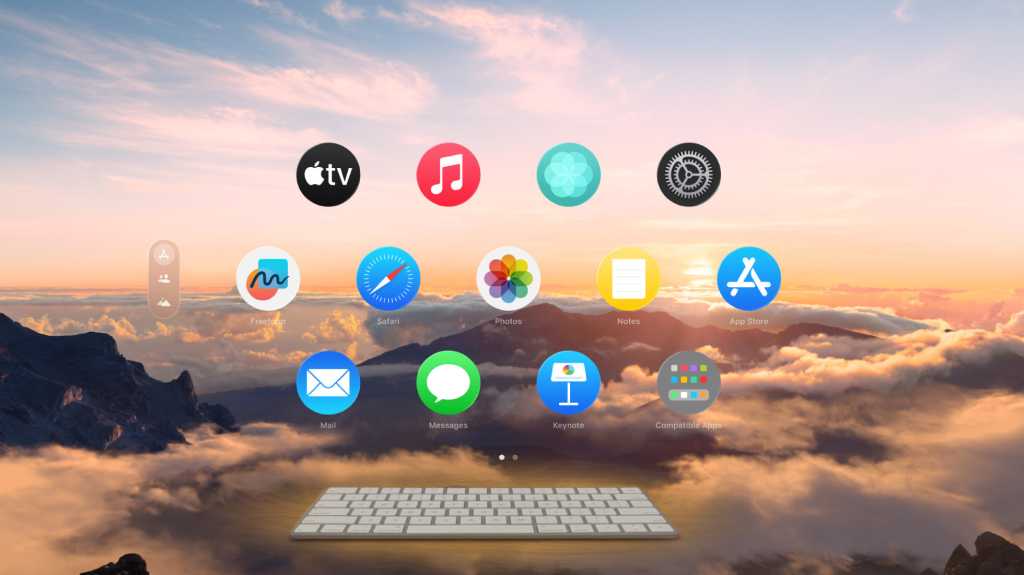
Has Apple’s love affair with AR cooled? Not on your life, and while it is true that visionOS didn’t get much time during the company’s big reveals at WWDC and last week’s iPhone launch, the company has delivered a handful of valuable improvements to the OS — hinting at future product plans as it did.
Perhaps you missed the hint, but what was interesting about the update wasn’t what’s new as much as what isn’t new, particularly the lack of support for Apple Intelligence. You could argue that this is only because the AI isn’t quite ready yet, but I can’t help but see its absence as a hint of what’s to come.
It’s always useful to cast about for a morsel of what Apple has actually said to support the theory. So, what has the company said? It’s already told us it’s working on a version of Siri with more contextual intelligence it hopes to ship in 2025.
That AI will be able to make contextual generative AI (genAI)-driven decisions in reaction to what it sees you interacting with on your iPhone, iPad, or Mac. Imagine what it will do if used with Vision Pro as it also looks around where you really are. If I’m right about this direction, it’s possible we’ll see visionOS equipped with a profoundly powerful contextual intelligence perhaps toward the end of next year.
The Gift of Sound & Vision
Did I call this profound? Think about it: contextual intelligence is essential for an effective/responsive voice-driven interface at the intersection of technology and the everyday world. What you are looking at will change depending on your context, and the data your device surfaces will reflect the complexity of such complex lives. I see this as being Door Detection on steroids.I also think the gap between the idea and the reality will delay complete realization for a while — but it’s a beginning.
I also think that late 2025 time frame hints at Apple’s target release schedule for the slightly more mass market Vision 2.0 devices speculators expect. However, speculation doesn’t mean much these days until Bloomberg’s Mark Gurman’s “little birds” (Game of Thrones reference) begin to whisper. And I don’t think they’ve discussed how AI, voice, and contextual genAI will underpin dramatic new user interfaces across a multitude of consumer devices (plausibly including something designed by Jony Ive).
Let’s move away from speculation based on what didn’t happen to run through what’s actually changed.
Here’s a run-down on how Apple has expanded Spatial Reality:
The handy gesture
For me, the biggest improvement is around gesture. Apple has made it handy to access Home View and Control Center on Vision devices. To get to Home, you just need to use your hand — stare at your palm, then tap the dot that appears. If you turn your hand around you’ll be presented with time and battery information and can tap in that view to invoke Control Center or adjust volume controls. You can also now change the icon arrangement in Home, and avatar hand movements have been made smoother with new animations
Memories get Spatial
Apple made several tweaks to photos and videos:
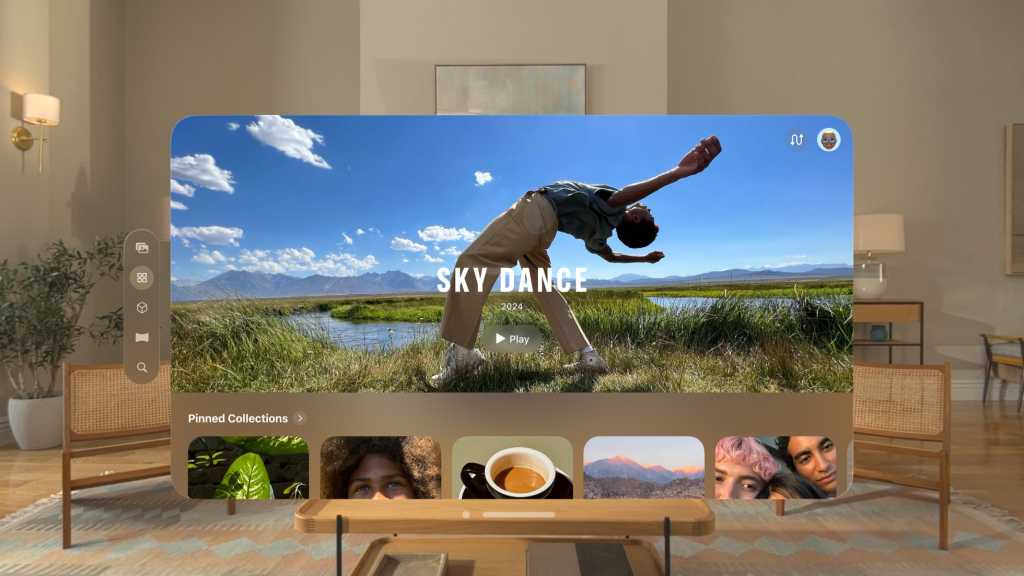
- You can turn existing photos into spatial images, adding depth to create a stereoscopic effect.
- The Photos app on Vision devices has been improved.
- You can share photos, videos, and panoramas during FaceTime calls using SharePlay.
- You get video trimming controls to use from within the headset.
(I’m quite interested to see the extent to which a future version of Apple Intelligence will be able to generate 3D environments from 2D photos you can then explore using Vision Pro. I believe that is inevitable.)
When you need a keyboard
You can use a Mac keyboard with Vision devices. In visionOS 2, the device will recognize your keyboard and display it on screen. This makes it much easier to use the input device. Apple has also introduced support for Bluetooth mice, which means you can navigate your device using a mouse and keyboard. A Messaging improvement means you can now dictate a message by staring at your microphone icon.
The infinite workspace
For work, perhaps one of the better enhancements (coming later this year) is the introduction of a new panoramic screen, equivalent to two 4K displays standing alongside each other. This really is giant real estate and should make complex workflows more possible.
On the web
The Safari browser lets Vision Pro users watch videos on a large display in any environment. Siri will read page content and Tab Group support makes it easier to handle multiple tabs. When you get time off, you get emoji reaction and singalong tools in Apple Music and the capacity to watch up to 5 MLS and MLB games in Multiview mode. (The latter feature is also expected later in the year.) You can also watch video in one window while working in other applications.
Virtuality and immersive environments
Apple expanded the number of immersive environments available in visionOS. It also improved the avatar system, so it captures more accurate skin tones and clothing colors.
And the rest…
- Guest mode gives guests 30-day access to your device as it saves their eye and hand data.
- Live Captions provide real‑time transcriptions of speech, audio, and video content, including FaceTime calls.
- There’s a new travel mode for trains.
Please follow me on LinkedIn, Mastodon, or join me in the AppleHolic’s bar & grill group on MeWe.
Source:: Computer World
7 Best Unblocked Games To Play At School Or Work For Free
22 Best Nova Launcher Themes And Icon Packs To Use In 2024
Apian and Alphabet’s Wing to fly NHS blood samples by drone in London first


