


Italy sets up €1B AI fund, mulls new penalties for the tech’s misuse

Autonomous vertical farming startup to grow crops in space in 2026
About the Best Places to Work in IT

Great news: Nominations are now open for Computerworld’s 2025 Best Places to Work in IT list. Nominate your organization today!
About the Best Places to Work in IT program
Computerworld conducts an annual survey to identify the best places to work for IT professionals. We invite readers, PR professionals and other interested parties to nominate companies they consider great employers for IT workers. You may nominate your own company. We then ask those nominated companies that meet our basic criteria to participate in our survey.
Once again, we are excited to extend this program, which has a 31-year history in the United States, to companies worldwide.
The employers in the Best Places list are evaluated by company size: Large companies have 5,000 or more employees; midsize have between 1,001 and 4,999 employees; and small companies employ from 100 to 1,000.
For a list of the 2024 honorees and more, please see our Best Places to Work in IT 2024 special report.
To be eligible, companies must have a minimum of 5 IT employees and a minimum of 100 total employees. We consider IT employees to be those IT workers who provide technology support and services to their own company — or to multiple companies through their work at an IT service provider. Workers who would *not* be included are administrative support staff for the IT department, staff who work in communications or PR for the technology department, IT contractors, or those staff whose primary role is in product development for outside sales.
Best Places to Work in IT is a global program. We ask that companies submit no more than one survey within any one country. If your company operates in multiple countries and you would like to submit a survey for your location only, please note this in the company name field (e.g., “Foundry North America” or “Foundry Germany”). If no location is specified in the company name, we will assume that the entry represents all locations worldwide.
In most cases, we prefer to have the parent company, rather than subsidiaries or affiliates, apply for the Best Places to Work in IT list. However, a subsidiary or affiliate may be eligible, providing that it stands out as a separate entity from the parent company, with separate business functions, IT leadership and so on. A subsidiary may also be eligible to apply separately if its parent company is a holding company. In those cases, the parent company and subsidiary may be able to apply separately. We encourage companies to complete the nomination form or contact us at [email protected], and our Best Places research team will evaluate the submissions on a case-by-case basis.
Questions about the Best Places to Work in IT program can be emailed to [email protected].
Frequently asked questions
Survey requirements and eligibility
Does my company have to be nominated to complete the survey?
No. Companies may participate even if they were not nominated. In lieu of a nomination, please send an email to [email protected] with the name and contact information (including email address) of the individual who should receive the company survey and other information; we’ll take care of the rest.
Does the Best Places to Work in IT list include public companies only?
No. The survey includes private as well as public companies.
What criteria must my company meet to participate?
To be considered for our Best Places to Work in IT list:
- Companies must have a minimum of 5 IT employees.
- Companies must have a minimum of 100 total employees worldwide.
- In most cases, we prefer to have the parent company, rather than subsidiaries or affiliates, apply for the Best Places to Work in IT list. However, a subsidiary or affiliate may be eligible, providing that it stands out as a separate entity from the parent company, with separate business functions, IT leadership and so on. A subsidiary may also be eligible to apply separately if its parent company is a holding company. In those cases, the parent company and subsidiary may be able to apply separately. We encourage companies to complete the nomination form or contact us at [email protected], and our Best Places research team will evaluate the submissions on a case-by-case basis.
Who should complete the survey?
An individual familiar with employment statistics, benefits, policies and programs of your IT department and your company should complete the survey. This could be a human resources representative, a CIO or corporate PR representative — or a team of all the above.
Survey contents and procedures
What does the company survey ask?
Our online survey includes questions about companies’ benefits, training and development, IT salary changes, percent of IT employees promoted, IT turnover rates, and the percentage of women employees in management in IT departments. In addition, we will collect information about diversity, equity and inclusion (DEI) programs, remote/hybrid working, and company growth.
Which employees are considered “IT workers” in this survey?
Answers to the survey should be based on those IT workers who provide technology support and services to their own company — or to multiple companies through their work at an IT service provider. Workers who wouldn’t be included are administrative support staff for the IT department, staff who work in communications or PR for the technology department, IT contractors, or those staff whose primary role is in product development for outside sales.
What happens if I leave a question blank on the survey?
You can’t leave a question blank if it is required. Many of the questions on the survey are required; the survey can’t be processed if they aren’t answered. Please answer to the best of your ability for questions with lists or options included. If any open-ended/text based questions aren’t applicable to your company, please indicate “NA” for “not applicable.” If there is a question you can’t answer fully given the format of the survey, you may briefly explain your answers in an addendum field that follows each survey section.
Companies that withhold information used to rank the finalists will have points deducted from their ranking. Answers that are left blank or have unexplained N/As will be assumed to be 0 (zero).
Companies must provide answers to questions related to data we run in our feature story and graphics in order to be considered. Please see below for the types of required information that are typically shared publicly.
Can I save my survey and come back to it at a later date?
Yes. You will be able to save your partially completed survey and can save a partially completed survey as many times as necessary. Please save your unique URL to re-enter the survey. When you return to the survey, you will be able to review/modify questions that you have already answered. However, we will continue to provide a printer-friendly version of the survey, and we recommend that you complete this survey, then enter your answers online.
How should I send my company’s information to Computerworld?
We accept company information from the online survey only. Please enter all data as accurately as possible. Provide company name, location, web address and other information, as you would like it to appear in print.
Can I get a copy of the survey to review before I go to the online survey and submit my company’s information?
Yes. A printer-friendly version of the 2025 Best Places company survey can be downloaded for reference. We encourage participants to complete the printer-friendly version offline before filling out the online survey.
| Download: 2025 Best Places to Work in IT Company Survey Printer-friendly copy of the 2025 Best Places to Work in IT company survey. |
Will Computerworld provide us with a copy of our submitted survey?
Upon request, Computerworld will email you a PDF of your company’s survey responses.
Is there an employee portion to the survey?
There is no longer an employee survey portion to the survey. Computerworld decided to make this change in the 2023 program to streamline the process for global participation and to enable companies with smaller IT departments to participate. In lieu of the employee survey portion of the program, Computerworld will be inviting a panel of judges consisting of industry experts to evaluate entries and confirm this year’s honorees.
List publication and notification
When will the list of honorees be published?
The Best Places to Work in IT honorees will be announced in December 2024 on Computerworld.com.
When can I find out if my company is on the list?
Computerworld will notify companies that will be honored as a 2025 Best Place to Work in IT several weeks in advance of publication. Computerworld’s marketing group contacts honorees to offer assistance with press releases.
Is there a timeline to which I can refer for survey action items?
Below is the 2025 Best Places to Work in IT timeline.
What information will be shared publicly?
Computerworld tries to avoid printing information that a company may consider competitive. The following information may appear publicly:
- Company name
- Location
- Industry
- Website
- Total number of employees
- Total number of IT employees
- Percentage of IT employee turnover
- Percentage of IT employee promotions
- Number of training days offered per IT employee
- Information from a 300-word essay outlining what’s special about your company and IT department
Please note that revenue, overall IT budget and other sensitive information will not be reported. Such information will be used only in aggregate format or for ranking purposes.
What if I have a question that was not answered in this FAQ?
Please email your questions to the following address: [email protected].
In the subject line, please include your company name and be as descriptive as possible in the subject line as to the nature of your inquiry.
Careers, IT Leadership
Source:: Computer World
US-China chip war further entangles Dutch semiconductor giant ASML
Spotify’s new AI tool creates playlists for any setting or feeling you ask for
Realme Narzo 70 Pro 5G Review: Best Camera Phone Under Rs. 20,000?
How DHL harnessed genAI to unify 200 career sites into a single platform

Like many global organizations, German logistics company DHL had career sites for almost every country in which the company operates — nearly 200 of them. Most of the sites, however, lacked brand consistency and none of them were leveraged to attract new hires. They were merely a place to fill out a job application.
DHL’s country-centric career sites also had limited integrations across a multitude of applicant tracking systems — this at a time when skills-based hiring had been growing to meet digitization and other business transformation efforts.
That prompted DHL to turn to generative artificial intelligence (genAI) to fix its talent recruitment problem by consolidating its 200 disparate sites into one site that parsed job seekers into ranked lists to match the company’s needed skillsets, and to which recruiters could quickly respond.
To create its unified site, DHL put together its own internal AI team and partnered with Phenom, a Philadelphia-based HR tech startup that sells a SaaS-based platform offering genAI and automation tools.
Though the company now has just one career site, each of its national locations can maintain their own identities with real-time customization capabilities. For example, in Prague, DHL created a site specifically to attract frontline workers for the peak holiday shopping season. (The low unemployment rate in the Czech Republic had made finding talent a challenge.)
Since the revamped site went live, the number of job seekers per job increased by 25%, 800,000 job searches found a relevant job within 5 milliseconds using AI-enabled features, and more than 200,000 job seekers became applicants in less than 14 minutes of the site’s launch.
Meredith Wellard, vice president of Group Talent Acquisition, Learning and Growth at DHL
DHL
Meredith Wellard, vice president of Group Talent Acquisition, Learning and Growth at DHL, oversaw the AI project from the HR side. DHL’s Express division had recently launched the Phenom Intelligent Talent Experience platform and saw early wins, piquing Wellard’s interest. So, she decided to expand it to the entire company. The results were almost immediate. Wellard said the new AI-based career site produced a spike in candidate traffic, greater overall engagement, and faster hires. The shift to a more engaging career site was particularly good at attracting frontline workers, especially truck drivers, delivery people, and warehouse workers.
Wellard spoke with Computerworld about the genAI HR project, and offered insights into how the project rolled out and what other companies should look out for when executing their own genAI-based tech plans. The following are excerpts from that interview:
Tell me about your job at DHL. “I’ve been with DHL for 18 years. Over the last five years, I’ve been working in our corporate center, looking after the group topics when it comes to everything from employer, brand, the way we position ourselves in the markets, attracting and recruiting team members, building their skills, building them into internal talents and then, in principle, also offboarding them in a respectful way. Although we don’t do a whole lot of that.”
When did you start the project and what hurdles were you facing? “We started the project around 2019. That’s when all of this tech was quite new. We were only just starting to hear about this cool thing called Machine Learning or AI. They were trying to get their heads around what it meant and whether it would really be useful. So probably for the first 12 months, it was about us learning.
“I think that’s an important part for any team venturing out on new technology — learn before you get distracted by the shiny things, you know, that great sales pitch that many companies can do. So, we did a lot of learning, and we were cleaning up our applicant tracking system landscape at that same time — that’s the sort of back end of the recruiting process. Then at one of our divisions — our Express Division — they had actually done quite a lot of work and found Phenom and they had decided to try using Phenom and see if it worked for them. That was quite successful. So, off the back of their success, we thought, ‘You know what? I think this could work for the whole globe.’
“AI is not going to get rid of our jobs. Our jobs are not going to be taken by AI. Our jobs are going to be taken by people who know how to use AI.”
Meredith Wellard
“We set up what we called our Skydiver project. The reason we called it Skydiver was because it was fast, and it was like a jump out of a plane — kind of risky. It worked. We partnered with Phenom and over a six-month period we got the career site up and running. After six months, I think we had like maybe five languages on the site and 70 career sites [consolidated on it]. After about 18 months, we were down to about 11 career sites [that weren’t on it] and up to 21 languages. As of today, which is three years on, we’re on about 40 languages and we’ve got one career site.”
DHL had 200 career sites. First of all, can you explain that? Why did you have 200 career sites? “So, as you know, we have [about] 600,000 employees, and we’re in basically every country in the world — so, 220 countries. We do operate in a decentralized model, so the power is in the hands of the countries. They need to be really relevant to the local markets. We’re in a service industry, so it’s super important that you know the local environment is reflecting who they are very well when it comes to our recruiting activities.
“We also have a ‘global as necessary, as local as possible’ mindset, and we probably we missed a bit of the global part when we allowed whichever country that wanted to to set up a career site. And a lot of them did. By the time we started to think about partnering with some [of] these great career site tech companies or talent experience platform companies, we realized that we had quite some work to harmonize the landscape and bring together all of those career sites. Some of those sites had a lot of love and care put into creating them on a local level, but they had no [click-throughs] because they were turning up on page 17 of a Google search.
“And so it was quite important for us at the beginning to take those 200 or so career sites and figure out how to bring those together so that the local environments don’t lose what they need in terms of the localization. And it’s way more than language. It’s also things like the way the visuals appear, the way the jobs are presented, how users can click on them.
“We did a lot of research in the early days, looking at what would someone in Denmark expect from a career site versus someone in Japan, and from a user experience point of view those two are so different…culture-wise — even the visuals like the real estate usage expectations in a country like Japan versus Denmark, where it’s rather more sparse, and you know, spacious. It’s a cultural preference.
“So, we had to take care of all of those things and at the same time really take care to communicate and educate our business around how it wouldn’t be a natural thing for an HR professional — who knows everything about HR, legal aspects, recruiting, what a good interview looks like — it wouldn’t naturally be that they should know what it means to create a good SEO. Or how they could become more transparent on Google search. Or what would it take to have the right words, or the right visuals, or the right number of interactions in order to bring yourself up higher on a search result. This is not something that HR people know necessarily. Some do for sure, but not all of them do.”
What other issues were you facing? “I think the biggest one was definitely, because of those disconnected sites, it was definitely our visibility. The second one is around our brand. We have an amazing consumer brand. Everyone knows DHL — the red and the yellow. It’s bright. It’s engaging. It means a lot to every employee, and…our customers and the partners that we work with.
“Unfortunately, whilst the consumer brand is still is incredibly powerful, our employer brand was somewhat ad hoc. You know, people were creating things that they thought look nice that they thought represented. But there was no standardization and if you looked at one brand in in Germany, it might not look the same as one in South America. It just didn’t work. So that was the second big thing. We needed to align our brand to be more visible. As an employer, we want to be this great place to work for everyone. We’re this great company to work for, but how can you ensure everyone knows that if you can’t even tell a coherent story out into the market?
“A third thing is we wanted to take care that we minimized the likelihood of things like the fraudulent use of our brands. You hear these things in the market where companies had fraudsters say, ‘Pay me $50 and I’ll get you a job interview here or there.’ We just wanted to make sure that we weren’t exposed to that, because when you’ve got so many different sites, it does increase the risk of that type of activity. So, with that sort of compliance topic, as a company that really values good business practices like compliance, it is important to us. So that was the other thing that we had to address.
“The fourth thing we had to address was just bringing the recruiting audience together. When we have all of us looking together at our talents and saying, ‘OK, well you know if I’m recruiting out of our supply chain division and I’ve picked my gold medalist, but geez, there was three really strong silver medalists.’ We were just letting them go back into the market. We needed to be directing them go into other potential jobs in our company, not back into the market — especially nowadays.”
What are some of the talent challenges you’re facing, particularly with some of the digital technologies that you’re rolling out. “I don’t think we’re unique in this. There is obviously a huge demand for tech talent across the globe at the moment. And, the demand changes, I feel like it’s changing every six months. We started with everyone wanting blockchain specialists. Then there’s this whole push on project managers and some cloud architects. And they have moved on to the cybersecurity space. Now, most recently, we’ve got the whole generative AI and AI technicians and data analysts and so forth. It’s a constant churn of changing demand, and it’s sort of pulsing.
“I think the initial mode, because it’s what our go-to always has been, is we go to market and say we need this type of person. Of course, because we’re DHL and we’re a logistics company, you [as a job applicant] may wonder why would we need technical people. We realized that our reputation as an employer of technical people — IT-type people — wasn’t that it was a bad reputation. There was literally no reputation. Technical people were not thinking, ‘I can’t wait to get my degree and work for DHL.’
“So we had to really get the story out there why we are a good match for someone who wants to work in that space. We really have that type of technology that is cutting edge in terms of what you do as a technical contributor, it manifests in our business immediately. Whether it’s a proof of concept or a pilot, whether you’re working on Google glasses or Internet of Things, you can actually see how your work impacts customers and the business — and quite quickly. And, I think there are a lot of technical people who want to see the impact of their coding or their design or their project management or whatever on the customer or the business.”
You partnered with Phenom to help you roll out the genAI for your career site, but did you also build an internal team to roll out this technology? What kind of people were on that? “We have a really good internal team. Phenom became our partner, and we learned a lot from them. They had a lot of expertise about this very new technology. Internally, though, we have a really great coherent team working in a sort of agile working mode. That was also new to us, a working mode being in a scrum-based environment. That team’s made up of a set of HR professionals who know recruiting and who know what it means to bring and attract people onto our business but who also had the ability to translate those HR needs into technical language, if you like. They could talk then to another group of people who we worked with internally, IT professionals who were willing to talk to HR and ask them, ‘What does it mean to transform HR into this technical world?’
HR was one of the late adopters of technology. And I think that we found a really great group of IT professionals who were fascinated at how technology manifests to enable our people in a way very different from, say, the operations of finance.”
Did you also include folks from legal, finance, and compliance and others? “We call them our product owners. They’re the ones from the HR and from the business side. They describe what’s needed. They work with our actual operators out in the field, the recruiters and so forth. And they understand what’s required. They talk to IT in the language of IT, and IT says, ‘Here’s what we can provide as a solution.’ Then we say that’s an interesting solution — now let’s talk to compliance about how this will work from a compliance perspective? You know, we can’t be a company that says you can trust us completely unless that trust extends to candidates, applicants and so forth.
“We also talked to the compliance people. Then we have our procurement partners. They’re talking about how our relationships are set up and how we can get the most out of these really powerful contracts that we have in place across the globe. And then of course there’s finance, which is looking after all those financial things. And then the managers. And the employees — everyone providing some insights from a personal perspective on how it should work for them. What would they want from your product like this? It’s really the whole company coming together.”
So how far down did you go on the management rung to get input? “All the way to our frontline supervisors in terms of testing it, trying it out, and giving us some feedback on how it looks and feels. We involved everyone…who is actually someone who needs to click the buttons to say, ‘Yes, I approve of this.’
“At the same time…, we spent a lot of time on our employer brand. Looking at what our brand looks like if we want consistency. It’s not just having the technology to do it, but you’ve got to have the right attributes. It’s a reflection of who we are internally. So, we talked, interviewed, surveyed, and ran workshops with literally 3,000 or 4,000 employees — maybe even more — to understand what their experience was working for us. What do they love about us? What should we talk about and not talk about? And through that we created this story around where we are as a company, and about how we’re a great team. And, once you’re in here, you bleed red and yellow. That’s the truth.”
Can you explain how your new, consolidated jobs site works to direct job seekers to the right open positions? “The nice thing about some of these new technologies is that AI is part of the experience, but it doesn’t feel somehow tricky. [Employees] will say I use ChatGPT to do this or that, and I’m like, it’s OK that you used it for that, just as long as you didn’t present it as your own work. On the career side, AI makes the whole thing super easy. It’s much simpler as part of the search experience. If I want to search for a job in Vietnam, I start to write ‘Vietnam,’ and the AI immediately recognizes where you’re located. It then triggers a set of jobs that start to come to you in the language that you’re writing in. This is very simple algorithm in the end, but it feels very personalized, very relevant.
“The second thing that happens is that you get the job recommendations. We have a Phenom-branded chatbot called Larry that allows customers to personalize it. He pops up and says, ‘Do you want more information?’ You start to enter in things and Larry will say things like, ‘Would you like to apply for a job or are you just browsing?’ He’ll tackle some of the first compliance questions like ‘Would you give permission for us to record some of your data?’ And as it does this, it starts to understand what sort of jobs the applicant or interested person might be a match for through one answer-type questions.
“Then once you get into the platform and start looking at the jobs, of course, it gets a little more intense — not so much for the candidate themselves, but more so for the recruiter who will immediately start to see people recommended for specific roles if they’ve given their consent for that. The [job seeker] didn’t apply for that, but let’s see if he’s interested, because this could be suitable for him.
“This type of matching AI is very useful for helping us bring to the surface the right people for the right jobs. In the past, it would have required recruiters to go through lists and lists and lists of [resumes] to try and find the right people for the right jobs. So, for me, that’s a super powerful use of the machine learning technology that we just didn’t have access to before.
“And then there’s about a million other things that it does. For example, once you find someone, you can send them an e-mail and the recruiter can click on a little AI helper in that email and choose to send an e-mail to the [job seeker] asking if they’re interested in talking about another opportunity we might have. So, it really makes the job easier.”
So give me an example like before and after, since rolling out the new AI-powered site. So back when you had 200 sites as opposed to now. “Let’s say I’m in South Africa on DHL’s career site. I’m hoping like crazy that someone’s going to find the career site and click on it. Maybe they go there and maybe they see some nice pictures and a statement from some of our employees on how they like the company. Then they might click on a job, and then that might get to a recruiter that information along with all the other people that have clicked on that job. But mostly what happened is that people would put [resumes] in there and probably not hear back, if I’m being honest.
“Now what happens on our career site is South Africa is in bold, and so they still have a very localized site, but it’s fully integrated with the global site. It’s the same global URL; it’s just that the page would have some local references, probably some local visuals, maybe some of the local employees talking about their experience working at some in South Africa with our company. The real difference is that as a candidate, now I go in and I get guided to the right sort of jobs based on my [resume]. The system parses the [resume], finds my skills and tells me there’s some jobs that might suit me. And then the recruiter who’s looking for someone with those skills doesn’t have to search through hundreds and hundreds of [resumes]. They get presented the ones that have the matching skills to the top of the list.
“So recruiters still have the list of 100 [applicants] if they want to look at them, but the ones that are matching what they’re looking for are at the top of the list. And that list [of applicants] could come not just from my unit…, but also includes DHL’s Express supply chain and our Freight Forwarding units in different parts of the country. They get to see it all now, not just that singular entry point.”
What’s the most unexpected benefit from the genAI-assisted, unified career site? “The unexpected things? This last couple of weeks, we’ve discovered that we are the most visible career platform in Germany. That means if you go searching for a job in Germany, you will find DHL before any other site, and we’re very close to being the number one job site in a lot of other countries as well. That is because it takes a good [career] site platform and it takes a good understanding of how you use that platform. We’ve reached the point where those two things have become really congruent. So we have some great people doing wonderful things with the content, continually updating our tags and the language alignment.
“But we also, of course, have a platform that allows us to do that fast and efficiently and we’ve set up a really nice process where we have people who are responsible for administering the content. In Costa Rica, in Malaysia, and in the Netherlands, it’s 24 hours a day those updates are made. So, for example, if the administrator in a particular company comes to us today and says something like, ‘We’ve just heard that XYZ company is closing down and we immediately want to get something onto the career site so that we can bring their employees to our site,’ we have someone somewhere in the world that can get that content on to the system. We didn’t realize that this would even be possible when we brought the product on.
“The expected things? Our reputation is improving, particularly with technical talent and young talent. Our ability to customize and really target content to appeal to certain [talent] audiences…has been quite rewarding.”
In what other ways has DHL used generative AI technology other than the career site? “We have what we call our Career Marketplace, which is an internal marketplace recommending people not only for jobs, but also learning networks and mentoring and these types of experiences. We’re in the middle of rolling that out at the moment. That will also include some very nice AI capabilities.
“We use a generative AI chatbot specifically for creating some of our internal marketing content, so, short videos and…training videos and things like that. The chatbot is called GAIA, which stands for Generative AI & Intelligent Automation.
“Internally, it has been super for those things also, because it doesn’t have to be done by a specialist, it can be done by people who have the right tools now. The company has been very wise and very fast, but at the same time cautious in setting up an internal generative AI tool that our employees can use, and that’s safe, and that’s compliant, and that’s able to be accessed by…everyone. Anyone who is the least bit interested in accessing it can. That has had two benefits: one, it gives people an awareness of what generative AI is and that it’s an actually something valuable if you use it well. And two, it also helps those who may have some fear or concerns understand that it’s not a monster. It is just a tool.
In what ways did DHL train its full-time employees in the use of AI? “We have a group within our company that took a more proactive role in informing and educating [employees], running workshops and webinars and inviting people to information sessions that were a bit more formal than our previous sort of soft rollout. And, there also people who are responsible for using AI or creating algorithms or machine learning or data analysts, who have had very formal education, and they’re using some of our learning partners to provide them with proper education on AI.”
Who are your learning partners? Are they universities in the various countries you’re located or online course providers? “We use Coursera a lot, for example. Also, Skillsoft Percipio. We also do have partnerships with universities…and other places that provide us with super advanced levels of education.”
Can you offer any tips for other organizations who are considering rolling out AI? What should they avoid? “I think they should avoid hysteria. I think what our company has done super well is I have never felt scared of AI. It was explained to us that this technology was just something that’s coming. It’s going to help us. It’s not going to cause problems if you get on board. There’s a quote that we’ve kind of thrown around in our business a bit. I can’t remember who it comes from, but it says something like, ‘AI is not going to get rid of our jobs. Our jobs are not going to be taken by AI. Our jobs are going to be taken by people who know how to use AI.’
“It’s not about replacing your job or being something you should be afraid of. It’s about getting your arms around it and learning how it’s going to help you be better at what you do.”
Careers, Emerging Technology, IT Jobs
Source:: Computer World
AI in Robotics Statistics 2024 By Industry, Robot Type And Market Size
By Barry Elad

Introduction
AI in Robotics Statistics: We have already known about robotics technology in the last few decades, but recently introduced artificial intelligence is making it more advanced. Using AI-powered robots in manufacturing industries is going to increase overall productivity and efficiency. AI or Artificial Intelligence associated with industry automation is definitely going to change the world.
Moreover, as stated, these AI in Robotics Statistics AI-based Robots will reduce the worldwide economic cost by more than 50%. This will aid in stabilising the economies. However, there are some drawbacks to technology that are yet to be addressed. Considering some positive aspects, let’s look at the AI Robotic Industry by numbers.
Editor’s Choice
- According to a McKinsey report, industrial companies plan to invest 25% of their capital in automation within the next five years.
- By Robot type, compared to service robots, industrial robots are expected to generate the highest revenue, resulting in $6,658.2 million and $10,430.3 million, respectively.
- AI in Robotics Statistics shows that, by 2030, AI and robotics are estimated to contribute $15.7 trillion toward the worldwide economy.
- As of 2023, the machine learning segment was the largest contributor to market share, with 34.98% in the technology segment.
- It is estimated that revenue generated by AI robotics in environmental monitoring will amount to $79.9 million by 2025.
- The global AI industrial robotics market is projected to be valued at $10.72 billion by 2024.
- AI in Robotics Statistics shows that in 2023, the industrial robots market share around the world was the largest, contributing 60.51%. The service robots segment showed a 39.49% market share.
- AI and robotics-related activities are anticipated to make up 26% of the global GDP source in 2030.
- In the global comparison, the United States of America is expected to generate the highest revenue, contributing $3,282 million in 2024 in the AI Industrial Robotics Market.
- Between 2023 and 2034, the Asia Pacific region is forecast to grow at a CAGR of 21.9% in the AI Robotics segment.
General AI In Robotics Statistics
- According to AI in Robotics Statistics, AI-based robotics technology will create more than 12.5 million jobs worldwide.
- It is estimated that by 2025, AI-based retail robots will save 1.2 billion labour hours annually.
- AI in Robotics Statistics shows that, by 2030, AI and robotics are estimated to contribute $15.7 trillion toward the worldwide economy.
- By 2030, AI-powered autonomous vehicles are expected to reduce the cost of transportation by 25%.
- AI and robotics-related activities are anticipated to make up 26% of the global GDP source in 2030.
- In 2023, North America captured the highest revenue share, contributing 33.12%.
- The industrial AI robots segment generated 60% plus revenue in the previous year.
- As of 2023, the machine learning segment was the largest contributor to market share, with 34.98% in the technology segment.
- Between 2023 and 2034, the Asia Pacific region is forecast to grow at a CAGR of 21.9% in the AI Robotics segment.
- In 2023, the cloud segment by deployment mode captured the highest market share with 53.86%.
- In addition, the on-premises segment by deployment mode is estimated to grow at a CAGR of 21.4% between 2023 and 2032.
- AI in Robotics Statistics shows that the service robots segment by type is the fastest-growing market, with a 21.6% growth rate in the forecast period.
- By Robot type, compared to service robots, industrial robots are expected to generate the highest revenue, resulting in $6,658.2 million and $10,430.3 million, respectively.
- Furthermore, in 2024, the market revenue by offering products segment in the Artificial Intelligence Robots market is as follows: software ($6,430.6 million), Services ($6,638.1 million), and Hardware ($6,638.1 million).
- According to a McKinsey report, industrial companies plan to invest 25% of their capital in automation within the next five years.
By Industry
- The global defence industry based on AI and robotics is estimated to be valued at $61 billion by 2027.
- In addition, by next year, it is estimated that AI robotics in agriculture will reach $703.4 million.
- In 2024, the healthcare industry is forecasted to be the second largest industry in the Artificial intelligence Robotics market, with a 19% share.
- AI in Robotics Statistics for Logistics estimates that, by 2025, the market will reach $40.9 billion.
- It is estimated that revenue generated by AI robotics in environmental monitoring will amount to $79.9 million by 2025.
By Robot Type
(Reference: precedenceresearch.com)
AI in Robotics Statistics shows that in 2023, the industrial robots market share around the world was the largest, contributing 60.51%. The service robots segment showed a 39.49% market share.
By Technology
| Technology | 2023 (In Millions) | 2024 (In Millions) |
| Natural Language Processing | 3,180.5 | 3,783.4 |
| Computer Vision | 2,519.9 | 3,014.8 |
| Machine Learning | 4,866.7 | 5,825.3 |
| Context Awareness | 3,732.9 | 4,464.9 |
(Source: precedenceresearch.com)
According to a report by Precedence Research 2023, in 2024, content awareness by technology type in the AI Robotics segment is estimated to generate more revenue as compared to other AI-based technologies, such as computer vision, machine learning, and natural language processing.
Worldwide AI Robots Market Growth
 (Reference: statista.com)
AI in Robotics Statistics forecast worldwide, the highest growth was experienced in 2023, with 60.23%. In addition, in the current year, it is expected to grow up to 26.4%. However, in the coming years, the growth will be declining and is expected to reach merely 4.53% by 2030.
AI Industrial Robotics By Region
Worldwide
- The global AI industrial robotics market is projected to be valued at $10.72 billion by 2024.
- In the global comparison, the United States of America is expected to generate the highest revenue, contributing $3,282 million in 2024.
- Furthermore, between 2024 and 2030, the worldwide AI Industrial Robotics market is expected to grow at a CAGR of 11.54%, reaching $20.64 billion by 2030.
Asia
- The Asian AI industrial robotics market is currently valued at $3.61 billion.
- Compared to 2023, in 2024, the market size change is expected to be 31.94%.
- The market volume is estimated to grow at a CAGR of 12.25% by 2030, reaching $6.32 billion.
Africa
- The African market is expected to show a market size change of 33.64% in 2024.
- It is estimated that between 2024 and 2030, it will grow at a CAGR of 12.45%, reaching $504.10 million by the projected year.
- Currently, it is valued at $249.30 million.
Australia And Oceania
- In 2024, the Australia and Oceania market is expected to reach $252.80 million.
- Compared to 2023, in the current year, the market size change is expected to be 33.97%.
- The AI industrial robotics market is expected to grow at a CAGR of 12.36% between 2024 and 2030, reaching $508.80 million by the forecasted period.
Americas
- Between 2024 and 2030, the American AI Industrial Robotics market is expected to grow at a CAGR of 10.90%, reaching $7.31 billion by the forecast year.
- Furthermore, it is expected to reach $3.93 billion in 2024.
- In 2024, the market size change is projected at 22.03%.
Europe
- The European AI industrial Robotics market is expected to reach $3.13 billion in the current year.
- Between 2024 and 2030, it is estimated that 11.46% will be the annual growth rate, reaching $6.00 billion by 2030.
- In the current year, the market size change is expected to be 25.47%
AI Robotics By Region
Worldwide
- Currently, the global AI Robotics market is estimated to be valued at $19.01 billion.
- Furthermore, it is estimated that between 2024 and 2030, it will grow at a CAGR of 11.63%, reaching $36.78 billion by the forecast year.
- In the global comparison, the USA is expected to become the largest market by size, resulting in $6,295 million in 2024.
- In 2024, the market size change is expected to be 26.40%.
Americas
- According to AI in Robotics Statistics, the American AI Robotics market is expected to reach $7.48 billion in the current year.
- It will grow at an annual rate of 10.97% between 2024 and 2030, reaching $13.97 billion by 2030.
- In 2024, the expected market size change is 22.18%.
Asia
- The Asian AI Robotics market is estimated to reach $5.36 billion in the current year.
- Between 2024 and 2030, the market volume is expected to grow at a CAGR of 12.40%, reaching $10.81 billion by the forecasted year.
- In 2024, market size change is expected to be 32.55%.
Africa
- The African AI Robotics market is expected to reach $921.60 million by 2030.
- Between 2024 and 2030, it will grow at a CAGR of 12.55%, reaching $921.
- Currently, the market is estimated to reach $453.50 million.
- In addition, the expected market size change is 33.53%.
Europe
- The European AI robotics market is expected to reach $5.24 billion in 2024.
- Between 2024 and 2030, the annual growth rate for market size is expected to be 11.56%, reaching $10.10. Billion by 2030.
- The market size change in 2024 is 25.39%.
Australia And Oceania
- AI in Robotics Statistics 2024 shows that the Australia and Oceania market is estimated to be valued at $482.70 million in the mentioned period.
- It will grow at a CAGR of 12.38% between 2024 and 2030, reaching $972.20 million by the forecast period.
- The market size change is expected to be 34.15% in 2024.
AI Service Robotics By Region
Worldwide
- The global AI Service Robotics is currently valued at $8.29 billion.
- The global comparison of AI in Robotics Statistics shows that, in 2024, the USA will be the largest market by size, resulting in $3,013 million.
- The market size is estimated to grow at an annual rate of 11.74% between 2024 and 2030, reaching 16.12% by the forecast period.
Asia
- The Asian AI Service robots are estimated to reach $2.20 billion in 2024.
- As of 2024, the market size change is expected to be 33.44%
- Between 2024 and 2030, it will grow at a CAGR of 12.63%, contributing $4.49 billion by 2030.
Africa
- Similarly, the African region is estimated to amount to $204.30 million in 2024.
- Furthermore, by 2030, it is expected to show an annual growth rate of 12.65%, reaching $417.50 million by 2030.
- The change in the market size in 2024 compared to 2023 is 33.39%.
Australia And Oceania
- In Australia and Oceania, the AI service robotics market is valued at $229.90 million in 2024.
- Furthermore, by 2030, the market will grow at a CAGR of 12.39%, reaching $463.40 million.
- The rate of change in market size in 2024 is 34.34%.
Americas
- According to AI in Robotics Statistics by Service, the market is currently valued at $3.55 billion.
- Furthermore, it is estimated that by 2030, it will grow at a CAGR of 11.06%, contributing $6.66 billion.
- 22.35% is the current market size change in the USA for AI Service Robotics.
Europe
- As of 2024, AI in Robotics Statistics shows that the European AI service robotics market is valued at $2.11 billion.
- Furthermore, it will grow at an annual growth rate of 11.75%, with an expected volume to reach $4.11 billion by 2030.
- In 2024, the change in market size is projected to be 25.27%.
Worldwide AI Robotic Market Size
 (Reference: statista.com)
The above chart shows the improving growth in the market size year on year. According to Statista, by 2030, the AI robotic market size is expected to reach $36.78 billion. Currently, in 2024, it is valued at $19.01 billion.
By Market Size Share By Industry
 (Reference: statista.com)
According to a report by Statista, the worldwide market size of AI Robotics was the largest for the manufacturing industry, contributing 65.02% in 2022. Other industries took respective places with the following market shares: transportation (16.01%) and security (7.76%), retail (4.85%), healthcare (4.20%), energy (1.02%), and others (0.93%).
By Region
 (Reference: precedenceresearch.com)
According to AI in Robotics Statistics 2023, North America had the highest market share, contributing 33.12%. Furthermore, Europe and Asia Pacific represented 28.84% and 25.29%, respectively. Latin America, the Middle East, and Africa share 7.99% and 4.76% each.
AI Robotics Market Size Change Between 2021 And 2030
| Year | AI Industrial Robotics (%) | AI Service Robotics (%) |
| 2021 | 31.49 | 35.39 |
| 2022 | 43.91 | 48.74 |
| 2023 | 61.72 | 58.36 |
| 2024 | 26.36 | 26.46 |
| 2025 | 21.33 | 21.36 |
| 2026 | 16.49 | 16.59 |
| 2027 | 12.33 | 12.54 |
| 2028 | 9.02 | 9.32 |
| 2029 | 6.53 | 6.86 |
| 2030 | 4.37 | 4.72 |
(Source: statista.com)
AI and Robotics: A Powerful Duo Shaping Our Future
Imagine a world where robots aren’t just clunky machines on factory floors but intelligent assistants working alongside us in homes, hospitals, and even on farms. Thanks to the marriage of artificial intelligence (AI) and robotics, this future is rapidly becoming a reality. Let’s delve into how AI is transforming robots and the exciting trends that will reshape our world in the coming years.
The Power of AI In Robotics
Traditionally, robots were programmed for specific tasks, making them inflexible and unable to adapt to changing environments. AI injects intelligence into robots by enabling them to:
- Perceive their surroundings: AI algorithms help robots “see” the world through sensors and cameras. They can identify objects, understand their surroundings, and navigate complex spaces.
- Learn and adapt: Machine learning allows robots to learn from experience. By analysing data, they can improve their performance over time and adjust their actions to new situations.
- Make decisions: AI empowers robots to make basic decisions without constant human intervention. This frees up human workers for more complex tasks and improves overall efficiency.
Current Impact of AI Robotics
The synergy between AI and robotics is already making waves across industries. Here are some real-world examples:
- Industrial Revolution 2.0: Manufacturing is a prime beneficiary. AI-powered robots can handle intricate tasks like delicate assembly or customised product creation, boosting productivity and reducing errors. A 2023 McKinsey report estimates that AI could generate $3 trillion to $5 trillion in value for the global manufacturing sector by 2030.
- Surgical precision: AI-assisted surgical robots are transforming healthcare. They provide surgeons with better mastery and control, leading to minimally invasive procedures and faster patient recovery times.
- Smarter Homes: AI-powered home robots are becoming increasingly common. They can perform tasks like cleaning floors, mowing lawns, and even monitoring elderly individuals for safety concerns. The global domestic robot market is expected to reach a staggering $32.2 billion by 2025 [Source: AI in Robotics: Exploring Emerging Trends and Future Prospects].
Future Trends: A Glimpse into the AI-powered Robotic Revolution
As AI and robotics continue to evolve, we can expect even more transformative advancements:
- Cobots: Rise of the Co-workers: Collaborative robots, or cobots, will become commonplace. These robots will work safely alongside humans, assisting with tasks and automating repetitive processes. This will create a more efficient and productive workforce.
- Enhanced Dexterity and Versatility: Robots with human-like agility and adaptability are on the horizon. This will open doors for robots to perform tasks currently limited to humans, like working in unstructured environments like disaster zones or search-and-rescue operations.
- Swarm Robotics: Imagine swarms of tiny robots working together to achieve a common goal. This concept, known as swarm robotics, has the potential to revolutionise fields like infrastructure inspection, agriculture, and environmental monitoring.
AI Robotics: Redefining Our World
The impact of AI robotics will be widespread, affecting every facet of our lives. Here’s a glimpse into what we can expect:
- Increased Productivity and Efficiency: AI robots will take over repetitive and dangerous tasks, freeing up human workers for more creative and strategic roles. This will likely lead to increased productivity and economic growth.
- Revolutionised Industries: From manufacturing and healthcare to logistics and agriculture, AI robots will transform industries by automating tasks, improving accuracy, and creating entirely new possibilities.
- Evolving Work Landscape: As AI robots handle more tasks, the nature of work will change. We may see a rise in new job roles focused on developing, maintaining, and collaborating with AI-powered robots.
Challenges And Considerations
While the future of AI robotics is bright, challenges need to be addressed:
- Job displacement: Concerns exist about AI robots replacing human workers. However, experts believe new jobs will be created in the AI and robotics sectors, requiring workforce retraining and reskilling.
- Ethical considerations: As robots become more autonomous, ethical considerations regarding decision-making and potential biases in AI algorithms need careful attention.
- Safety and Security: It is crucial to ensure the safety of humans working alongside robots and the security of AI systems from hacking attempts.
The Road Ahead
The future of AI robotics is brimming with possibilities. By embracing this evolving technology responsibly, we can unlock a future where humans and intelligent machines work together to create a better, more efficient world. As research and development continue at a rapid pace, AI robotics holds the potential to revolutionise every aspect of our lives, shaping a future that is safer, healthier, and more prosperous for all.
Conclusion
These AI in Robotics Statistics offered a glimpse into upcoming years when artificial intelligence will be present in every segment of our world. Integrating AI in every industry is difficult, considering the costs and skilled personnel needed accordingly. Yet, in the next few years, more than 50% of companies will invest in AI technology to improve their productivity, revenue, and sales. Aligning robots with Artificial intelligence will provide improved results. But surely, 2024 and beyond are technologically transforming years for everyone.
Source:: Coolest Gadgets
Bluetooth Speakers Statistics 2024 By Geography, Age Group, Import and Export
By Barry Elad

Introduction
Bluetooth Speakers Statistics: Whether you are a party host or a music lover, now say goodbye to the hassles of wires and say hello to the Bluetooth speaker, which improves your audio environment. There are several types of Bluetooth speakers available on the market, with different specifications and features. Most significantly, they allow you to keep balance within and outside of your home when playing. Let’s dive into the article to understand all the current trends of the market, as Bluetooth Speakers Statistics include several statistical analyses from different aspects of the market.
Editor’s Choice
- According to Bluetooth Speaker Statistics, the shipment of Bluetooth speakers increased more than expected in 2023, reaching 360 million.
- Manufacturers plan to implement Bluetooth technology in 98% of all speakers by 2023.
- As of 2023, the worldwide market for Bluetooth speakers was $14.6 billion and is expected to reach $57.3 billion by the end of 2032.
- The compound annual growth rate of the market will grow by 15.9% from 2024 to 2032.
- In the United States of America, nearly 105 million people (30% of the population) used smart speakers per month in 2023.
- Bluetooth Speaker Statistics further states that the Bluetooth speaker market in the U.S. was $3 billion in 2023.
- Meanwhile, the market has approached 34 million unit shipments in the nation.
- Recent speaker models generally use Bluetooth 4.0 and Bluetooth 5.0.
- Bluetooth Statistics further states that on 22nd April 2023, JBL launched two eco-friendly versions of portable Bluetooth speakers, Go 3 Eco ($50) and Clip 4 Eco ($80).
- The prominent manufacturers of Bluetooth speakers are JBL, Sonos, Bose, Logitech, ViewSonic, Philips, Terratec, Pioneer, etc.
Facts About Bluetooth Speaker
- The appropriate frequency required for Bluetooth speakers is usually between 100Hz and 20 KHz.
- Bluetooth speakers with heavy batteries can last for more than 10 hours.
- Bluetooth speakers allow users to play music and listen to podcasts and other content without wired connections.
- The incorporation of voice assistants like Alexa and Siri into Bluetooth speakers has enhanced the market’s popularity.
- Smart speakers such as Google Home and Echo can also be used as Bluetooth speakers once they are paired with an Android or iOS device.
- Normal speakers can also be turned into Bluetooth speakers simply by buying a Bluetooth adapter.
- Ten important things that must be considered before buying a Bluetooth speaker are sound quality, portability, battery life, connectivity options, water and dust resistance, Bluetooth range, durability and build quality, additional features, brand reputation, and budget.
- Some negative features of Bluetooth speakers are low battery, signal interference, connecting issues beyond the recommended range, incompatible audio devices, and malfunctioning music apps.
General Bluetooth Speaker Statistics
(Source: mordorintelligence.com)
- As of 2024, the market size of the Bluetooth speaker is anticipated to reach up to $15.24 billion.
- The market is expected to increase to around $38.28 billion by the end of 2029, at a CAGR of 20.22% from 2024 to 2029.
- Bluetooth Speaker Statistics also stated that, in May 2023, Sony Electronics Inc. launched two new wireless speakers, the SRS-XV800 and the SRS-XB100.
- A leading mobile accessories brand, Inbase Technologies, launched a compact Bluetooth speaker named ‘Boom Box’ in July 2023.
- In February 2023, a new wireless Bluetooth speaker was launched by Zebronics, named ‘Rocket 500’.
- According to Bluetooth Speaker Statistics, the global market revenue of waterproof Bluetooth speakers will be $3.2 billion by 2030.
- By the end of 2025, the Bluetooth device segment should reach around 6.4 billion shipments
Wireless Bluetooth Speaker Statistics

(Source: market.us)
- As of 2023, the market size of global wireless Bluetooth speakers generated $7,770.9 million.
- According to a report of Bluetooth Speakers Statistics, the forecasted market valuation in coming years is followed by 2024 ($8,641.3 million), 2025 ($9,609.1 million), 2026 ($10,665.3 million), 2027 ($11,882.1 million), 2028 ($13,212.9 million), 2029 ($14,692.7 million), 2030 ($16,383.3 million), 2031 ($18,168.2 million), and 2032 ($20,203 million).
- Moreover, the sales of wireless Bluetooth speakers are estimated to surge at 12.2% of CAGR from 2023 to 2032.
Portable Bluetooth Speaker Statistics
- As of 2024, the market valuation of portable Bluetooth speakers is estimated to be $7,521.6 million and will reach $20,521 million by the end of 2034, with an annual growth rate of 10.6% CAGR from 2024 to 2034.
- East Asia’s market for Bluetooth speakers reached a record 30.7% share in 2024, followed by the North American market, which had a 25.8% share.
- The U.S. market is predicted to dominate the North American portable Bluetooth speaker market by the end of 2030, with a market valuation of $4,853.6 million.
- Meanwhile, the annual growth rates of other countries are Canada (13% CAGR) and Mexico (12.1% CAGR) from 2023 to 2030.
- In 2024, based on sales channels, the organized retail stores segment of Bluetooth speakers turned out to have a 63.1% share.
- However, based on usage type, the market share of the Bluetooth car speaker segment resulted at 25.7%.
By Geography
- Bluetooth speaker statistics state that in 2024, the East Asia market for Bluetooth speakers approached its highest share of 30.7%, accounting for $2,309.1 million in revenue.
- The East Asian countries with the highest share of Bluetooth speakers are China (50%), Japan (29.8%), and Korea (19.9%).
- The North American Bluetooth speaker market will have a 25.8% share, worth $1,940.6 million.
- Furthermore, the United States (78.2%), Canada (15.3%), and Mexico (6.5%) have the highest shares in other countries.
By Age Group

(Reference: univdatos.com)
- According to Bluetooth speakers statistics, 24% of Bluetooth speaker users are between 45 and 54 years old.
- Meanwhile, 21% of the user share is aged from 35 to 44 years.
- Followed by another ownership share by Bluetooth speakers by age group are 18% (25 to 34 years), 15% (18 to 24 years), and 22% (above 55 years).
Bluetooth Audio Device Shipment Statistics

(Reference: statista.com)
- Wireless speakers and headsets are Bluetooth audio devices, and the above graph describes the Bluetooth device shipment analyses.
- The annual shipment of Bluetooth audio devices was around 1.46 billion units in 2023 and will reach 1.57 billion units by 2024.
- Moreover, shipments are estimated to increase in the coming years, such as in 2025 (1.67 billion units), 2026 (1.74 billion units), and 2027 (1.84 billion units).
By Import and Export
- In a report analyzed by Volza on December 2023, the worldwide shipment of Bluetooth speakers recorded around 206.2K, which were imported by 9,031 buyers and exported by 8,658 suppliers.
- Bluetooth speaker statistics state that Vietnam (84,472 shipments), India (40,602 shipments), and the United States (36,592 shipments) are the countries that import Bluetooth speakers.
- The top 3 import product categories of Bluetooth speakers are HSN Code 85332100, HSN Code 85182290, and HSN Code 85182190.
- The exporter countries are China (153,465 shipments), Vietnam (35,801 shipments), and Hong Kong (2,486 shipments).
- The top 3 export product categories are HSN Code 85332100, HSN Code 85182190, and HSN Code 85182290.
- Global buyers of Bluetooth speaker are India (1537), the United States (1520), Vietnam (1245), Peru (500), Philippines (366), Pakistan (339), Ecuador (162), Indonesia (153), Uganda (147), Turkey (144), Ghana (142), Kenya (136), Namibia (120), Sri Lanka (105), Bangladesh (101), etc.
- Global suppliers are China (4849), Vietnam (447), the United States (422), Hong Kong (419), India (271), South Korea (143), Singapore (100), United Kingdom (83), United Arab Emirates (83), South Africa (73), etc.
Bluetooth Speaker Manufacturer Comparison
Website Traffic Statistics by Country

(Source: similarweb.com)
- In February 2024, the total number of website visits to jbl.com was 4.7 million, which decreased by 12.37% from last month.
- As explained by Appliances Statistics, the United States had 24.47% of total traffic on jbil.com, but it was reduced by 4.21% in total website visitors.
- Furthermore, other countries recorded the following contribution in total traffic: Germany = 9.98% (-16.59%), France = 6.43% (-15.69%), Japan = 5.71% (+2.22%), and India = 5.47% (-10.08%).
- Other countries collectively made around 47.94% of visitor share.

(Source: similarweb.com)
- The highest traffic share of sonos.com was recorded from the United States with 47.36%, which website visitors have increased by (+4.04%).
- Other countries’ traffic share are the United Kingdom (11.23%-0.29%), the Netherlands (5.35% -1.63 %), Germany (5.17%-2.19%), Canada (4.35%-18.72%), and others (26.55%).
By Demographics

(Reference: similarweb.com)
- The users shared on the jbl.com website are male (67.18%) and female (32.82%).
- Bluetooth speakers Statistics by age group state that the highest number of website users observed is between 25 and 34 years old, resulting in 28.78%.
- In addition, other jbl.com users share by age group are 21.04% (18 to 24 years), 19.86% (35 to 34 years), 15.04% (45 to 54 years), 9.3% (55 to 64 years), and 5.98% (65 years and above).

(Reference: similarweb.com)
- Male and female users of sonos.com are 63.63% and 36.37%, respectively, as of February 2024.
- The highest number of website users was observed among 25- and 34-year-old users, resulting in a 26.97% share.
- The other users’ share by age group is 35 to 44 (20.96%), 45 to 54 (21.37%), 55 to 64 (13.09%), 18 to 24 (9.47%), and 65+ (8.14%).
By Traffic Source
- The highest traffic rate towards jbl.com was accounted for by organic search, with 39.43%.
- Meanwhile, other traffic sources shared are direct (19.44%), paid search (7.33%), Referral (3.66%), display (2.58%), social (1.55%), and mail (0.45%).
- The traffic rate towards sonos.com is received from organic sources (49.13%), direct (40.53%), paid search (2.67%), display (2.41%), mail (2.4%), and social (1.16%).
By Social Media Referral Rate
- On jbl.com, YouTube recorded the highest social media referral rate, with a 39.78% share compared to other social networks.
- Furthermore, other segments shared are Reddit (35.91%), Facebook (11.95%), Twitter (3.01%), Instagram (2.81%), and others (6.55%).
- On the other hand, on sonos.com, YouTube accounted for the highest referral rate share (34.86%).
- Followed by Reddit (29.19%), Facebook (11.1%), LinkedIn (5.54%), DeviantArt (3.39%), and others (15.92%).
Best Bluetooth Speakers of 2024
Sonos Roam (Most preferred Bluetooth speaker)

(Source: futurecdn.net)
- The price of the speaker varies from $97.99 to $179.99
- Specifications: weight (0.43 Kg), battery life (10 hours), wireless range (40 to 240m), frequency (over 5 KHz), connectivity (Bluetooth 5 and Wifi), driver (1 tweeter and one mid-woofer), and charging (USB-C).
Tribit Stormbox Micro 2 (best budget Bluetooth speaker)

(Source: futurecdn.net)
- The regular price range of this speaker is $59.99
- Specifications: weight (0.315 Kg), battery life (12 hours), wireless range (36m), frequency (70 Hz to 20 KHz), connectivity (Bluetooth 5.3), driver (1), and charging (USB-C).
JBL Flip 6 (mid-range best Bluetooth speaker)

(Source: futurecdn.net)
- The recent cost of this speaker is $109
- Specifications: weight (0.54Kg), battery life (12 hours), frequency (63 Hz to 20 KHz), connectivity (Bluetooth 5.1), driver (16mm dome tweeter, 45*80mm bass driver, and 2*passive radiators), and USB charging (No).
B&O Beosound A1, 2nd Generation (Best small Bluetooth speaker for audiophiles)

(Source: futurecdn.net)
- On Amazon, the device is available for only $159.
- Specifications: weight (0.54 kg), battery life (24 hours), wireless range (30m/100ft), frequency (55 to 20,000 Hz), connectivity (Bluetooth), and charging (USB-C).
Tribit Stormbox Blast (best Bluetooth speaker for parties)

(Source: futurecdn.net)
- The price of the speaker varies between $199.99 to $224.99.
- Specifications: weight (5.45Kg), battery life (30 hours), wireless range (40m), connectivity (Bluetooth), drivers (2*4.2-in 30W woofers, and 2*1.2-in 15W tweeter), and charging (USB-C, plus USB-A for charging your device).
Conclusion
Bluetooth speakers have revolutionized the world of music because people can now enjoy music with versatility and ease of use. These speakers offer endless features that attract users of all age groups globally and help enhance the overall market size. This article on Bluetooth speaker Statistics described all possible segments of the market with its current facts, revenue, website traffic, users, shipments, and some best-picked models of speakers in 2024.
Source:: Coolest Gadgets
How many jobs are available in technology in the US?
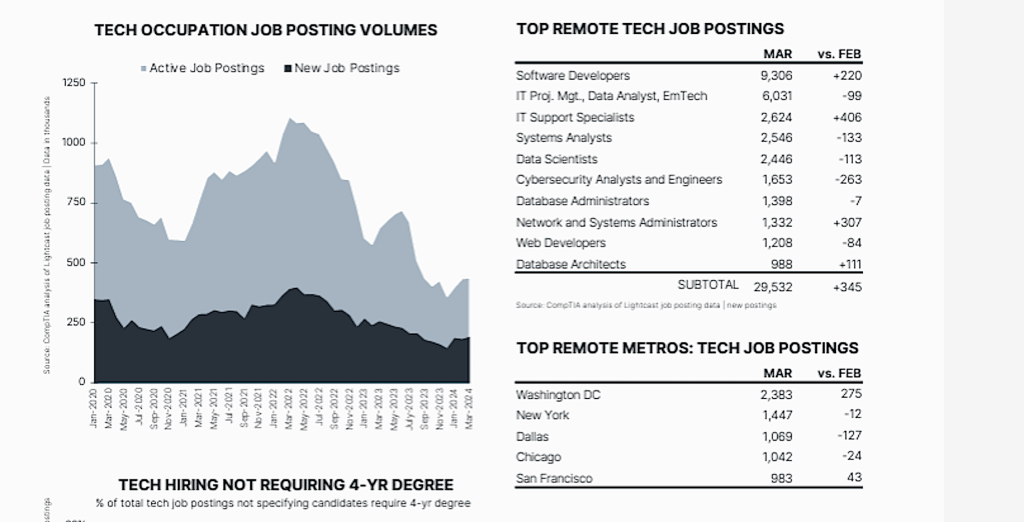
After a lengthy spat of layoffs spiked unemployment rates in recent months, the tech industry is poised to return to growth, according to analyses of the US Bureau of Labor Statistics (BLS) report released today.
Employers accelerated their hiring of technology workers and expanded their search for new tech talent in March, according to CompTIA, a nonprofit association for the IT industry and workforce.
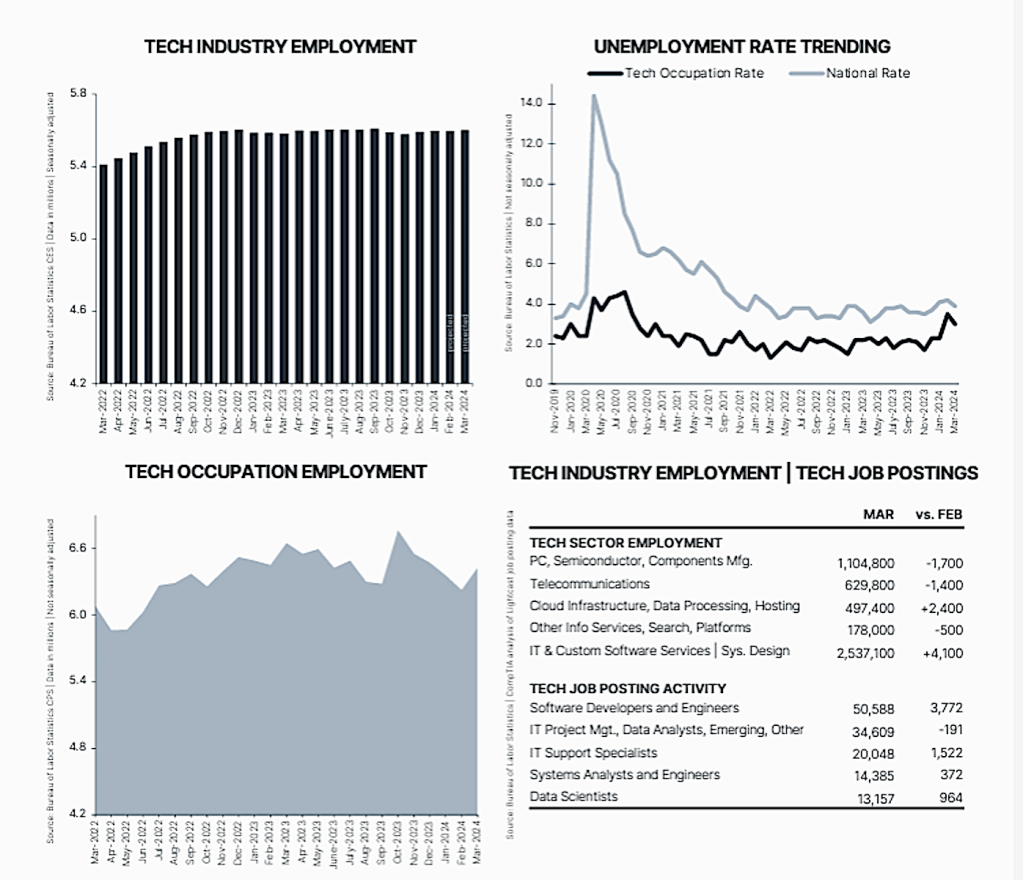
Tech companies added an estimated 6,000 workers last month, according to CompTIA’s analysis of BLS data. Job growth was led by new hiring in technology services, software development, cloud infrastructure and related positions.
Technology occupations throughout the economy rose by 203,000 for the month. That pushed the unemployment rate for tech occupations in March back down a full half a point from 3.5% in February to 3.0%, according to CompTIA.
CompTIA
Employers added 191,000 new job postings for tech positions, an increase of 8,000 from the previous month and the highest volume since August 2023. In total, there were an estimated 438,000 active tech job postings in March.
“With all four key tracking metrics in the positive for the month, it’s a welcome return to stability in the tech employment data,” said Tim Herbert, chief research officer at CompTIA.
By occupation category, software developers and IT support specialists saw the largest increases in openings from February to March. The job posting data also affirms that there are a variety of paths to a job in technology. CompTIA’s report shows that 46% of all tech jobs postings in March did not specify that candidates have a four-year degree.
Percentages were higher in certain job categories, such as IT support specialists (78%), network support specialists (66%) and web UI/UX designers (62%). Jobs in artificial intelligence (AI) or for occupations that require AI skills accounted for 41% of March postings in the emerging technologies sub-category.
Becky Frankiewicz, president of Manpower Group North America, took a more subdued view of the current tech market. “Our real-time data shows signs of a goldilocks labor market — hiring is slightly hotter than last year at this time, cooler than last month and warmer than pre-pandemic,” she said “This demonstrates remarkable resilience given the economic uncertainty we’re experiencing right now.”
Both the overall US unemployment rate, at 3.8%, and the number of unemployed people, at 6.4 million, changed little in March. The unemployment rate dropped one-tenth of a percent from February’s 3.9%.
Overall US unemployment has remained in a narrow range of 3.7% to 3.9% since August 2023, according to BLS data. While the unemployment rate changed little, the U.S. labor market added 303,000 jobs in March, which far exceeding the roughly 200,000 economists had predicted.
According to Janco Associates, a management consulting firm for the IT industry, the number of unfilled IT jobs fell from 202,000 in January to 117,000 in February — a drop of more than 42%.
CompTIA
Tech demand remains stronger than last year at this time and was stronger in Q1 2024 than during the final three months of 2023.
“Demand for AI and machine learning engineers has continued to grow for the last few years, and we’re recognizing that with increased tech demand comes increased training and upskilling,” said Ger Doyle, senior vice president at ManpowerGroup and Head of Experis North America — a ManpowerGroup focused on recruitment of US tech talent.
“Humanizing tech roles is the key to continuing this growth, making the ladder for tech roles in reach and bringing attainable skills to employers and employees alike,” Doyle said.
In its “State of the Tech Workforce 2024,” CompTIA forecasts tech employment growth of 3.1% this year — a net gain of more than 300,000 new jobs. That compares to the 1.2% growth rate of 2023, which yielded about 117,000 net new hires.
Top projected occupations for this year, and their growth rates, include: data scientists and data analysts, up 5.5%; cybersecurity analysts and engineers, up 5.1%; software developers and engineers up 4.8%; software QA and testers, up 4.3%; computer and information research scientists, also up 4.3%; CIOs and IT Directors, up 3.6%; web developers, also up 3.6%; and web and digital interface designers, up 3.6%.
According to projections from the BLS statistics and job market analytics firm Lightcast, the tech workforce will grow twice as fast in the next 10 years as the overall US workforce. The replacement rate for tech occupations during the 2024-2034 period is expected to average about 6% annually, or approximately 350,000 workers each year, totaling several million through 2034.
Growth in so-called “driver occupations” will expand even faster. Positions in the data science and data analyst, cybersecurity, software development, UI/UX and emerging tech categories, including artificial intelligence, will grow at the fastest rates on a percentage basis, according to CompTIA. “On a volume basis, core infrastructure positions in networking and cloud engineering, along with tech support positions, will continue to serve as the on ramp for many starting a career in technology,” the report stated.
Projections from CompTIA’s report indicate that 20 states and 14 metropolitan areas will exceed the average growth rate this year. Twenty-six metro markets are expected to at least double last year’s job growth rate, reflecting the diversity of tech hub concentrations across the US.
February 2024
US unemployment in the technology sector increased by 0.2% to 3.5% last month, following an upward trend in joblessness in all sectors.
Technology occupations across the economy declined by an estimated 133,000 positions, according to a new report from IT industry group CompTIA.
Overall, the US unemployment rate among all job markets rose by 0.2% to 3.9% in February, and the number of unemployed people increased by 334,000 to 6.5 million. A year earlier, the jobless rate was 3.6%, and the number of unemployed people was 6 million. While unemployment did tick up, February’s rate continued the longest stretch of unemployment below 4% in decades.
There were 275,000 jobs added to the US market last month, according to the US Bureau of Labor Statistics (BLS) report today. The data shows a significant uptick over January’s 229,000 jobs added to the workforce, but lower than December’s numbers, when 290,000 jobs were added.
“New hiring of tech services and software development personnel is the lone bright spot in February’s lackluster technology employment data,” said Tim Herbert, chief research officer at IT industry group CompTIA.
Overall tech industry employment increased modestly, employer job postings for future tech hiring were flat, tech occupations throughout the economy declined, according to CompTIA’s latest jobs report.
“We continue to see the lag effect of market developments working their way into government employment data,” Hebert said. “While employers across every sector of the economy demand tech talent spanning the continuum of tech job roles, there are pockets of employers recalibrating their staffing levels.”
IT business consultancy Janco Associates had a similar take on the lackluster IT job market performance in February. It said in its report today that hiring of IT Pros is hindered by the lack of qualified individuals and a slowing economic picture, which “will have a dampening impact on the growth of the IT job market size.
According to Janco’s data, there are currently 4.18 million US workers employed as IT professionals. The rate of growth in the number of new IT jobs has slowed, the firm said.
“There now are just over 121,000 unemployed IT professionals. The IT job market shrank by over 48,600 jobs in calendar year 2023, Janco’s report stated. “Overall that is a flattening of the long term growth rate pattern of IT job market,” the firm said.
One of the more surprising results of the BLS report, however, was that the agency drastically revised its January job gains, which had previously been reported as a leap of 353,000 new jobs. The revised numbers dropped that by more 124,000 jobs.
Tech employers added 185,000 new job postings for positions in February, raising the total number of active tech job postings to more than 436,000, according to CompTIA’s data. California, Texas and Virginia had the largest volumes of tech job postings among the states. At the metro level, Washington, New York, Dallas, Chicago and Boston were the most active markets.
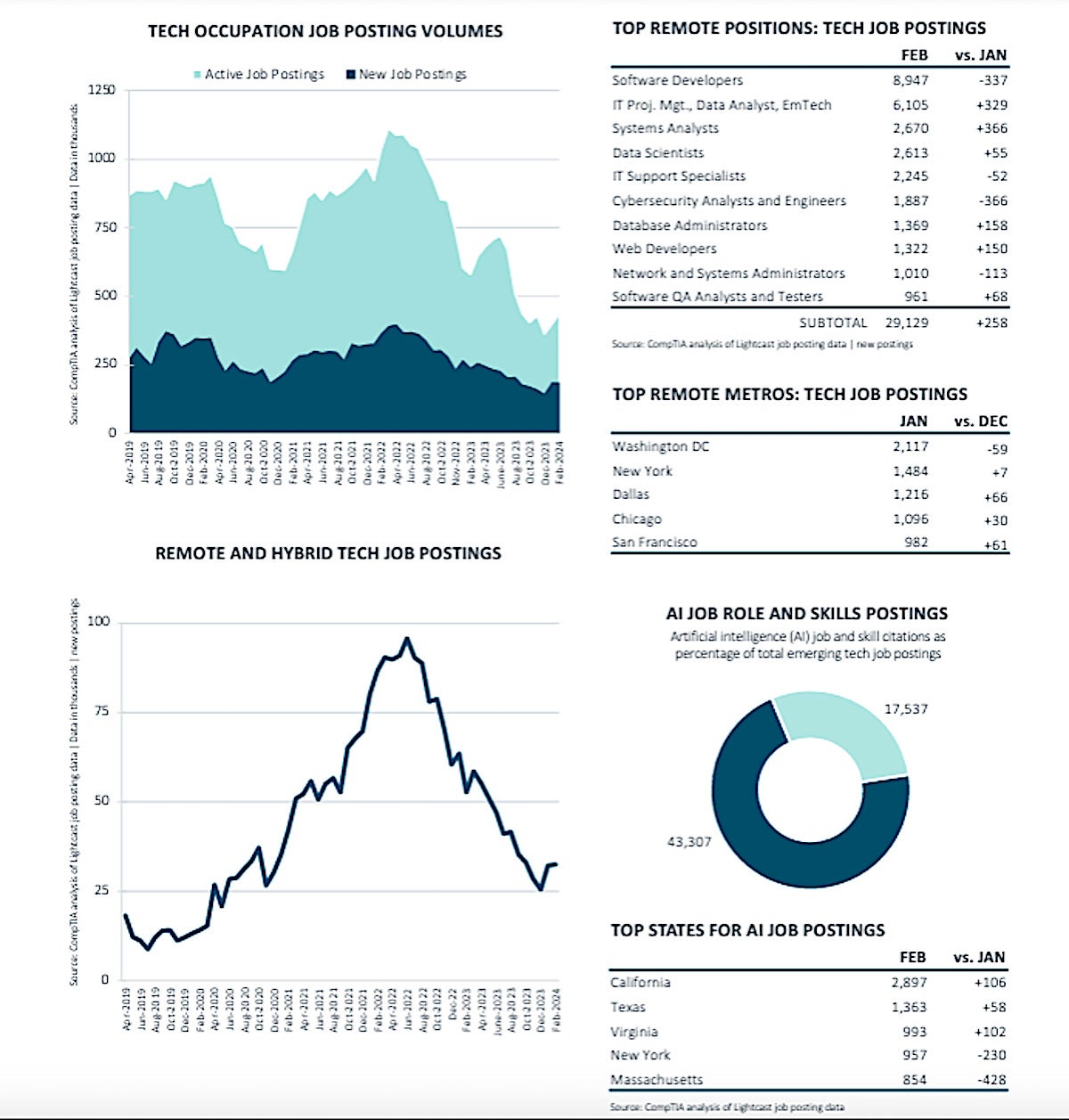
Open positions in artificial intelligence or jobs requiring AI skills continue to hover near the 10% threshold, while positions offering hybrid, remote or work from home options account for about 20% of all tech job postings, CompTIA’s report showed.
Technology companies added an estimated 2,340 workers last month, CompTIA’s analysis of BLS data showed. The technology services and software development sub-sector saw employment increase by 4,200 positions, but those gains were offset by staffing reductions in telecommunications and manufacturing.
Net tech employment spanning tech industry and tech occupation employment totaled more than 9.6 million workers, according to CompTIA’s data.
Over the next quarter — from April through June — the US is expected to lead all other nations in IT hiring, according to IT staffing firm Experis, a subsidiary of ManpowerGroup.
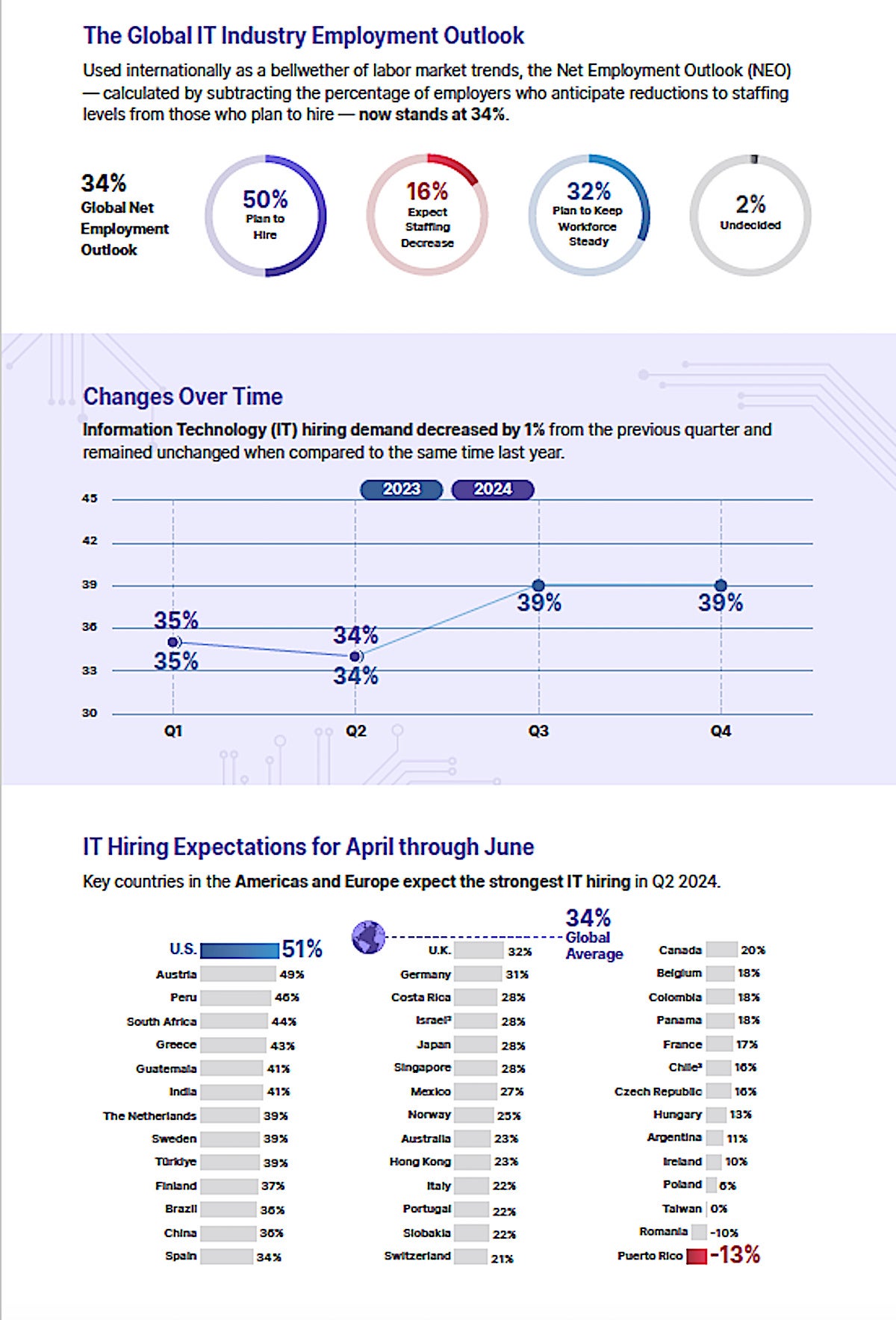
Ger Doyle, head of IT staffing at Experis North America, said while hiring data shows worker demand will remain strong, it will be “more balanced and concentrated.”
Nurses, software developers and front-line retail workers are the three most sought after roles in the U.S. today, according to Doyle.
“In the tech space, AI and machine learning engineers are seeing good growth since last year, with finance and consulting companies as some of the top employers of this specialist tech talent,” Doyle said.
While tech sector layoffs have made headlines over the past year Experis’s data shows the same companies laying people off are also hiring, including top tech companies such as Google, META, Amazon and Apple. However, consuntancies and financial services companies are also hiring – firms such as KPMG, Booz Allen Hamilton, JPMorgan Chase & Co and Slalom Consulting, according to Doyle.
While artificial intelligence and machine learning engineer hiring decreased by 1% in February, the demand for the roles has been trending upward since May 2023, Doyle said.
Wages are following suit, and have remained steady overall, with month-over-month increases in some sectors where remote and hybrid roles have increased, such as IT and business operations.
Hybrid job roles are strongest in the IT (38%) and finance (40%) sectors, according to Experis data.
January 2024
The US added twice as many jobs in January as analysts had expected, though the unemployment rate remained unchanged at 3.7% and tech layoffs continued to plague the IT industry.
In January, the US added 353,000 jobs, according to data published today by the US Bureau of Labor Statistics (BLS). And for tech workers, the latest employment data suggests 2024 is off to a promising start, according to an analysis by IT trade association CompTIA.
Tech companies added nearly 18,000 workers last month, the second consecutive month of job growth. The unemployment rate for tech occupations remained at 3.3%, well below the overall national rate, according to CompTIA. Yet, overall, tech occupations, which span all industries, were down in January.
Tech companies added jobs in several primary sub-sectors:
- Technology services and software development (+14,500)
- Cloud infrastructure (+2,100)
- Tech manufacturing (most notably semiconductors) (+1,400)
Also, on the rise – job openings in artificial intelligence (AI) and positions that offer hybrid, remote, or work from home options. AI job postings or jobs requiring AI skills increased by about 2,000 positions from December to 17,479 last month, CompTIA said.
Tech occupations across all markets and the broader economy, however, declined by an estimated 117,000 positions. “This month’s data is a helpful reminder of the many moving parts in assessing tech workforce gains or losses,” said Tim Herbert, chief research officer at CompTIA. “The expansive tech workforce will simultaneously experience gains and losses reflecting employer short-term and longer-term staffing needs.”
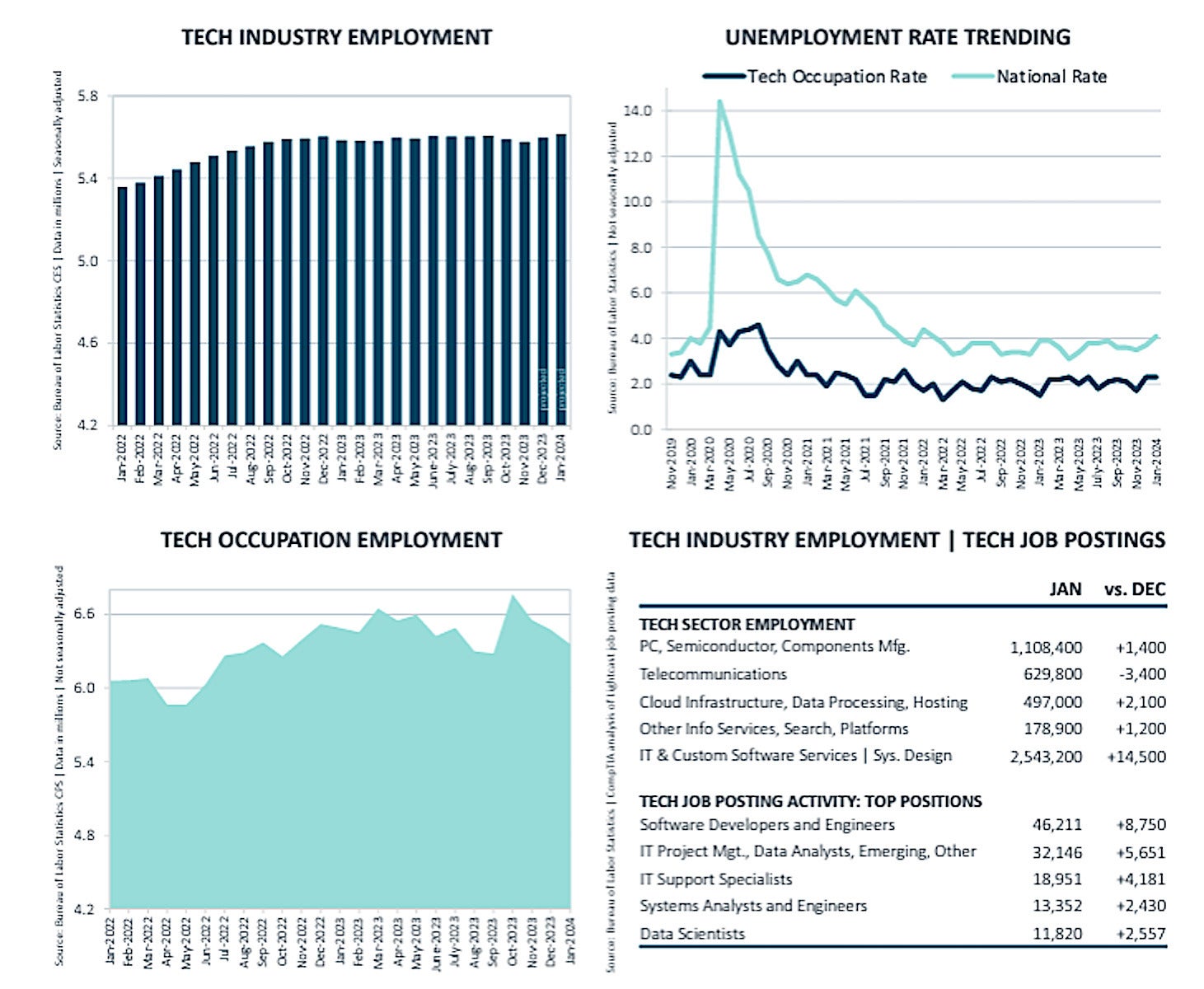
Employers listed more than 392,000 active tech job postings, with nearly 178,000 added last month alone. January’s total of active postings was 33,727 more than the December 2023 figure, the largest month-to-month increase in a year.
There was significant employer interest in filling positions in software development, IT project management, data analysis and science, IT support and systems analysis and engineering. And after several months of decline, the number of job postings offering hybrid, remote or work-from-home options exceeded 30,000 in January, up about 5,000 from December.
“Looking at the bigger picture, we continue to see a post-pandemic rebalancing,” said Becky Frankiewicz, president of staffing firm ManpowerGroup NA. “While hiring isn’t as strong as a year ago, it is better than pre-pandemic and has improved month-over-month.
“We’re also seeing an expected post-holiday hangover in retail and logistics, balanced by increases in IT, finance, accounting and engineering,” she continued. “Overall, more jobs are available now for each unemployed worker than there were before the pandemic, creating a stable environment for employers and employees.”
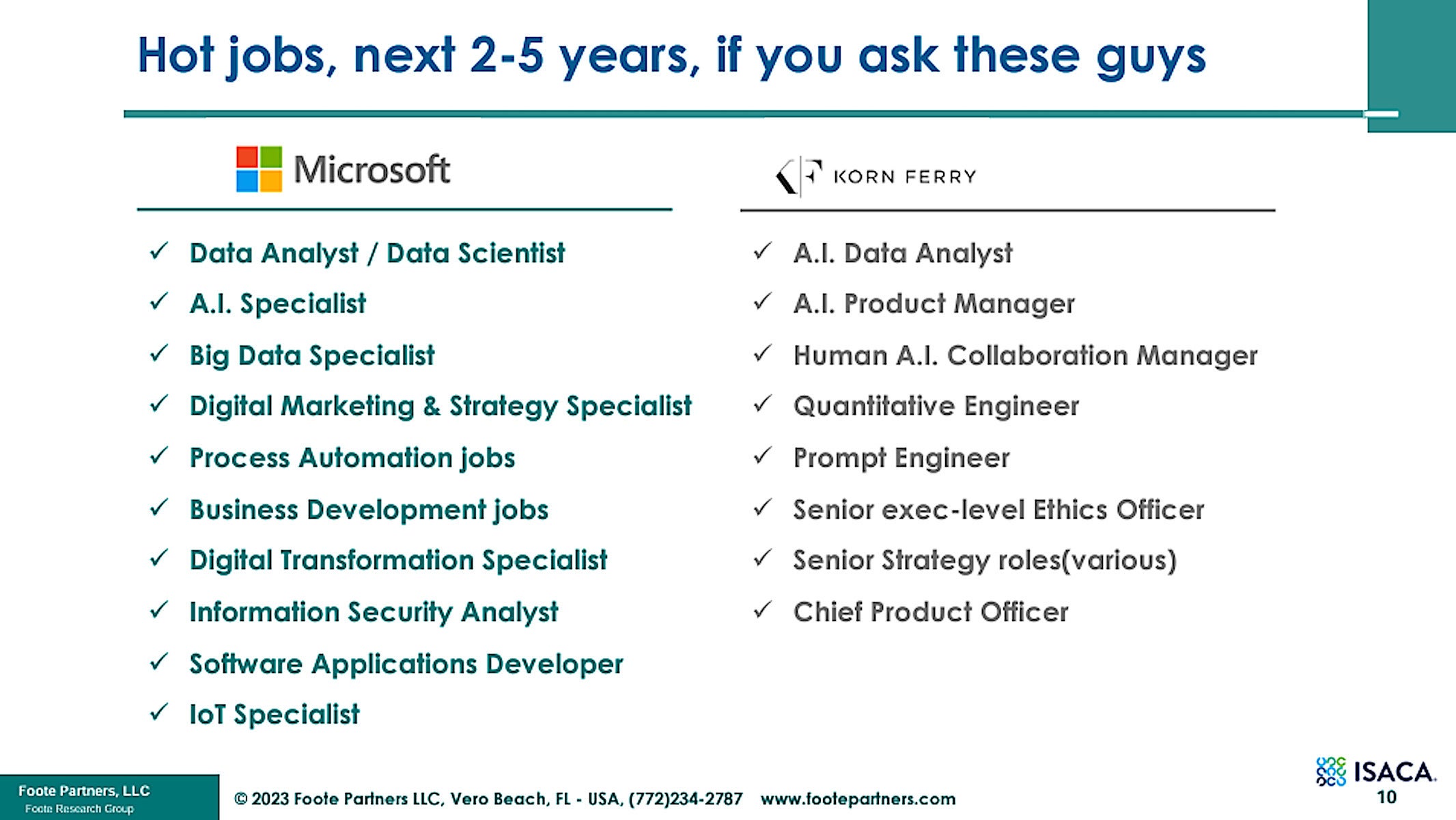
Layoffs in the tech sector have been a thorn in the side of an otherwise healthy industry. Amazon, Google, and Microsoft collectively laid off tens of thousands of workers last year and were among a number of companies that announced planned layoffs for this year. Meta and Google and AWS are cutting back on more ambitious “moonshot” projects, as enterprises are still hesitant to spend big on large software buildouts, etc.
This week, iRobot announced it would lay off about 31% of its 1,250 employees after a deal to be acquired by Amazon fell through.
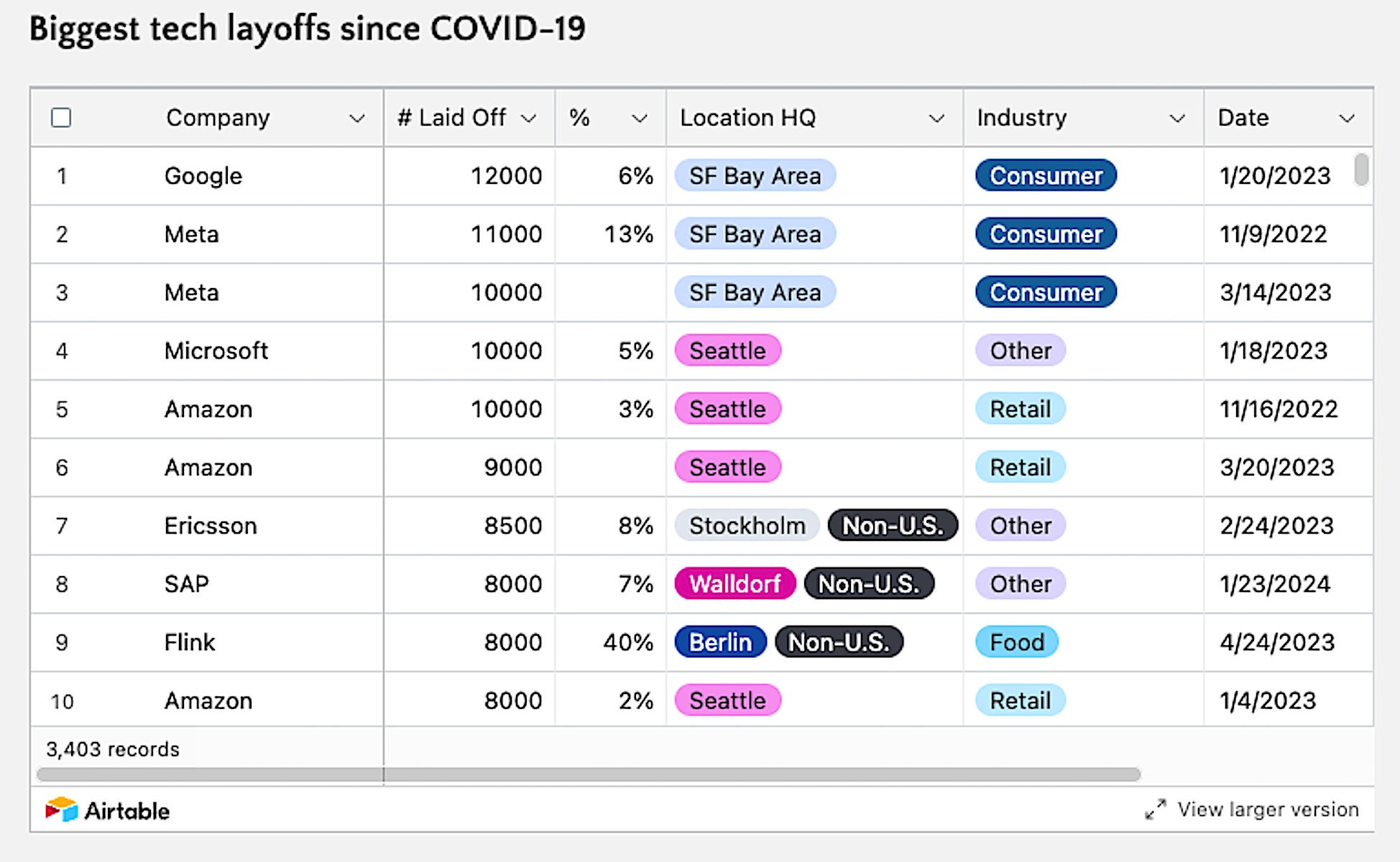
The number of employees laid off at tech companies more than tripled between December and January, according to industry tracker Layoff.fyi. So far this year, 115 tech firms have laid off 30,375 employees, according to the site.
Though layoffs remain below pre-pandemic levels, the number of US employees filing for jobless benefits last week reached an 11-week high. And while the stock market continues to soar, tech companies appear worried.
Many segments of the market remain soft, according to Jack Gold, principal analyst with business consultancy J. Gold Associates. That is likely to continue for at least the next two quarters, he said.
“Tech layoffs might make the headlines, but our real-time data shows a more nuanced story. In many cases, the same companies that are laying people off are also still hiring — they’re just laser focused on hiring to meet demand,” said Ger Doyle, senior vice president of tech employment service Experis.
As an example, Microsoft and Amazon, which recently cut jobs in gaming and streaming, respectively, are simultaneously planning huge investments in AI, according to Doyle.
Experis’s data shows tech demand rebounded in January (up 26% compared to December), with demand for AI/ML engineers growing 19% last month.
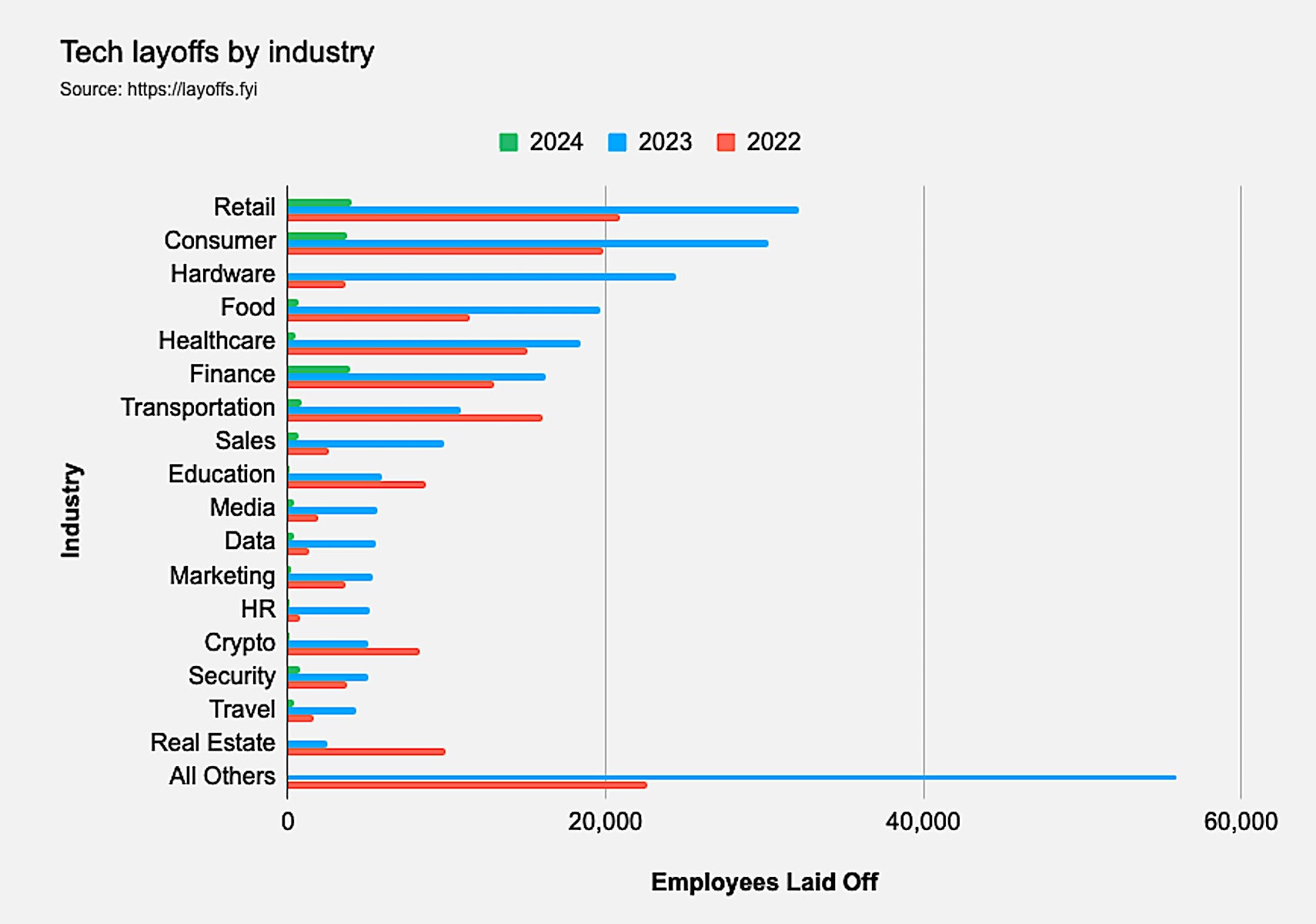
“AI hiring is through the roof due to betting on the future next big thing,” Gold said. “But that leaves many more mature industries vulnerable to scaling back. The thinking in many companies is, let’s cut back on ‘fringe’ stuff until we can determine if we’re going to be OK.”
Doyle said it’s important for employess to keep a focus on internal mobility. “We’re also seeing small and mid-size companies have their moment, scooping up tech talent that may have let go by the big hitters. It’s also important to remember that today every company is a tech company — Capital One, Doordash and Reddit are among the top hirers of AI and machine learning talent in the country today.
“Those with tech skills will still find themselves in high demand and able to call the shots on remote working, too…,” Doyle said.
December 2023
Unemployment in the IT industry ticked up from 2% in November to 2.3% in December, according to an analysis of the latest jobs data from the US Bureau of Labor Statistics (BLS).
Tech occupations throughout the US economy declined by 79,000 positions last month, though the unemployment rate for tech occupations was still well below the overall national unemployment rate of 3.7%.
The up-and-down pattern in tech employment seen over the past few months continued in December, according to CompTIA, an IT trade association.
Tech companies added the largest number of workers since April, but tech occupations throughout the economy declined, according to CompTIA’s analysis of data from the BLS.
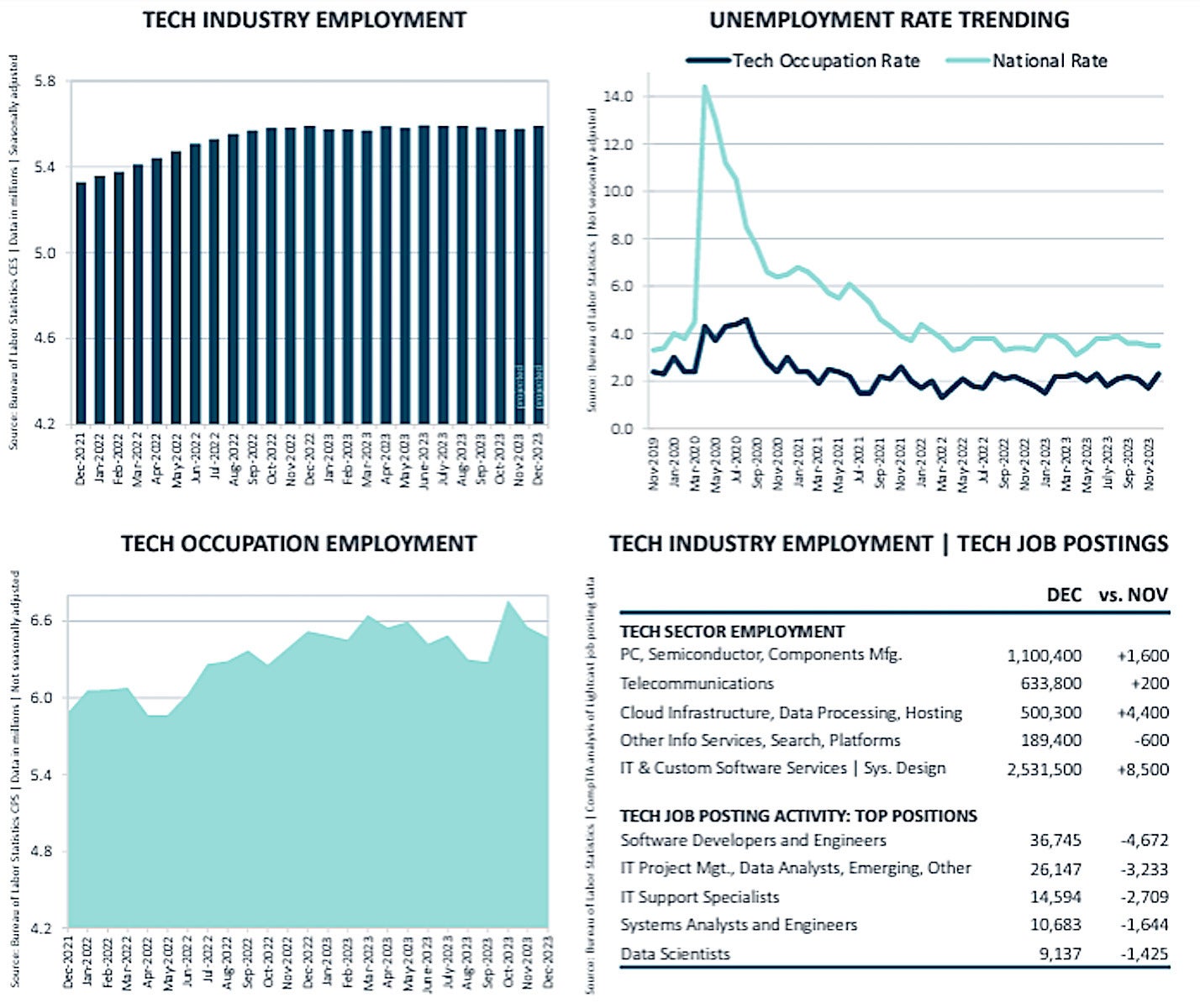
Job postings for tech occupations also fell. Active postings totaled nearly 364,000, including 142,295 newly added by employers in December, according to CompTIA.
There’s still strong demand for tech workers; US employers advertised 3.13 million IT job postings during 2023 for a wide range of positions including support, infrastructure, software, data, cybersecurity, and technology enablement.
In December, the top tech job postings by job openings in the US were:
- Software Developers and Engineers — 40,490;
- IT Project Management, Data Analysts, Emerging, Other — 27,853;
- IT Support Specialists — 16,526;
- Systems Analysts and Engineers — 12,513;
- Data Scientists — 10,293.
(Not every “help wanted” ad results in a new hire; generally, the ratio is one new hire for every eight job postings, according to CompTIA.)
One area that saw marked hiring involved artificial intelligence (AI) roles. Employer hiring for AI and other specialized skills continued to exceed 10% of all tech job postings, CompTIA said.
The push for AI and generative AI hires might be having an adverse effect on entry-level IT positions, especially in customer service, telecommunications, and hosting automation, according to Victor Janulaitis, CEO of IT consultancy Janco Associates, Inc.
“CIOs and CFOs are looking to improve the productivity of IT by automating processes and reporting where possible,” Janulaitis said. “They are focusing on eliminating ‘non-essential’ managers, staff, and services. Experienced coders and developers still have opportunities.”
The highest demand continues to be for AI specialists, security professionals, programmers, and blockchain processing experts, according to Janulaitis.
Ger Doyle, senior vice president of IT staffing firm Experis, said he still sees “very strong demand” for full stack developers, data scientists, and AI experts. “Seventy-six percent of IT employers say they are facing difficulty finding the talent they need,” Doyle said.
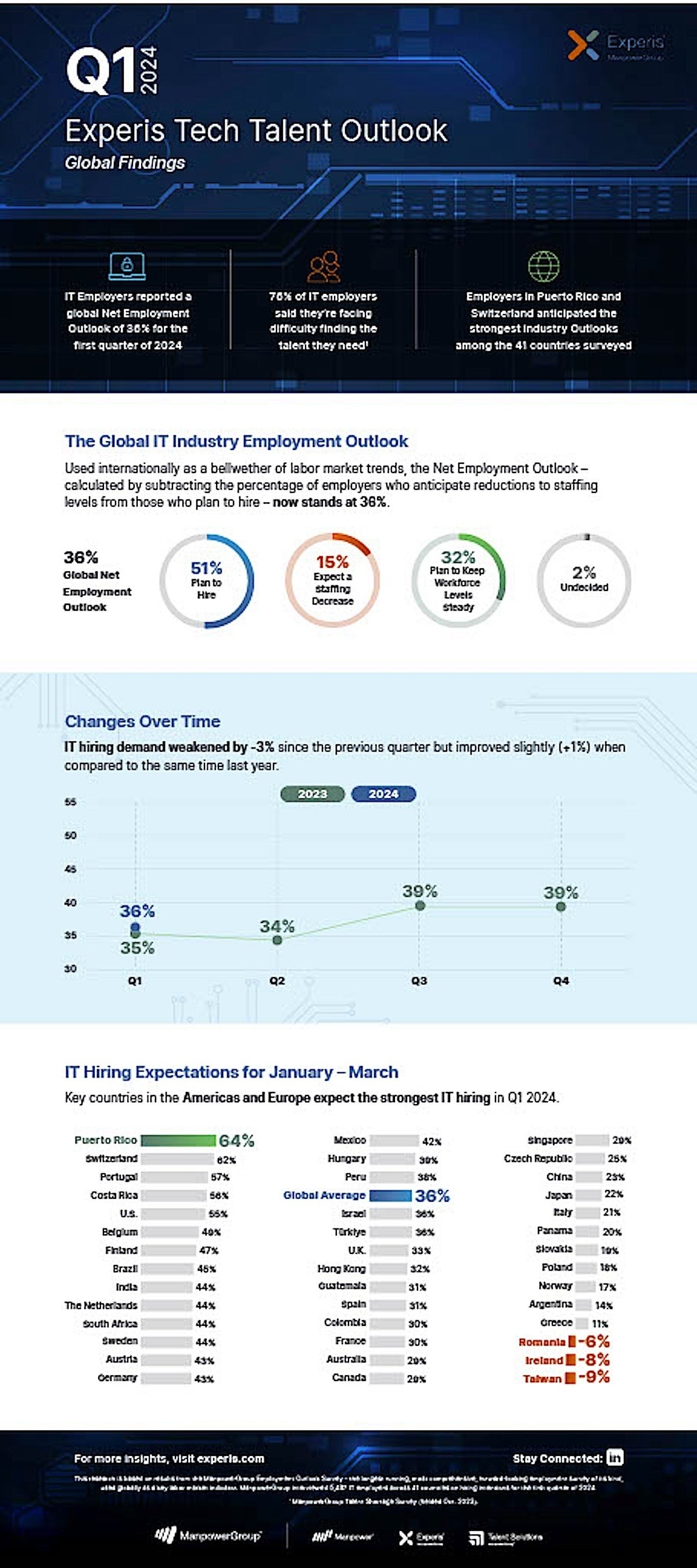
“Supporting people to gain experience and develop new skills will be key to alleviating talent shortages and helping people build employability for the long term,” IT staffing firm ManpowerGroup said in a statement.
Overall, US employers anticipate measured hiring in the first quarter of 2024, while persistent talent shortages continue to impede hiring, according to the latest Employment Outlook Survey from staffing firm ManpowerGroup. With seasonal variations removed from the data, the Net Employment Outlook (NEO) for the U.S. is +35%.
(The NEO is derived by taking the percentage of employers anticipating an increase in hiring activity and subtracting the percentage of employers who expect a decrease in employment at their location in the next quarter.)
Globally, the US ties for second place in the world (+35%), outpaced by first-place ties, India and The Netherlands (+37%).
“Tech employment remains on solid footing,” Tim Herbert, chief research officer at CompTIA, said in a statement. “Despite the ongoing pattern of mixed signals in the labor market tracking data, the optimistic outlook continues to hold.”
Janulaitis saw it differently, however: “Layoffs at big tech companies continued to hurt overall IT hiring in 2023. CIOs are looking at a troubling economic climate and are evaluating the need for increased headcounts based on the technological requirements of their specific business operations. At the same time, with a mean total compensation of $100,000 for ITpPros, IT will continue to be a target for budget cutting.”
Talent mobility is set to be the key trend of the new year — employers need to look for potential vs past performance and help people make lateral moves within their organization, according to ManpowerGroup.
In December, overall US employment rose by 216,000 people, according to the BLS . The overall unemployment rate remained unchanged from the previous month, with the number of unemployed workers was essentially unchanged at 6.3 million.
Employment in professional, scientific, and technical services continued to trend up, adding 25,000 jobs; the industry added an average of 22,000 jobs per month in 2023, about half the average monthly gain of 41,000 in 2022, according to the BLS report.
For all of 2023, the US added 2.7 million jobs. While the overall unemployment rate has remained under 4% over the past two years, last year ended with a higher unemployment rate (3.7%) than in 2022 (3.5%). Employment continued to trend up in government, healthcare, social assistance, and construction, while transportation and warehousing lost jobs.
“The 2024 labor market is all about balance and moderation — restoring equilibrium after four years of pandemic related swings,” said Becky Frankiewicz, president of the North America Region for staffing firm ManpowerGroup. “Today’s report…shows continued stabilization and an optimistic start to the New Year for employers and workers. Employers are holding onto their people and hiring where the demand exists.”
Average hourly wage growth accelerated slightly in December, rising by 4.1% over the previous 12 months to $34.27 an hour and continued to beat inflation, boosting workers’ spending power, according to BLS data.
November 2023
The number of new IT jobs being added to the US economy has continued to shrink over the past three months, even as the unemployment rate for tech workers has remained near historical lows.
The unemployment rate for tech workers dropped from 2.2% in October to about 2% in November, according to new data based on US Bureau of Labor Statistics.
Overall, US employment increased by 199,000 in November, and the national unemployment rate edged down to 3.7%, according to the US Bureau of Labor Statistics. That tracks with October, when employment increased by about 150,000 jobs and the unemployment rate was 3.9%.
While there have been a plethora of big employers announcing tech layoffs, there has also been a redistribution of tech talent to midsize and small companies that “finally got their shot at hiring talent post-pandemic,” according to Becky Frankiewicz, president of ManpowerGroup, North America.
“This talent was scooped up almost in real time by smaller size businesses, so it remains quite difficult to fill tech roles in the country,” Frankiewicz said. “Now that every company is a tech company, we also saw tech talent absorbed into other sectors outside of tech — like retail and hospitality.
“We continue to see strong demand in business analyst roles and software developers as companies continue to work on readying projects for the new year and building out their apps for more clicks this season,” she added.
According to a report from business consultancy Janco Associates, the IT job market shrank by 12,000 open positions in the last three months, leaving 101,000 unemployed IT professionals. At the same time, close to the same number of tech positions remain unfilled.
“CIOs have started to halt hiring IT pros. Demand for contractors and consultants is slow due to economic uncertainty,” Janco CEO Victor Janulaitis said in the report. “On a bright side, there are still over 120K unfilled jobs for IT professionals.”
Year to date, the IT job market has shrunk by 24,900 positions, according to Janco’s report. Currently, about 4.18 million people are employed as IT professionals in the US, according to Janco.
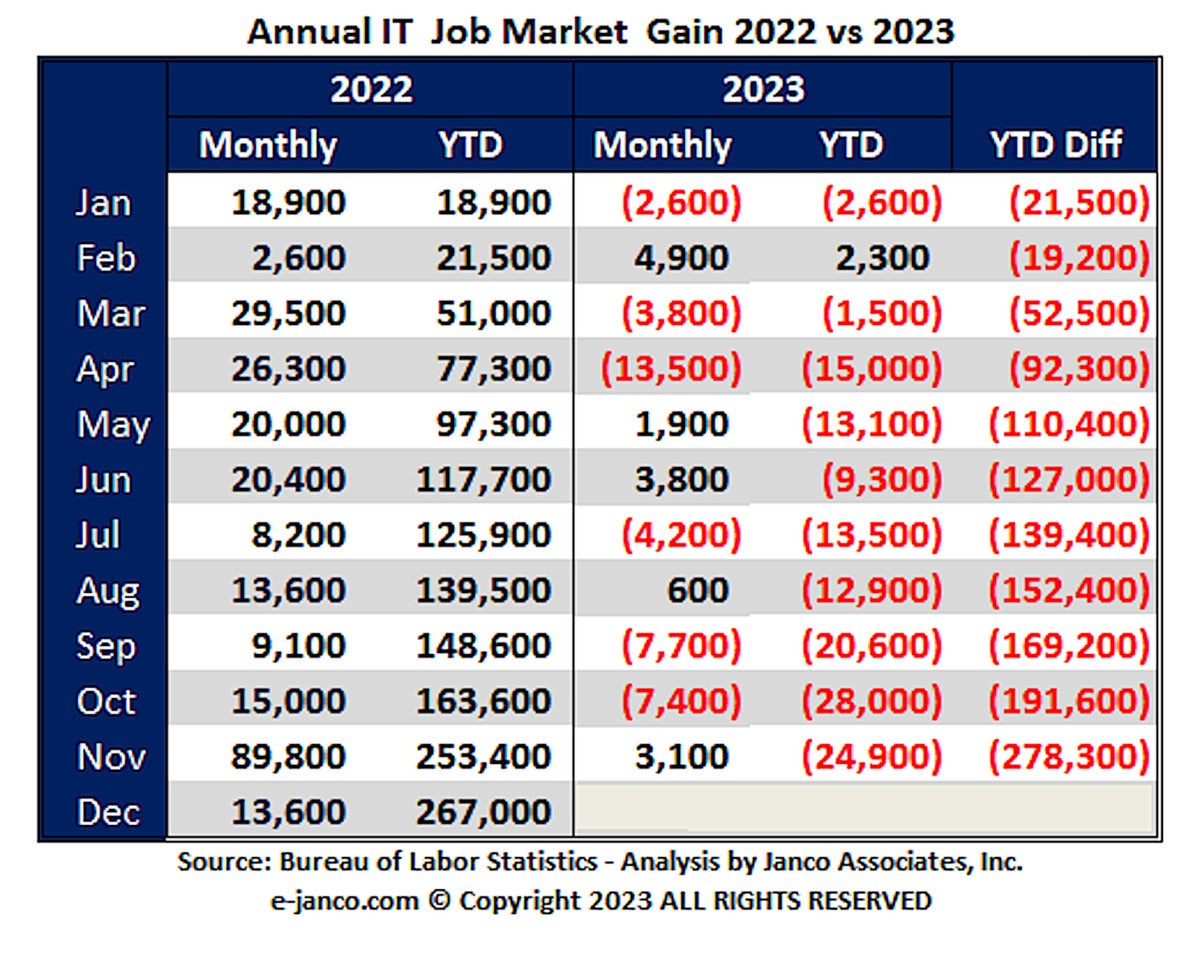
Janco’s figures show a year-to-date loss of nearly 25,000 IT jobs.
In the past 18 months, the number of IT pros hired each month has moved from 105,00 to 57,000 in October 2023.
“2023 was not a good year for the size of the IT job market,” Janulaitis said. “We currently do not see any change in that trend. In our professional opinion, in 2024 the size of the IT job market will remain at about the same levels as the fourth quarter of 2023, with growth in size limited to minimal levels.”
The number of unfilled positions for IT pros has fallen from 148,000 to 101,000 in the past 18 months. “There still is demand; however, not at the peak of the post-pandemic hiring frenzy,” Janulaitis said.
Not all IT job reports were doom and gloom, however. CompTIA, a nonprofit association for the IT industry and its workers, echoed ManpowerGroup’s findings, saying that hiring among SMBs is up — way up. And employer demand for AI talent boosted the share of job postings to 12%, the company stated.
Meanwhile, CompTIA’s numbers showed tech unemployment to be at 1.7%, well below ManpowerGroup’s figures, even as it estimated that tech occupations throughout the economy declined by 210,000 last month.
Tech occupations across the economy increased by an estimated 483,000 jobs, according to CompTIA. Tech firms added an estimated 2,159 workers, mainly in IT services and custom software development, CompTIA’s Tech Jobs Report showed.
“With the gains in employer hiring intent for AI talent, the job posting data is finally catching up to the hype,” said Tim Herbert, CompTIA’s chief research officer. “As an enabling technology, companies hiring for AI skills inevitably need to boost adjacencies in areas such as data infrastructure, cybersecurity, and business process automation.”
Employer hiring activity as measured by job postings for tech positions totaled 155,621 for November. Jobs associated with artificial intelligence (AI) made up 12% of the total, more than 18,000 postings. It’s the first time AI positions have surpassed the 10% threshold. Positions in emerging technologies or jobs that require emerging tech skills accounted for 26% of tech job postings last month.
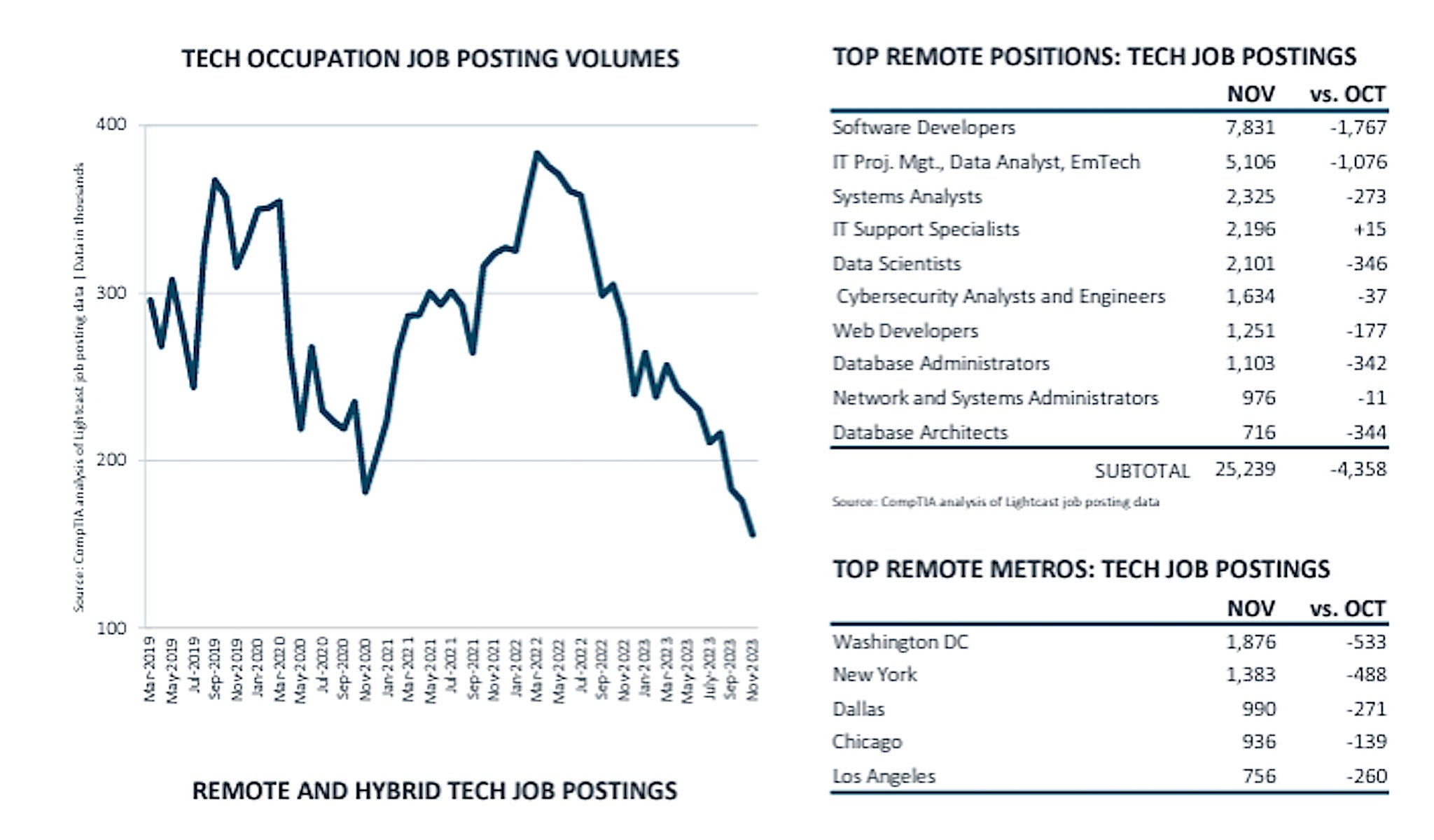
Tech job postings continue to fall. (Click image to enlarge it.)
ManpowerGroup’s Frankiewicz said her company’s analysts anticipated a stabilization of the IT job market with real-time data showing impacts to all sectors, including “always-hot healthcare” and retail.
“In real time, we’re seeing double-digit declines in job postings month over month and year over year that we haven’t seen since 2020. This moderation is welcome for many employers — who are finding it easier to fill vacancies,” Frankiewicz said.
“Time to fill roles has dropped to 49 days in November, from an average of 122 days in 2023 to date. For highly skilled roles like software developer, the time to fill has dropped by more than half, from 106 days to 29,” she added.
“We’re also seeing signs of the heavy hitter big companies taking a back seat and midsize employers with 50-249 employees having their moment — a trend that began with tech talent and is now impacting across the board,” Frankiewicz said.
October 2023
The national job rate for technology workers remained little changed in October, according to an analysis of data from the US Bureau of Labor Statistics (BLS).
The unemployment rate for tech workers in October dropped from 2.2% in September to 2.1% last month, even as there has been a cooling in the broader US job market. Technology companies and employers throughout the economy added workers to their payrolls in October, according to CompTIA, a nonprofit association for the IT industry and its workers.
Tech occupations across the economy increased by an estimated 483,000 jobs, according to CompTIA. Tech firms added an estimated 2,159 workers, mainly in IT services and custom software development, CompTIA’s Tech Jobs Report showed.
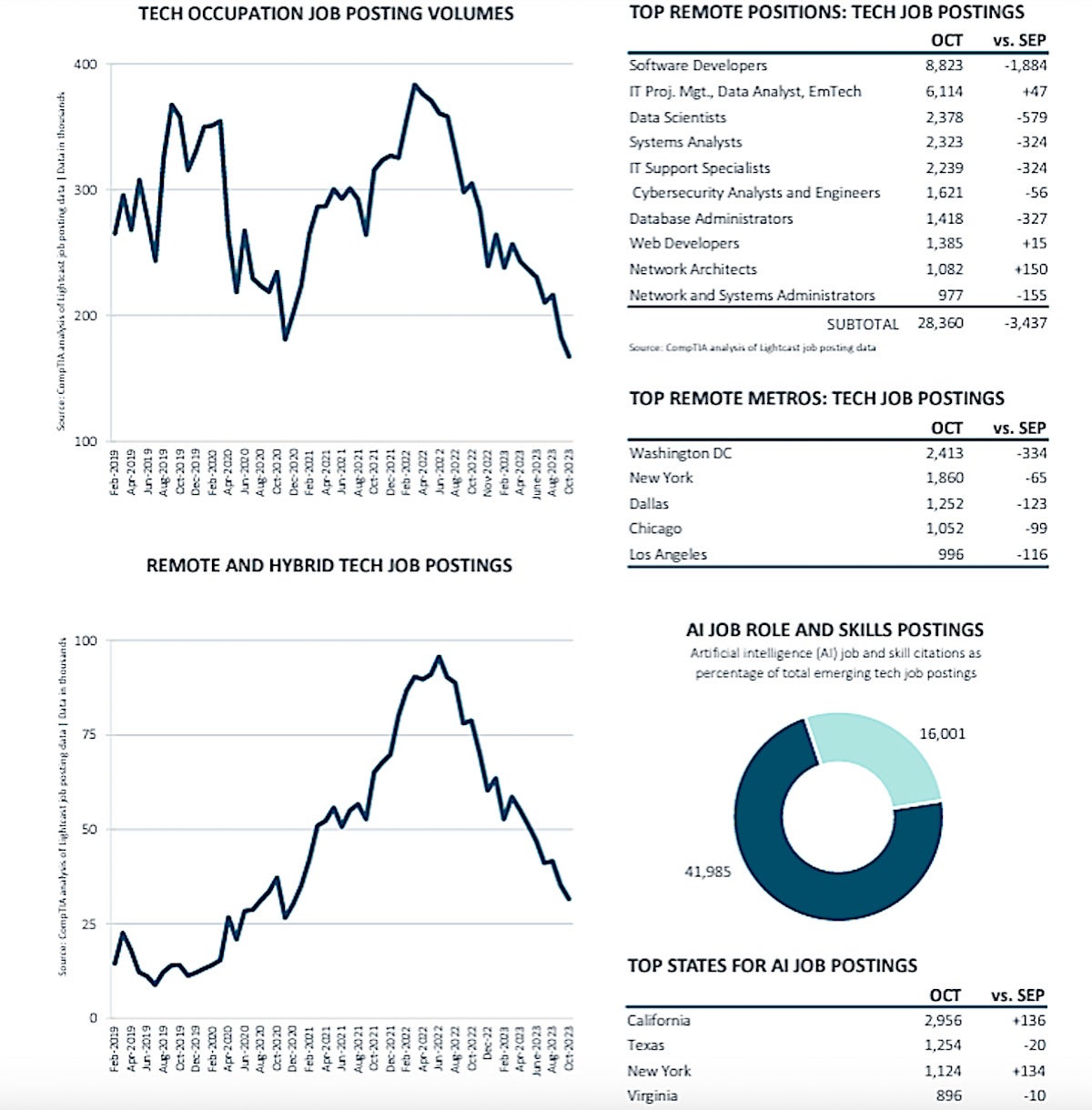
It was the second consecutive month of job growth in the sector — albeit at a modest pace.
“It’s fair to say tech employment gains for the month exceeded expectations, given the recent labor market swings,” Tim Herbert, chief research officer at CompTIA, said in a statement. “Companies continue to focus on the technologies and skills that deliver meaningful business value.”
California, Texas, Virginia, Florida and New York had the highest volumes of tech job postings among the states, CompTIA indicated. The Charlotte, Boston, San Diego, Cleveland and Phoenix markets were also active in October, with month-over-month increases in employer postings for tech jobs.
While the US market added 150,000 jobs in October, the overall unemployment rate rose from 3.8% to 3.9%, according to the US Bureau of Labor Statistics. The number of unemployed persons — 6.5 million — changed little in October. However, since their recent lows in April, those numbers are up by 0.5% and 849,000, respectively.
The uptick in unemployment and the slower pace of hiring pointed to a cooling of the employment market. In September, for example, 279,000 jobs were added to the US economy.
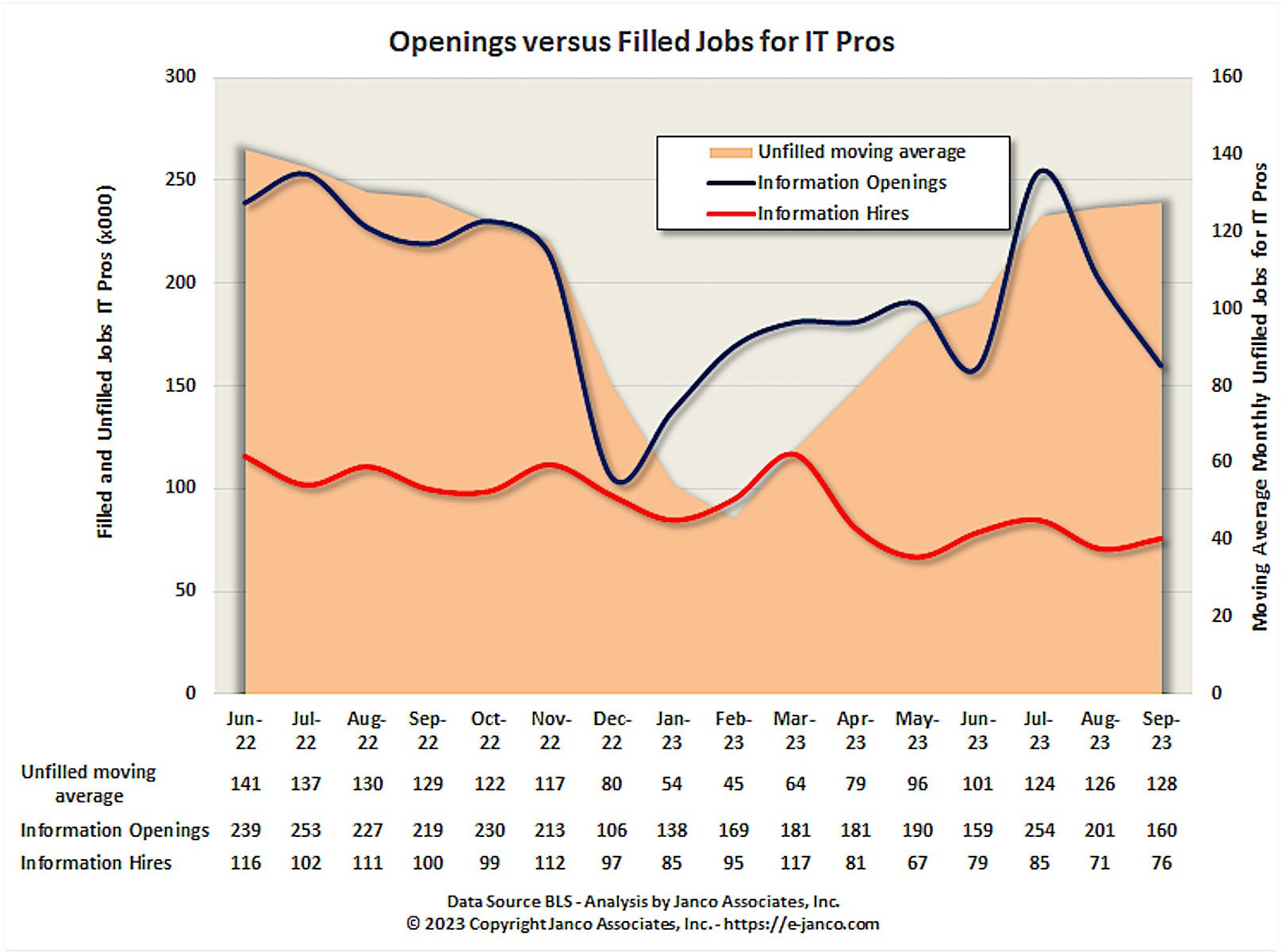
Becky Frankiewicz, president of staffing firm ManpowerGroup’s North America region, credited the slowdown for employees being less likely to leave for new roles than they were at the height of the pandemic. Hiring, she said, is solid but settling down.
“Our real-time data shows that in many sectors, especially blue-collar and tech, the market is finding balance,” she said. “The post-pandemic hiring frenzy and summer hiring warmth has cooled and companies are now holding onto employees.”
The tech sector is also cooling from its torrid growth over the past two or more years, but there’s still demand for highly skilled positions including app developers, cyber security experts and data analysts, Frankiewicz said.
“The most in-demand functions remain steady — with most new roles posted in medical and healthcare, sales and IT,” she said.
After a spike in the number of openings for IT professionals in the early summer, the number of unfilled openings for IT professionals fell from 201,000 in August to 160,000 in September. That reflects a pullback from the peak of 254,000 opening in July, according to Frankiewicz.
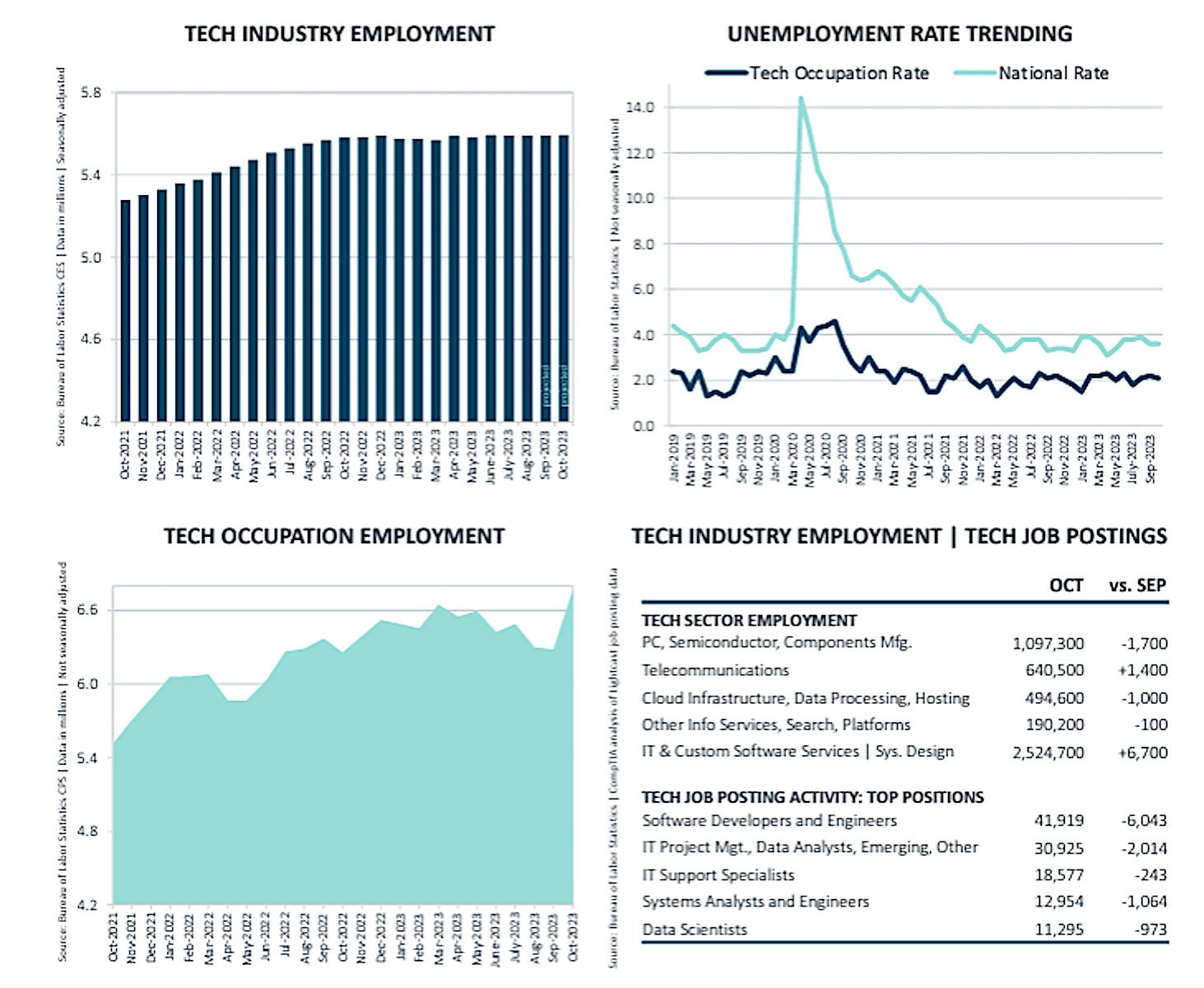
About 20% of job postings offered work from home or remote work as an option, according to CompTIA. One-quarter were for positions in emerging technologies or jobs that require emerging tech skills, including 16,000 associated with artificial intelligence (AI) jobs and skills. Employer hiring for AI positions and skills continues to trend upward, although it’s still a relatively small share of overall tech hiring activity.
Along with AI-skilled workers, software developers, IT support specialists, systems analysts, and data scientists are among the job roles in greatest demand, according to CompTIA.
Victor Janulaitis, CEO of Utah-based research firm Janco Associates, agreed AI and machine learning skills are in demand, though the number of coder openings is falling. At the same time, hiring of IT professionals is hindered by the lack of qualified individuals and a slowing economic picture.
“This will have a dampening impact on the growth of the IT Job Market size,” Janco stated in its latest tech market jobs report.
September 2023
The US unemployment rate remained at 3.8% in September, but the market added 336,000 jobs, far surpassing analyst expectations, according to today’s Bureau of Labor Statistics numbers.
Tech employment, however, was a laggard in the generally upbeat US employment report released today, according to analysis by the nonprofit trade association CompTIA. Key metrics of tech hiring activity all slipped in September, its report showed.
Tech jobs among all sectors across the economy fell by an estimated 20,000. The technology sector unemployment rate ticked up from 2.1% in August to 2.2% in September, but it remains well below the national rate of 3.8%, according to CompTIA.
Tech salaries also appeared to be on a downslope, according to an analysis by job matching site Hired, which notes that US inflation-adjusted salaries have plummeted to a five-year low.
Meanwhile, tech sector companies reduced staffing by a net 2,632 positions last month, according to CompTIA’s analysis of BLS data.
Employer job postings for future tech hiring also fell to 184,077 in September, down from nearly 208,000 in August. (Future tech hiring is defined by CompTIA as expected open requisitions.)
“Demand for software positions continues to drive the largest volume of hiring activity. In the aggregate, volumes are equally large in positions spanning IT project management, IT support, data analytics, and systems/cloud infrastructure,” CompTIA’s report stated.
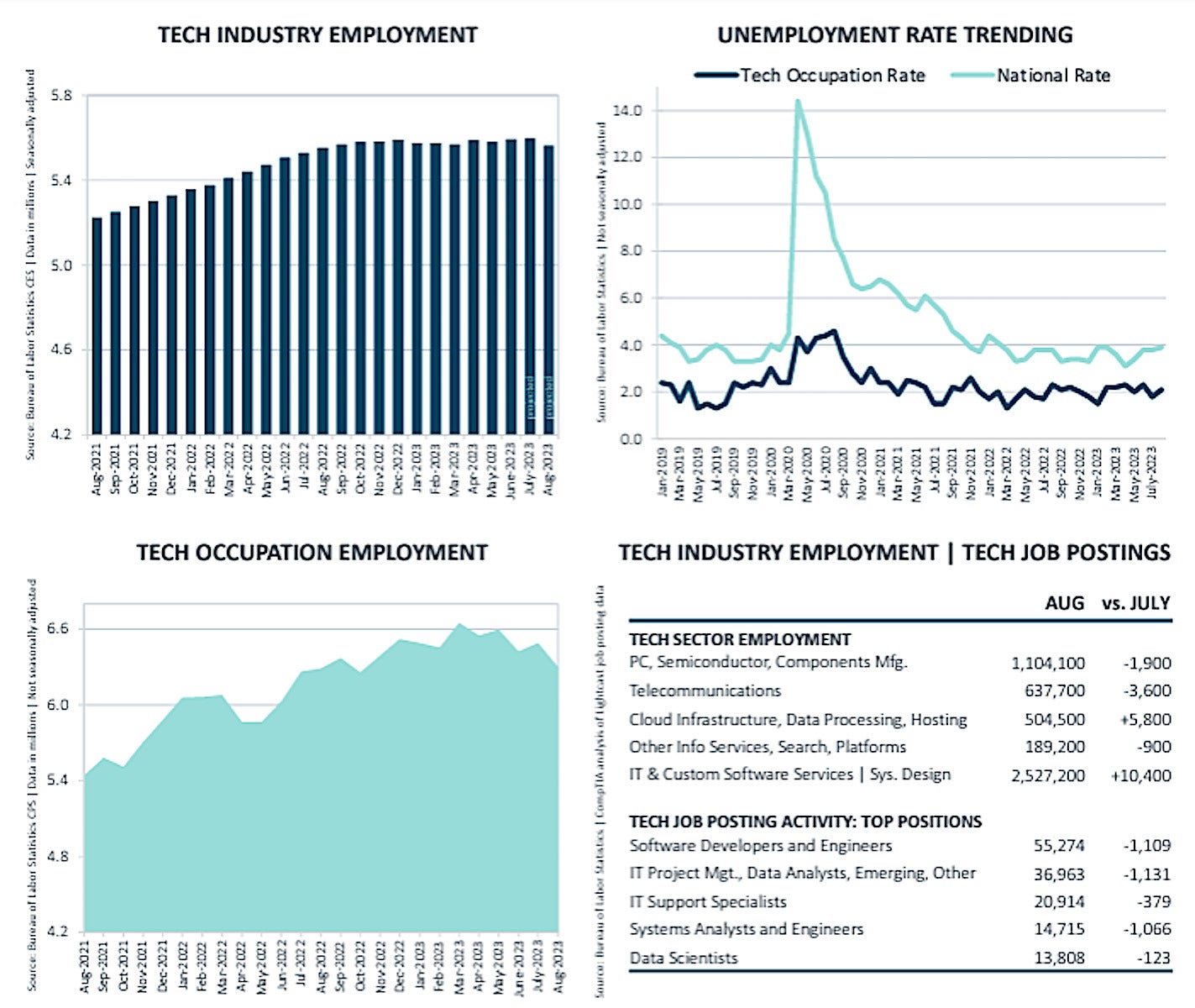
Positions in emerging technologies or jobs requiring emerging tech skills accounted for 26.5% of all tech jobs postings last month, up from 22% in August. Within emerging tech job postings, 36% were associated with artificial intelligence (AI).
“There is no sugar-coating the off month of tech employment data,” Tim Herbert, CompTIA’s chief research officer, said in a statement. “Despite the persistently high demand for tech skills on many fronts and positive forward-looking projections, there is a lag in hiring at the moment.”
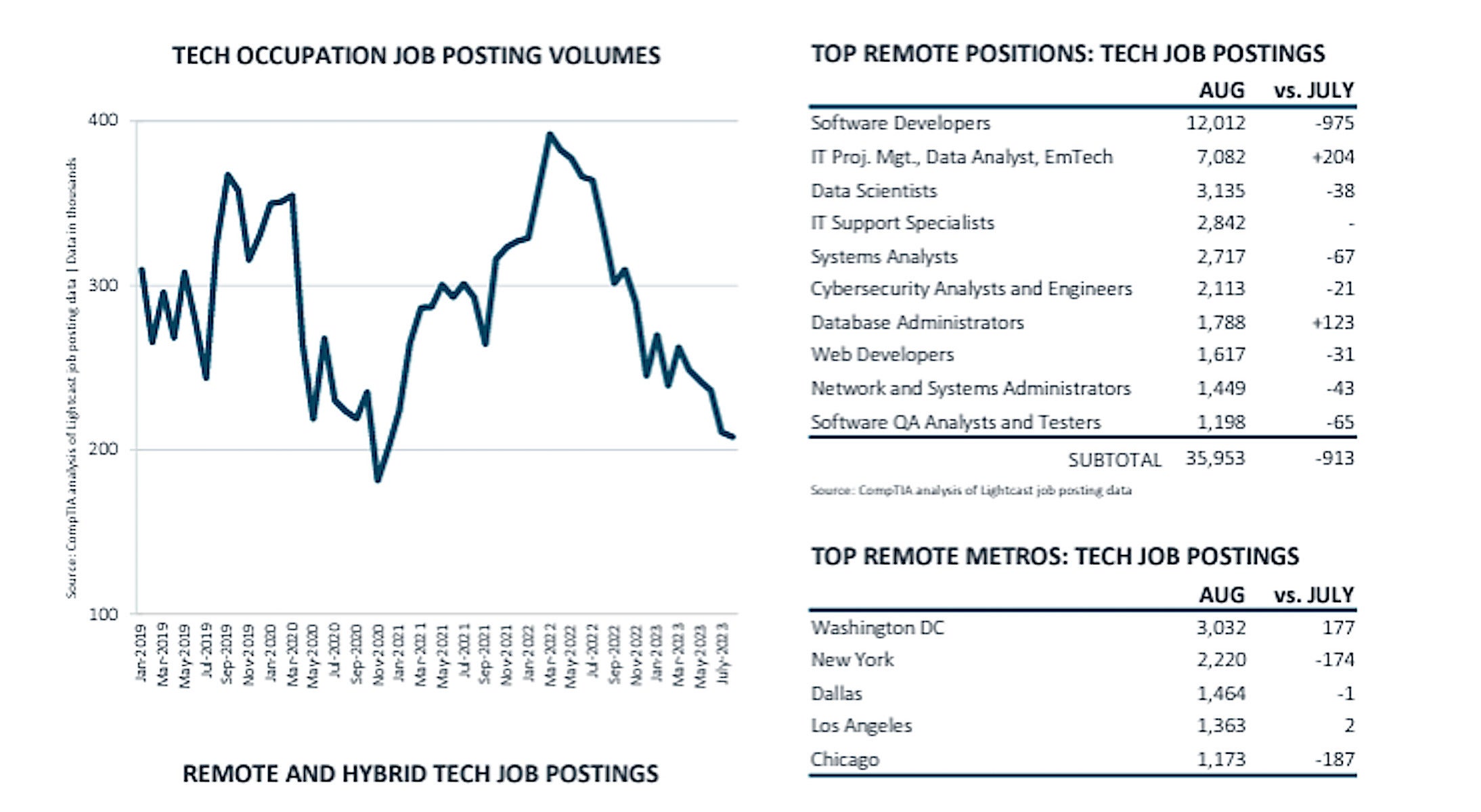
Jim McCoy, senior vice president of staffing firm ManpowerGroup, echoed Hebert’s sentiments on tech employment, but he said one bright sector has been smaller firms that are still dealing with a skills gap.
“To be sure, large companies have pulled back hiring and even cut workers, especially in technology, as borrowing costs have spiraled higher,” McCoy said. “But many small and midsized businesses that struggled to attract workers are snapping up those laid off and drawing from a more plentiful labor supply as Americans sidelined by COVID return to the workforce.”
The BLS jobs report showed the average hourly earnings for all employees rose by 7 cents, or 0.2%, to $33.88. Over the past 12 months, average hourly earnings have increased by 4.2%, the report stated. In September, average hourly earnings of private-sector production and nonsupervisory employees rose by 6 cents, or 0.2%, to $29.06.
While hiring may be up overall, real wages in the technology sector appeared to be declining, according to a recent report from job matching site Hired.
In its annual State of Tech Salaries Report, released in late September, Hired said the tech talent market has seen dramatic shifts from 2022 to the first half of 2023, fueling tension and misalignment between recruiter and job candidate expectations.
Following a year of record-breaking inflation and market turbulence, local salaries in the US, including those for fully in-person or hybrid roles, have experienced their most significant year-over-year decline, dropping by 3% from $161,000 to $156,000. In contrast, salaries in the UK have seen a 4% increase, rising from £82,000 to £86,000, according to Hired.
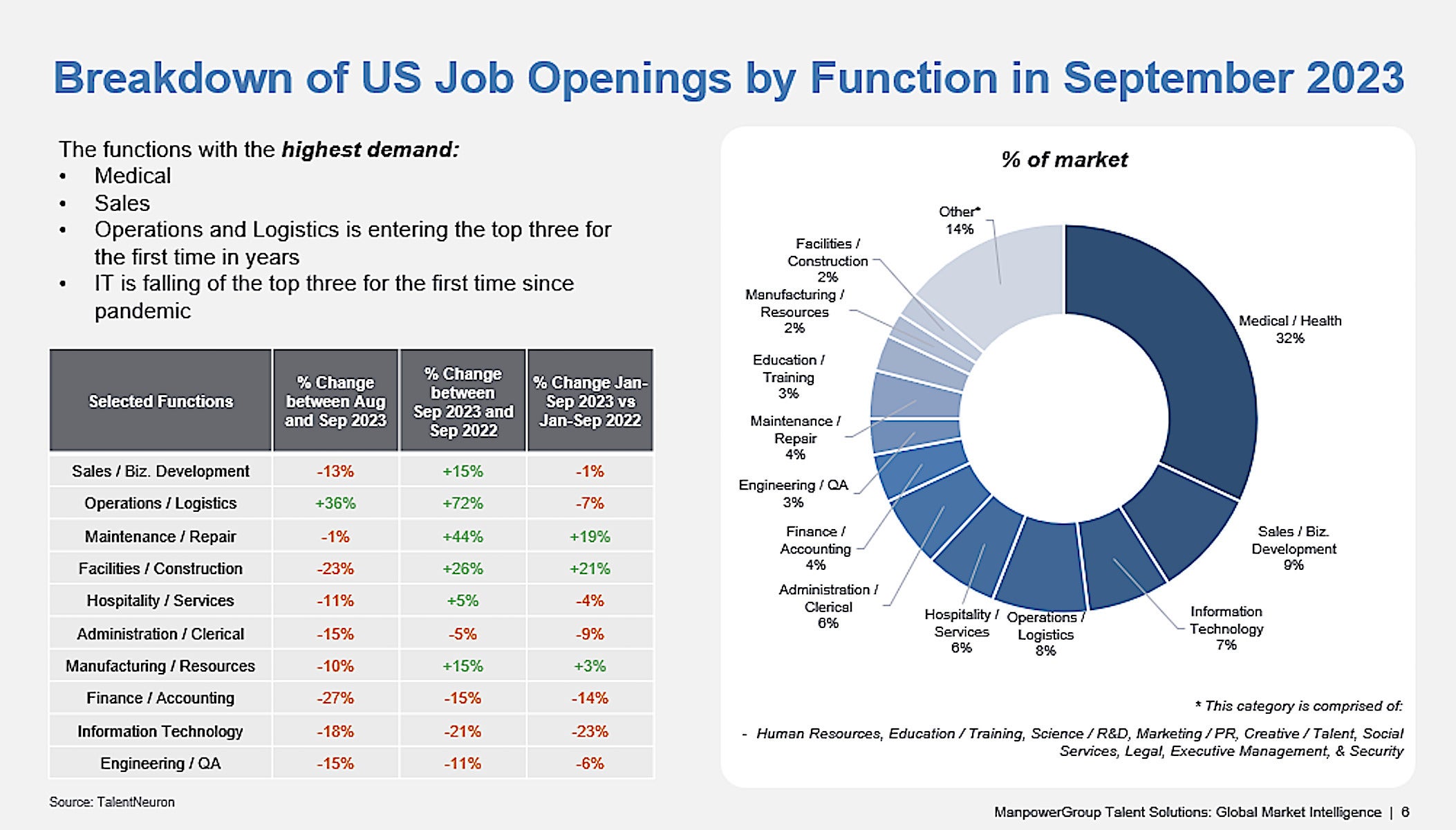
When adjusted for inflation, local salaries decreased 9% from $141K in 2022 to $129K by mid-2023, while remote salaries decreased 6% from $143K in 2022 to $134K by mid-2023.
Amid the rise of generative AI and a tightening of corporate budgets, junior talent (workers with less than four years of experience) have experienced the most significant decrease in salaries — nearly 5% year-over-year — and demand, with posted roles on the platform lowering from 45% in 2019 to 25% in the first half of 2023, according to Hired’s report.
“Compared to last year, we are witnessing a seismic shift in tech employee and employer preferences. The surging demand for experienced tech talent on our platform and employers’ increasing reliance on AI tools point to an ever-growing skills gap. This challenge will only heighten as companies reduce their hiring locations amid their return to the office and limit their access to qualified talent,” said Josh Brenner, CEO at Hired.
“With the future talent pipeline at risk of a deficit, companies cannot afford to disregard high-quality talent at any level. Instead, they must embrace diverse candidates with transferable skills who can adeptly address industry challenges, especially amid rapid advancements driven by emerging technologies like AI,” Brenner added.
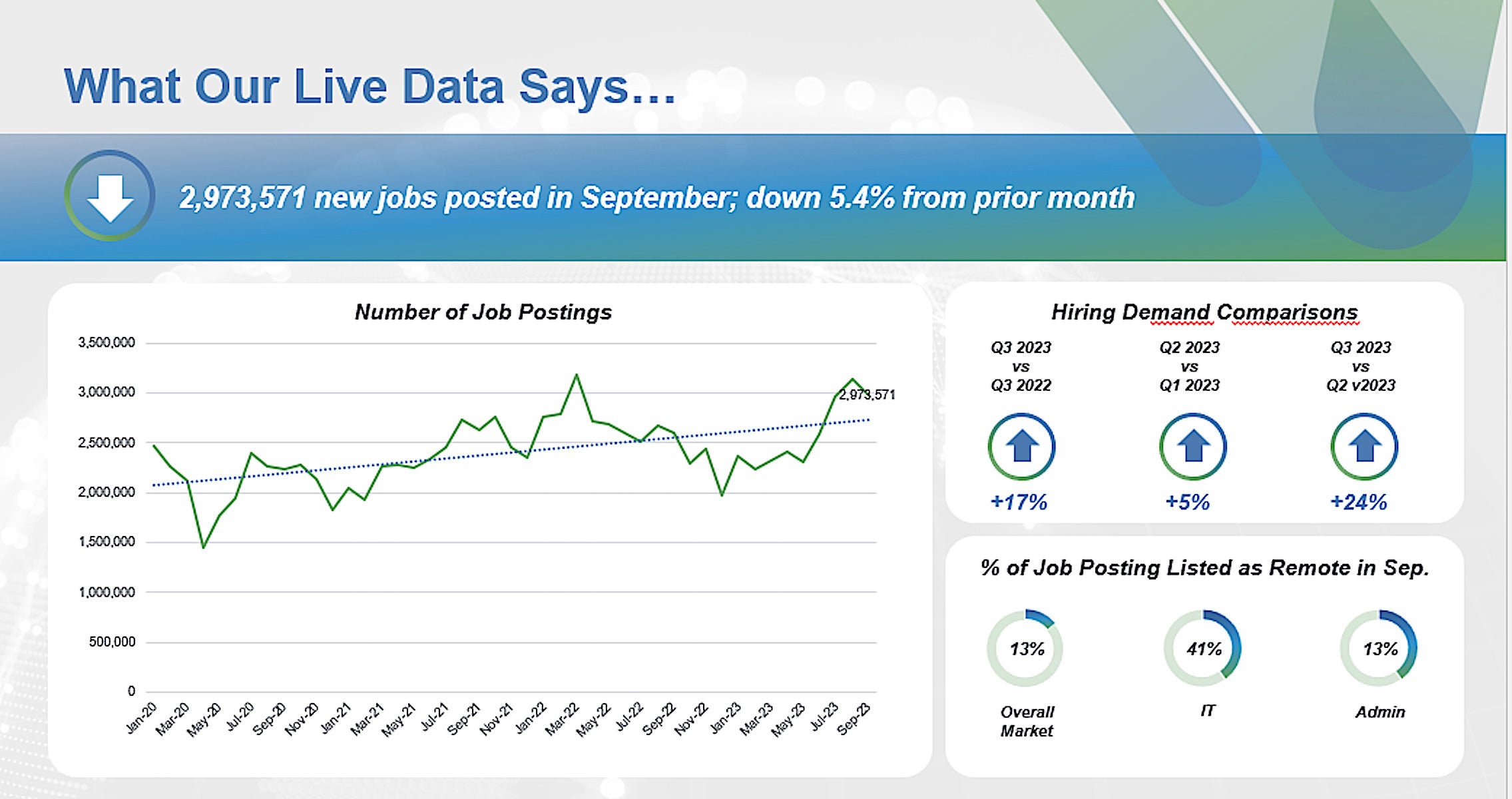
The highest paid tech workers were engineering managers, particularly with the introduction of AI tools and increased cybersecurity challenges. Engineering managers earn on average $202,000 in the US and £118,000 in the UK — a notable 10% increase from £107,000 at the end of 2022.
Specialized engineers are the most in demand in 2023: Employers on Hired’s marketplace have a higher demand for specialized engineers, especially for AI applications such as ML, as well as cybersecurity, data, and back-end engineers.
AI isn’t an immediate threat to job security, but it could present challenges for job seekers in the coming years: While the majority of surveyed candidates (87%) currently do not view AI as the primary threat to their roles, a significant portion of employers (47%) project they will leverage AI to reduce headcounts by 2029.
Overall, there were job gains in leisure and hospitality, government, healthcare, professional services, scientific and technical services, and social assistance.
Employment in professional, scientific, and technical services increased by 29,000 jobs in September, in line with the average monthly gain of 27,000 over the prior 12 months, BLS data showed.
Victor Janulaitis, CEO of Janco Associates, identified the 10 AI skills listed most often on client open job requisitions for IT professionals. The one AI skill that was included in more than 60% of those requisitions: ChatGPT.
“Since its launch in November of 2022, ChatGPT has been implemented by the greatest number of organizations,” Janulaitis said in a blog post. “As a result, companies are recruiting IT professionals who have the skills to help them with using ChatGPT for content generation, task automation and scripting… and more.”
Other skills listed in open IT job requisitions: Natural Language Processing, TensorFlow, Image Processing, PyTorch, Generative AI content creation, Midjourney, AI Chatbot, Model Tuning, and Stable Diffusion.
PricewaterhouseCooper’s Global Workforce Hopes and Fears Survey found sizeable pockets of the global workforce eager to learn new skills, embrace artificial intelligence (AI), and tackle new challenges — even as many companies fail to tolerate debate and dissenting ideas, or even small-scale failures. Meanwhile, many workers are restless: fully 26% say they plan to quit their job in the next 12 months, up from 19% last year.
August 2023
Though they remain low, unemployment figures have seesawed over the past six months, a phenomenon that has some tech industry experts scratching their heads trying to make sense of what may be the new norm.
Last month, unemployment in technology fields increased along with the overall US unemployment rate, which rose from 3.5% in July to 3.8% in August, according to new data from the US Bureau of Labor Statistics (BLS). At the same time, total nonfarm employment across all markets increased by 187,000 jobs in August.
The mixed messages in last Friday’s employment report carried over to the tech industry and workforce, according an analysis by industry group CompTIA.
Tech unemployment had dropped from 2.3% in June to 1.8% in July, as tech firms and employers in other industries added workers after a spate of high-profile layoffs in the tech industry.
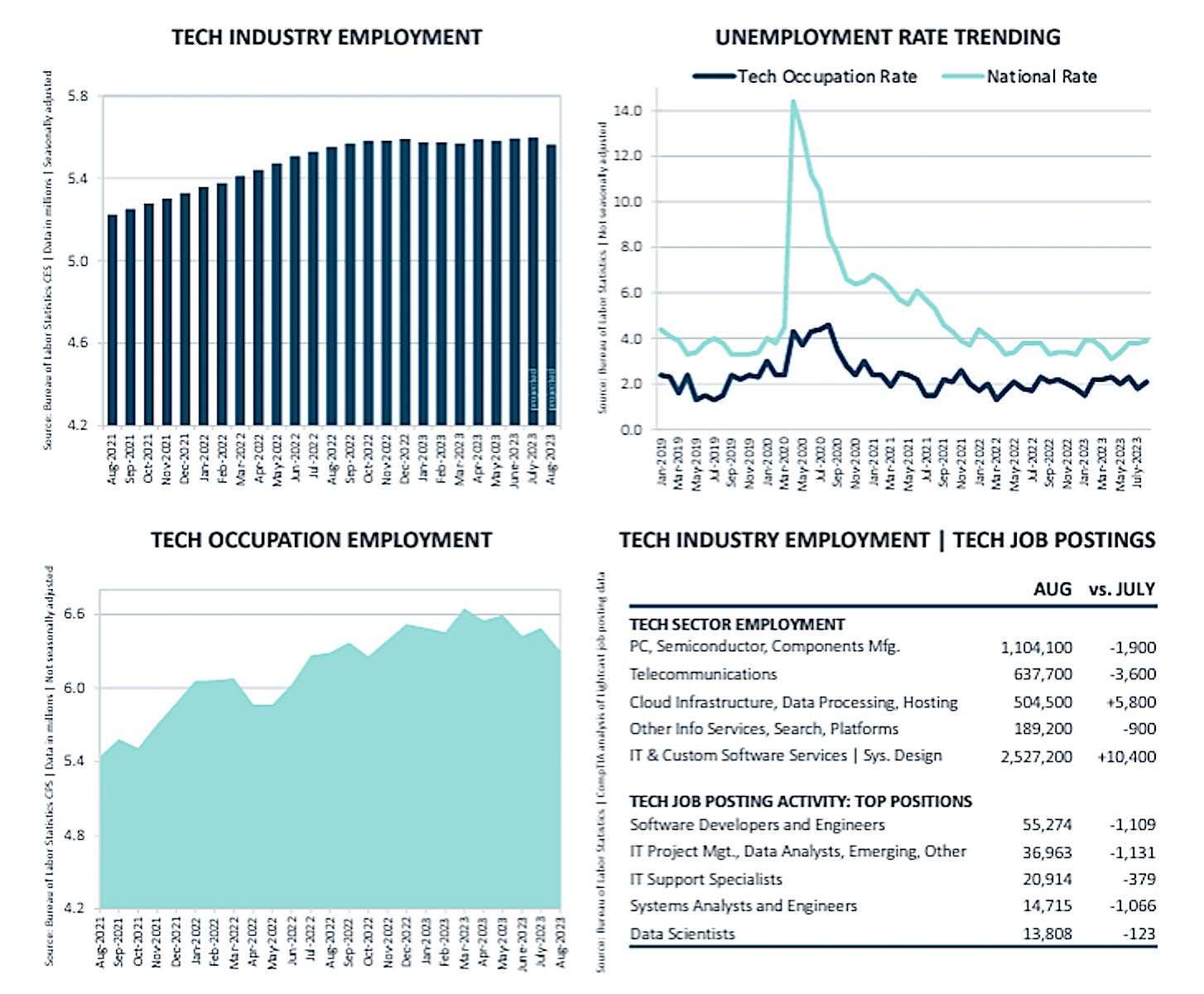
The latest BLS report, however, found that employers across the US economy reduced tech occupations by an estimated 189,000 positions, pushing the unemployment rate for tech jobs up to 2.1% — almost where it was in June, CompTIA said.
“The usual caveats of monthly fluctuations in labor market data apply,” said Tim Herbert, chief research officer at CompTIA. “The seesawing between strong and lagging tech jobs reports is undoubtedly confusing, but the overall macro trend of growth in the depth and breadth of the tech workforce remains steady.”
Employer job postings for future tech hiring (a separate category tracked by CompTIA) totaled nearly 208,000 in August, a slight decline of 1.4% from the previous month. But job postings for information security analysts increased 19% from July to August to more than 12,000 postings. Other in-demand occupations include software developers, tech support specialists, computer systems analysts, and data scientists.
“With ‘pandemic paranoia’ about hiring lingering, companies are continuing to hold onto their workers, remembering how hard it was to rehire,” said Becky Frankiewicz, president of global staffing firm ManpowerGroup’s North America Region. “Essential workers we valued through the pandemic may not be feeling so essential, as real-time job postings for blue collar roles like operations and logistics/maintenance and repair are down 43% month over month” based on ManpowerGroup’s real-time data.
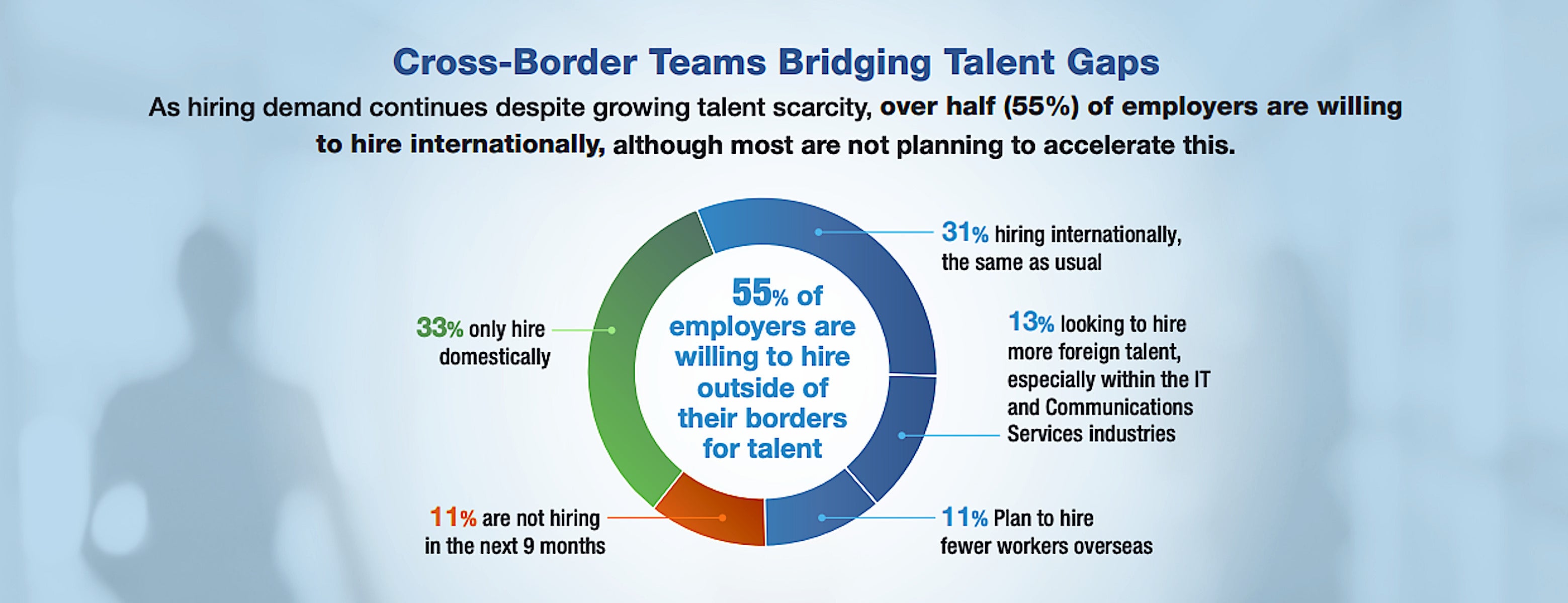
“This Labor Day is a great occasion to celebrate the resilience of the American worker,” she said. “Although we are seeing a slowdown, the labor market remains healthy, and we are optimistic about the future.”
Positions in emerging technologies or jobs requiring emerging tech skills, such as artificial intelligence (AI) and data science, accounted for 23% of all tech jobs postings in August. Among emerging tech job postings, 37% were associated with AI, with California, Texas, New York, Massachusetts, and Virginia showing the highest numbers of AI-related job postings.
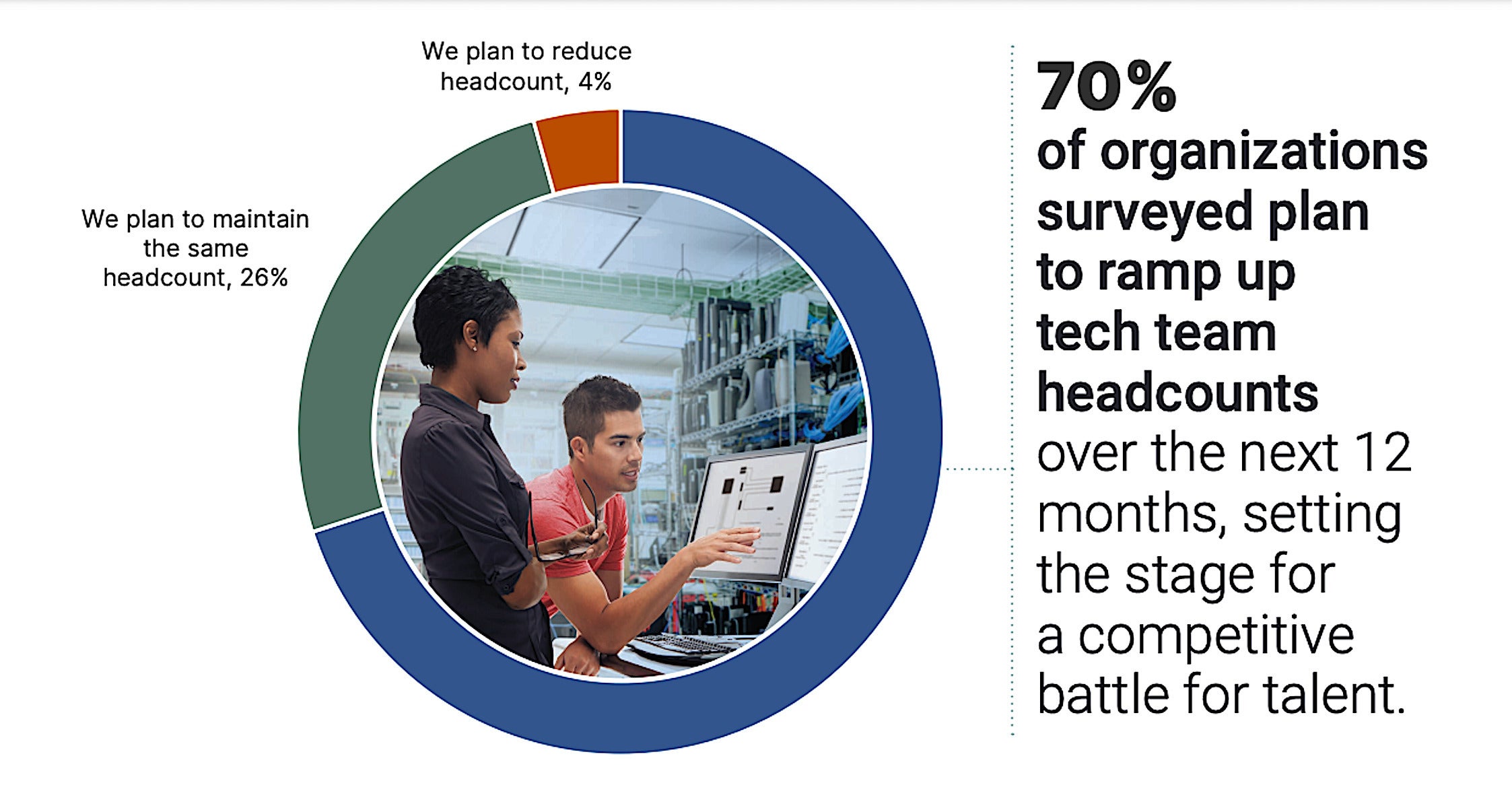
New data from IT staffing firm Experis found that an increasing number of companies surveyed are either adopting or planning to adopt emerging technologies in their recruiting processes. That comes as more than three quarters (78%) of IT organizations report difficulty finding talent with the right skills — a 17-year high.
According to Experis, 58% of employers believe AI and virtual reality will create jobs, not kill them. Additionally, cybersecurity, technical support, and customer experience remain high-priority IT staffing areas. Half of employers say they are training and upskilling their current workforce to address staffing challenges.
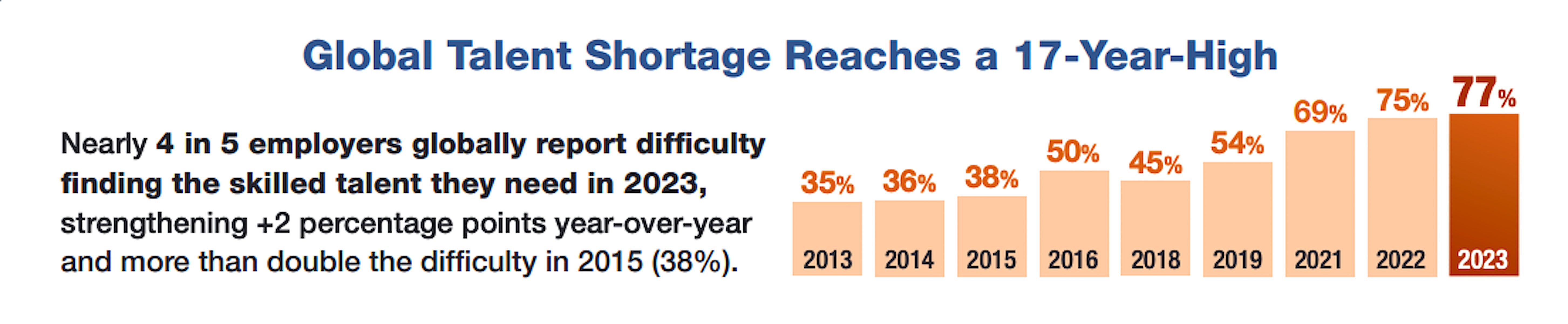
“The integration of AI, machine learning, VR/AR, and other emerging technologies is rapidly transforming industries and driving the need for an adaptable workforce,” said Experis Senior Vice President Ger Doyle. “We are seeing companies embrace these new technologies with many seeking to hire or upskill existing talent to take advantage of potential productivity gains. Smart employers know that embracing digitization and nurturing human talent will enhance their readiness to succeed in this era of rapid technological advancement.”
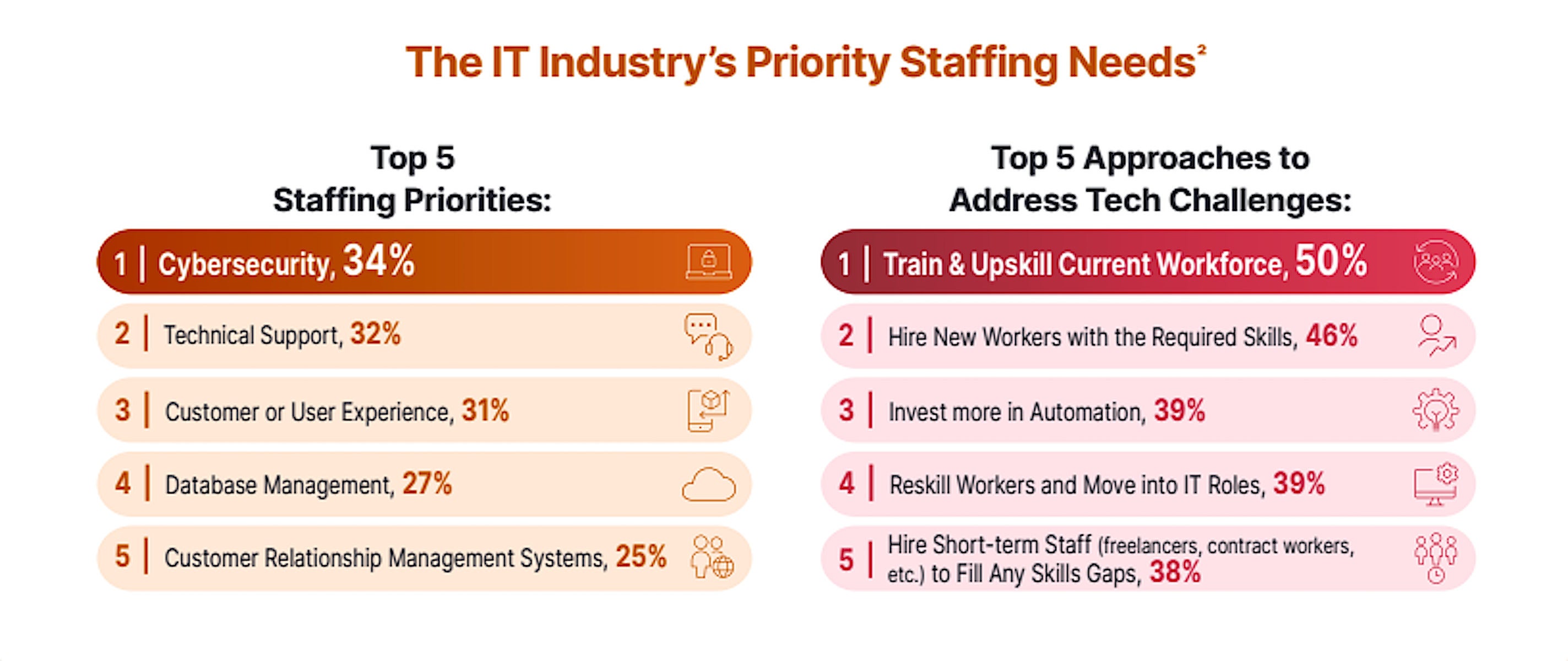
July 2023
The unemployment rate for tech jobs dropped from 2.3% to 1.8% in July, as technology companies and employers in other industry sectors added workers, according to analysis of US Bureau of Labor Statistics (BLS) data.
It was the lowest tech-sector unemployment rate since January, according to CompTIA, a nonprofit association for the IT industry and workforce.
The overall US unemployment rate also dropped slightly last month from 3.6% in June to 3.5%, according to BLS data. About 187,000 non-farm jobs were added, less than the average monthly gain of 312,000 over the prior 12 months. In July, jobs grew in healthcare, social assistance, financial activities, and wholesale trade, according to the BLS.
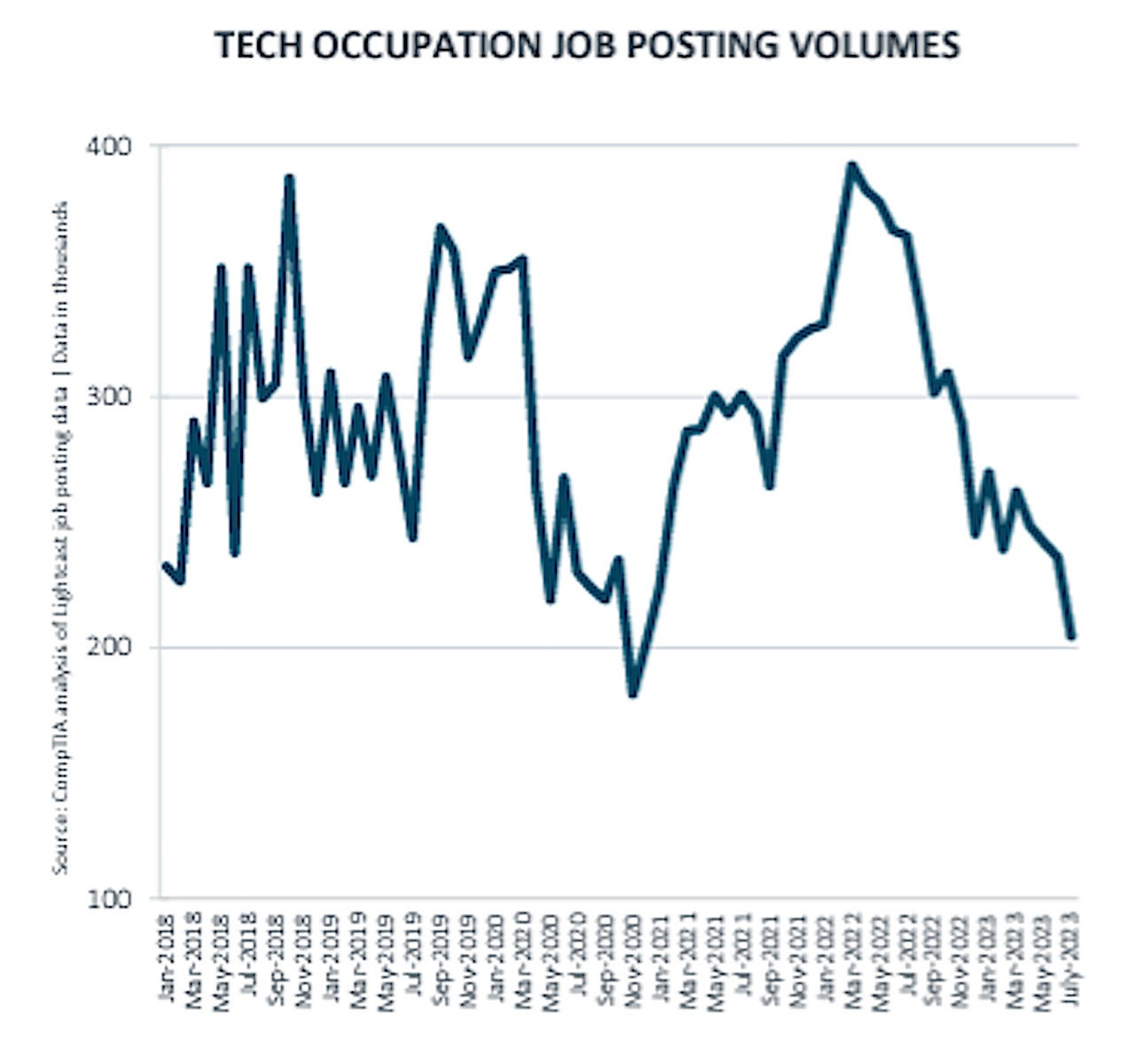
The overall unemployment rate has ranged from 3.4% to 3.7% since March 2022.
According to BLS data, employment in professional, scientific, and technical services continued to trend up in July with 24,000 positions filled.
Tech sector companies increased their staffing by 5,432 employees, according to CompTIA’s analysis of BLS data. Leading the way in new IT hires were custom software services and systems design;and PC, semiconductor and components manufacturing.
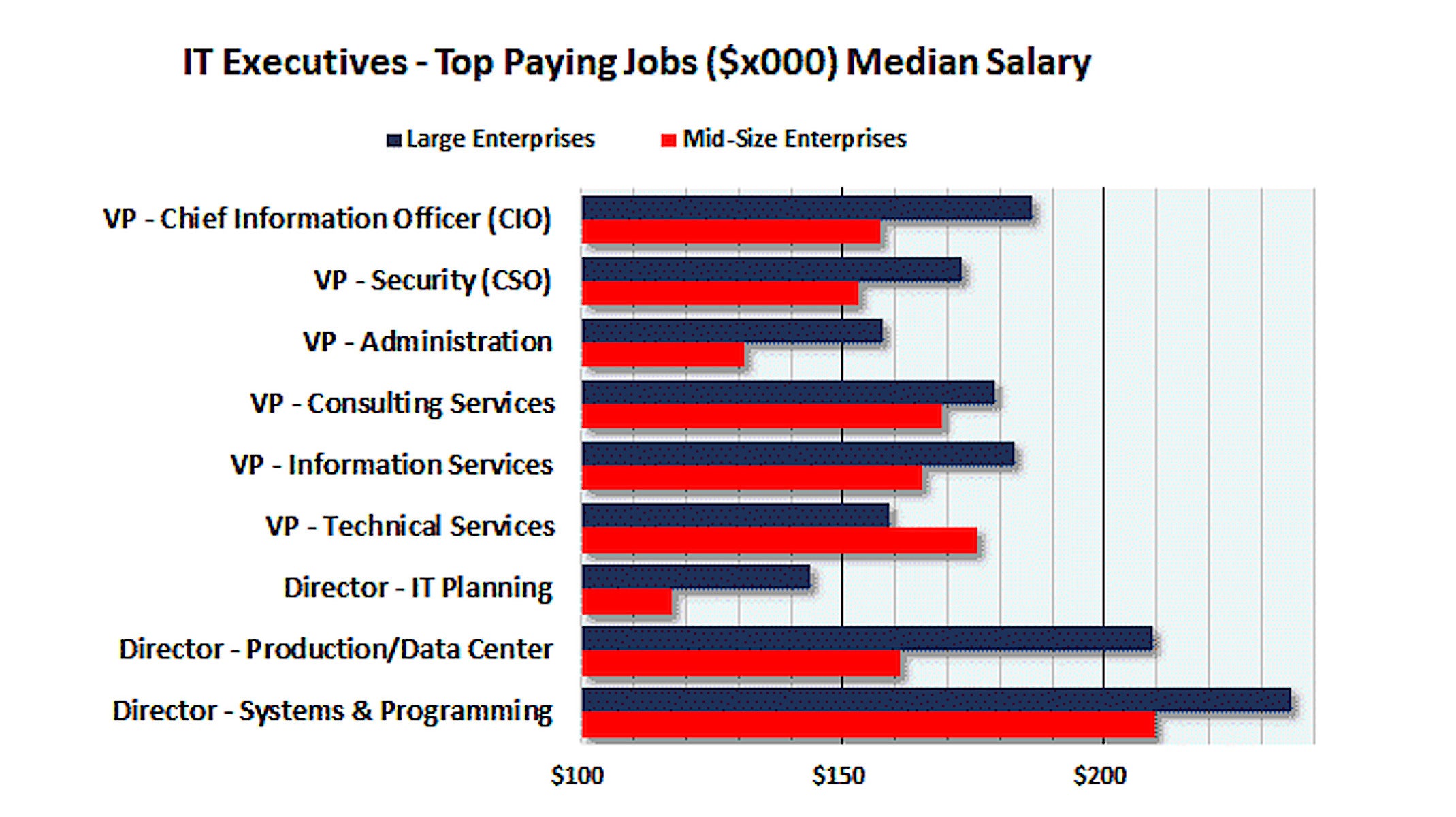
IT salaries were on the rise, too, according to a mid-year analysis by business consultancy Janco Associates, as more companies invested in IT. The emphasis in recent years has been on both e-commerce and mobile computing. And with growing numbers of cyberattacks and data breaches, CIOs are looking to harden their sites and lock down data access to protect all of their electronic assets, according to Janco Associates.
The lone drag on the July data was in employer job postings for tech occupations, which slipped to from 236,000 in June to 204,400 for the month of July.
“Given the pace of tech hiring, it remains a fairly tight market for tech talent,” Tim Herbert, chief research officer for CompTIA, said in a statement. “It continues to be an environment where employers must supplement recruiting efforts with proactive talent development strategies.”
While the drop in tech sector unemployment is notable, it’s not uncommon for rates to fluctuate, according to Herbert. Over the past 5.5 years dating back t0 January 2018, the tech unemployment rate saw a 1/2-point or higher rise or fall from the previous month 27 times, which translates to 40% of the time, he said in an email to Computerworld.
In comparison, the national unemployment saw the same kind of variation 22 times, or 33% of the time. Herbert said.
“Unfortunately, the Bureau of Labor Statistics does not provide data at a granular enough level to pinpoint the exact tech occupation categories driving changes in the unemployment rate,” Herbert said. “The employer job posting data indicates hiring activity is broad-based spanning all the major job families within tech.”
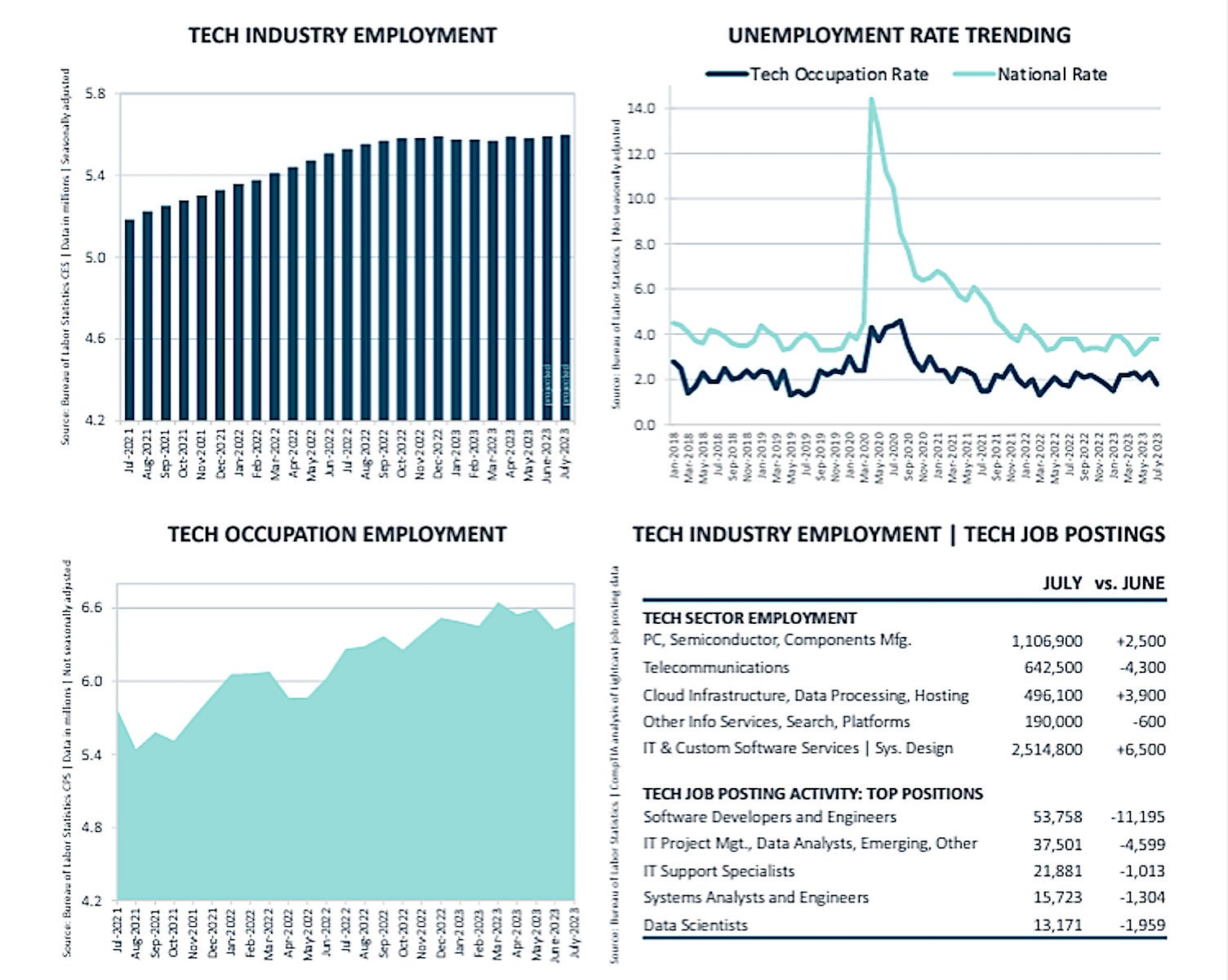
The way the BLS tracks job seekers also matters; it only keeps tabs on people actively looking for employment, Herbert noted.
“There could be scenarios whereby certain segments of workers go uncounted in the unemployment rate because they put their job search on pause — perhaps to re-evaluate their job search strategy, to pursue additional training, to recharge their batteries, etc.,” he said. “This could have the effect of artificially lowering the unemployment rate.”
There is a difference, however, between the long-term unemployed who might lack skills demanded in the labor market and those who voluntarily put a job search on hold. “My sense is tech workers in this position tend to fall in the latter category given most have in demand skills,” Herbert added.
Janco Associates painted a somewhat gloomier picture of the IT jobs landscape: it said that year to date, IT jobs shrank by 5,500 positions. That’s in contrast to 125,900 jobs created during the same period of 2022.
The number of unfilled jobs for IT pros shrank from more than 200,000 in December to just over 120,000 at the end of July, Janco’s latest report showed. It argued that the growth of the IT job market stopped in January, with a loss of 2,600 positions, with other losses piling up in succeeding months.
“Based on our analysis, the IT job market and opportunities for IT professionals are poor at best,” Janco CEO M. Victor Janulaitis said in a statement.
In the second quarter of 2023, the “big losers” were computer system design jobs (down 10,500); telecommunications (down 5,500); content providers (down 4,700); and other information service providers (down 6,600). Janulaitis said.
Many roles, especially in telecommunications and cloud providers are being automated and eliminated, he said. CIOs and CFOs are looking to improve the productivity of IT by automating processes and reporting where possible and focusing on eliminating “non-essential” managers, staff, and services.
“Experienced coders and developers still have opportunities. The highest demand continues to be for security professionals, programmers, and blockchain processing IT Pros,” Janulaitis said.
As part of an effort to boost return on investment, CIOs are looking to consolidate the cloud service providers they support.
“This will impact the job prospects at those providers,” Janulaitis said. “There continues to be a general belief there will be an economic downturn by many CIOs and CFOs. This is impacting all decisions around hiring new IT pros and increasing technology-related expenditures. This has impacted the salaries of IT pros with a major impact on the compensation of IT executives.”
Meanwhile, according to CompTIA, the strongest demand was for software developers and engineers, IT project managers, data analysts, IT support specialists and emerging technologies. Positions in emerging technologies or jobs that require emerging tech skills accounted for about 23% of all tech job postings in July.
Within the emerging tech category, 35% of job postings referenced artificial intelligence (AI) work and skills, CompTIA said.
June 2023
IT workers are well positioned to not only keep their jobs but to get big bumps in pay when looking for new opportunities, according to analysis of jobs data released today by the US Bureau of Labor Statistics (BLS).
Overall, the US unemployment rate dropped slightly from 3.7% in May to 3.6% in June, with about 206,000 jobs added, according to the BLS. The number of jobs added last month was down 100,000 from May.
Wages also increased as employers continued to struggle to find workers. Average hourly earnings of private-sector production and nonsupervisory employees grew 4.4% in June over the same period last year to $28.83, according to the BLS.
Tech sector companies increased headcount by 5,348 jobs last month, according to an analysis of BLS data by industry group CompTIA. Among the six top tech occupation categories, three have shown positive gains through the first half of 2023: IT and custom software services and systems design; PC, semiconductor and components manufacturing; and cloud infrastructure, data processing and hosting.
Overall, however, tech occupations throughout the economy declined by an estimated 171,000, according to CompTIA. The unemployment rate for tech jobs edged up from 2% to 2.3%, still well below the national unemployment figure.
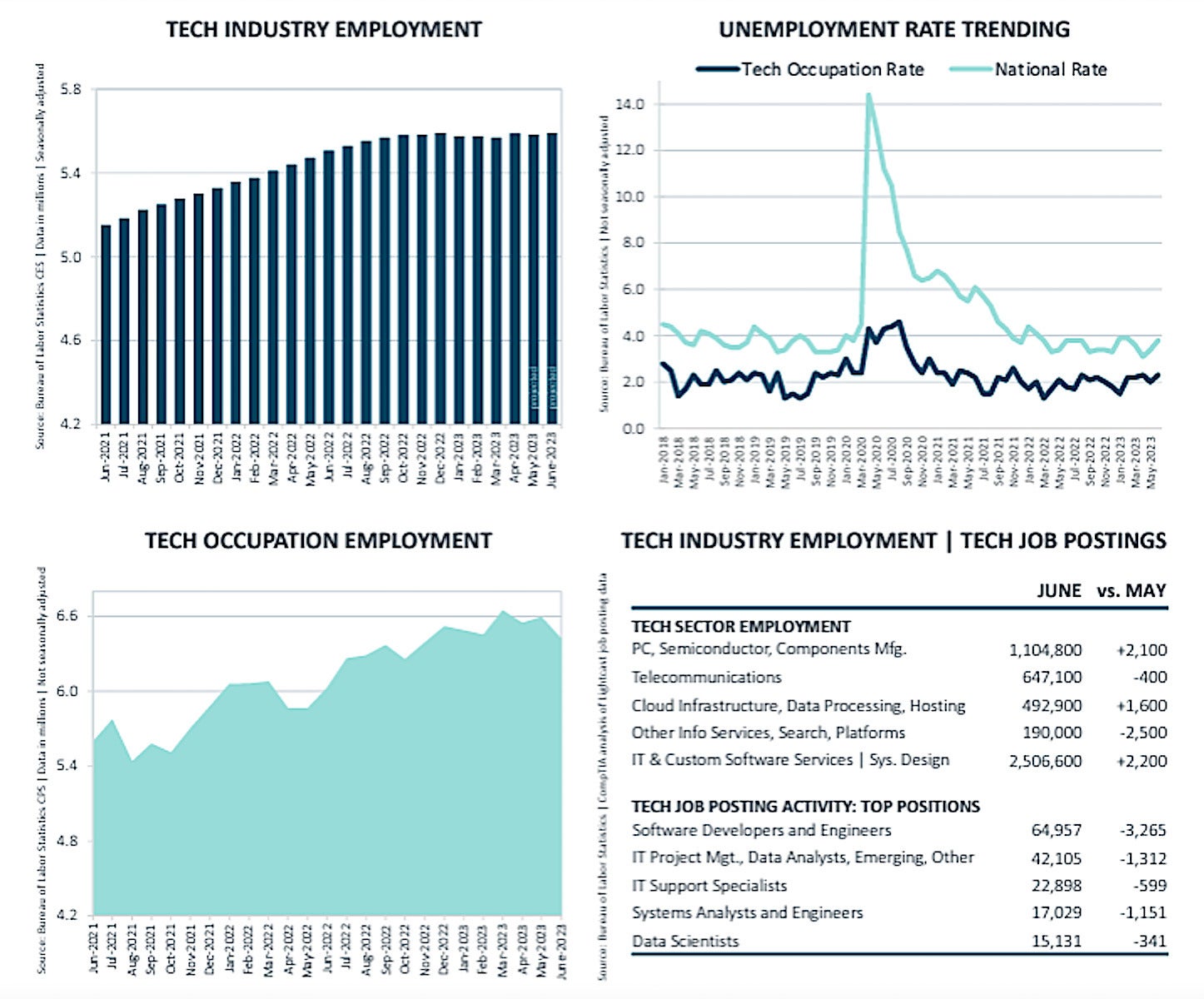
Software developers were in particularly in high demand, according to CompTIA. Job openings had dropped by more than 2,700 positions in May, but in June software development positions rose by more than 15,700 openings. Job openings for IT project managers and data scientists also lept in June, up by 8,633 and 3,929, respectively.
Other IT positions that saw marked increases included system analysts, IT support specialists, web developers, cybersecurity analysts and engineers, and database adminitrators, according to CompTIA.
Overall, tech-related employment mirrored June’s overall easing of the labor market nationally, CompTIA said. Tech occupations throughout the economy fell back and job postings for future hiring were down modestly, with jobs offering remote/hybrid work arrangements falling off even as opportunities to work with artificial intelligence rose in the emerging job market.
“The latest tech employment figures do lag some, but the underlying fundamentals remain unchanged. All signs point to a continuation of the growth trajectory for the tech workforce,” Tim Herbert, chief research officer, CompTIA, said in a statement.
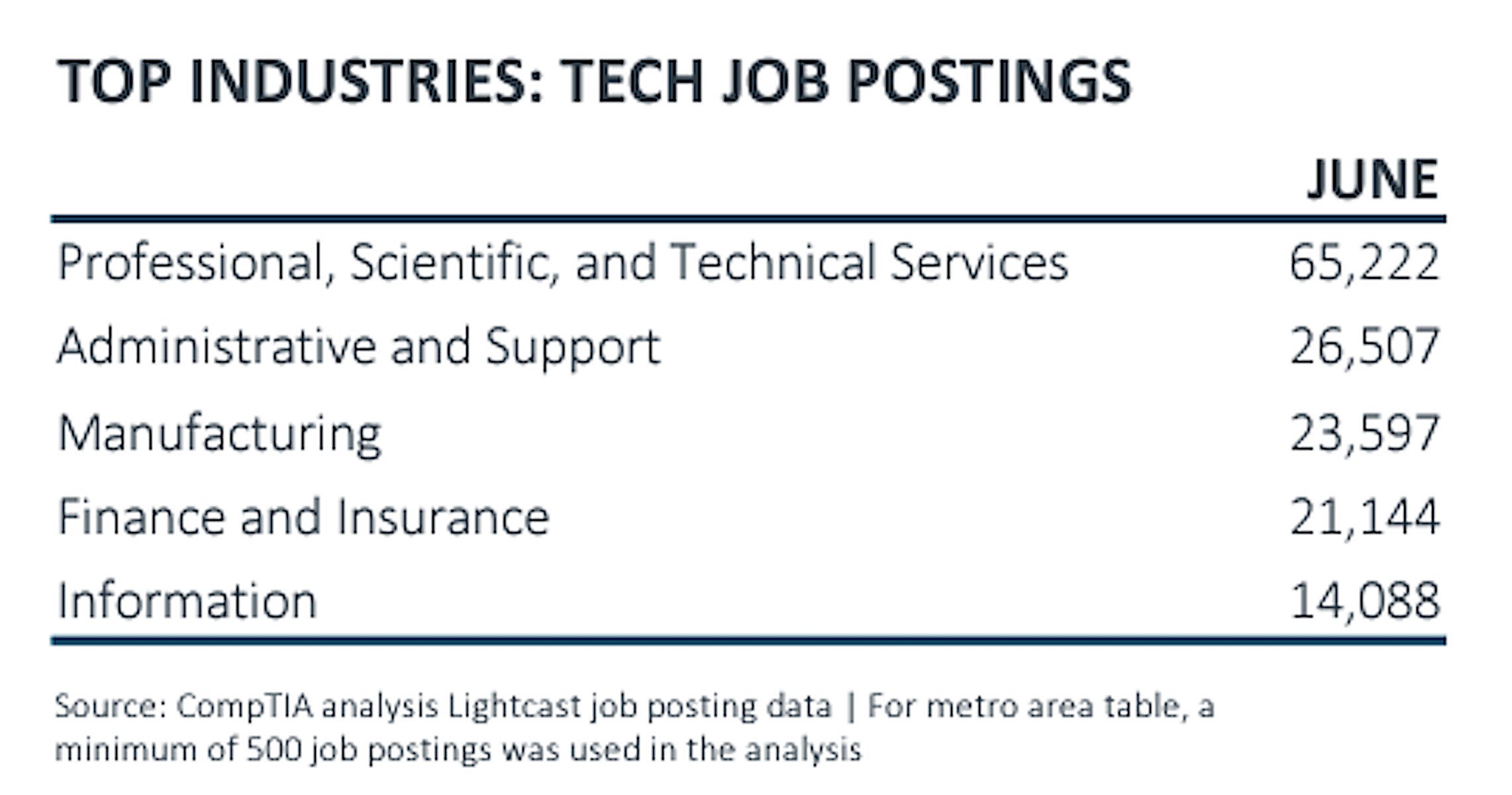
Ahead of the BLS jobs report, HR software provider ADP released its own jobs report Thursday saying private sector jobs surged by 497,000 in June, well ahead of the 267,000 gain in May and much higher than the 220,000 analysts had estimated.
“According to the Department of Labor, [ADP’s] numbers were way off,” said Jamie Kohn, senior director of human resources research at Gartner. “I do think we’re seeing a slight slowdown in jobs at the moment, but there’s such a shortage of talent, companies are trying to keep up.”
Employment rates for prime age workers — 18- to 54-year-olds — is back to pre-Covid numbers and companies are reticent to make further cuts even as economists continue to chirp about a possible recession.
“We have data that shows on median, people are getting a 15% increase when they move from one job to another,” Kohn said. “They’re actually getting higher pay bumps than they thought they would.” On average, most job seekers expect an 8% increase in pay in a new job, according to a new Gartner survey.
Another trend putting pressure on the job market is an increasing number of Baby Boomer retirements, leaving management positions and other senior jobs unfilled.
“We’re about half way through Baby Boomer [generation] retirement. The market is likely to get tighter as the latter half of the Baby Boomer generation retires over the next decade or so. Some people also retired early during and coming out of the pandemic,” Kohn said. “I’m hearing from a lot of HR leaders who are trying to figure out how to convince people to delay retirement because they’re finding it hard to find people.”
IT workers in particular are in demand, Kohn said. The Gartner survey showed 78% of job market candidates have multiple offers on the table. That compares to overall job seekers, 72% of whom had multiple job offers.
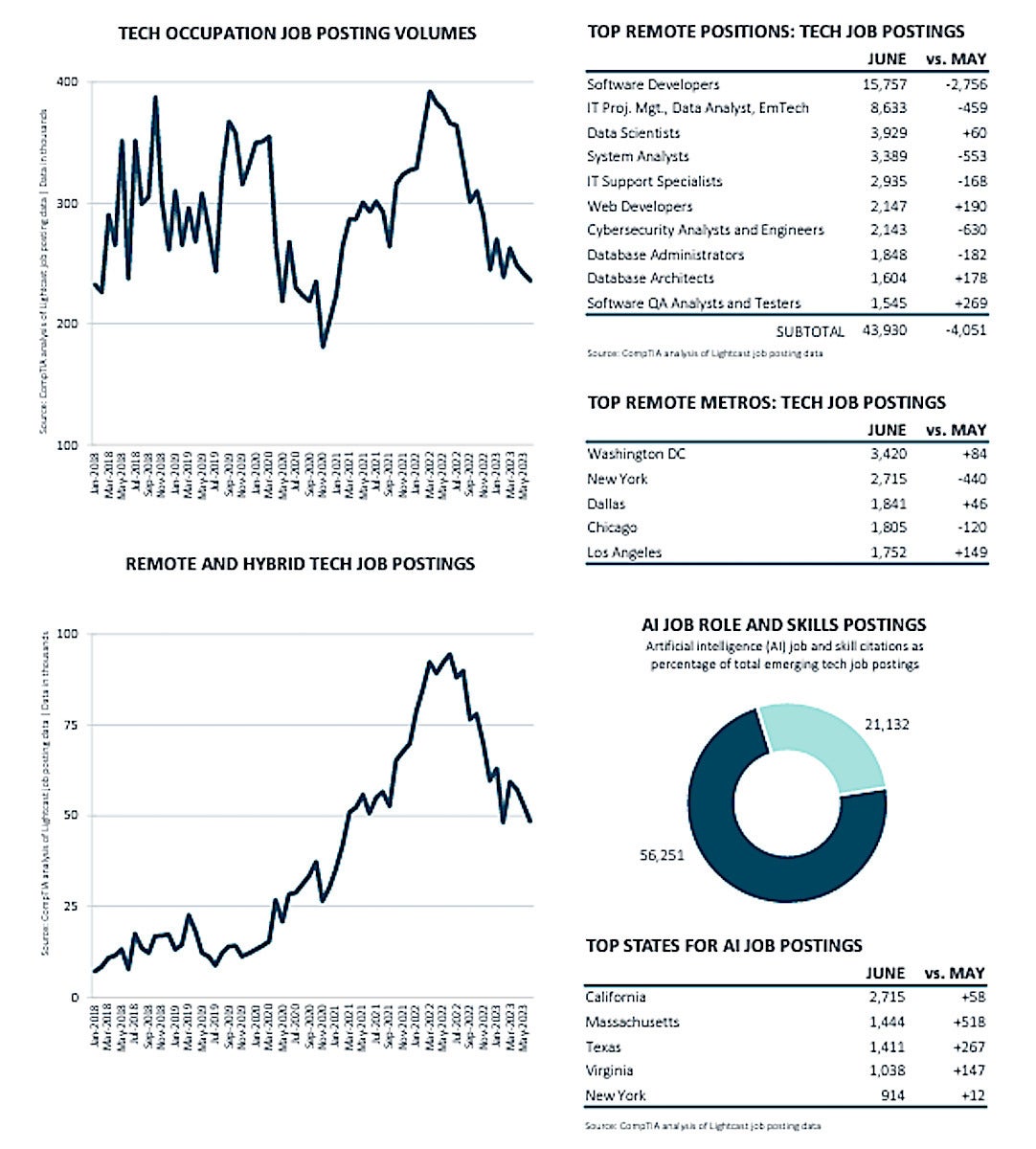
While organizations across all US industries are expected to boost hiring in the third quarter, employers in the IT market have the most aggressive hiring plans, according to global staffing firm ManpowerGroup.
Unmet demand for talent is highest in IT-related fields, with 78% of employers in IT reporting challenges in hiring, according to an earlier report from ManpowerGroup. This suggests that tech workers who find themselves laid off will soon be reabsorbed into the market.
ManpowerGroup’s real-time data is showing plentiful opportunities in logistics, job openings grew 25% this quarter, sales and business development were up 10%, medical (up 9%) and finance (up 8%).
“We’re seeing the relationship between employers and workers continue to evolve, particularly for workers with in-demand skills,” Becky Frankiewicz, ManpowerGroup’s regional president and chief commercial officer, said. “As ‘pandemic paranoia’ about hiring lingers, companies are holding on to their workers as layoffs calm and permanent roles are more in demand than temporary.”
Hybrid work is also on the uptick, with all industries offering more remote/hybrid roles month-over-month and tech remote work up 34%-40% in June, according to ManpowerGroup. And as the relentless advance of AI continues, employers are betting on people. Companies are investing in the talent and skills they have in house, with organizations re-skilling and up-skilling more than ever.
After some high-profile layoffs by tech companies this year and last, many IT workers are seeking employment in industries they consider more stable, such as financial services, according to Kohn.
Workforce participation by women remains lower than for men. A key reason for that is US employers are not as generous with flexible work, paid maternal leave and childcare assistance as their European counterparts.
“If you have to spend half or more of your income for childcare, no reason to go back to work,” Kohn said, adding that what’s needed is an overhaul of worker benefits rights by the federal government. Another wrinkle: US immigration has seen steep declines — even before the pandemic — further reducing the chance for a glut in job openings.
May 2023
Like April before it, the month of May showed mixed results for tech employment in the US.
Technology companies shed an estimated 4,725 jobs — a figure that includes nontechnical workers — in May, according to an analysis of the latest US Bureau of Labor Statistics (BLS) figures by IT industry group CompTIA. Job postings for open technology positions also eased off, down to about 234,000 from April’s 300,000, according to a new report from CompTIA.
At the same time, however, the number of technology jobs throughout the economy rose by 45,000, according to the report.
Those mixed results for the tech workforce reflect the unpredictability of the overall labor market. US employers added a stronger-than-expected 339,000 jobs in May, but the overall US unemployment rate rose by 0.3 percentage points to hit 3.7%, while the number of unemployed people rose by 440,000 to reach 6.1 million, according to BLS data released today.
Responding to the BLS data, global staffing firm ManpowerGroup also commented on the mixed results for tech pros: “Our data shows cooling in IT, with posted roles down 12% compared to last month. Yet those let go are being quickly reabsorbed, often into midsize companies.”
Indeed, while the national unemployment rate has ranged between 3.4% and 3.7% since March 2022, the unemployment rate for tech occupations has hovered near 2% throughout that time frame. In fact, tech unemployment decreased slightly in May, from 2.1% to 2.0%, according to CompTIA’s analysis of the BLS data.
“Reassuringly, the positives for the month outweigh the negatives, confirming the tech workforce remains on solid footing,” said Tim Herbert, chief research officer at CompTIA.
The most in-demand roles among tech job postings include software developers and engineers; IT project managers, data analysts, and other emerging tech roles; IT support specialists; systems analysts and engineers; and data scientists. Approximately 20% of job postings are in emerging tech fields or require emerging tech skills, including nearly 15,000 postings that mention AI skills, according to CompTIA.
April 2023
Technology companies added 18,795 workers in April, the largest number since August 2022, according to the latest US Bureau of Labor Statistics (BLS) figures and an industry analysis of that information.
The data revealed a mixed bag of results for tech workers last month. Technology jobs throughout the economy declined by 99,000 positions even as employer job postingspassed 300,000 — a level last reached in October, according to a report from CompTIA, a nonprofit association for the IT industry and workforce.
Both the overall US unemployment rate, at 3.4%, and the number of unemployed, at 5.7 million, changed little in April, according to BLS data released today. The national unemployment rate has ranged between 3.4% and 3.7% since March 2022.
The unemployment rate for tech occupations inched up to 2.3% in April from 2.2% in March, still well below the national unemployment rate, according to CompTIA’s evaluation.
“It was another all-too-familiar month of mixed labor market signals,” said Tim Herbert, chief research officer at CompTIA. “The surprisingly strong tech sector employment gains were offset by the pause in tech hiring across the economy.”
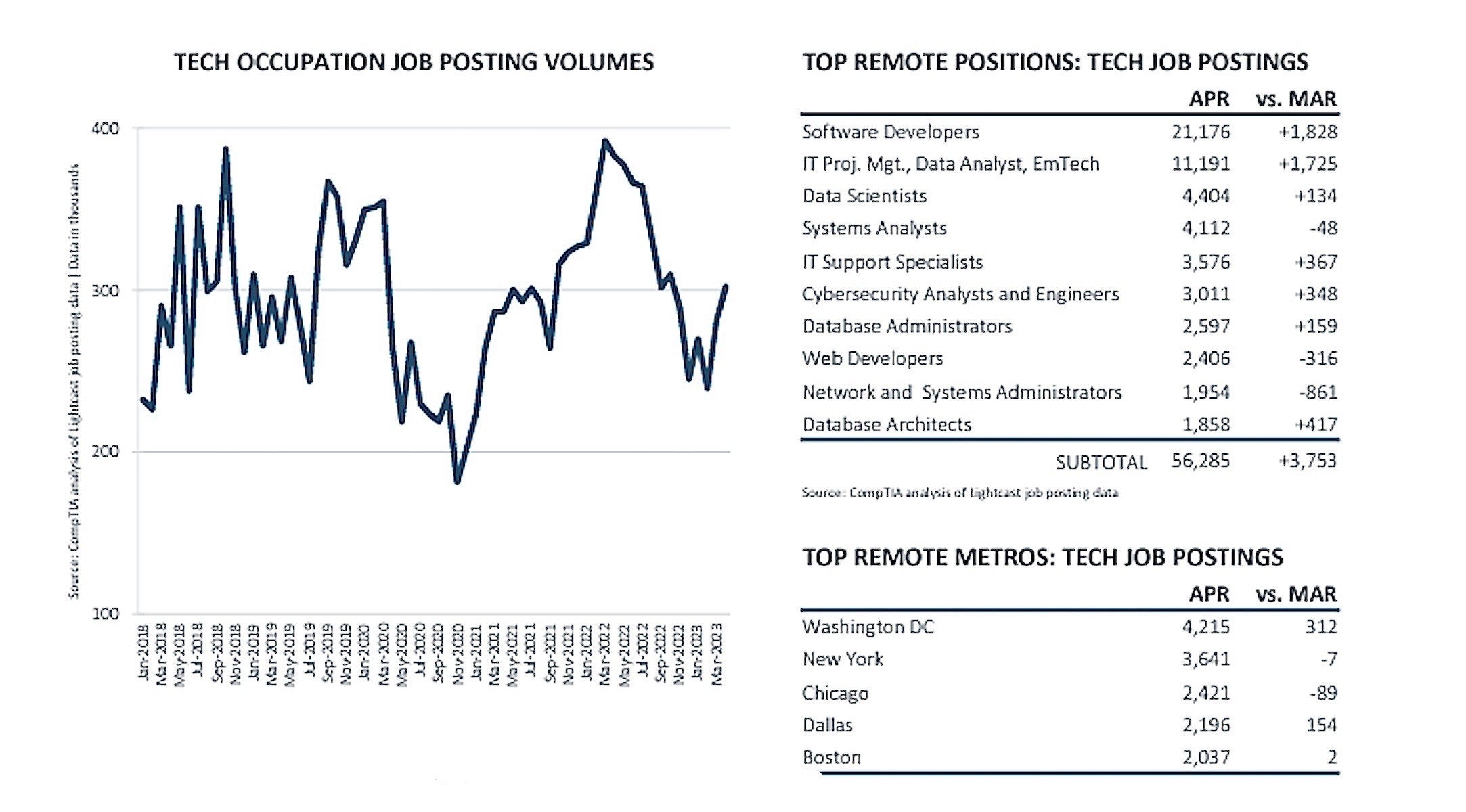
Still, IT executives and managers are among the most highly paid workers in US corporations, according to a new report based on the latest data from the US Bureau of Labor Statistics (BLS).
A BLS report published last last month — the Occupational Employment and Wages Summary for 2022 — showed computer and information research scientists earn on average about $155,880 a year. Database architects are the second-highest earners with just over $136,540 in annual compensation. Software developers followed at $132,000 a year.
Putting upward pressure on wages has been a combination of scarce tech talent and low unemployement rates.
Computer and IT managers are among the most highly paid positions in the US, earning an average $173,670 across all industries and occupations; that’s even more than the top executives in all industries and occupations ($129,050), according to business consultancy Janco Associate.
In terms of employment in the tech industry, software developers held just over 1.5 million positions in the US, more than double the 700,000 positions held by computer user support specialists. Computer systems analysts, with 500,000 jobs, were in third place, according to Janco’s report.
Late last month, job search website Lensa published a research study showing “computer occupations” are among the most in-demand jobs in the US, second only to “health diagnostic and treatment practitioners.” More than 3.1 million potential applicants clicked on open job positions in the IT arena, according to Lensa.
Overall, the number of workers not in the labor force who currently want a job increased by 346,000 over the month to 5.3 million, according to the BLS. “These individuals were not counted as unemployed because they were not actively looking for work during the four weeks preceding the survey or were unavailable to take a job,” the BLS said.
Both the labor force participation rate, at 62.6%, and the employment-population ratio, at 60.4%, were unchanged in April. These measures remain below their pre-pandemic February 2020 levels, 63.3%and 61.1%, respectively.
Global Staffing firm ManpowerGroup viewed the BLS data from April as a “promise of spring” for the job market, with a higher-than-expected 253,000 jobs added.
Employers continue to hire for in-demand skills while pulling back on non-essential headcount, the company said in a statement to Computerworld. The company also noted some negative trends that emerged with the BLS’s revisions to its March data showing 100,000 fewer jobs, “and the three-month average is tracking down.”
“Today, we’re seeing very concentrated demand with medical, IT, and sales representing 44% of all open positions,” Becky Frankiewicz. president of ManpowerGroup North America said. “That data includes all real-time available jobs across the country. [Job] openings are the lowest they’ve been in two years.”
Employers listed more than 300,000 job postings for tech positions in April, signaling demand for tech talent continues to hold up, according to CompTIA. In March, there were 316,000 tech job openings.
Within the tech sector, three occupation categories paced April hiring, led by IT services and custom software development (+12,700 additional jobs). Job gains were also reported in cloud infrastructure, data processing and hosting (+7,300 additional jobs) and PC, semiconductor and components manufacturing (+3,200 additional jobs).
Employer job postings for tech positions were widely dispersed geographically and by industry. Employers in administrative and support (32,861), finance and insurance (32,820) and manufacturing (31,959) were among the most active last month.
The number of tech job postings that specify remote work or hybrid work arrangements as an option continued to trend upward in April, with more than 65,000 positions across the country; software developers, IT project managers, data analysts and jobs in emerging technologies topped the list
Among metropolitan markets, Washington, DC, New York City, Dallas, Los Angeles, and Chicago had the highest volumes of tech job postings. And Dallas, Houston, Philadelphia, Boston and Seattle saw the largest month-over-month increases in postings, according to CompTIA.
March 2023
Tech sector employment, which includes all workers on the payrolls of tech companies, declined in March by an estimated 839 jobs, according to the US Bureau of Labor Statistics (BLS) and IT industry group CompTIA.
Employer job postings for tech positions for March, however, increased by 76,546 month-over-month, for a total of 316,000 openings; the tech unemployment rate remained unchanged from February at 2.2%.
Technology employment across all industry sectors increased by an estimated 197,000 positions for the month, according to CompTIA’s analysis of BLS data. “This represents the highest level of employer hiring activity as measured by job postings in seven months,” CompTIA said in its Tech Jobs Report.
More than 4.18 million people are now employed as IT professionals in the US, according to industry research firm Janco Associates.
“As a forward-looking indicator, the rebound in employer tech job postings is a notable positive,” said Tim Herbert, CompTIA’s chief research officer. “While caution is in order given the state of uncertainty, the data suggests segments of employers may be stepping back into the tech talent market.”
Overall, the US economy added 236,000 jobs in March, according to the BLS, a slight slowdown compared to recent months; that could mean the jobs market may be responding to recent interest rate hikes by the US Federal Reserve.
At the same time the number of jobs being added to the economy dropped slightly, the overall unemployment rate dipped a tenth of a point to 3.5%, remaining near 50-year historic lows.
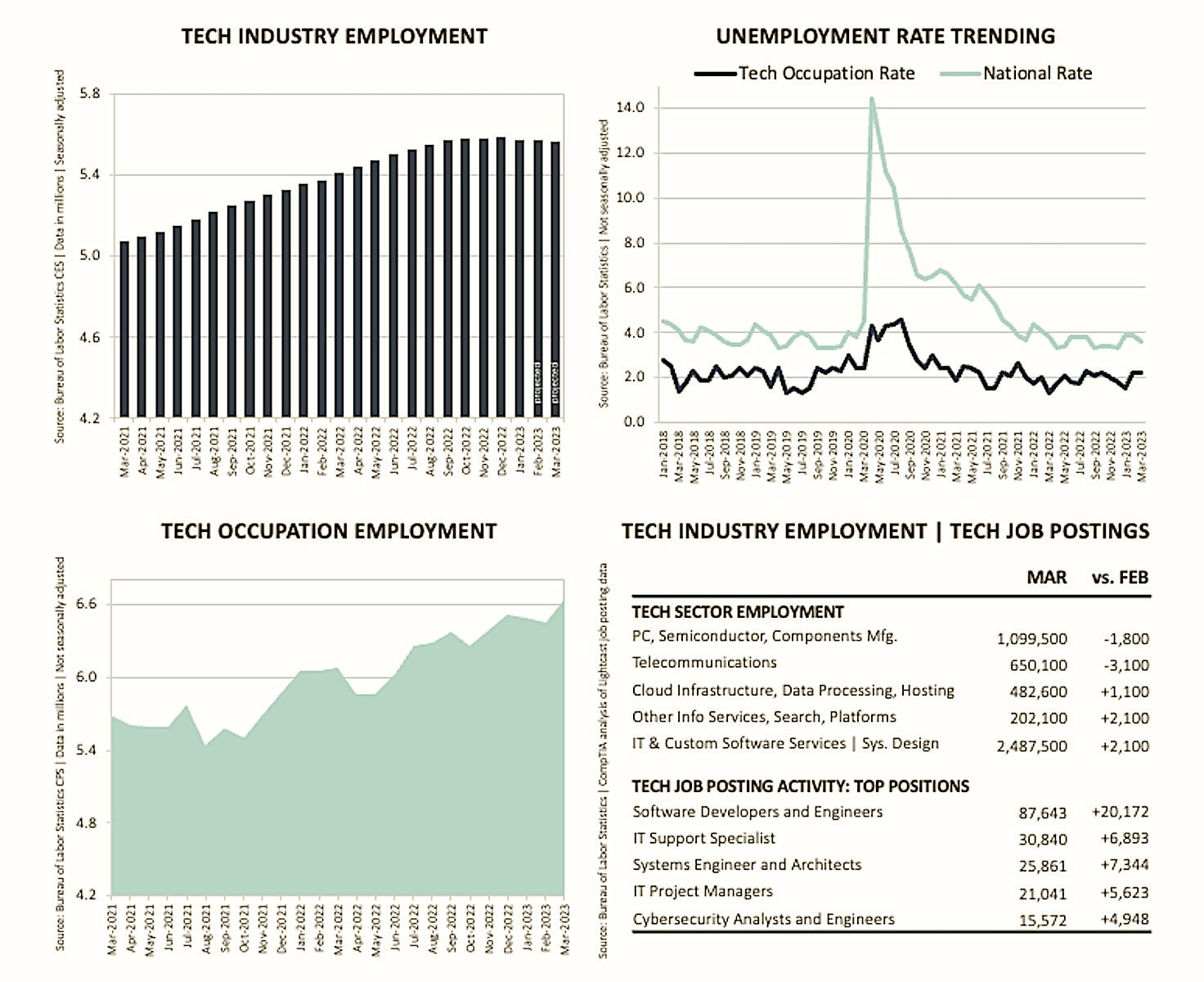
IT industry advocacy group CompTIA’s March Tech Jobs Report.
The total number of unemployed US workers, at 5.8 million, changed little in March; that measure has shown little net movement since early 2022, according to BLS data.
“The labor market posted solid if not spectacular gains,” Diane Swonk, chief economist and managing director at KPMG LLP, wrote in a blog post. “Hiring in both the public and the private sectors slowed. Hiring by firms with less than 250 workers continues to drive gains in the private sector. Those firms are the most vulnerable to the recent tightening of credit conditions,”
Even as unemployment remains low, there have been a number of high-profile layoffs in the technology industry and elsewhere during the past six or so months; industry experts have said many organizations over-hired during the COVID-19 pandemic and are now having to trim their workforces, a so-called “course correction.”
This year, more than 168,000 workers have been laid off at tech firms, according to industry tracker Layoffs.fyi.
Last month, job search site Indeed fired 15% of its workforce, or about 2,200 employees. The layoffs came from nearly every team and function within the company, CEO Chris Hyams said, and were in response to a job market that has cooled “after the recent post-COVID boom,” he said.
“US total job openings were down 3.5% year-over-year, while sponsored job volumes were down 33%,” Hyams said. “In the US, we are expecting job openings will likely decrease to pre-pandemic levels of about 7.5 million, or even lower over the next two to three years.”
While big tech firms such as Google and Microsoft may be letting workers go, the layoffs aren’t dominated by IT talent. Most of the layoffs are occurring on the business side of the corporate world. In fact, there are fewer IT workers than job openings — a lot fewer.
Positions for software developers and engineers accounted for the largest share of job postings in March, according to CompTIA. Employers are also in the market for IT support specialists, systems engineers and analysts, IT project managers, cybersecurity analysts, and engineers. About one in five tech job postings offer remote or hybrid work arrangements as an option.
A new report from global staffing firm ManpowerGroup found that 77% of employers report difficultly filling job roles, representing a 17-year talent shortage high.
James Neave, head of data science at job search site Adzuna, said despite the latest spate of layoffs, which include Apple and Walmart, job growth has exceeded expectations for 12 consecutive months, “the longest streak since 1998.
“Today’s closely watched jobs report gives another healthy reading on the job market and the strength of hiring,” he said invia email to Computerworld.
On Adzuna, advertised job vacancies in the U.S. totalled 8.3 million in March. As a result, organizations need to continue working to attract and retain highly qualified talent amid shortages and skills gaps, Neave said.
“To win workers, organizations are improving their benefits and providing care for the whole person in such a stressful economic time,” he said. “Boosting benefit offerings also helps to slow staff turnover and reduce the risk of burnout, improving morale as well as the bottom line.”
February 2023
Tech sector employment fell by 11,184 positions in February, a modest reduction of 0.2% of the total tech industry workforce of more than 5.5 million.
Unemployment in the tech sector also jumped from 1.5% in January to 2.2%, in February, according to data released today by the Bureau of Labor Statistics (BLS) and CompTIA, a nonprofit association for the IT industry and workforce.
The unemployment rate for tech occupations is still below the national rate of 3.6%, which saw a .1% increase from January.
The number of technology occupations in all industries declined by .6% or 38,000 positions, according to CompTIA’s report. Tech occupations in the US economy still total more than 6.4 million workers. Among all tech industries, tech manufacturing added a net new 2,800 jobs, the fifth consecutive month of positive gains.
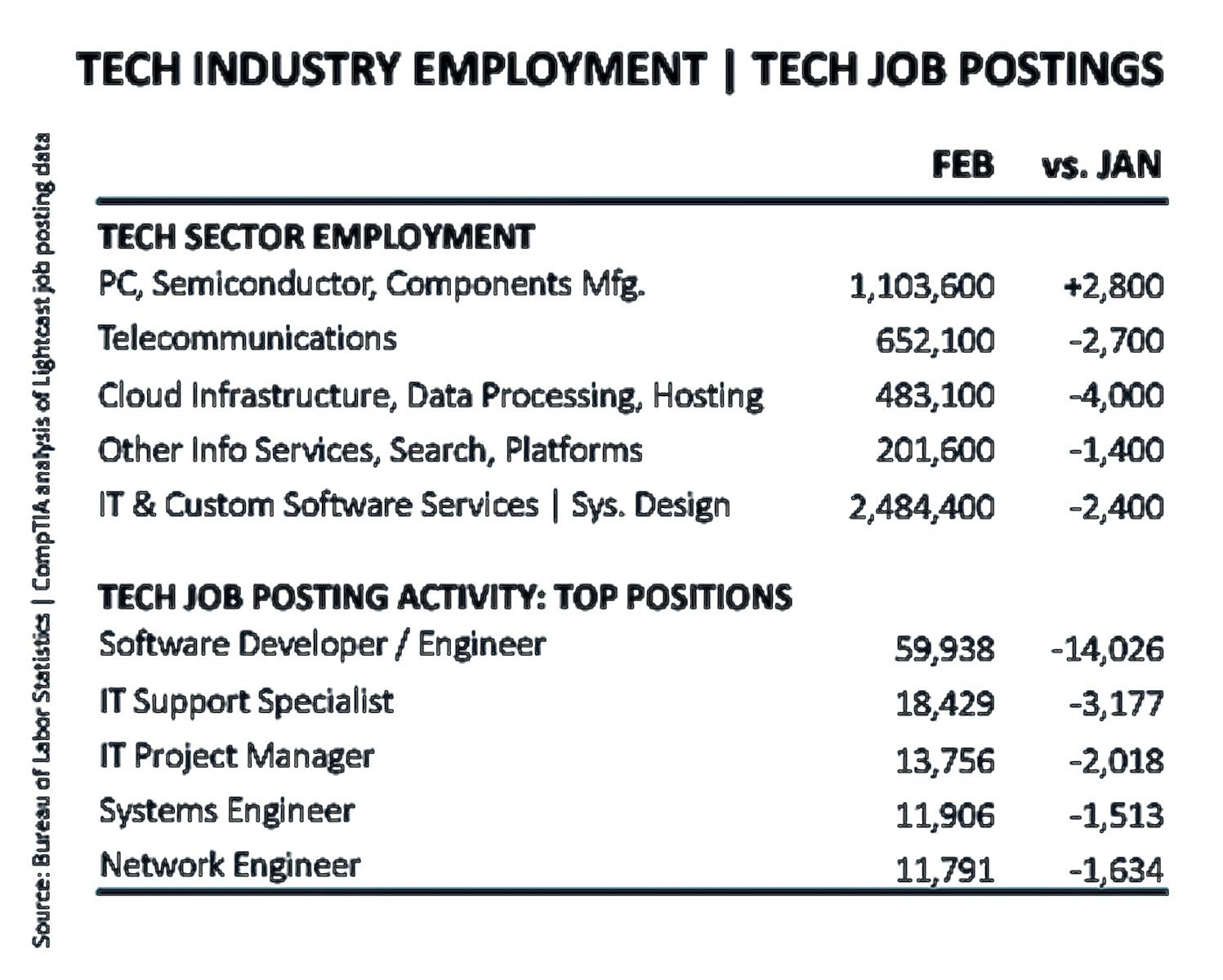
Employer job postings for tech positions also declined by about 40,000, to just over 229,000 in February. Most metropolitan markets experienced fallbacks from January to February, with a few exceptions, according to CompTIA.
“As expected, the lag in labor market data means prior layoffs announcements are now appearing in BLS reporting,” said Tim Herbert, chief research officer for CompTIA. “Context is critical. The recent pullback represents a relatively small fraction of the massive tech workforce. The long-term outlook remains unchanged with demand for tech talent powering employment gains across the economy.”
While there have been hundreds of highly publicized layoffs among tech companies, the vast majority of employees being fired are not in IT positions, according to industry analysts. In fact, there remains a dearth in tech talent to fill more than 145,000 IT job openings.
IT consultancy Janco Associates offered a somewhat more pessimistic view of the IT job market.
“Layoffs, for the most part, did not hit developers. Rather they were focused on data center operations, administrative and HR roles related to recruiting, and DEI (diversity, equity, and inclusion). Some roles, especially in telecommunications and data center operations are being automated and eliminated,” Janco CEO Victor Janulaitis said in a statement. “Driving this is CIOs and CFOs who are looking to improve the productivity of IT by automating processes and reporting where possible. They are focusing on eliminating non-essential managers and staff. They will continue to hire coders and developers.”
The highest demand, Janulaitis said, continues to be for security professionals, programmers, and blockchain processing IT professionals. Other industry research shows data analysts and AI professionals are also in high demand.
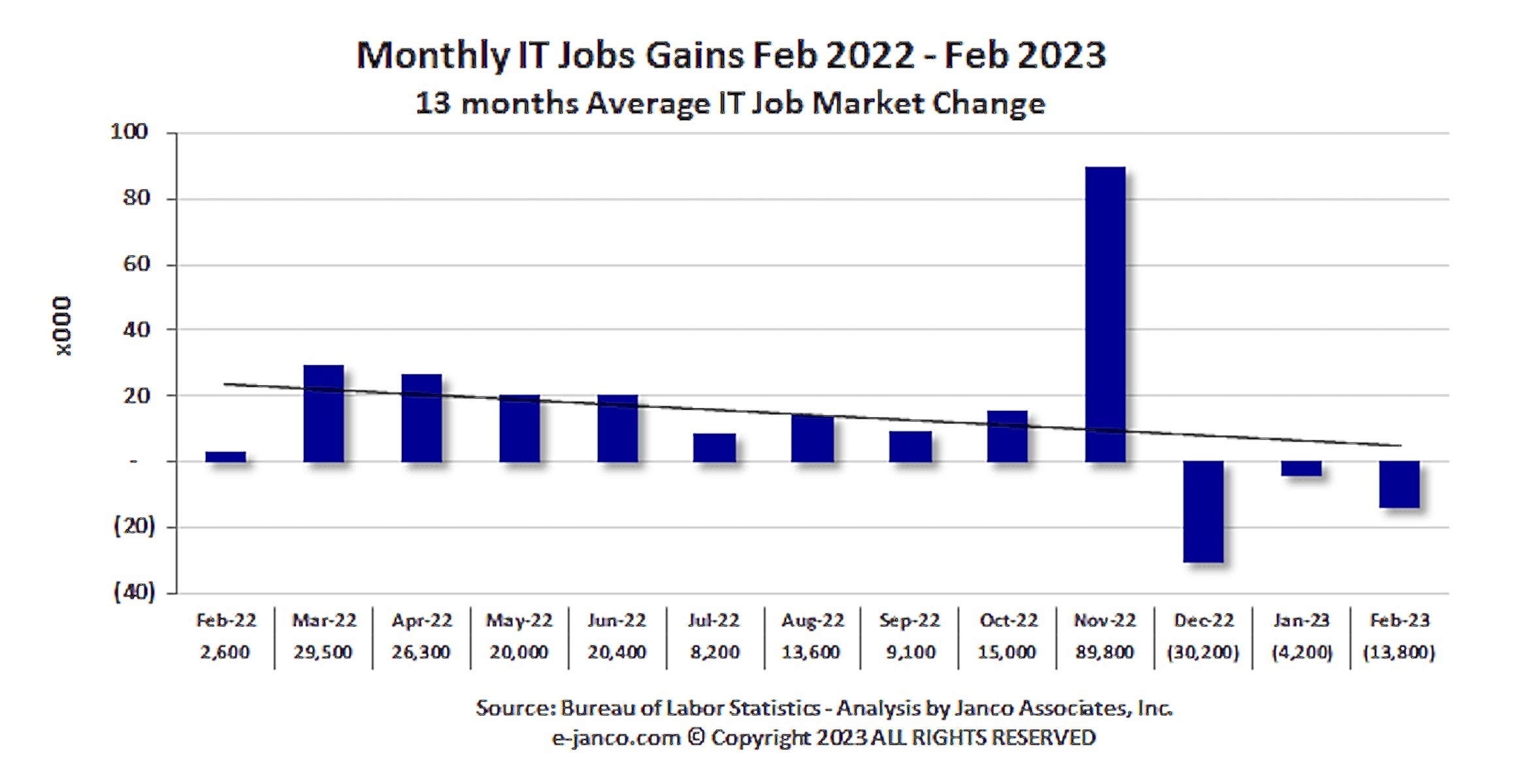
“The general belief there will be an economic downturn is high for many CIOs and CFOs. This is impacting all decisions around hiring new IP pros and increasing technology-related expenditures,” Janulaitis said.
In 2022, 267,000 new jobs were added to the IT market. Those new jobs were in addition to the 213,000 jobs created in 2021.
In 2023, while there are more jobs being added, that number is declining. In January, for example, for the first time in 25 months, there was a net loss in the number of jobs in the IT Job Market. That trend is continuing, Janco said. In the first two months of 2023, the IT job market shrank by 44,900 jobs.
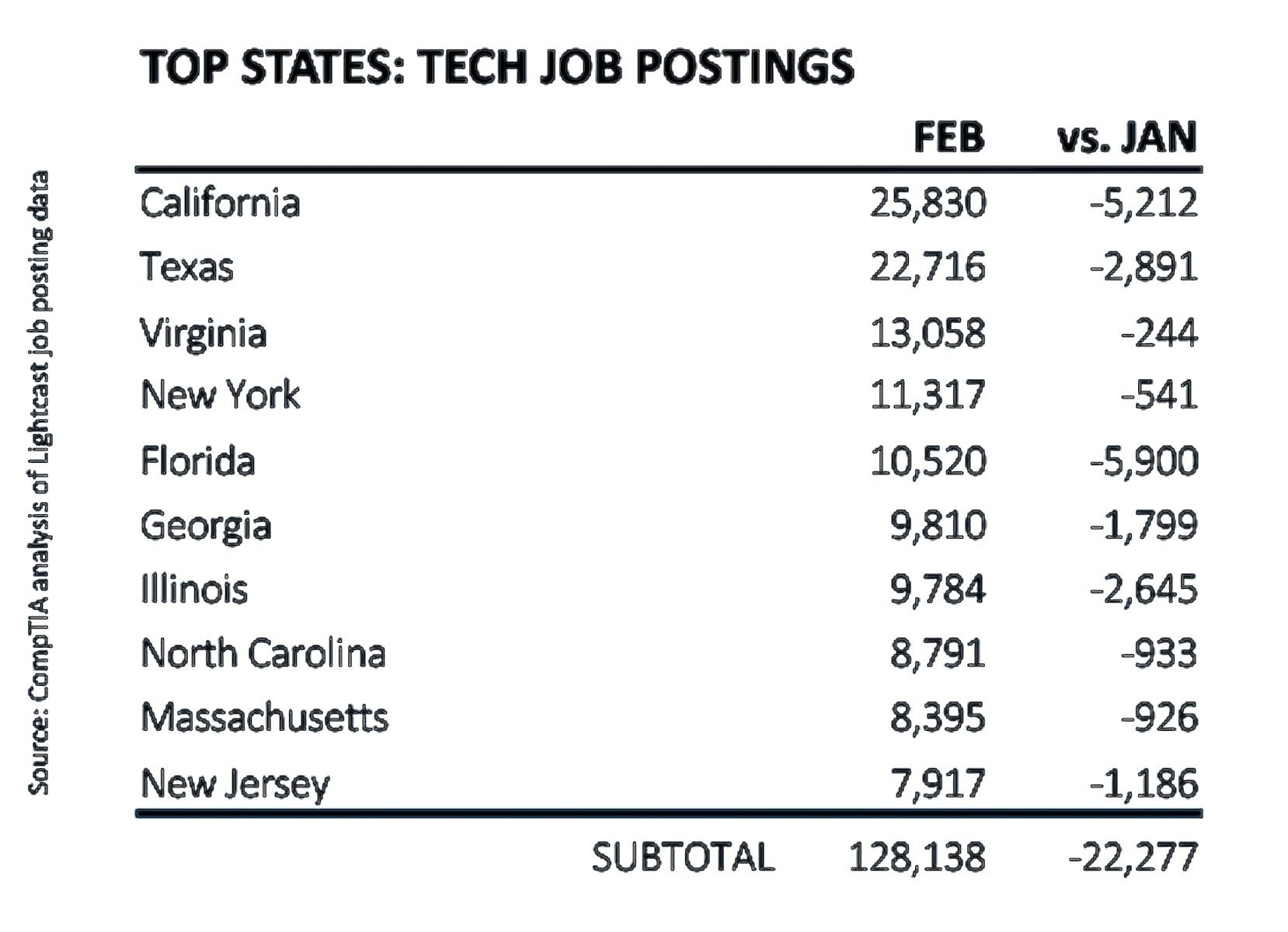
“CIOs and CFOs have started to slow the rate of creating new IT jobs and hiring IT professionals,” Janco said in its report. “The three month moving average for IT job market growth trend for IT professionals shows a significant downward trend. Inflation and recessionary trends are driving this.”
Layoffs and economic uncertainty drove CIOs and CFOs to slow IT hiring in February, according to Janulaitis.
“Layoffs at big tech companies are having an adverse on overall IT hiring. More CIOs are looking at a troubling economic climate and are evaluating the need for increased headcounts based on the technological requirements of their specific business operations,”Janulaitis said.
The growth of the IT job market stopped with a decline of 10,000 jobs in January and 13,400 jobs in February, according to Janco. That was the first loss in the number of IT Pros employed in over 27 months. The three-month moving average of IT job market growth went negative with a trend line that shows a further decay in IT job market growth.”
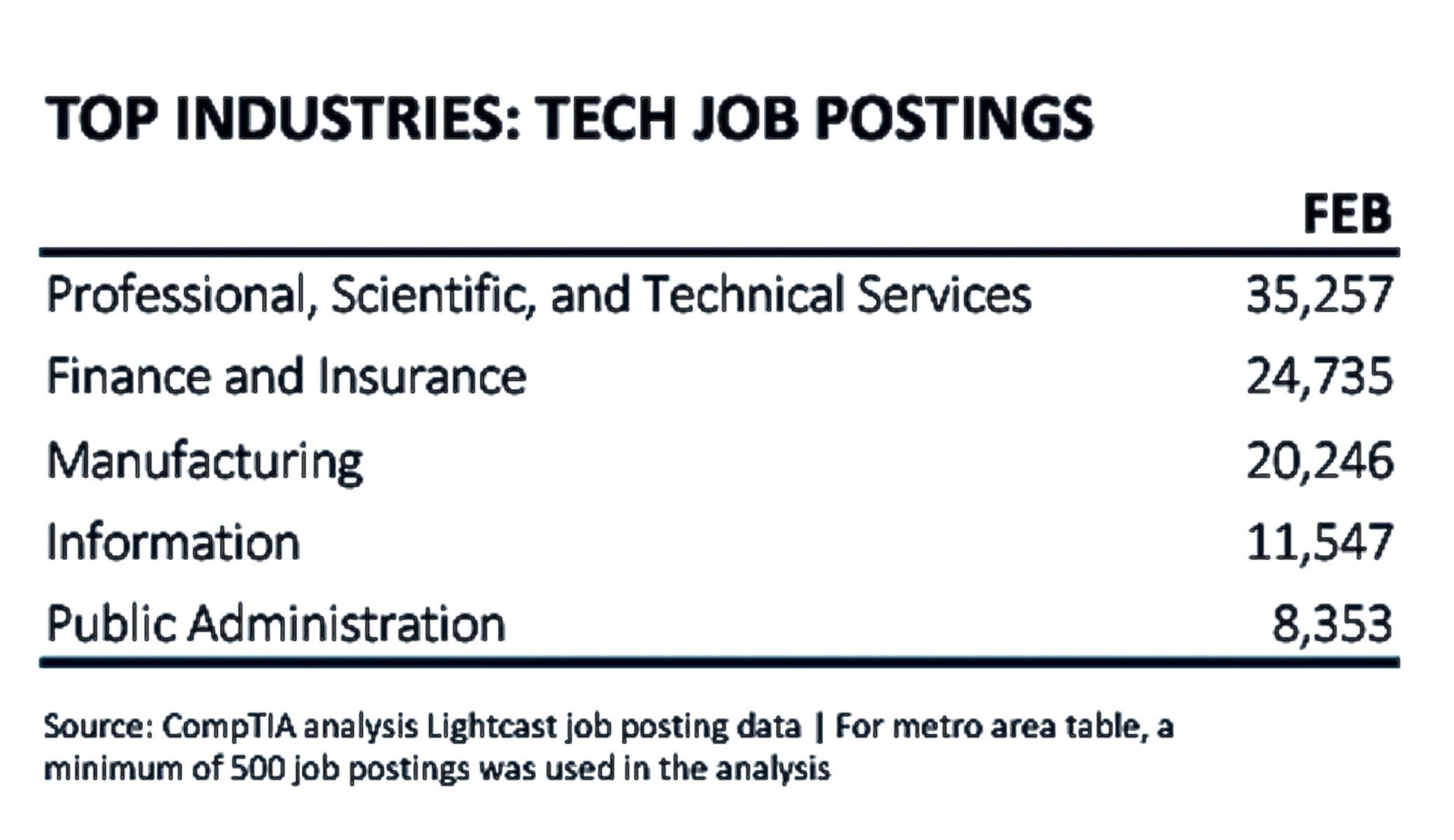
Overall US employment rose by 311,000 jobs in February, the Bureau of Labor Statistics (BLS) said. That was vastly higher than the 225,000 jobs predicted by economists polled by the Wall Street Journal. In January, about half a million jobs were added, according to BLS data.
The number of people quitting jobs (3.9 million) decreased, in February, while layoffs and other firings (1.7 million) increased. Even with the unemployment rate ticking up slightly, are still nearly two jobs (10.8 million) for every unemployed worker (5.9 million), according to a BLS data. In 2022, the annual average number of job openings was 11.2 million.
Last month, U.S. consumer spending also rose to its highest level in over nearly two years.
Across all industries, the number of people who were without jobs for a short period of time (less than 5 weeks) increased by 343,000 to 2.3 million in February, offsetting a decrease in the prior month. The number of long-term unemployed (those jobless for 27 weeks or more), changed little in February and accounted for 17.6% of the total unemployed or 1.1 million people.
Job postings for technology positions rose the most in scientific and tech services industry sector (35,257), finance and insurance (24,735) and manufacturing (20,246).
Overall, in the US job market, the average hourly earnings grew 4.6% year-over-year, which was down from last year but above the pre-pandemic pace, BLS data showed.
The ongoing tech talent shortage also lifted IT salaries, but future pay increases will be less than expected, according to Janco Associates.
On average, IT salaries rose by 5.61% in 2022 and were expected to increase by as much as 8% this year, according to earlier reports by Janco.
“Many CIOs’ 2023 IT budgets planned to increase salaries for IT pros to address the inflationary pressures faced by employees are now being reviewed,” Janulaitis said. “Given these facts, we believe that median salaries for IT pros in 2023 will be 3% to 4% salary above 2022 levels, not the 7% to 8% that was budgeted.”
The mean compensation for all IT pros in 2023 is now $101,323; for IT pros in large enterprises it tops $102,000; and for executives it averages $180,000.
“Companies that do not live up to employees’ expectations may find that even if they are able to get candidates in the door, those candidates leave as soon as a better offer comes along,” Gartner Research analyst Mbula Schoen wrote in a Q&A post this week.. “Additionally, there are increasingly opportunities for IT jobs outside traditional tech companies, so it’s important to look beyond just the tech provider community to truly grasp the state of the tech talent crunch.”
January 2023
The unemployment rate in the technology job market decreased for the second month in a row, dropping to 1.5% in January from 1.8% in December.
Even with the marked drop in unemployment, it was a mixed bag for the technology marketplace, after the U.S. Bureau of Labor Statistics (BLS) issued its January jobs report on Friday. There was a decline in current employment and an increase in employer job postings for potential future hiring, according to CompTIA, a nonprofit association for the IT industry and workforce.
While the overall US unemployment rate dropped to a figure not seen since 1969 (to 3.4%, from 3.5% a month earlier), the number of technology workers hired in January fell into negative territory for the first time in more than two years. Technology occupations throughout the economy declined by 32,000 for the month, representing a reduction of -0.5%, according to CompTIA. Technology companies also shed 2,489 positions in January, according to CompTIA.
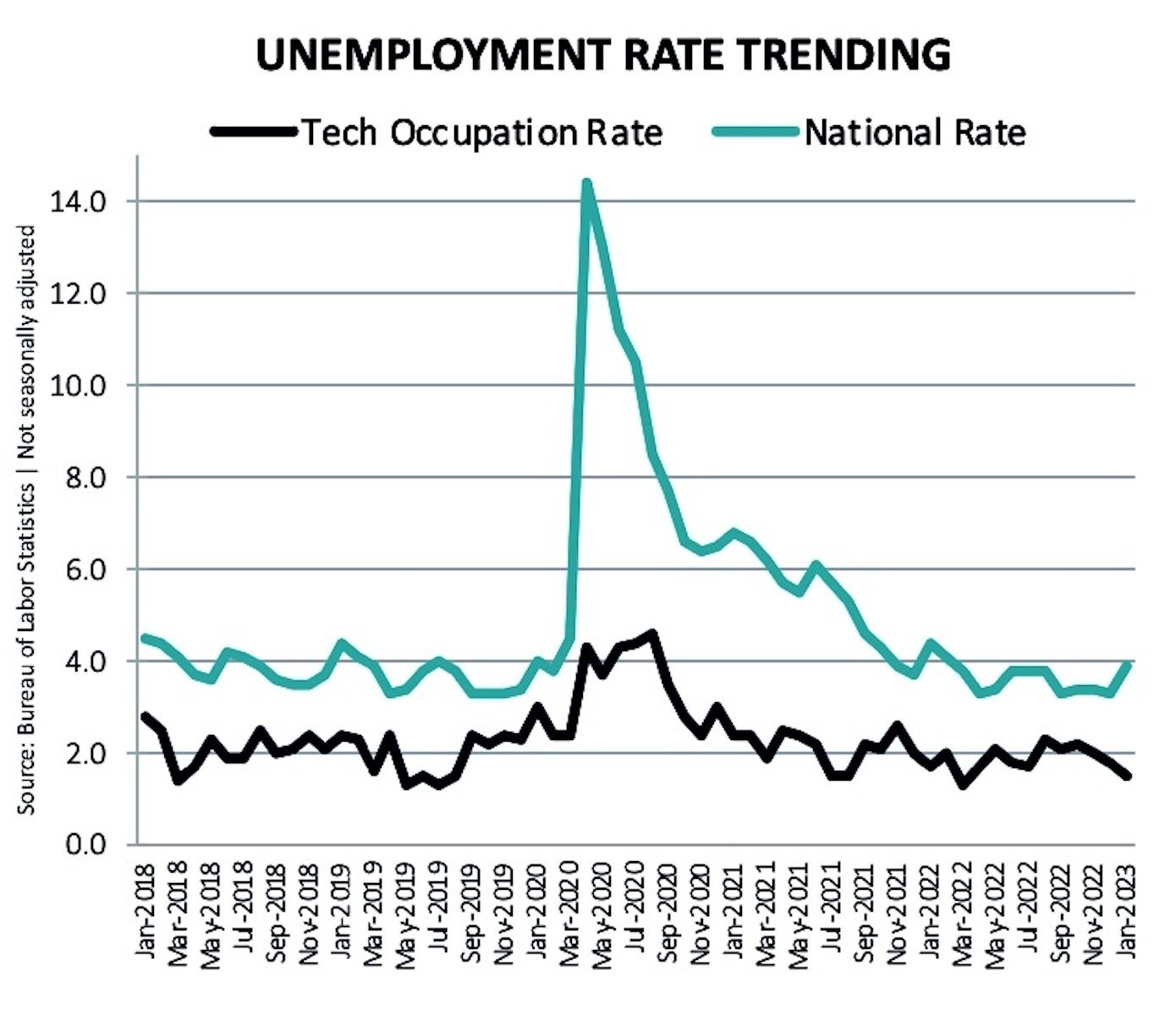
Overall, however, the US added 517,000 jobs in January, according to BLS numbers.
The BLS also said on Friday it had significantly revised its November data, describing it as a “major revision reflecting content and coding changes.”
In November 2022, the BLS indicated U.S. technology companies added approximately 2,500 net new jobs versus the mistakenly reported decrease of 151,900 jobs in earlier reporting.
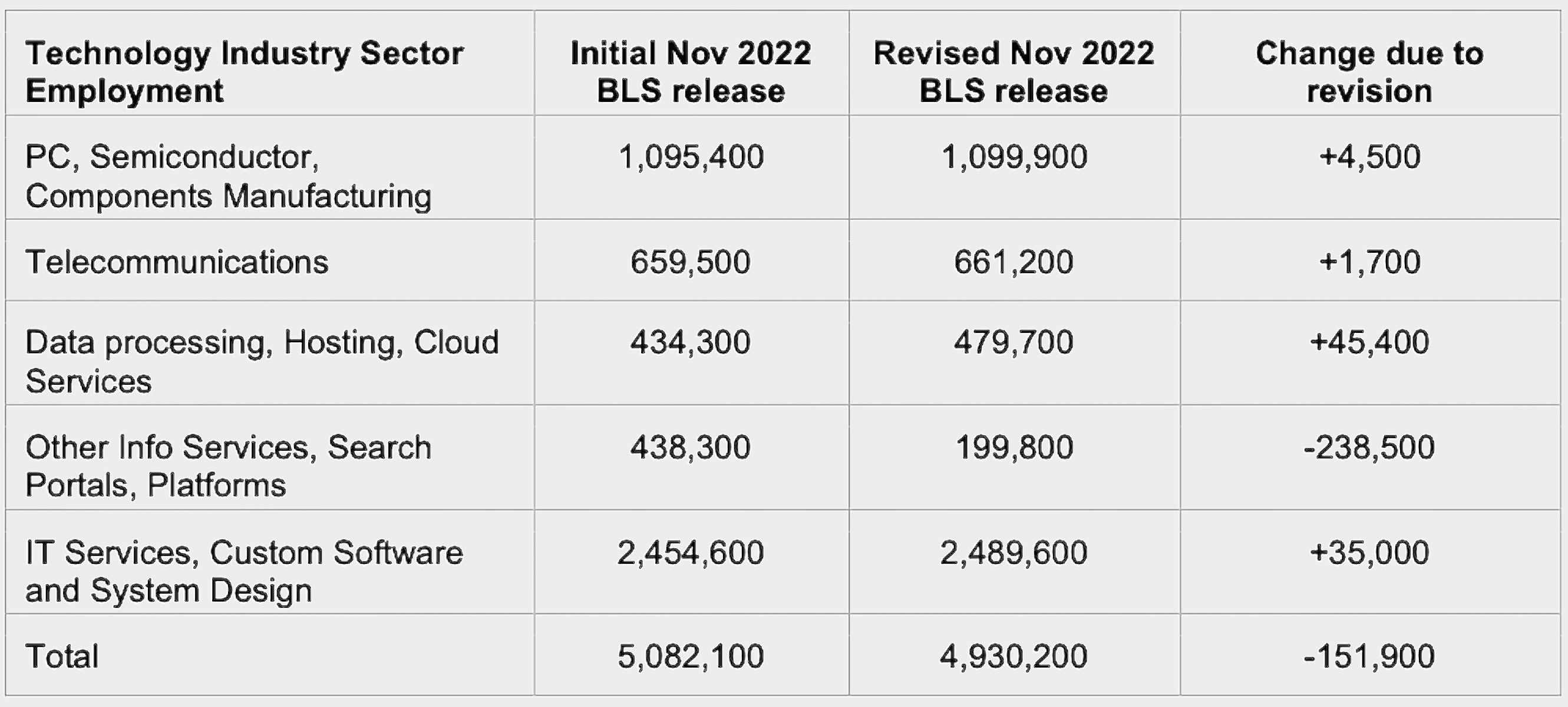
“The change materially affects the sub-sector of tech companies providing search and platform services, while the revisions were a net positive for sub-sectors such as IT services and data,” CompTIA said.
ComTIA also uses employer online job posting data to predict the number of job postings for future tech hiring, and that number reversed last month’s dip and increased by 22,408 to 268,898 for 2023.
The fact that the unemployment rate in the tech market still dropped in January indicates many laid off workers were re-hired and absorbed back into the labor market, according to CompTIA. The tech unemployment rate is also an indication that many of the layoffs occurring within technology organizations are non-technical workers, such as sales, marketing or related business support positions.
Among industries, the highest volumes of job postings for tech positions were reported in the professional, scientific and technical services (40,712), finance and insurance (30,576) and manufacturing (24,269) sectors.
“Despite the unusual backward revision by the BLS and the routine fluctuations in monthly labor market data, much of the big picture tech employment picture remains the same,” Tim Herbert, chief research officer at CompTIA said in a statement. “Undoubtedly, some companies over- hired and are now scaling back. The low tech unemployment rate and steady hiring activity by employers confirms the long-term demand for tech talent across many sectors of the economy.”
While tech companies shed employees over the past few months in highly publicized reports, overall, 2022 saw an increase of about 264,500 new jobs to the IT job Market, according to IT industry consultancy Janco Associates. Those new jobs were in addition to the 213,000 jobs created in 2021.
In January, the growth of the IT job market stopped with a decline of 4,700 jobs. That was the first loss in over 27 months, according to Janco. The three-month moving average of IT job market growth went negative with a trend line that shows a further decay in IT job market growth. At the same time, there is an excess of 109,000 unfilled jobs for IT Pros due to a lack of qualified candidates.
A lack of qualified candidates has lead to increased demand for tech workers raising overall salaries for all IT positions by 5.6%, with small-and-medium-sized businesses seeing an average increase of 7.74% increase, with their median compensation increasing to $100,434 as reported in Janco’s 2023 IT Salary Survey.
U.S.-based employers announced 102,943 cuts in January, a 136% increase from the 43,651 cuts announced in December, according to global outplacement and business and executive coaching firm Challenger, Gray & Christmas, Inc. That’s 440% higher than the 19,064 cuts announced in the same month in 2022, according to Challenger, Gray & Christmas’s report. Forty-one percent of January’s job cuts were in tech.
Yet demand for those to fill jobs requiring tech skills is rising.
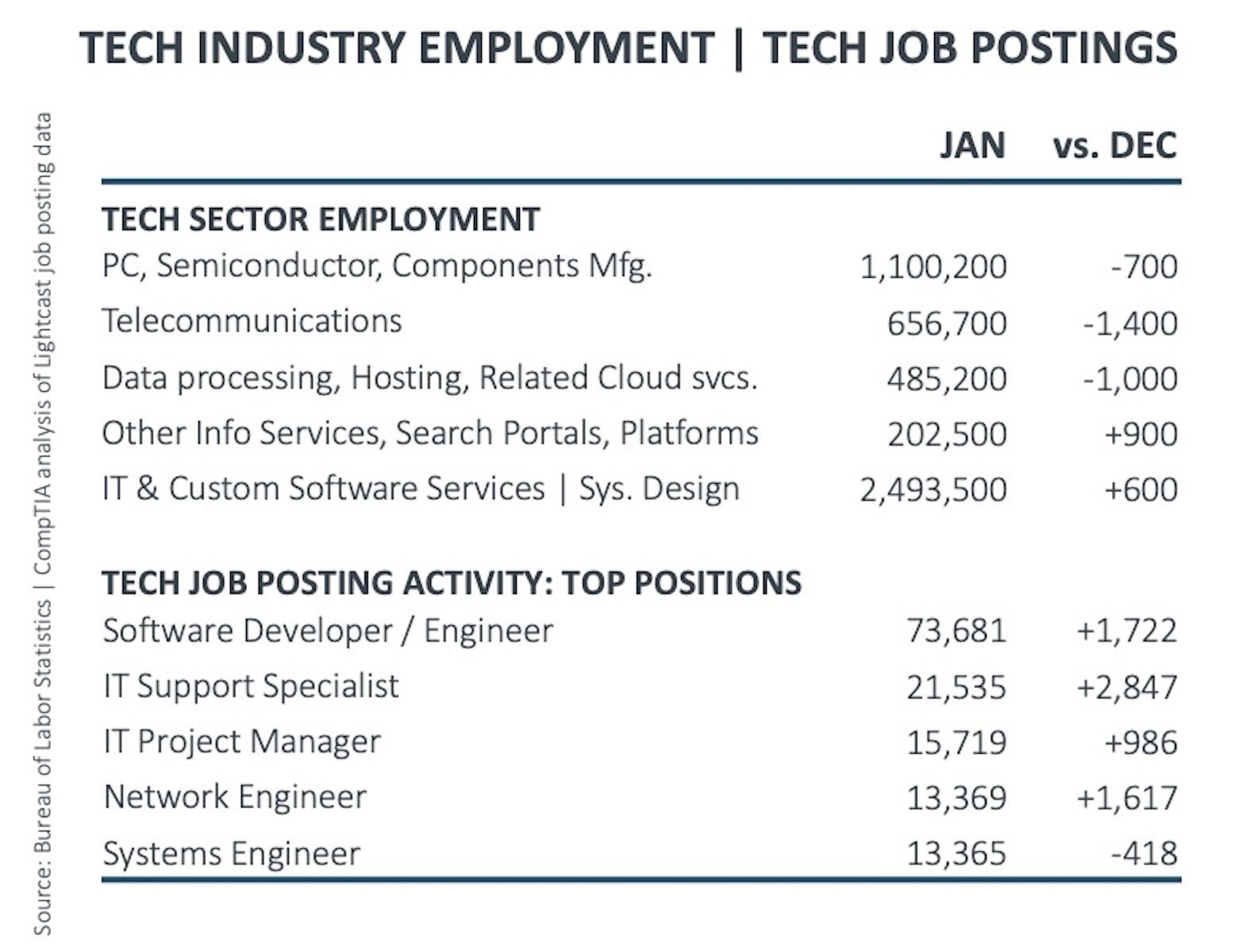
“That’s a ton of expertise missing from an industry that needs the brightest to get brighter,” said Vince Padua, CTO at Axway, a tech company that sells an API management platform.
And it’s going to get worse, he added, as 86% IT leaders expect an expertise gap increase in coming years.
“As cloud computing, AI and microservices are developed and adopted, the skills required to support them constantly evolve,” Padua said. “Companies need more employees with the right skills and experience – plus IT infrastructure and enterprise software experts with specialized skills in cybersecurity, data analytics and cloud architecture.”
IT jobs took the top spot in a list of the 25 best jobs in the US, according to online job site Indeed. The top job slot went to full stack developer, which offers a median annual salary of $130,000 and allows for a mostly remote or hybrid workplace..
Eight tech jobs were among the top 10 positions on Indeed’s list this year; that compares with just two tech jobs in the top 10 on last year’s list. In 2022, tech jobs were moving down the top jobs list; now, a year later, tech jobs are surging upward. This year, 11 of the top 25 jobs, or 44%, were tech positions. By comparison, in 2022, just 25% of the top 25 jobs were tech-related.
“Based on our analysis, the IT job market and opportunities for IT professionals are there but not in as broad in scope as in 2022. Layoffs, for the most part, did not hit developers. Rather they were focused on data center operations, administrative and HR roles related to recruiting, and DEI (diversity, equity, and inclusion),” said Janco CEO Victor Janulaitis.
Some roles, especially in telecommunications and data center operations are being automated and eliminated, Janulaitis noted, but those operations will continue to hire coders and developers.
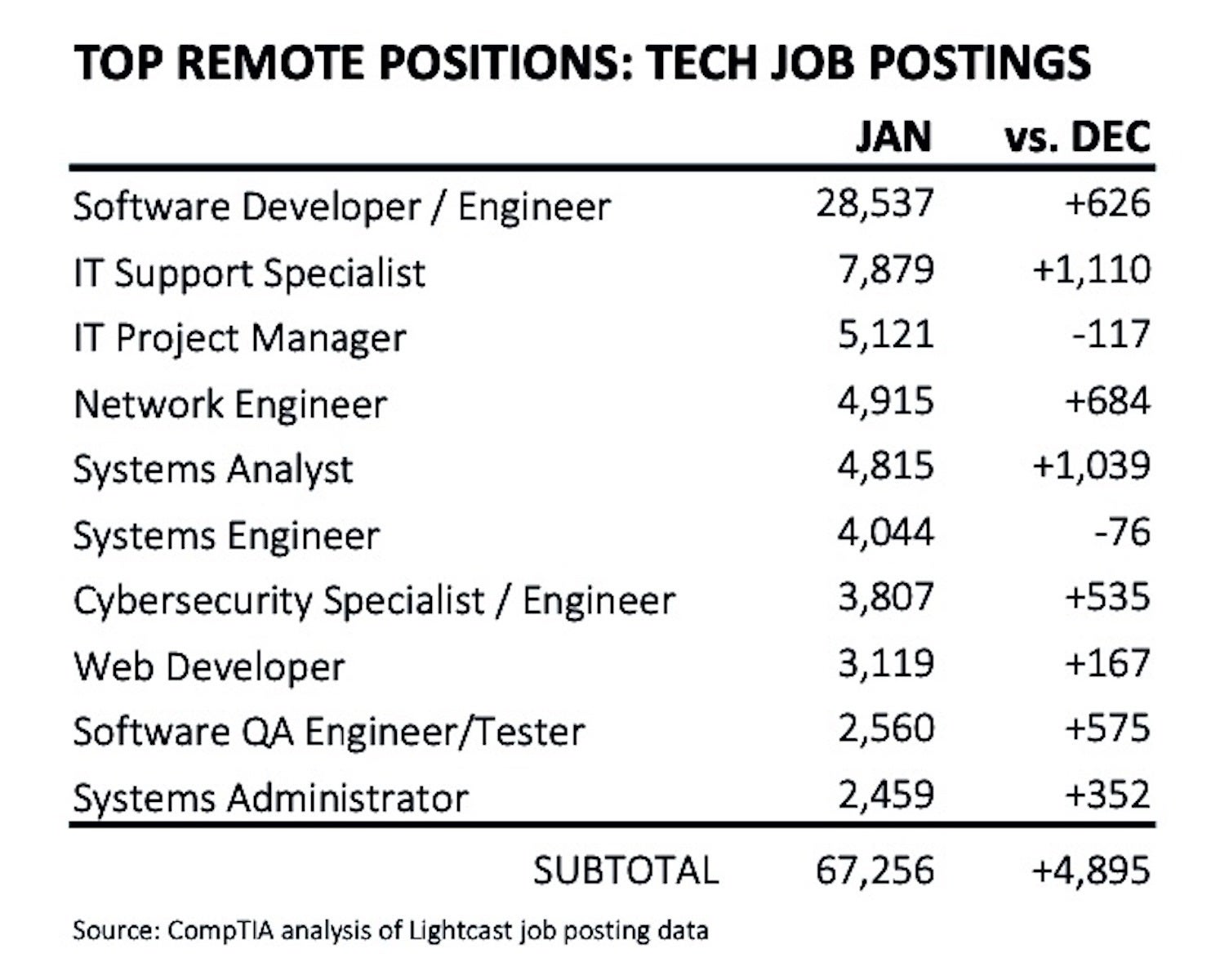
The highest demand continues to be for security professionals, programmers, and blockchain processing IT professionals, according to Janco. Currently, there are over 109,000 unfilled jobs in the IT job market — a drop from 216,000 in November.
Janulaitis blamed continued concern over a possible recession as one reason organizations are eliminating jobs.
“More CIOs are looking at a troubling economic climate and are evaluating the need for increased headcounts based on the technological requirements of their specific business operations,” Janulaitis said.
According to the latest BLS data analyzed by Janco, there are now just over 4.2 million jobs for IT Professionals in the US., and layoffs at big tech companies are having an adverse on overall IT hiring.
“The possibility of the economic downturn is very likely and is impacting all decisions that increase technology-related expenditures. Work from home is being minimized as companies are requiring employees to be in the office at least 3 to 4 days a week,” Janulaitis said. “Mid-level managers are now having to justify most positions where the IT Pro is not working in the office. Companies that are forced to hire replacements, do so with the caveat that payroll costs remain flat. “
The 2023 IT budgets increased salaries for IT pros to address inflationary pressures faced by employees. Those are now being reviewed. Given those facts, Janco believes that median salaries for IT Pros in 2023 will be 3-4% salary above 2022 levels, not the 7% to 8% that was budgeted at the end of 2022.
“With this as a background, Janco has just revised downward its forecast for the growth of the IT Job Market in 2023 to just over 160,000 from 174,000 new jobs,” Janulaitis said. “That will be less growth than in 2021 and 2022 but still at high levels.”
December 2022
Even as some high-profile layoffs have lead the news over the past few months, the US added 223,000 jobs in December, including 17,600 positions at tech companies, according to the US Bureau of Labor Statistics (BLS) and other research.
Technology job gains were recorded in four of five sector categories. It’s the 25th straight month of net employment growth in the tech industry, according to a report by CompTIA, a nonprofit association for the IT industry and workforce.
The overall US unemployment rate dropped from 3.7% in November 2022 to 3.5% in December, according to BLS data. In the technology sector, the unemployment rate dropped from 2% in November to 1.8% in December, according to CompTIA.
“Another wave of positive tech employment data speaks to the many moving parts of a complex labor market,” Tim Herbert, chief research officer at CompTIA, said in a statement. “Despite the layoffs there continues to be more employers hiring tech talent than shedding it.”
CompTIA’s analysis also showed that 30% of all tech jobs postings are for positions in emerging technologies, such as artificial intelligence, or in roles requiring emerging tech skills.
Within the tech sector, three occupation categories lead December hiring: IT services and custom software development (+7,200 jobs), other information services, including search engines (+6,600 jobs) and data processing, hosting and related services (+5,600 jobs).
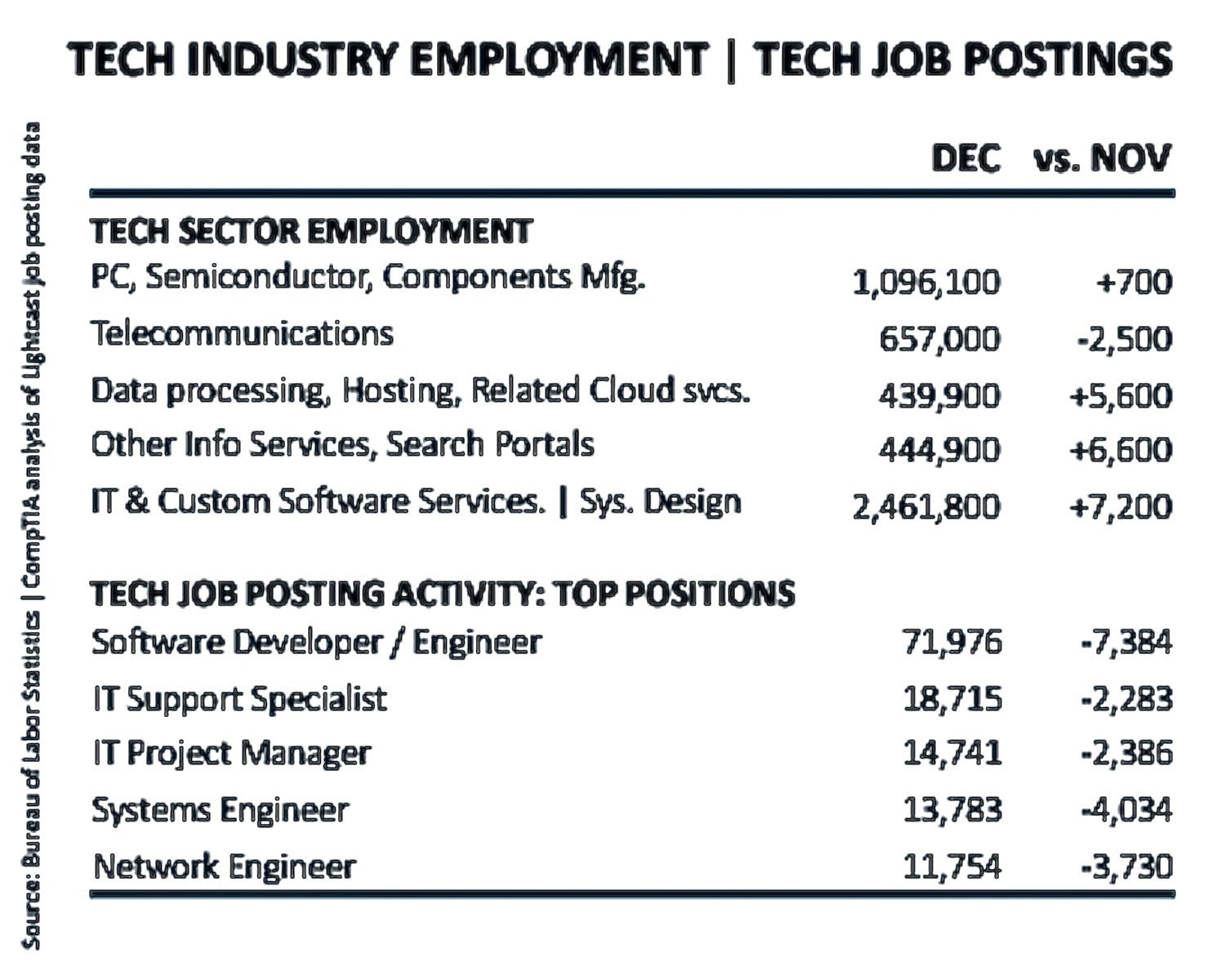 CompTIA
The positive news was countered by a second consecutive month of lower employer job postings for future tech hiring. Future tech hiring is one metric CompTIA uses to predict how many job openings will be available over the next year. Future tech hiring declined for the second consecutive month, but still totaled more than 246,000 in December, down from 270,000 in November, 2022.
Also, the organization cautioned, recent layoff announcements by technology companies may not show up immediately in government reports, such as today’s BLS “employment situation” report, a CompTIA spokesperson said.
In spite of that, in the first quarter of 2023, the IT industry will lead all others in hirings, according to a new report from global staffing firm ManpowerGroup.
While companies are expected to hire fewer technology workers this quarter than the previous one (6% less) or even Q1, 2022 (14% less), ManpowerGroup’s survey of just under 39,000 employers in 41 countries revealed overall there will be a 23% increase in hiring.
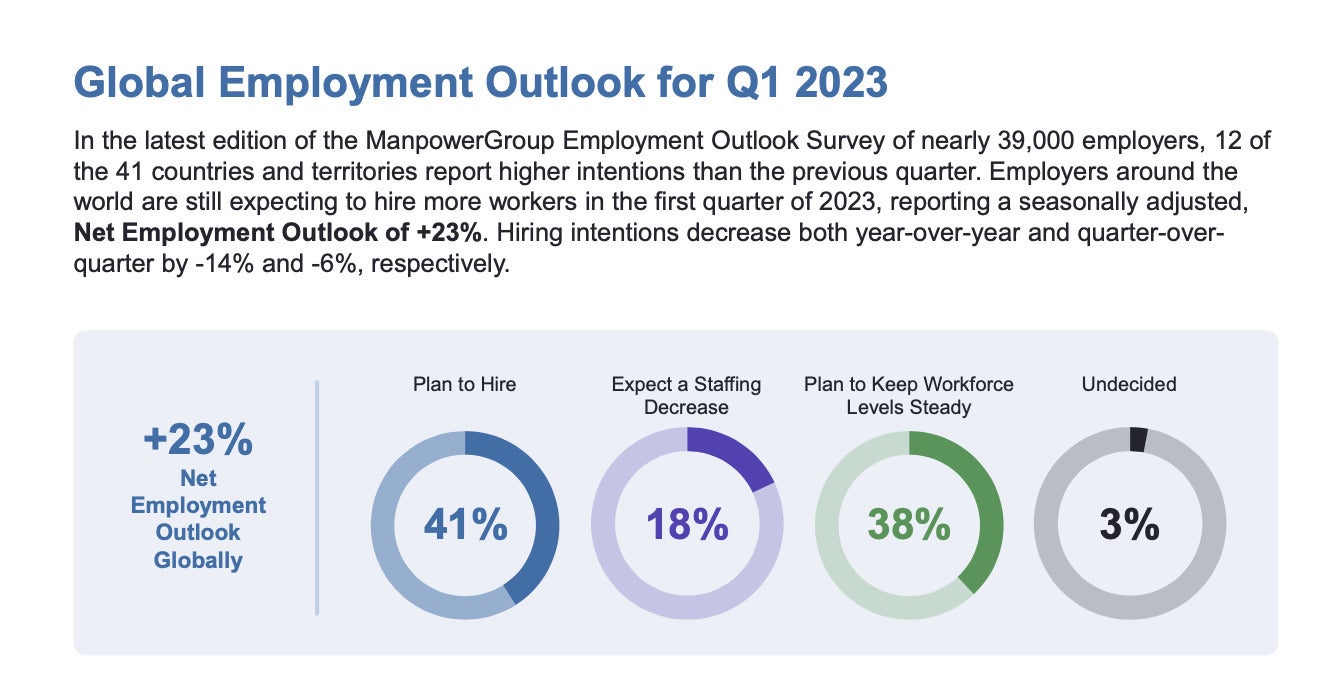 ManpowerGroup
When considering how staffing levels will change during the first quarter, employers in 39 of 41 countries and territories surveyed anticipate a net positive hiring outlook, the report stated.
Organizations in the IT industry reported the most optimistic outlook for Q1, 2023 with an expected 35% increase in hiring; that was followed by Financials & Real Estate (28%), and Energy & Utilities (+26%).
Geographically, North American organizations expect to increase hiring by 31%; US organizations expect a 29% increase in hiring and Canadian organizations expect at 34% increase. Large organizations with more than 250 are more than twice as optimistic as small businesses (with less than 10 employees) to hire in the coming quarter with outlooks of 29% and 13%, respectively.
Wanting to hire is one thing and actually being able to find tech talent is another. Currently, there is a dearth of tech talent available.
Despite strong optimism to hire, the industry faces a talent shortage where 76% of IT industry employers report difficulty finding the hard and soft skills needed, according to ManpowerGroup’s survey.
“This recovery is unlike any we have ever seen [and] demand for skills is at record highs in many markets, and unemployment levels remain high while workforce participation stagnates,” the report said.
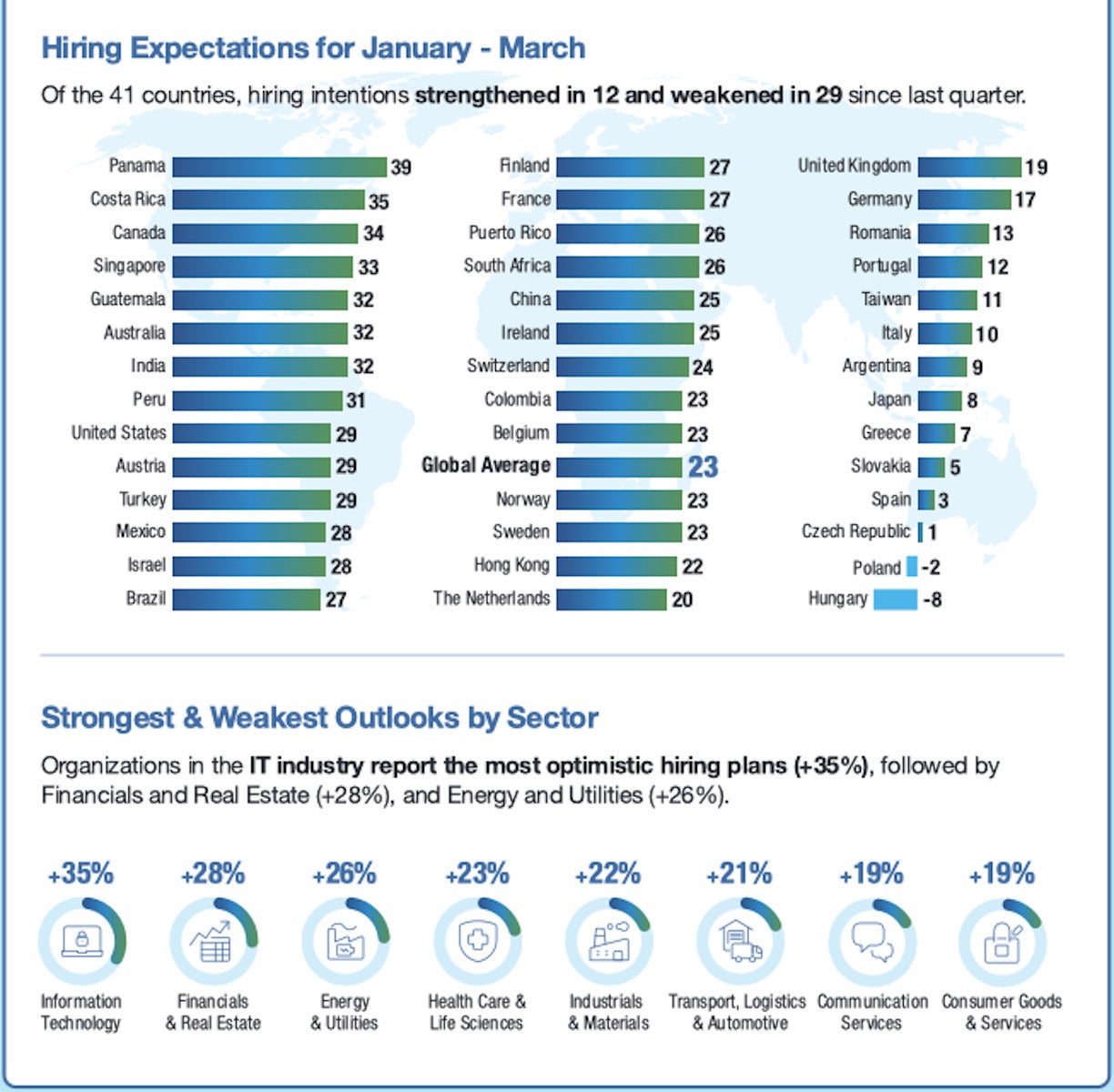 ManpowerGroup
Because of the lack of available talent, the lead time for filling an open IT position is now several months, according to a new report by business consultancy Janco Associates.
“If the position to be filled is a replacement for some who has left the enterprise, training time has to be factored in. This is just one of the issues faced by CIOs,” Janco stated in its 2023 IT Salary Survey, which included interviews more than 142 CIOs, CFOs, and HR professionals to identify key CIO staffing Issues
Organizations have addressed hiring challenges by removing college degree requirements from job postings and by creating apprenticeship programs to train new candidates.
“With the limited labor supply of IT professionals, every hiring mistake is magnified,” Janco’s report stated.
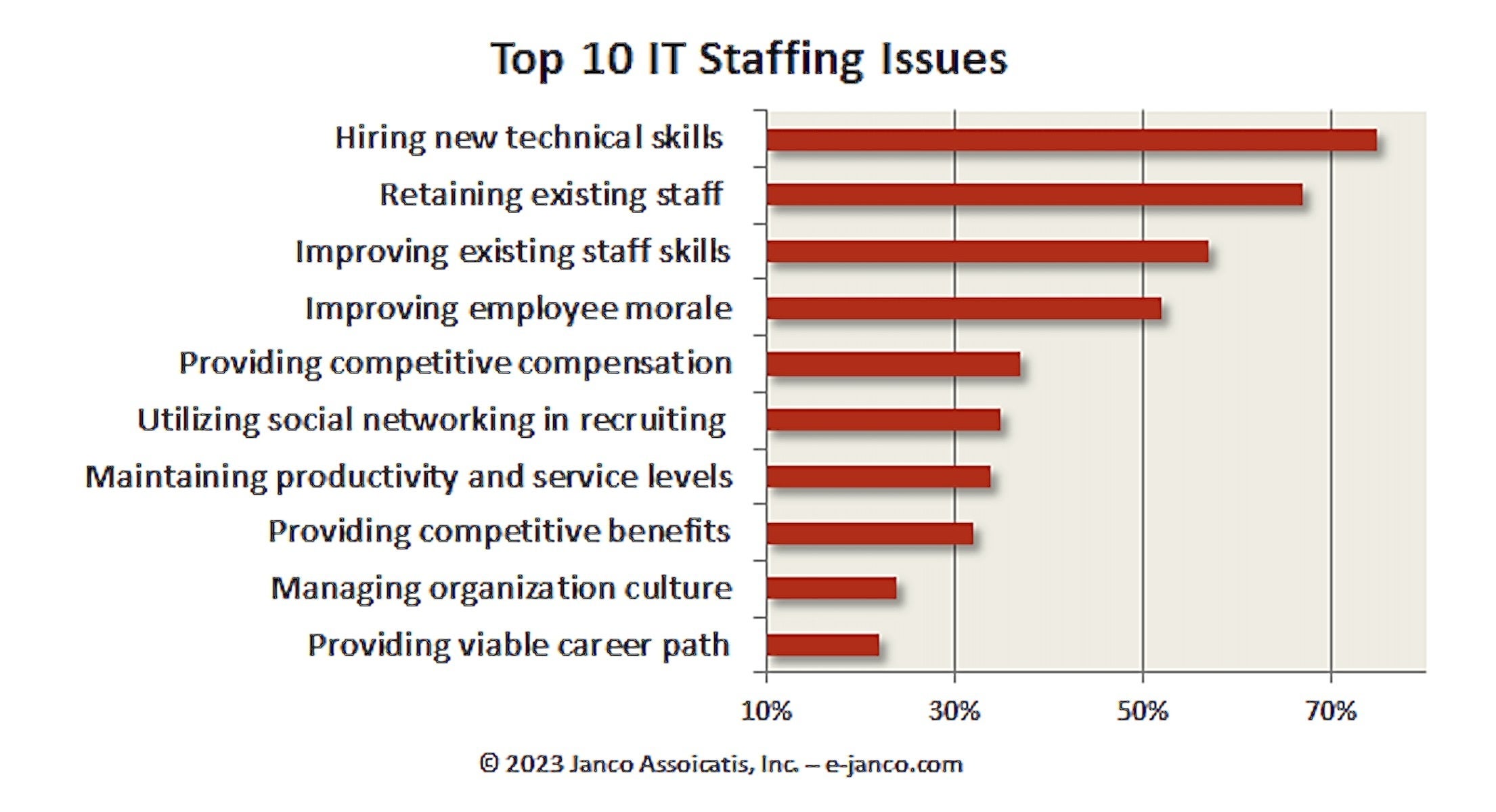 Janco Associates
In Janco’s review of hiring failures based on survey responses, it found two factors that stood out over others. Interpersonal issues associated with these failures (29%) and poor corporate culture fit (28%) with the others. Those issues, Janco argued, can mostly be filtered out during the recruiting and interviewing process.
November 2022
For two straight years, the technology sector has added jobs every month.
In November, US tech companies added 14,400 workers, and tech jobs in all industry sectors grew by 137,000 positions, according to a new report from CompTIA
While the needle on overall US unemployment remained unchanged in November at 3.7%, for the technology sector it dropped to 2% from 2.2% in October, according to Bureau of Labor Statistics figures compiled by CompTIA, a nonprofit association for the IT industry and workforce.
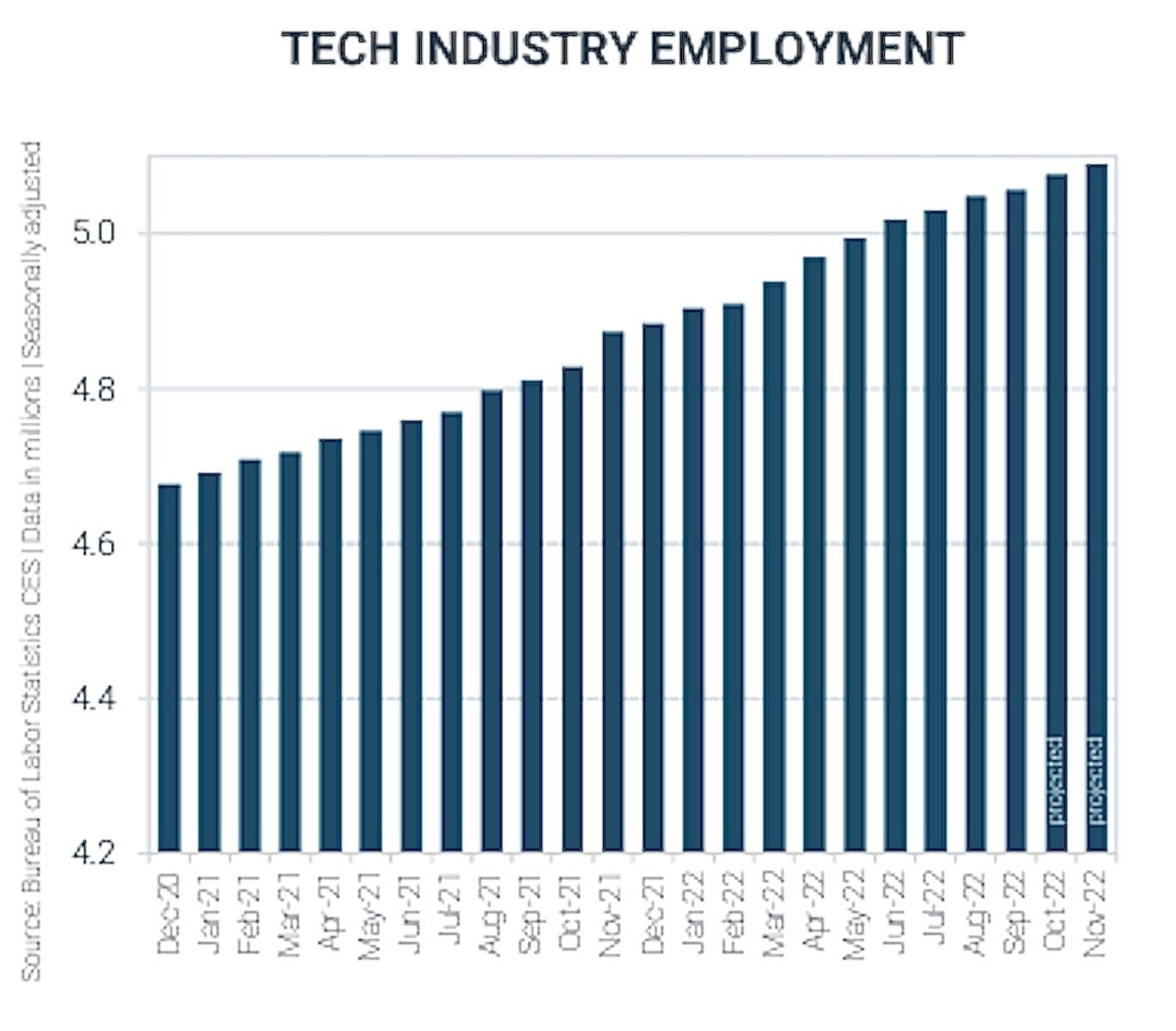 CompTIA
So far this year, tech industry jobs grew by 207,000 positions, according to BLS data.
“The hotter-than-anticipated tech jobs report confirms there are still many more employers hiring tech talent than shedding it,” said Tim Herbert, CompTIA’s chief research officer. “It’s certainly premature to dismiss concerns over the health of the economy, but this should be a reassuring sign for the tech workforce.”
The growth in the tech sector belies an economy beset by high inflation and what many still believe is an impending recession. And although inflation slowed to 7.7%, it is still well over the 2% target set by policymakers at the Federal Reserve Bank.
In November, nearly a dozen big name companies announced layoffs — some in the thousands, including Amazon, Cisco and HP. But experts believe the targeted layoffs, which have been ongoing over the past three months, are mostly a result of poor hiring strategies.
Due to a dearth of tech talent over the past two years, companies rushed to hire, bringing in a raft of tech workers with seven to 10 years’ experience and highly specialized skills.
On top of that, the companies tended to pay two to three times more than what they would have for someone with less experience but with the right education, aptitude, and attitude to be part of a sustainable workforce, according to Tony Lysak, CEO of The Software Institute, which offers IT consulting and education services.
“We need them, and can’t get them, so let’s pay more,” said Lysak, summing up how many companies have approached hiring during the past two years.
According to IT employment consultancy Janco Associates, the latest BLS data shows there are now just shy of four million jobs for IT professionals in the US. Janco sees this trend of IT jobs increases continuing but at a slower pace in the future. Layoffs will continue as companies seek to improve productivity levels.
“Based on our analysis, the IT job market and opportunities for IT professionals will continue to be positive but not as broad in scope as in the first three quarters of this calendar year,” Janco CEO Victor Janulaitis said in a statement. “CIOs and CFOs are looking to improve the productivity of IT. They are focusing on eliminating ‘non-essential’ managers and staff. They will continue to hire coders and developers. The highest demand continues to be for programmers, blockchain processing, and security professionals. There still are over 200K unfilled jobs in the IT job market.”
IT salaries for existing IT staff and middle managers increased by just under 3% while new hires were paid 5% to 6% more than existing staff, according to Janco’s Mid Year 2022 IT Salary Survey. “In conversation with several CIOs, we observed that starting pay rates for new hires were in the 8% to 10% range a few months back, but this is not the case currently,” Janulaitis said.
November hiring by technology companies was broad-based across occupation categories, led by IT services and custom software development (+8,100). Employment growth also occurred in data processing, hosting and related services (+4,100), other information services, including search engines (+2,100), and computer and electronic products manufacturing (+1,900).
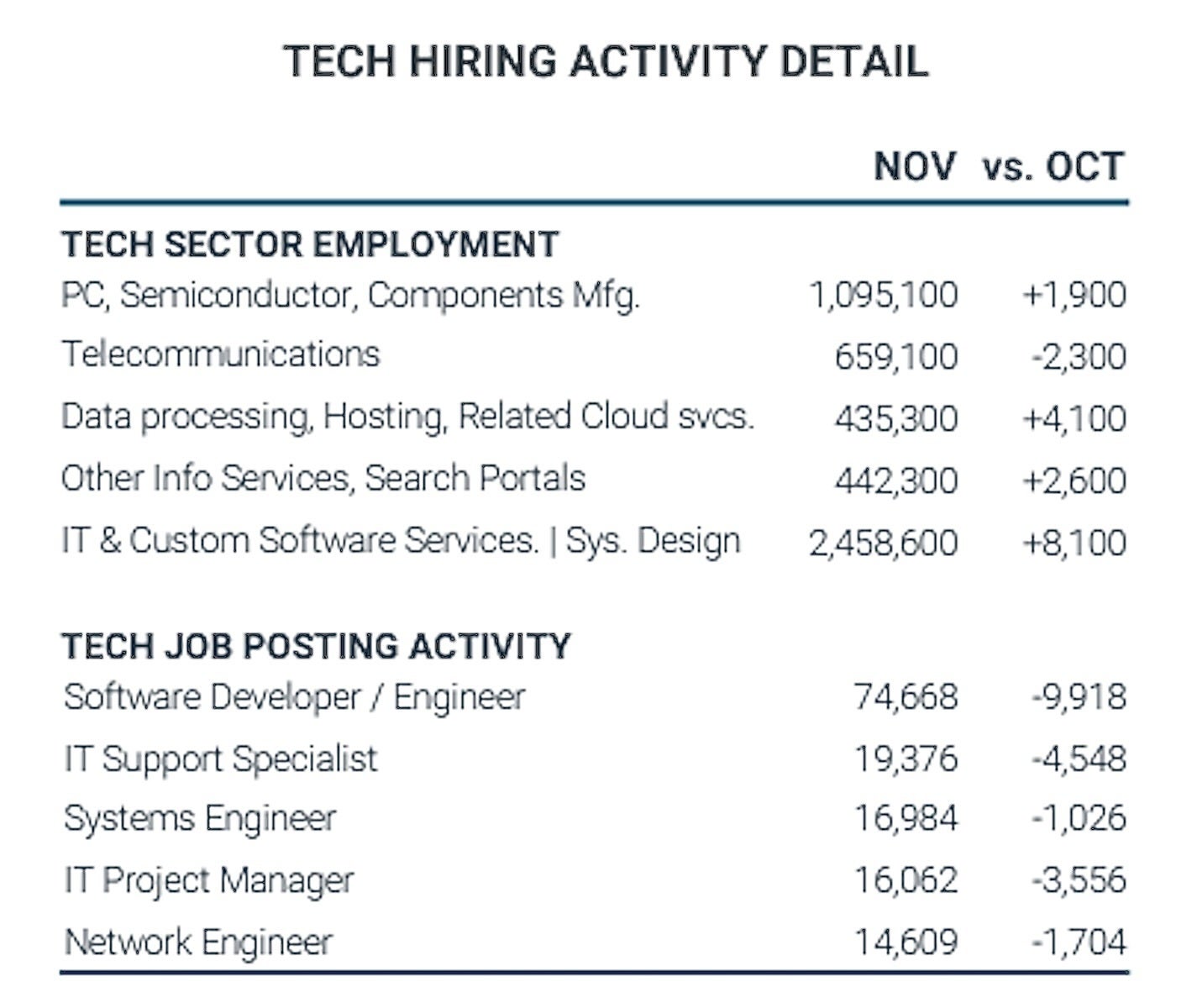 CompTIA
Employer job postings for future tech hiring fell back in November, but still totaled nearly 270,000. Openings for software developers and engineers accounted for about 28% of all tech jobs postings. Demand for IT support specialists, systems engineers, IT project managers, and network engineers was also solid.
While major tech hubs recorded the largest numbers of job postings for tech positions, ‘under the radar’ markets showed notable increases in employment opportunities, including Topeka, Kan.; Virginia Beach, Va.; Worcester, Mass.; and Riverside, Calif. Among industries, the professional, scientific, and technical services sector had the most tech job postings (41,188), followed by finance and insurance (35,132) and manufacturing (31,036).
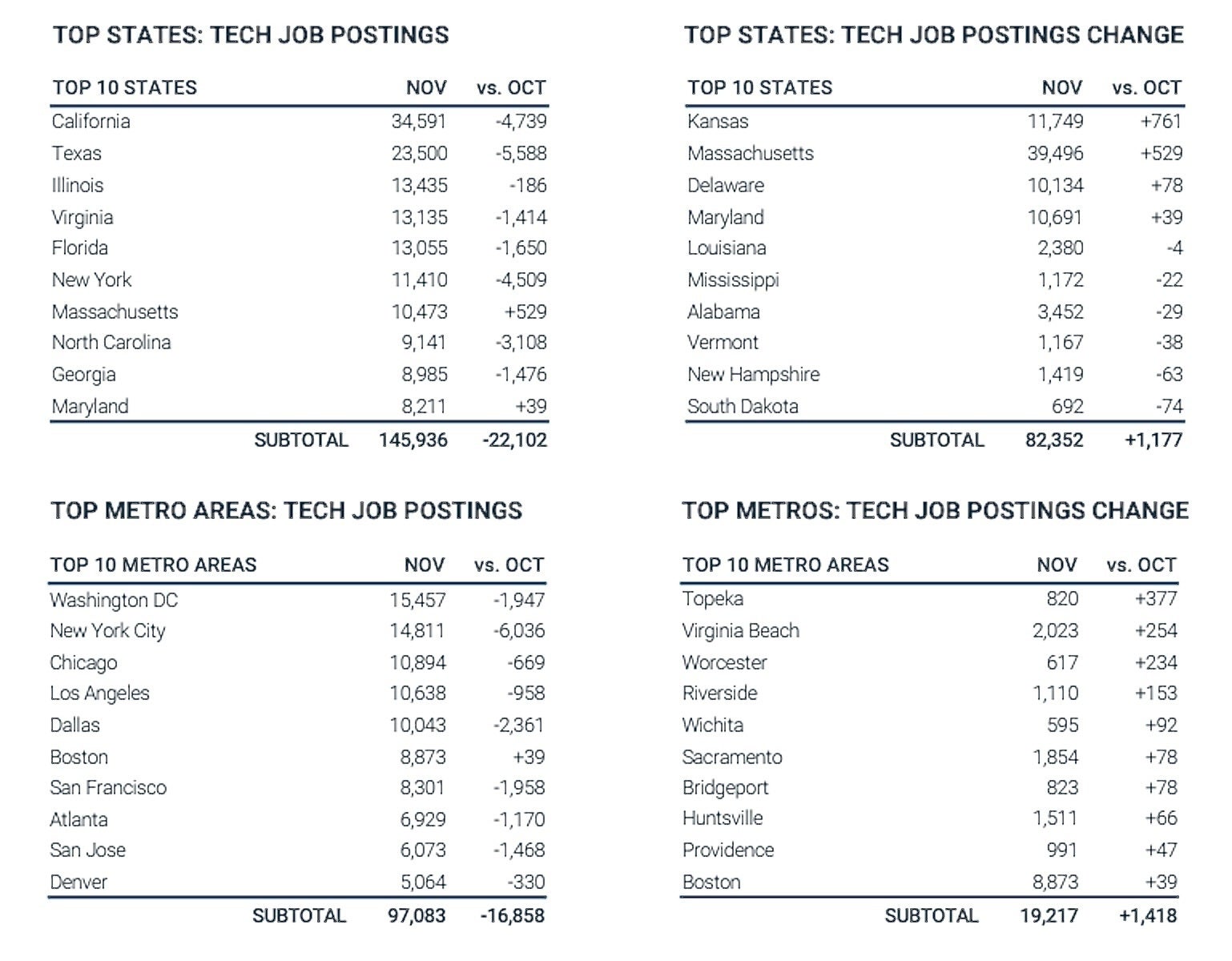 CompTIA
CompTIA’s analysis also showed 30% of all tech jobs postings are for positions in emerging technologies, such as artificial intelligence, or in roles that require emerging tech skills.
Janco’s report also shows corporate executives are challenged by inflation and the economic downturn. Those executives are reluctant to hire replacement employees at salaries that are significantly higher than those who left as part of the Great Resignation. In their 2023 salary budgets for IT pros, “CIOs are trying to address the inflationary pressures faced by employees. We believe that starting salaries for IT Pros in 2023 will be 6% to 7% salary above existing levels,” Janulaitis said.
October 2022
Tech firms in October hired between 15,300 and 20,700 workers (depending on who’s doing the counting), marking roughly two straight years of hiring growth in the industry, according to two new employment reports.
So far this year, tech industry employment has increased by 193,900 jobs, 28% higher than the same period in 2021, according to a jobs report from CompTIA, a nonprofit association for the IT industry and workforce.
In contrast, technology job postings by tech and non-tech companies had been on a five-month downward slide until last month. Tech workers employed throughout the economy, regardless of industry, declined by 116,000 last month, according to CompTIA. CompTIA’s report is based on the latest US Bureau of Labor Statistics (BLS) data.
“The data is roughly in line with expectations,” Tim Herbert, chief research officer at CompTIA, said in a statement. “Tech hiring activity remains steady, but there are undoubtedly concerns of a slowing economy.”
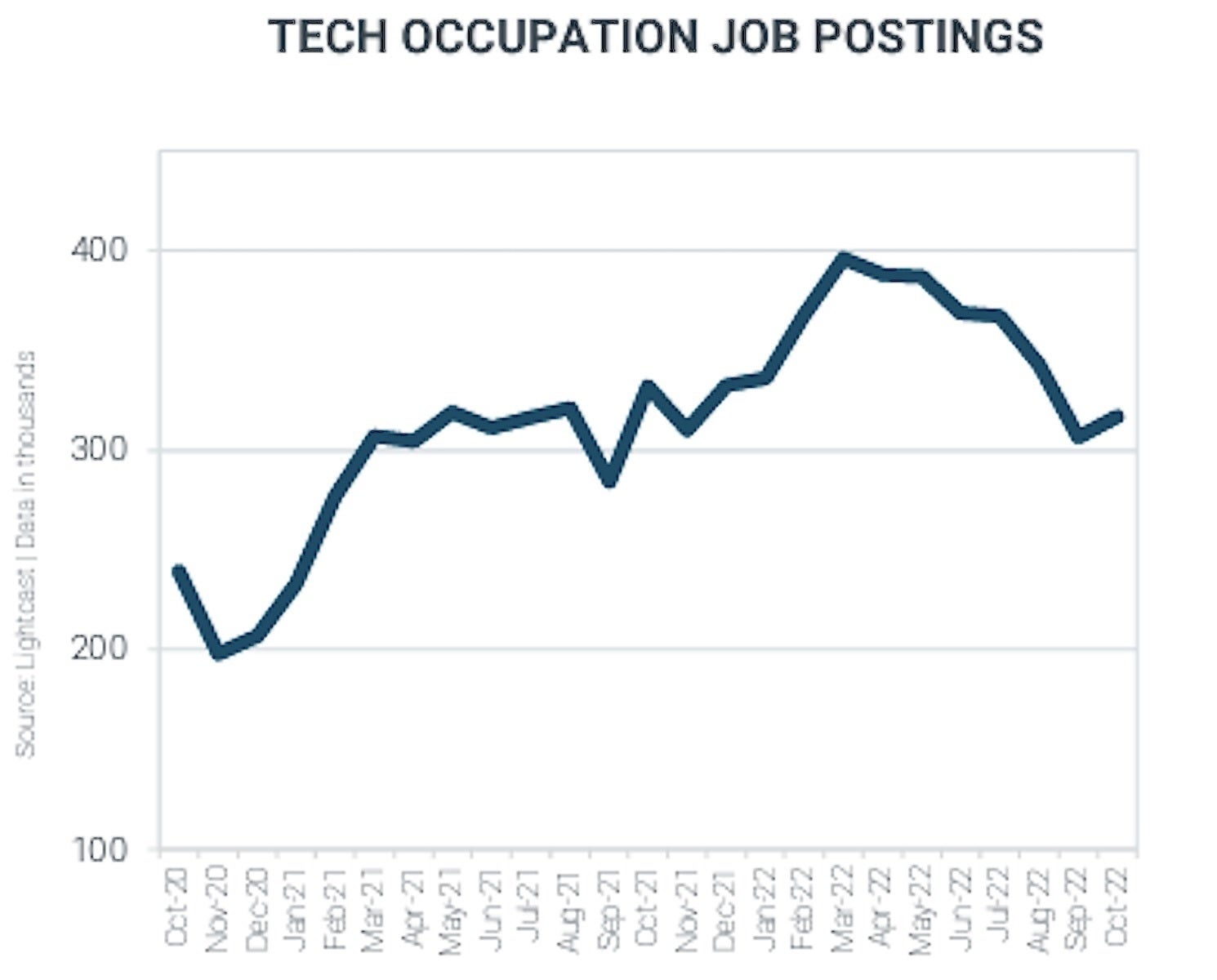 CompTIA
In October, the number of tech workers employed throughout all industries grew by 10,000 over the previous month, according to CompTIA.
Most of the issues affecting the economy are due to supply chain problems, according to Victor Janulaitis, CEO of Janco Associates, which also released its IT jobs report on Friday.
“If China opens up and supply chains will improve, that should lessen the recessionary pressures that are driving the tech giants to reduce staff,” Janulaitis said in a statement. “Also, the results of the election in the US will provide an opportunity to improve the economic climate.”
Tech job postings reflect the total of “help wanted” ads companies listed last month. There were 317,000 such postings in October, according to CompTIA. It was the first time since April 2022 that the number of job postings increased over the prior month.
CompTIA also noted that tech manufacturing employment is up 43% compared to the same period last year.
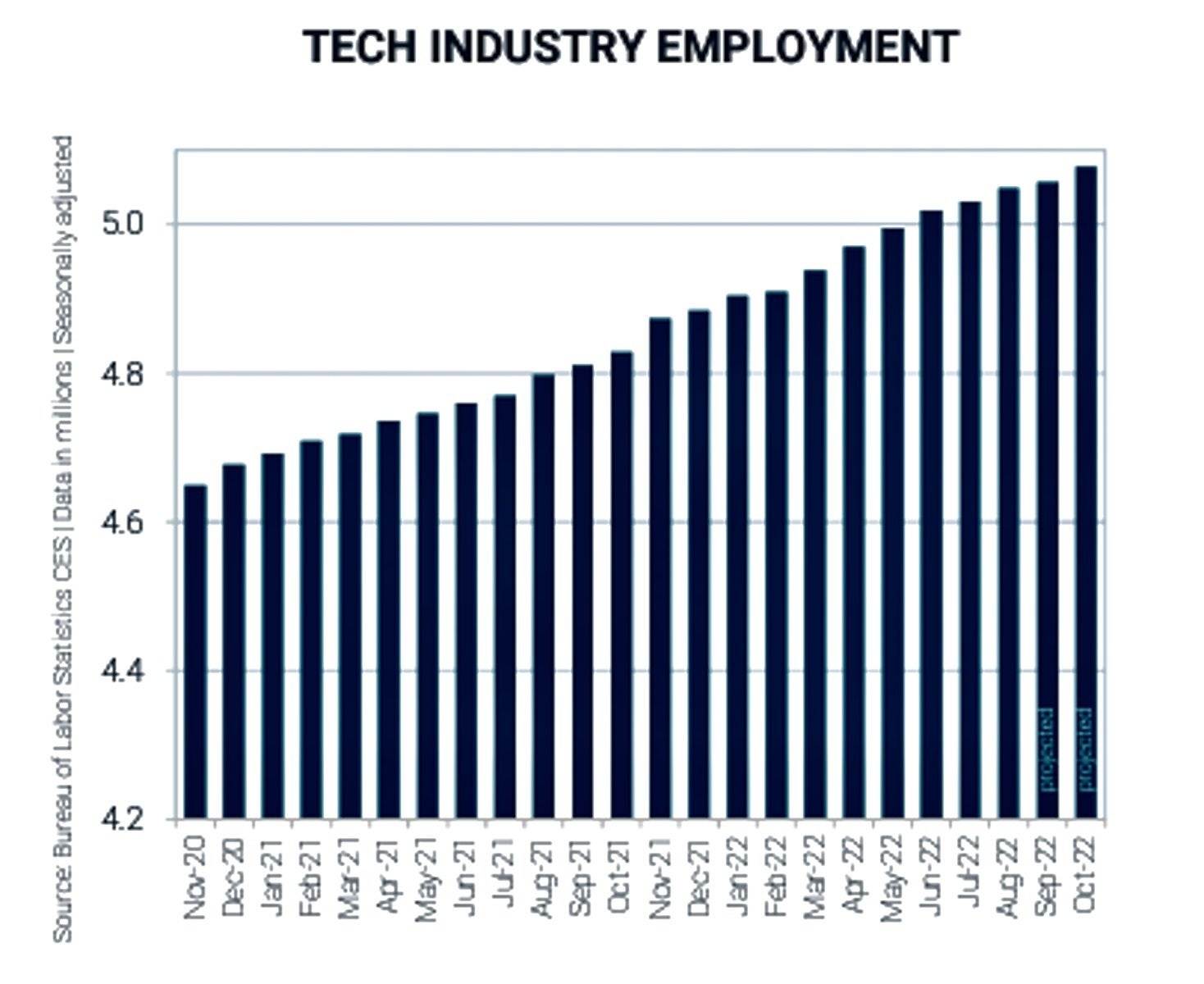 CompTIA
While the tech industry unemployment rate ticked up slightly to 2.2% in October from 2.1% in September, it remained well below the overall US unemployment rate, according to CompTIA’s report. The overall US unemployment rate also ticked up to 3.7% in October.
CompTIA’s jobs report differs somewhat from Janco Associates’s figures. Janco reported 15,300 new hires by tech companies in October; that compares to 13,700 job listings added by the tech industry the previous month.
There are now a total of 3.98 million jobs for IT professionals in the US, according to the BLS data analyzed by Janco.
“Based on our analysis, the IT job market and opportunities for IT professionals will continue to be positive, but not as broad in scope as in the first three quarters of 2022,” Janulaitis said in a statement. “CIOs and CFOs are looking to improve the productivity of IT. That means they are focusing on eliminating “non-essential” managers and staff. They will continue to hire coders and developers.”
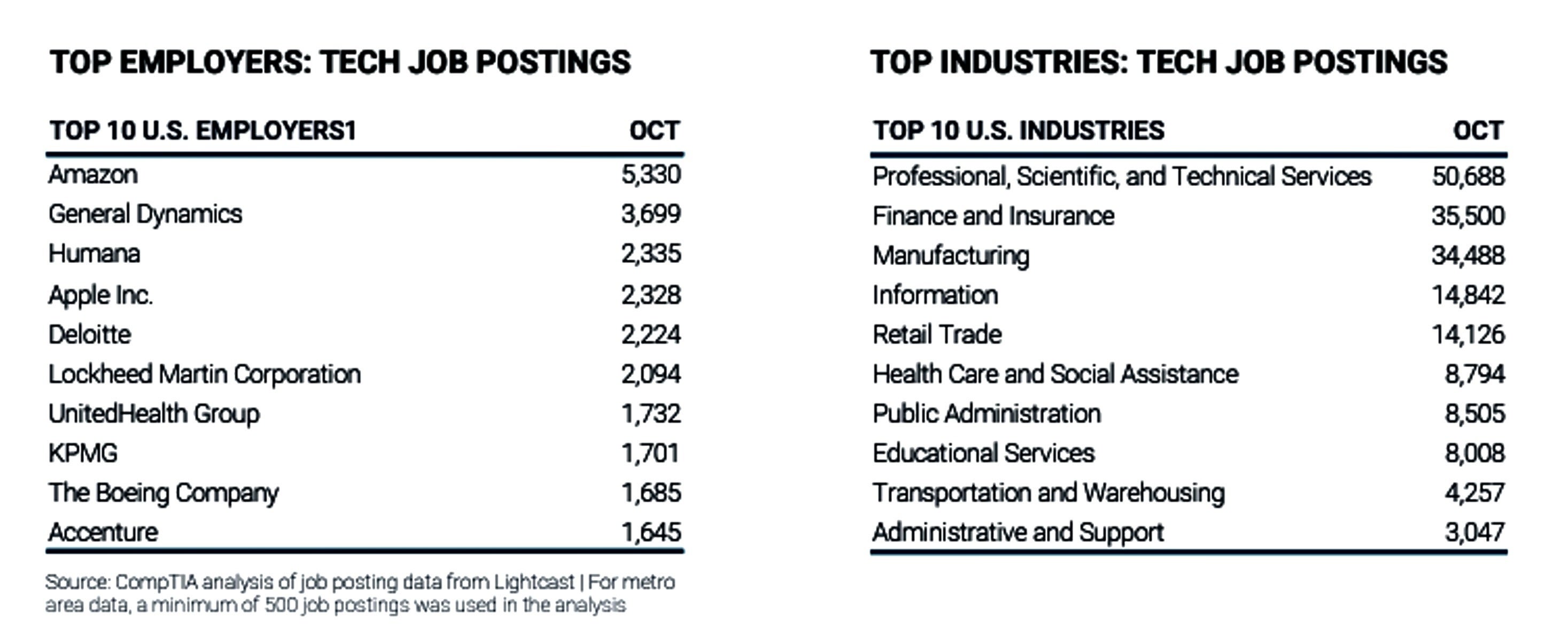 CompTIA
The highest demand in IT will be for programmers, blockchain processing, and security professionals, according to Janulaitis. Much of the hiring will be limited to filling positions that have been approved and are unfilled — not staff expansion.
Within the tech industry, the bulk of new hiring occurred in three sector categories, according to CompTIA:
- IT services and custom software development (+8,800)
- Other information services, including search engines (+6,800)
- Computer and electronic products manufacturing (+5,400)
In Janco’s mid-year 2022 IT Salary Survey, it found IT salaries for existing IT staff and middle managers increased by just under 3%, while new hires were paid 5% to 6% more than existing staff. “In conversation with several CIOs, we observed that starting pay rates for new hires were in the 8%-10% range a few months back, but this is not the case currently,” Janulaitis said.
The disparity in pay between veteran IT workers and new hires is a point of contention and has likely led to some problems in worker motivation, according to Sinem Buber, lead economist with ZipRecruiter. When new employees are hired, they often come in with pay and benefits equal to or better than veteran employees. Even as companies have raised wages, it’s often across the board, ignoring seniority.
“So, the link between hard work and raises is broken,” Buber said.
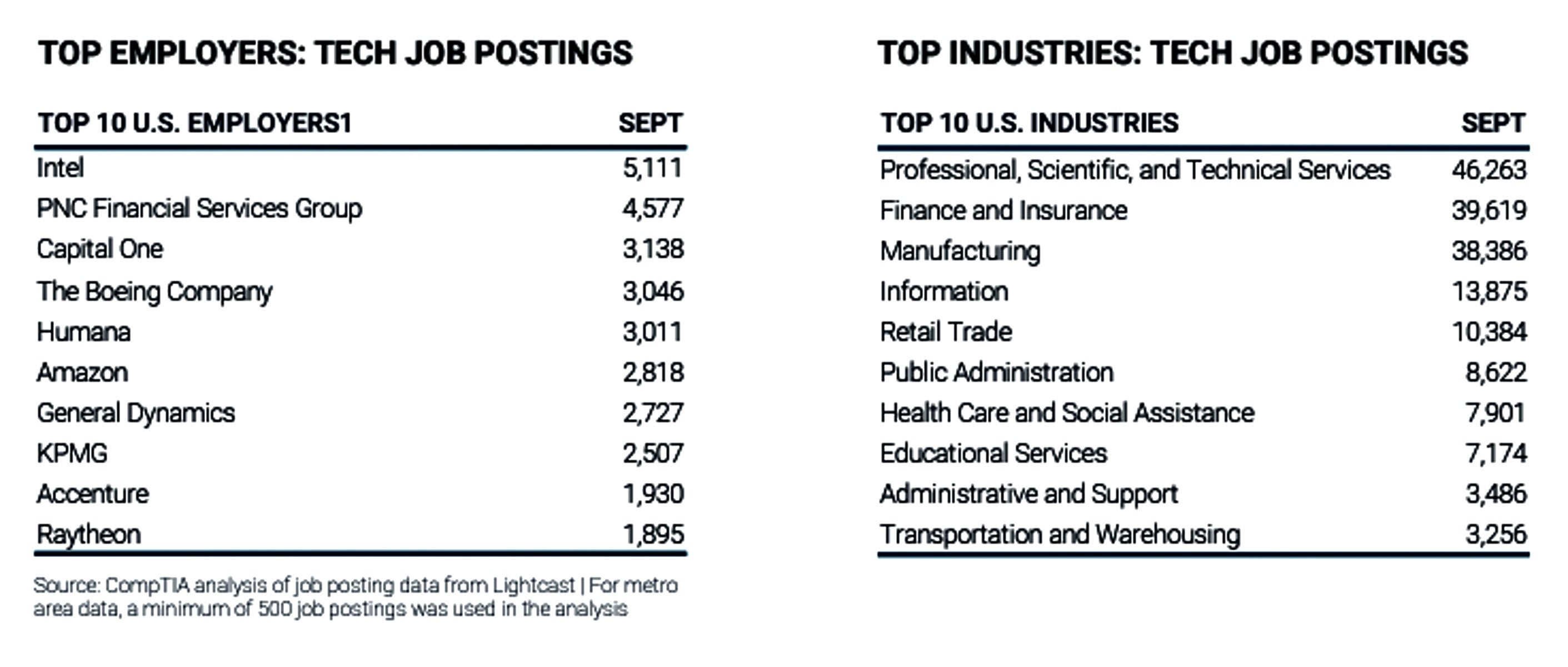 CompTIA
Remote work hiring trends on the upswing
Remote work shows no signs of slowing down, according to CompTIA. Employer job postings for tech positions that specify remote work or work-from-home options continue to increase, with a year-to-date rate of 34% compared to 27% in 2021, and 22% in 2020.
Major tech hubs saw significant month-over-month increases in tech jobs postings, including Boston (+2,732), New York City (+1,459), San Francisco (+884) and San Jose (+864). The top industries for tech job postings were professional, scientific, and technical services (50,688); finance and insurance (35,500); and manufacturing (34,488), according to CompTIA.
Positions for software developers and engineers led the October job postings (85,796). “There is also strong demand for IT support specialists, IT project managers, systems engineers and network engineers,” CompTIA said.
September 2022: Janco analysis
IT job growth has continued each month for over a year, and in the last 12 months 202,800 jobs have been added, according to the latest US Bureau of Labor data, which was analyzed by IT consultancy Janco Associates.
At the same time, CIOs and CFOs have started to slow the rate at which they’re creating new IT jobs and hiring due to inflation and recession fears, according to Janco’s latest report.
“Based on our analysis, the IT job market and opportunities for IT professionals will continue to be positive, but not as broad in scope as in the first nine months of 2022,” said M. Victor Janulaitis, CEO of Janco Associates. “CIOs are still posturing to hire staff and expand technologies to address blockchain processing and security applications based on market conditions. However, most hiring will be limited to filling positions open due to attrition, not staff expansion.”
U.S. tech firms added workers for the 22nd consecutive month, and companies across the economy hired an estimated 84,000 new tech workers in September, according to the latest Tech Jobs Report from CompTIA.
Job postings for new hiring were down 12% from August, but still totaled just over 300,000. Positions in software development and engineering, tech support, tech project management, systems engineering, and network engineering were in highest demand, according to CompTIA.
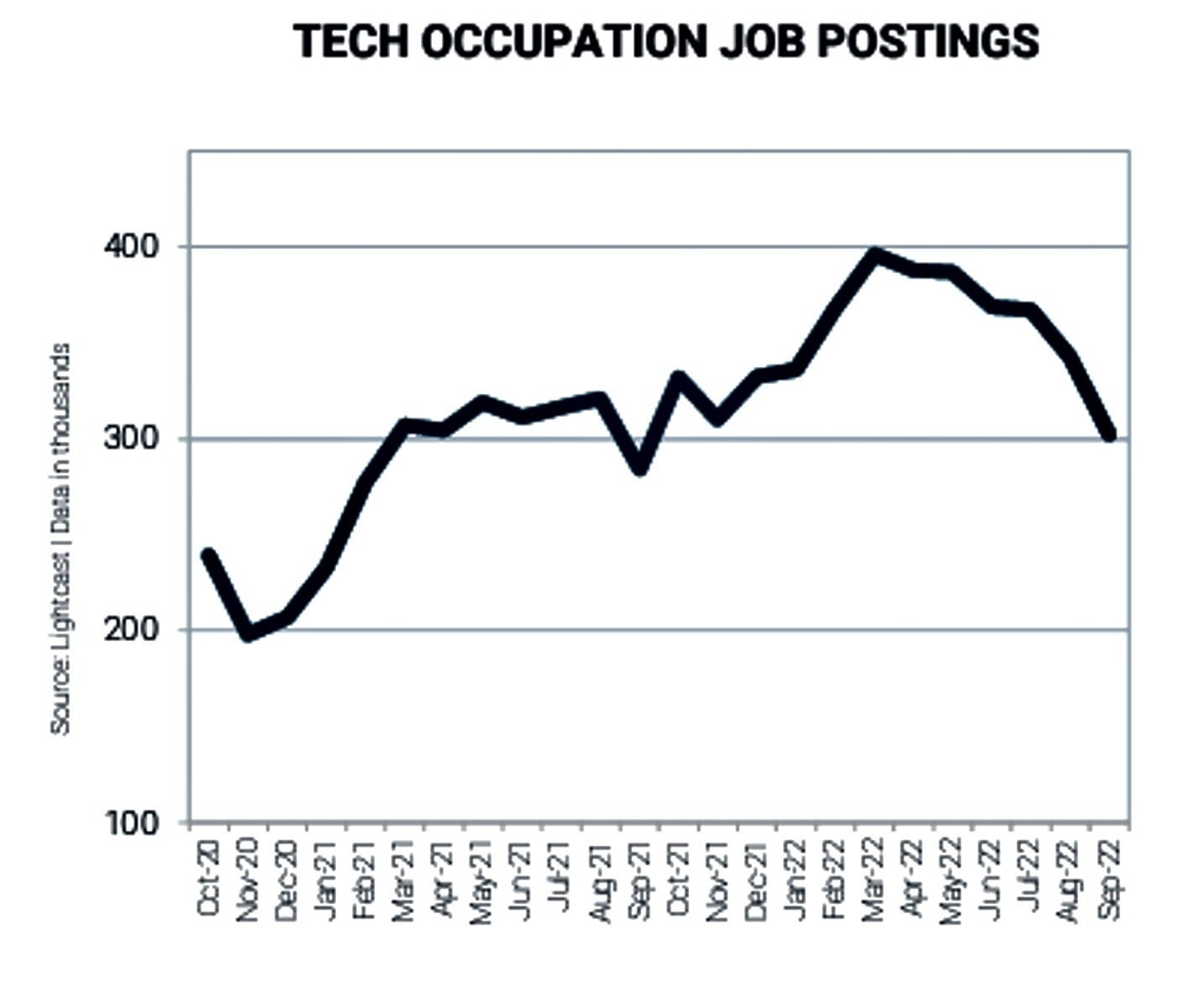 CompTIA
About 30% of all postings were for positions in emerging technologies or in jobs that require emerging tech skills. Positions that offer remote work or work from home as an option surpassed 109,000.
Another new report by UK-based job search engine Hired showed that, unlike 2021, when companies were hiring faster than in years prior, the overall time to hire job seekers in 2022 slowed across the US, UK, and Canada. UK companies are now taking 68 days on average to fill open positions. US companies aren’t moving much faster, taking 60 days (up from 52 days in 2021). In Canada, it’s now 54 days. (Remote roles took 40 days to fill – that’s slower than in 2021, but the shortest time to hire overall, Hired said.
“Why? It’s not clear yet,” Hired said in its report. “Are jobseekers taking longer to evaluate opportunities? Or are employers moving candidates through the funnel more carefully? While this indicates an increase in the time to fill roles, it doesn’t equal an overall slowdown in tech hiring.”
Data from Hired indicates employers offering remote roles have a hiring edge over those requiring hybrid or on-site jobs. Since June 2021, candidates showed a preference for remote-only roles.
In January, 18% of active jobseekers indicated they only wanted remote roles. By May, preference for “only remote” roles climbed to 31% of all active jobseekers on Hired’s platform, and rose another percentage point to 32% in June. By June, 93% of candidates showed a preference for remote or hybrid jobs.
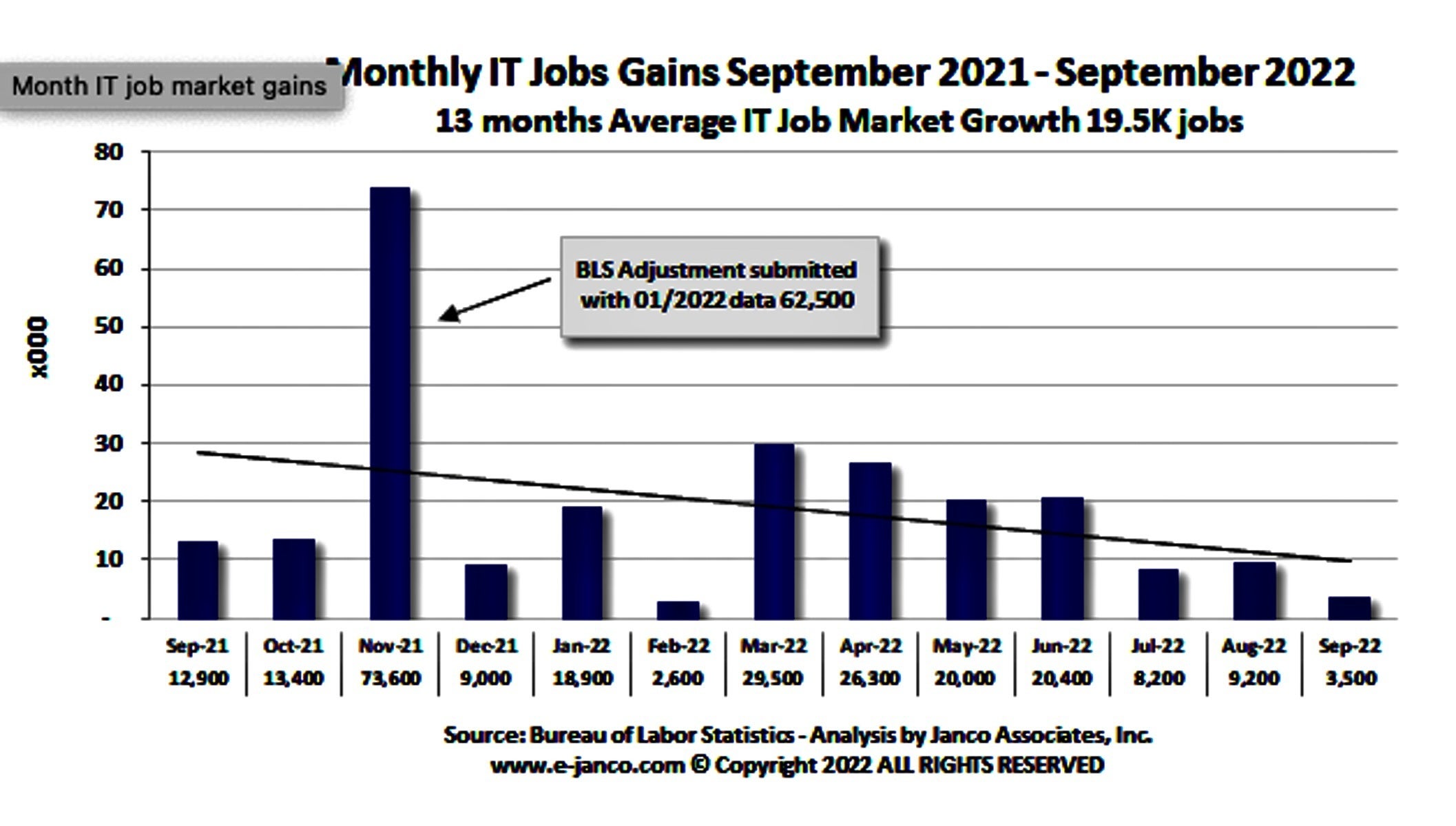 Janco Associates
Throughout the year, IT salaries in the US and Canada (except for junior candidates with less than two years of experience) saw significant growth. Mid-level US candidates with four to six years of experience saw the biggest jump from $146,000 to $154,000 between 2021 and 2022. Remote salaries for all candidates, except the most junior, also saw significant growth; on average they jumped by $7,000 to $8,000 from 2021 to 2022.
CompTIASeptember 2022: CompTIA analysis
Tech companies added 25,500 workers last month, one of the strongest hiring months so far this year, according to new data from the US Bureau of Labor Statistics (BLS) and industry analysts.
So far this year, employment in the tech industry has increased by 175,700 jobs, 46% ahead of 2021 — and 92% ahead of 2019, according to CompTIA, a nonprofit association for the IT industry and workforce. (The total includes all employees —technical and non-technical — on the payrolls of tech companies.)
“Stability in tech hiring continues to be an over-arching theme this year,” said Tim Herbert, chief research officer at CompTIA. “Despite all the economic noise and pockets of layoffs, aggregate tech hiring remains consistently positive.”
According to the latest BLS data, analyzed by IT consultancy Janco Associates, there are now 3.97 million jobs for IT Professionals in the US. For 24 months in a row, there has been an increase in the number of jobs added to the IT job market. Janco sees this trend continuing, according to its latest report released Friday.
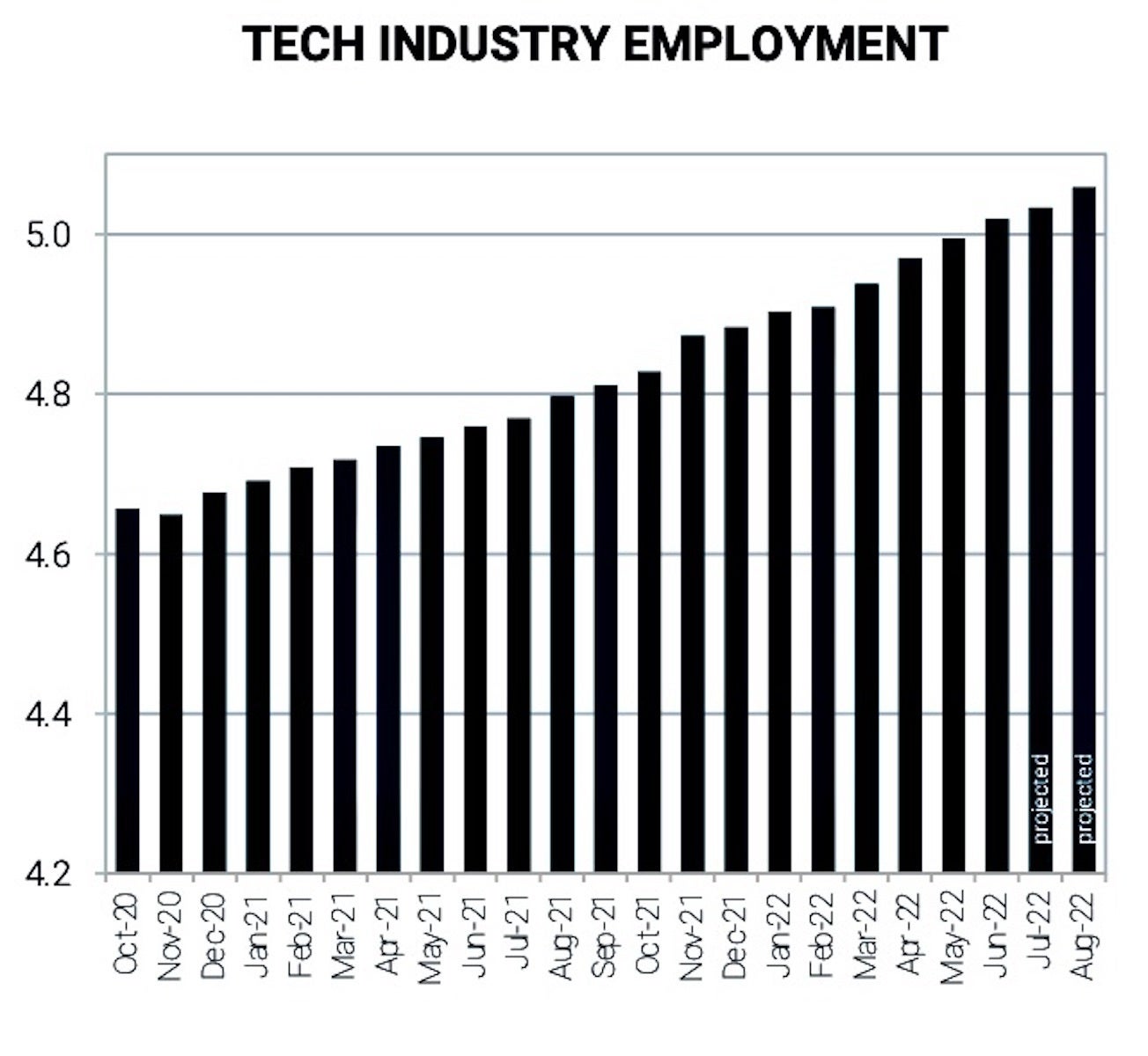 CompTIA
The unemployment rate for tech occupations rose to 2.3% in August from 1.7% in July, according to CompTIA. There are likely two reasons for it jump: the overall US unemployment rate increased, as well, and some large tech firms announced layoffs, Herbert noted.
“The other component is we’ve seen a rebound in consumer confidence and worker confidence,” Herbert said. “So, it can also be attributed to tech workers feeling a renewed sense of confidence, and so they’ve quit their job and they’re looking for new opportunities. That was far more prominent earlier this year and last year with the ‘Great Resignation.’”
The number of workers quitting their jobs remained above 4 million in August, according to BLS data. Since June 2021, more than 4 million people have quit every month, according to BLS data, giving rise to the trend known as the Great Resignation. The trend reflects a deep dissatisfaction by many workers with their employment situations. The ongoing global pandemic pushed workers to rethink their careers, work/life balance, long-term goals, and working conditions.
Overall employer job postings for tech positions eased in August to just under 320,000 from 372,000 in July, with 31% of jobs posted last month for positions in emerging technologies, such as artificial intelligence, machine learning and IoT, or in roles that require emerging tech skills, such as data analytics and automation software.
“A lot of the technology is mature enough now that a lot of positions are implementing automation solutions, robotic process automation,” Herbert said. “Next-generation roles include cybersecurity, and broad categories of automation, so, marketing automation and HR automation.”
From January through August 2022, tech job postings where employers specify remote work or work from home as an option were up 56% over last year —and up 281% from the pre-pandemic year of 2019, according to CompTIA.
“The one thing that jumped out at me, to no surprise, was the trend toward remote work that I think is now in a semi-permanent state,” Herbert said.
The increase in remote employment was highlighted by the leap in tech job postings in states such as Wyoming, Montana and Alaska, Herbert said.
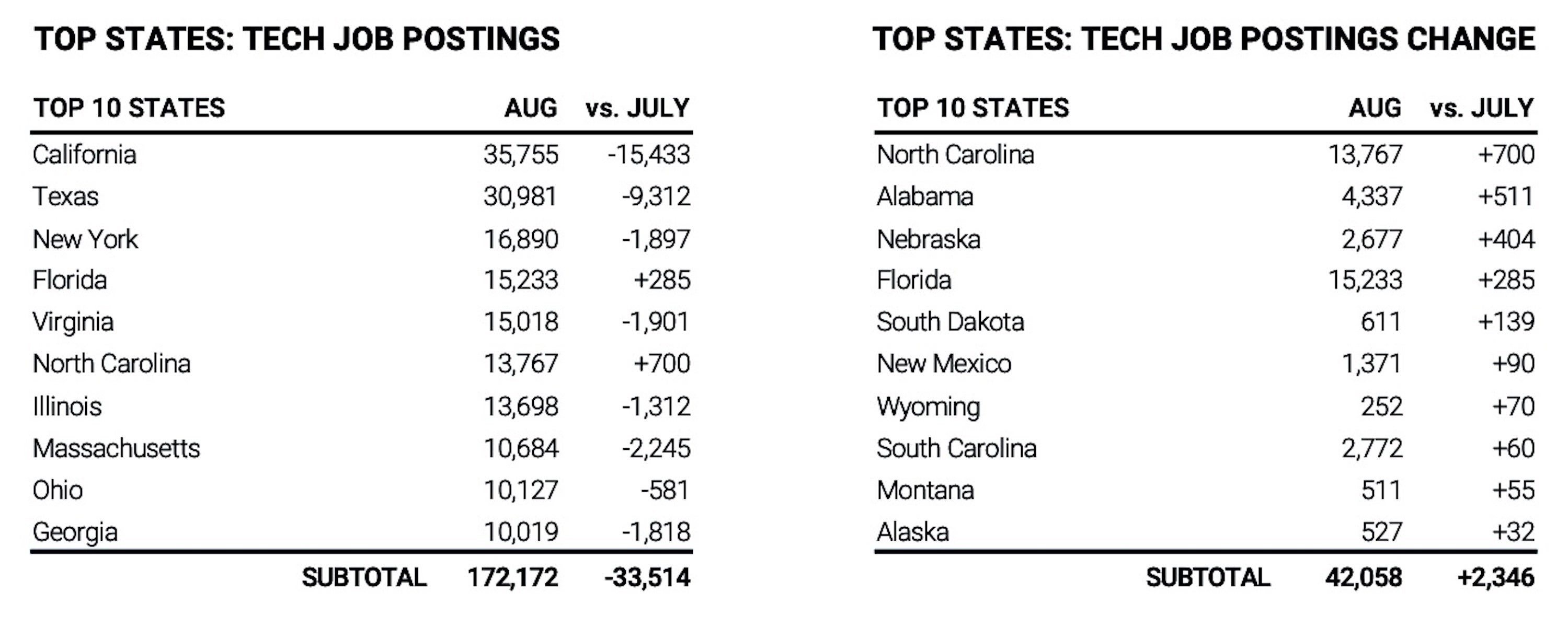 CompTIA
Even as hiring was up, the number of job openings dropped, indicating the pace of new job vacancies could be slowing, according to Janco Associates. Its data is based on the latest BLS statistics.
There is some slowing in hiring as fears of a significant downturn or recession are on the horizon, Janco’s report stated.
“CIOs and CFOs now are more cautious than they were in the first quarter. CIOs do not have a clear understanding of how a downturn will impact their bottom line. Most still are hiring but at a slower pace,”Janco CEO M. Victor Janulaitis wrote in the report. “Some companies have stopped hiring and started laying off employees.”
“With all that, the IT job market remains tight with an average of 200,000 IT professionals jobs that are not filled due to a lack of qualified candidates,” Janulaitis continued. “The number of unfilled IT jobs has peaked from over 260,000 in April to 210,000 in July. That should still be enough of a buffer to keep hiring of IT pros on a positive track.”
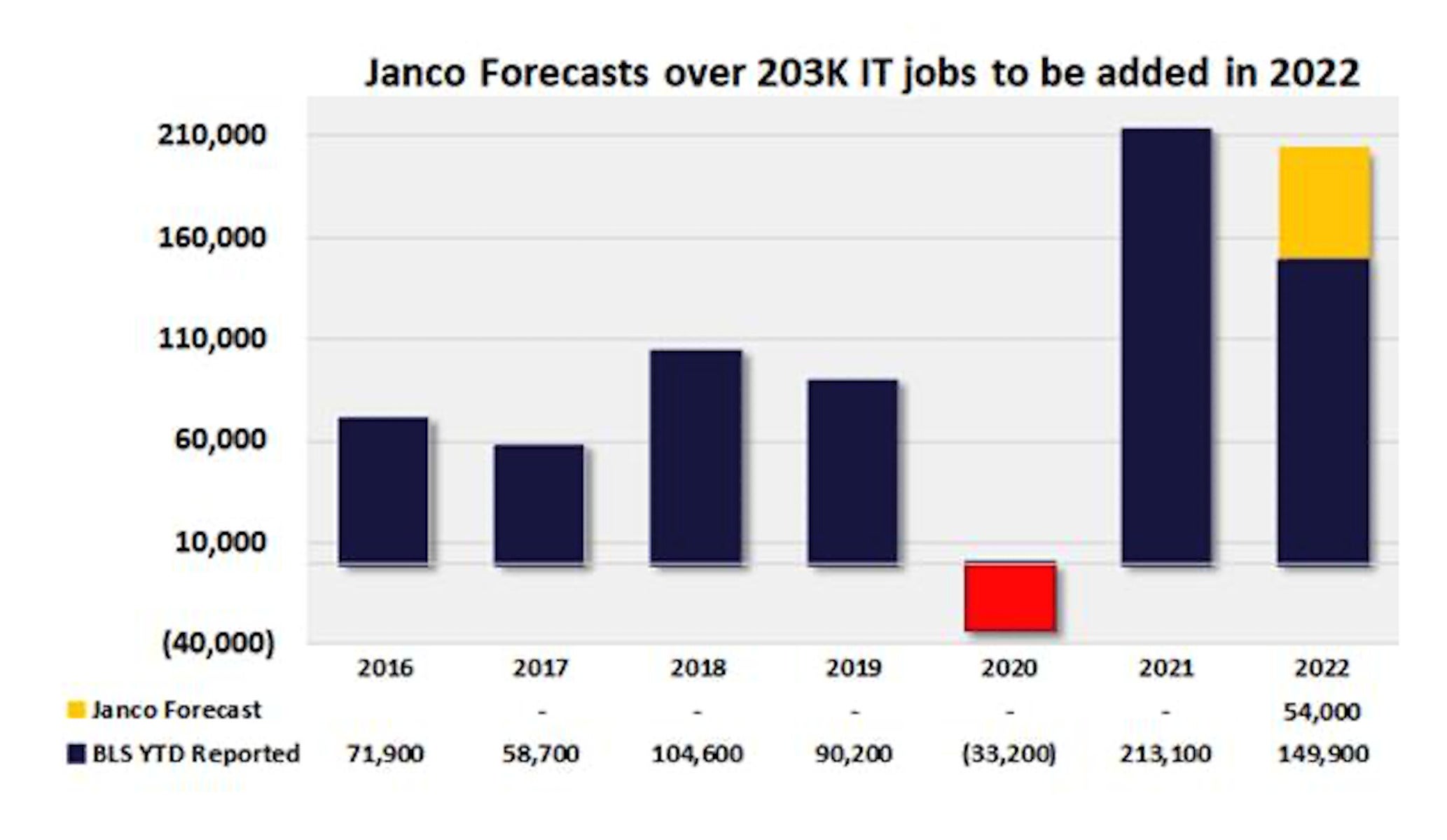 Janco Associates
Janulaitis also said new IT hires are on average receiving salaries that are 5% to 6% above pay for existing positions — and in some cases as much as 10% higher; The higher starting pay is needed to attract the best IT candidates. That salary disparity, however, is driving dissatisfaction and an increase in attrition rate among existing employees, according to Janulaitis.
“The challenge CIOs face will be how to keep the balance between the existing budget, providing salary increases to existing employees that address inflation and higher commuting costs, and having sufficient resources available to achieve the enterprise’s technology and bottom line objectives,” Janulaitis said.
The BLS doesn’t track tech industry jobs directly. Instead, the agency uses the “information sector” as a proxy for tech employment because there are tech jobs in most industries, and therefore technology is not an industry in and of itself.
The nation’s unemployment rate rose from 3.5% to 3.7% in August, with the number of unemployed rising by 344,000 to 6 million.
Overall, the US economy added 315,000 jobs in August, which was more than economists had predicted, but still far less than the 526,000 positions added in July – a record month for jobs.
Professional and business services added 68,000 jobs in August, according to the BLS. Within the industry, computer systems design and related services added 14,000 positions; management and technical consulting services grew by 13,000; and scientific research and development services increased by 6,000. Over the past 12 months, professional and business services has added 1.1 million jobs, according to the BLS.
“CIOs and CFOs now are more cautious than they were in the first quarter. CIOs do not have a clear understanding of how a downturn will impact their bottom line,” Victor Janulaitis, CEO of Janco Associates said in a report last week. “Most still are hiring, but at a slower pace. Some companies have stopped hiring and started laying off employees.”
With all that, the IT job market remains tight, with an average of 200,000 IT professional jobs that are not filled due to a lack of qualified candidates, according to Janulaitis. If there is a major recession, many companies will choose not to fill those new open positions.
“That should be enough of a buffer to keep the hiring of IT pros on a positive track,” he said.
August 2022
Despite a number of sizeable layoffs at high-profile companies in recent months, the tech sector continued to lead all others in low unemployment rates in July, according to a new report from CompTIA, a nonprofit association for the IT industry and workforce.
Tech occupations across all industry sectors increased by an estimated 239,000 positions last month, according to an analysis of US Bureau of Labor Statistics (BLS) data by CompTIA.
Tech industry employment saw a net gain of 12,700 workers, the 20th consecutive month of growth. So far this year, the tech sector has gained 143,700 jobs, an increase of 55% year-over-year, according to CompTIA. The unemployment rate for tech jobs was just 1.7% in July (1.3% for women, 1.8% for men), roughly half the overall US unemployment rate of 3.5%.
Employer job postings for tech positions approached 484,000 in July, a slight decrease from the previous month but still at a near record level. Through the first seven months of 2022, US companies listed approximately 3.1 million jobs postings for tech positions, up 49% compared to 2021.
“The tech jobs market has repeatedly outperformed in the face of real and perceived economic weakness,” Tim Herbert, chief research officer at CompTIA, said in a statement. “The data confirms that for every layoff announcement there are other employers stepping in to take advantage of tech talent hiring opportunities.”
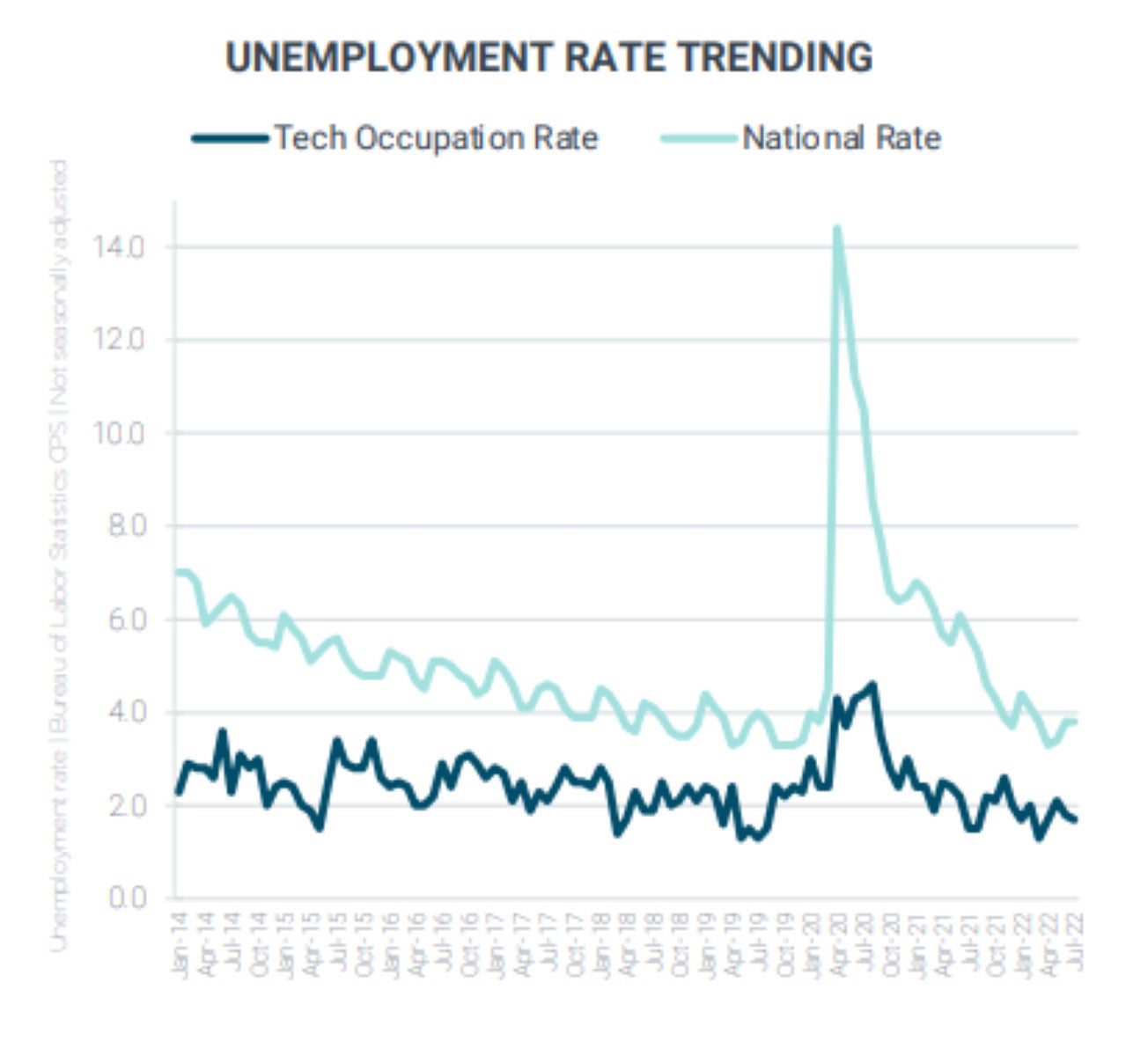 CompTIA
Meanwhile, since June 2021, more than 4 million people have quit their jobs every month, according to BLS data, part of a trend known as the Great Resignation. The trend reflects a deep dissatisfaction by many workers with their employment situations. The ongoing global pandemic has enabled workers to rethink their careers, work/life balance, long-term goals, and working conditions.
Some of the top reasons workers quit this year are unhappiness with how their employer treated them during the pandemic (19%), low pay or lack of benefits (17%), and a lack of work-life balance (13%), according to a survey by employment listing website Joblist.
The BLS doesn’t track tech industry jobs directly. Instead, the agency uses the “information sector” as a proxy for tech employment because there are tech jobs in most industries, and therefore technology is not an industry in of itself.
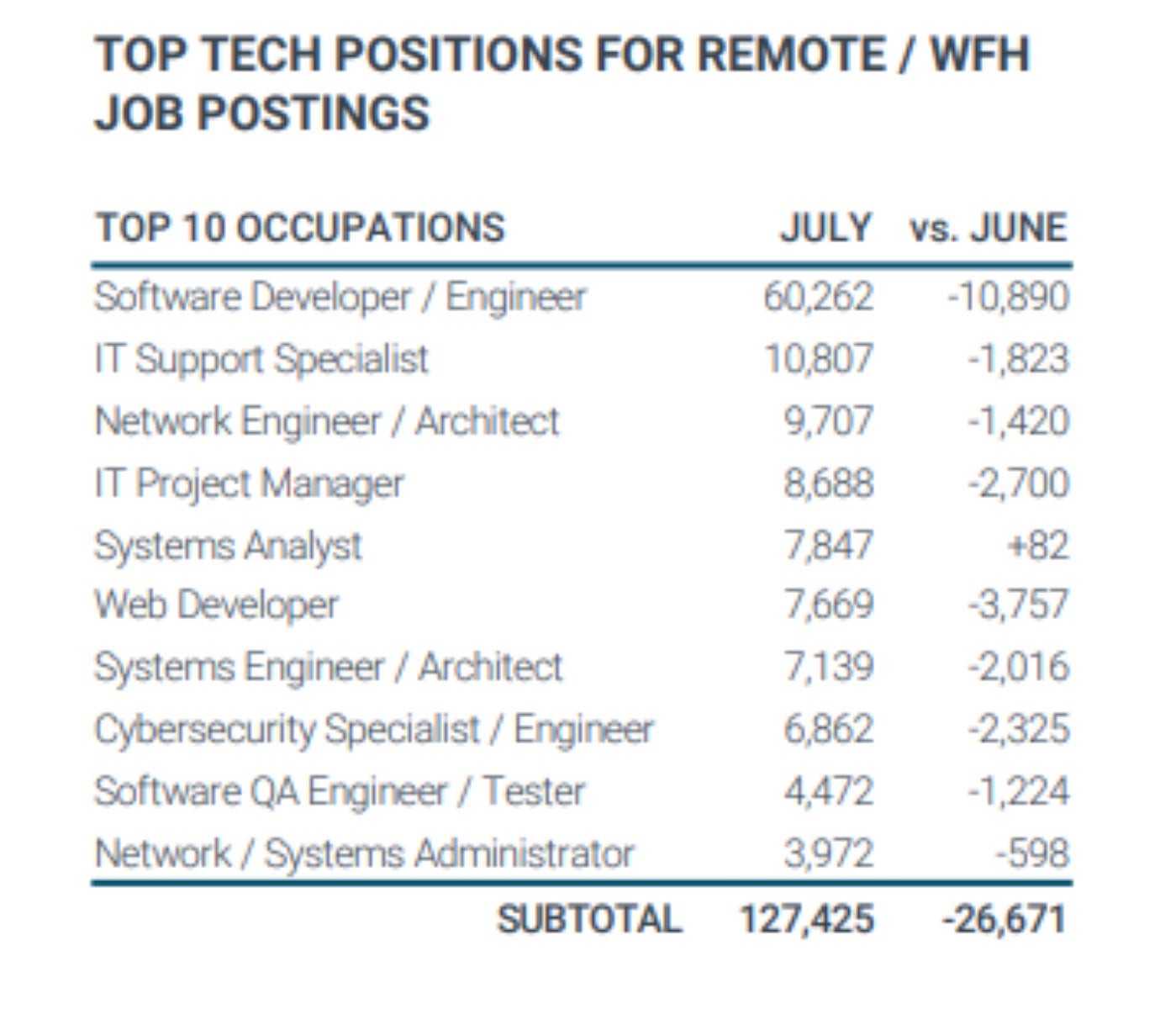 CompTIA
Within the tech sector, three occupation categories recorded job growth in July – other information services, including search engines (+6,800); data processing, hosting and related services (+4,100); and computer and electronic products manufacturing (+3,300). Hiring in the IT services and custom software development category was flat, while telecom-related occupations declined (-1,400), according to CompTIA.
About one in five tech job postings in July were for positions requiring two years or less of experience. About half specified three to five years of experience, while 13% sought candidates with nine or more years of experience, CompTIA said.
Many employers, even those in tech industries, are ending college degree requirements for many job openings. Instead, organizations are focusing on the skills, experience, and personality traits of job candidates. The sea change opens up tech jobs to a more diverse pool of candidates.
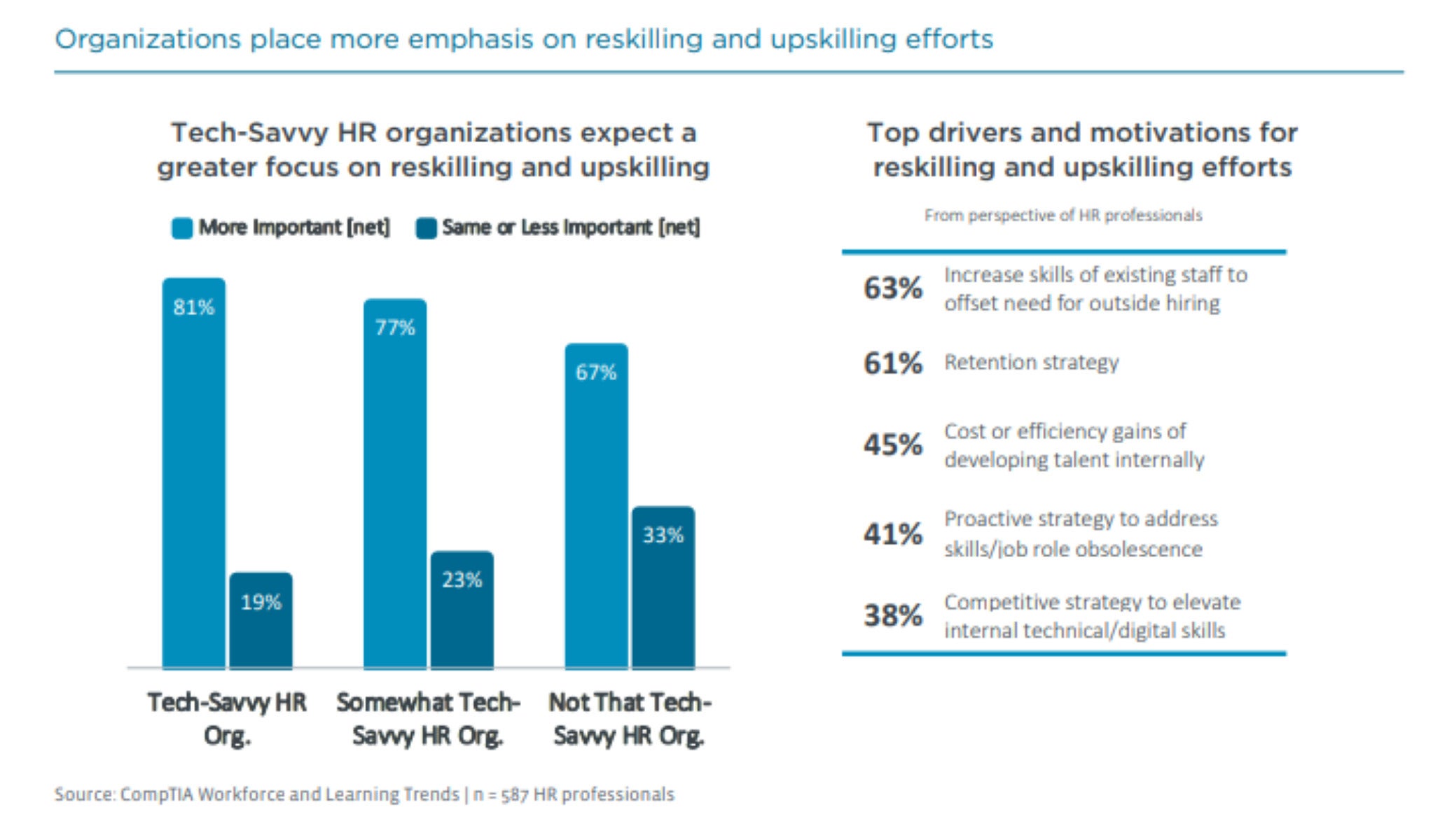 CompTIA
Software developers and engineers are the most in-demand positions employers are looking to fill — accounting for nearly 148,000 job postings last month. There is also a strong job market for IT support specialists, IT project managers, systems engineers and architects, and network engineers and architects. Positions in emerging technologies or jobs requiring emerging tech skills accounted for one-third of all postings in July.
Faced with a dearth of workforce talent, many tech companies and others are hiring through non-traditional approaches that include coding bootcamps, low-code training, and a focus on population areas outside the norm.
July 2022
Over the past three months, IT job openings for entry-level positions have declined significantly, according to a new report.
Job openings for entry-level tech workers declined from 29,500 in April to 24,000 in May and to 18,400 in June, according to IT employment consultancy Janco Associates.
Janco’s report, which was compiled from US Bureau of Labor Statistics (BLS) and survey data, said the downward trend is the result of several factors — the most critical of which is an increasing belief among C-level executives that we are already or soon will be in a recession.
In creating its May forecast for future IT hiring, Janco found that almost all 217 CIOs it surveyed are planning on:
- Limiting the extension of existing contracts for contract workers and consultants beyond the 3rd quarter of the year.
- Managing the full-time employee headcount to budgeted levels through the end of this year.
- Not replacing departing employees who do not have critical IT skills and/or enterprise-specific operational knowledge.
“In our interviews, we have found that Wall Street has stopped hiring, and a number of job offers for recent IT college graduates have had offers that were extended pulled back,” Janco’s report stated. “The initial indicators from the monthly BLS data for June seem to be reinforcing those findings.”
Janco’s report noted that some organizations have already started the process of layoffs.
- Netflix, PayPal, Getir, Klarna, Bolt, and Carvana instituted layoffs in May.
- Coinbase will cut 1,100 jobs, about 18% of its global workforce.
- Microsoft is slowing down its hiring “to better align its resources.”
- Meta (Facebook) and Twitter have frozen hiring for some departments.
Gartner research shows that just 4% of US companies have started laying off employees, while 7% have frozen hiring and 15% have started to slow down hiring.
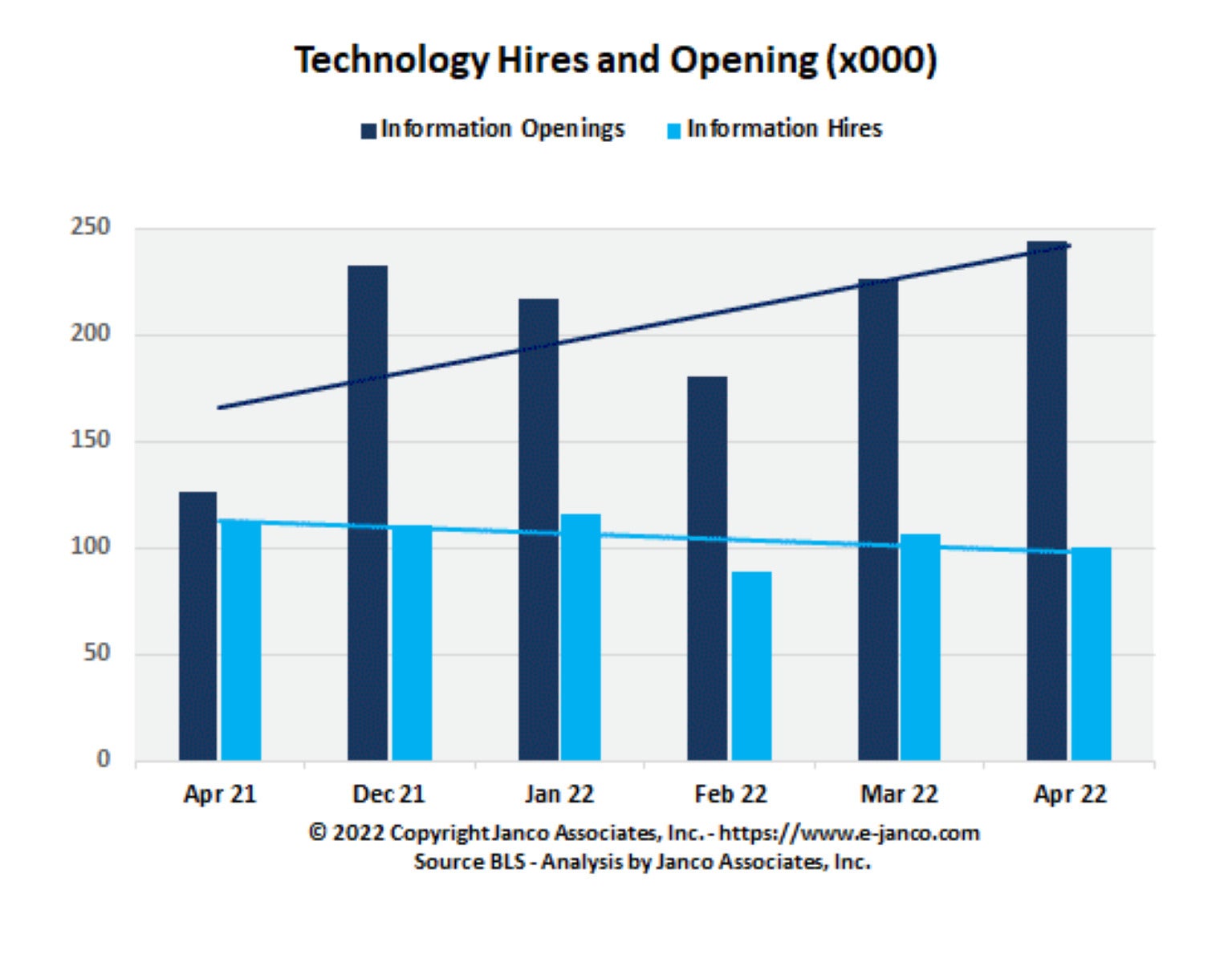 Janco Associates
Hiring is still robust for experienced IT pros —particularly for certain job titles, including security-related positions and in-demand technology, such as blockchain and e-commerce positions — but entry-level candidates are finding it more difficult to find new jobs, according to Janco.
Overall, the number of open jobs in the US at the end of May was 11.3 million, a drop from 11.7 million in April, according to the BLS’s May Job Openings and Labor Turnover Survey (JOLTS) report. Despite the drop in open requisitions, the U.S. added 390,000 jobs in May; The unemployment rate also held at 3.6%, and there were almost two job openings for each unemployed American. The number and rate of workers quitting their jobs remained almost unchanged at 4.3 million and 2.8%, respectively.
The impact of inflation and the potential of a significant downturn is not reflected in the preliminary budgets for 2023. Most CIOs and CFOs are trying to determine what they will do if that downturn occurs, Janco reported.
Janco also publishes a biannual salary survey in January and July. The just-published survey results showed that IT salaries were on the rise in the first six months of 2022. For the first time, median salaries for all IT pros in large enterprises exceeded $100,000.
Midsized companies were offering the greatest salary increases, which averaged north of 4% for IT middle managers and staff. IT executives saw an average 3.04% salary increase this year.
Large enterprises were more miserly, with staff receiving a 3.27% average increase and executives and middle managers earning a 3.47% and 1.20% average boost, respectively.
The unemployment rate for tech occupations fell to a near-record low in May, and employer job postings for tech positions passed 443,000, according to an analysis of the latest labor market data by CompTIA, a nonprofit association for the IT industry and workforce.
“The already tight labor market just became even tighter as competition for tech talent reaches near-record levels,” said Tim Herbert, chief research officer at CompTIA. “For any employer relying on the old hiring playbook, it’s time to rethink approaches to recruiting and retention.”
Employers throughout the US economy are stepping up their search for tech workers and tech companies continue to expand payrolls, according CompTIA. Specifically, tech firms added 75,200 workers through the first four months of 2022.
More than 190,000 new IT jobs will be created in 2022, according to IT employment consultancy Janco Associates. The IT job market now has more than 3.85 million positions in the US, with about 130,000 of those positions unfilled, Janco’s report stated.
Some of the top tech jobs in terms of hiring and pay include software developer/engineer, IT project manager, IT support specialist, systems engineer/architect, and network engineer/architect, according to CompTIA’s jobs report.
Tech workers employed in the cloud space saw some of the greatest salary increases over the past year, according to a new salary survey from O’Reilly Media, an online IT training provider. According to the report, cloud-focused workers are the most sought-after tech talent as a growing number of organizations of all sizes utilize cloud tools and services.
The survey revealed that cloud professionals are paid an average yearly salary of $182,000. Report findings also show the impact of the great reshuffle within the tech sector, with 20% reporting they’ve already changed employers over the last year, and 25% of respondents planning to find new employment with better compensation, raising a question of whether the great reshuffle will continue.
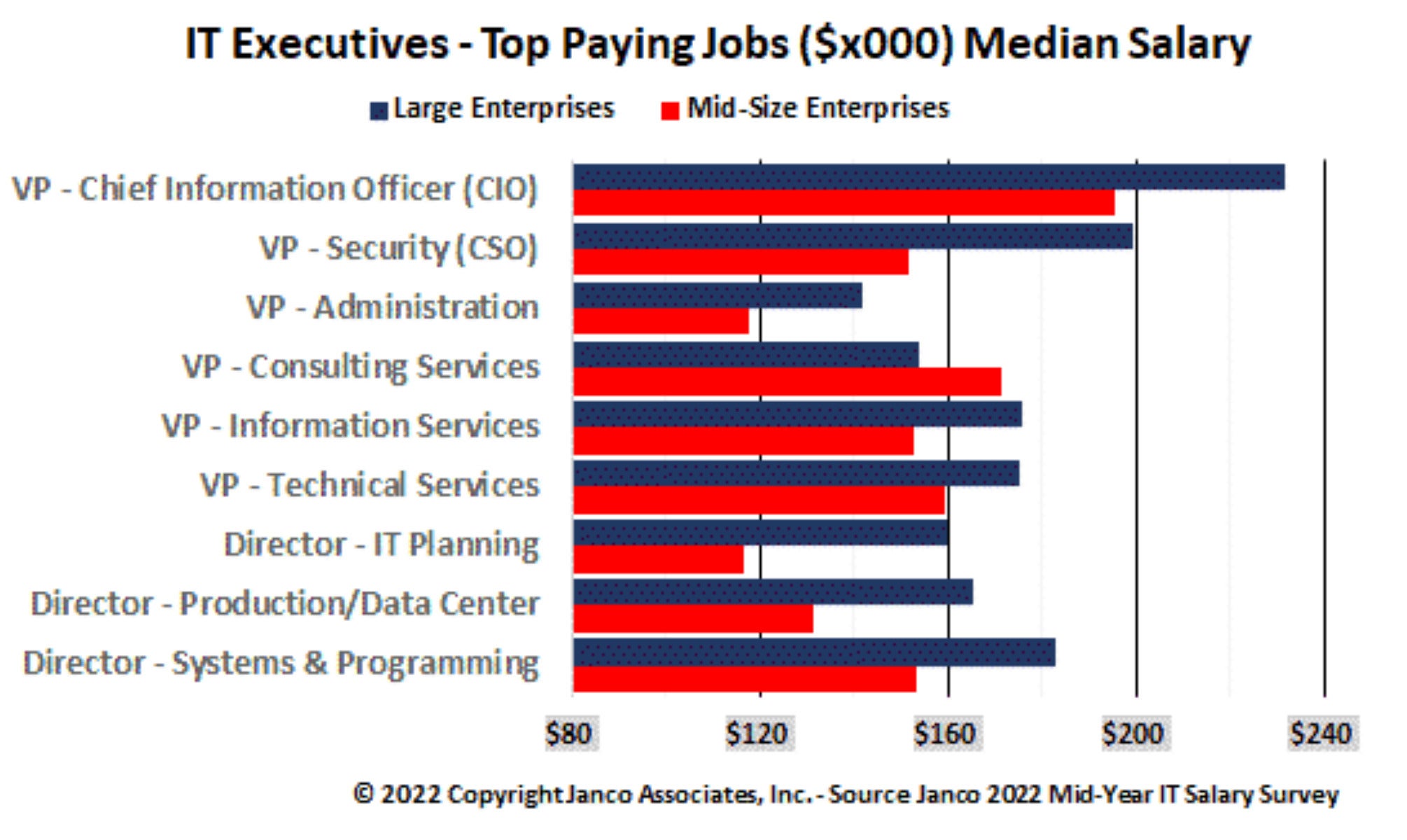 Janco Associates
The average salary increase over the past year for cloud workers was 4.3%. The average salary for women, unfortunately, is 7% lower than the average salary for men, the survey also found.
The highest-paid job titles include directors ($235,000) and executives ($231,000), followed by architects, “leads,” and managers ($196,000, $190,000, and $188,000, respectively).
“During the pandemic, we witnessed millions of workers resign from companies in an effort to reconfigure their careers and take deliberate steps toward new job opportunities with higher wages and better alignment between their work and life goals,” said O’Reilly President Laura Baldwin. “With these workers in such demand, we anticipate the great tech exodus to continue unless employers step up with competitive pay, substantial benefits, remote work flexibility, and on-the-job learning and development.”
June 2022
Technology companies added workers for the 18th consecutive month and employer job postings for tech occupations reached a new high in May, according to an analysis of the latest employment data by a nonprofit association for the IT industry and workforce.
Technology industry level companies added 22,800 net new workers in May. Through the first five months of 2022 employment increased by 106,700 positions and is 69% ahead of the same period versus 2021, according to an analysis of the U.S. Bureau of Labor Statistics (BLS) jobs report by industry association CompTIA.
Employer hiring activity as measured by job postings for tech positions totaled 623,627 for the month of May and nearly 2.2 million year-to-date, which represents a 52% increase versus the same period of the previous year.
“The data speaks to the broad-based nature of the tech workforce,” Tim Herbert, chief research officer at CompTIA, said in a statement. “It also speaks to the many factors affecting employment and situations where sectors or companies easing up on hiring may be offset by sectors or companies increasing hiring.”
The unemployment rate for the IT sector did edge up slightly in May to 2.1% from 2.0% the previous month . The unemployment rate for tech occupations, however, remained remarkably low compared to the overall national unemployment rate of 3.6%.
“In an analysis of the latest BLS data we have found the number of jobs created for IT professionals continues to grow. However, there are some clouds for IT pros’ job prospects six to twelve months in the future.” said M. Victor Janulaitis, CEO of IT employment consultancy Janco Associates. “The primary driver is inflation and high energy costs which is causing concerns that the economy will slow later in the year and potentially have an extended recession in 2023.”
Janco Associates, which did its own analysis of the BLS jobs report, found over the past year more than 20,000 new IT positions were added each month. That surge has begun to cool a bit with 17,000 new IT jobs created in May.
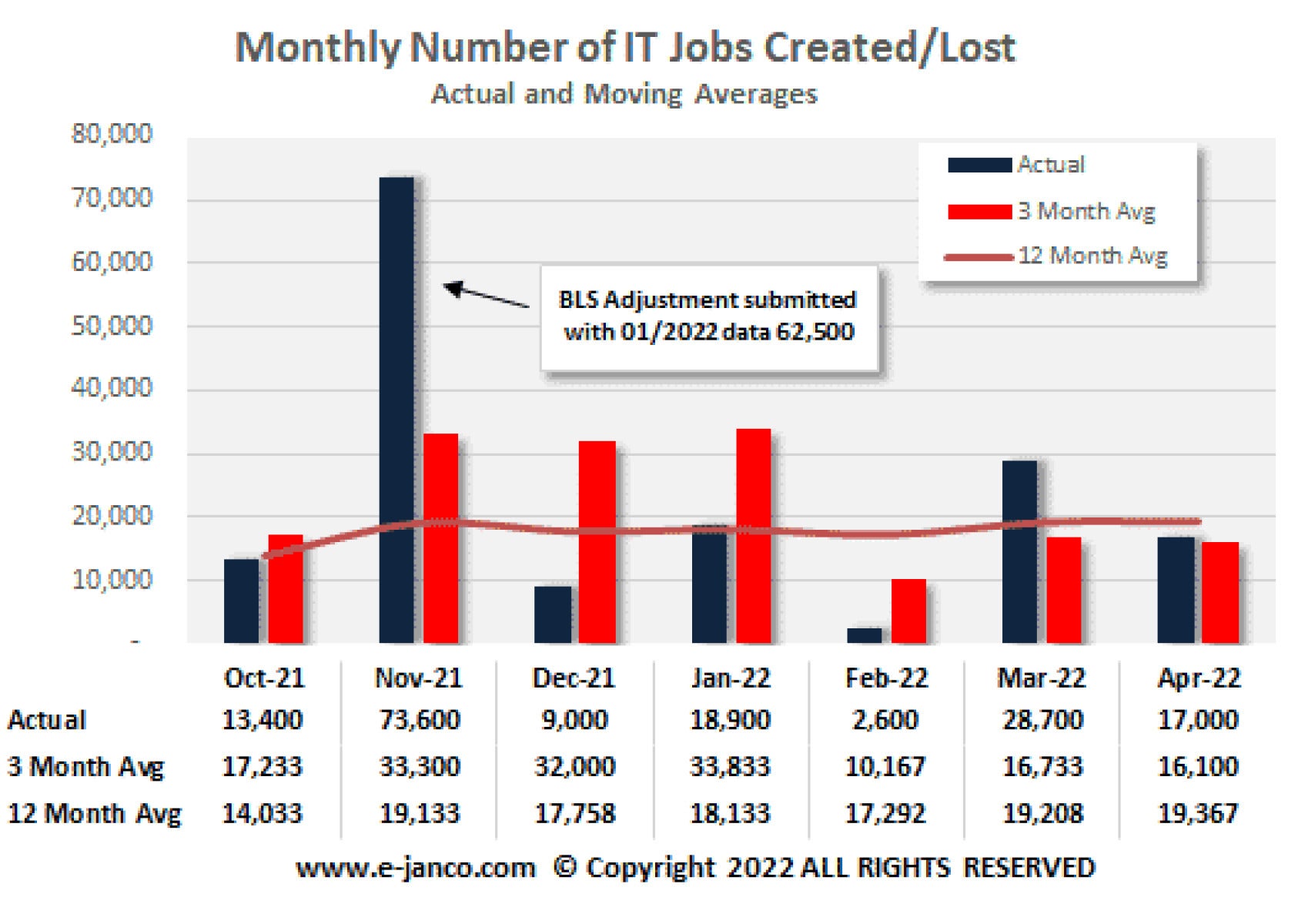 Janco Associates
All signs point to that growth continuing but at a slower rate of 13,000 to 14,000 new jobs added per month through out the rest of the year. By the end of 2022, Janco forecasted that 191,000 new IT Jobs will be added.
Currently, there are more than 3.9 million unfilled IT job positions in the US, according to Janco.
“That is driven by the fact that qualified candidates can not be found,” Janulaitis said. “The first sign that the growth of the IT job market is slowing will be the reduction in that number as companies will just pull back on trying to recruit those unfilled positions.”
So far in 2022, the IT job market has grown by 93,400 jobs, which is 43,000 more than the for the same period in 2021. If there is a downturn, as some predict, one of the reactions by CEOs will be to implement hiring freezes that will result in a decrease in the growth of the IT job market, according to Janulaitis.
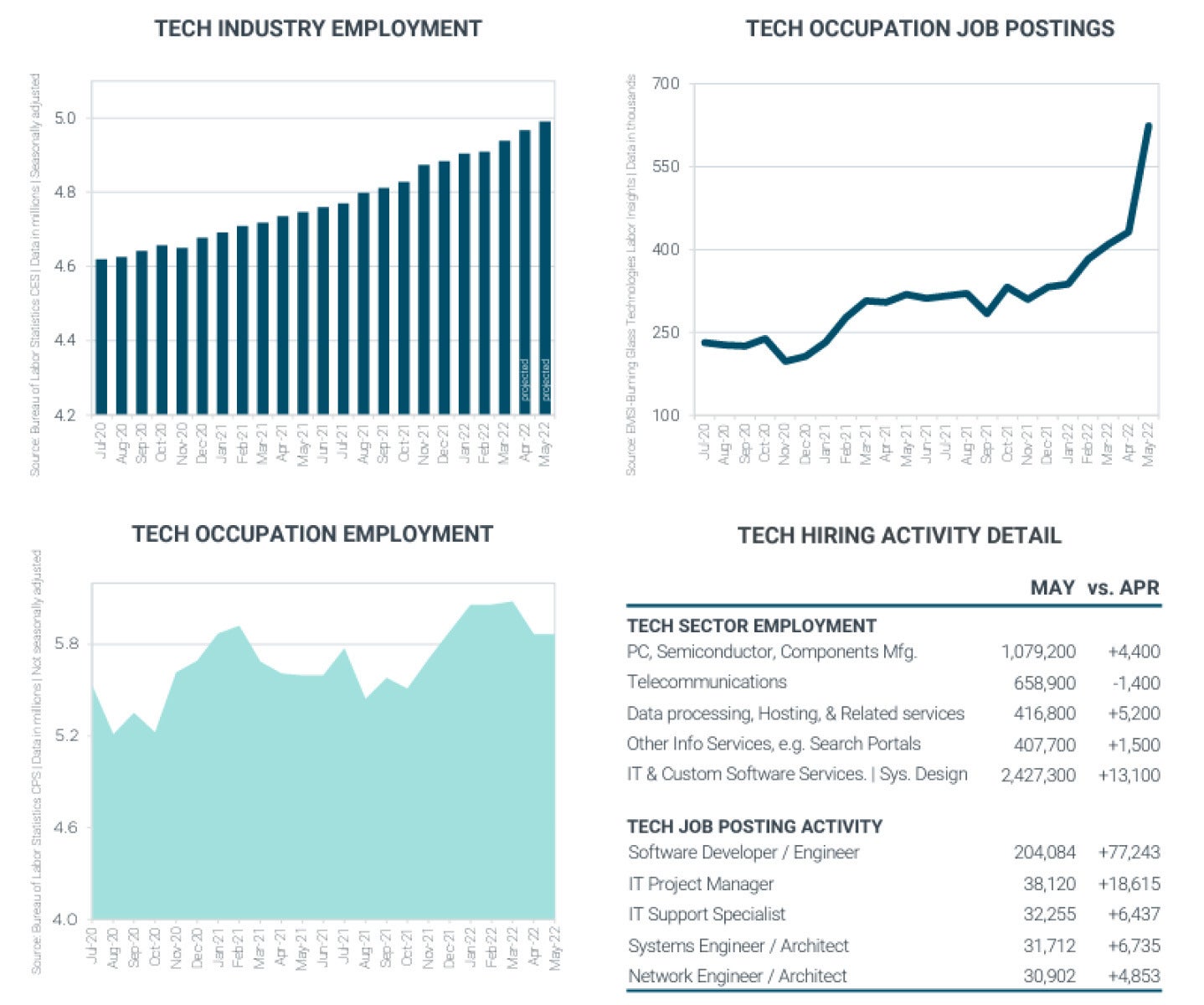 CompTIA
“Based on our analysis, the IT job market and opportunities for IT professionals will continue to be positive but not as broad in scope as last year. CIOs are still posturing to hire more staff and expand technologies to address blockchain processing and security applications based on market conditions,” Janulaitis said. “However recent events, increased energy cost, and the specter of high inflation will harm IT job market growth.”
Positions for software developers and engineers (204,084) accounted for nearly a third of all employer tech job postings in May, an increase of more than 77,000 from April, according to CompTIA. IT project managers, IT support specialists, systems engineers and architects and network engineers and architects also saw market increase in hiring.
One-third of all job postings were for positions in emerging technologies or jobs requiring emerging tech skills.
Industries that saw some of the hottest hiring trends includeded scientific and technical services, finance and insurance, manufacturing, information, retail trade, health care and social assistance, public administration and educational services. The search for tech talent was widely dispersed across geographies, as well. Four metro areas (New York City, Dallas, Los Angeles and Washington) recorded tech jobs postings totals that surpassed 31,000 positions.
Hiring in the IT services and custom software development category led May’s tech sector job growth with more than 13,100 new positions. Hiring in data processing, hosting and related services, computer and electronic products manufacturing and other information services, including search engines also increased. Conversely, jobs in telecommunications declined, according to CompTIA’s report.
April 2022
The IT job market size grew by 17,000 jobs in April, according to new data from IT employment consultancy Janco Associates.
Over the past three months, 43,200 Jobs have been added to IT Job Market, a pace of expansion exceeds 2021, the firm stated in its latest research post.
In 2021, 213,100 jobs were added to the IT Job Market. That not only replaced the jobs lost during the pandemic, but it also expanded the growth to a level that exceeded the pre-pandemic levels. (Janco bases its information on data from the US Bureau of Labor Statistics — the BLS.)
“In interviews with both CIOs and HR professionals, Janco has found that hiring IT professionals is at a record high level. This, even with inflation and the specter of a possible economic downturn,” Janco stated. “All signs point to that growth continuing.”
While all IT jobs lost during the pandemic have been recovered, the hiring of IT professionals is now being hindered by a lack of qualified individuals, according to the latest statistics.
The April monthly tech jobs report released by the CompTIA industry association showed the tech industry added 12,300 jobs from February to March, 2022. Software developers (3,613) and systems engineers/architects (3,126) led the pack in terms of new positions available.
Software developers and engineers are far and away the most sought-after positions companies need to fill, with more than 115,000 job postings across the US, according to CompTIA. IT support specialists, IT project managers, systems engineers and architects, and network engineers and architects are also in high demand.
“By all accounts this was an exceptionally strong start to the year for tech employment,” said Tim Herbert, chief research officer at CompTIA. “The arms race in recruiting and retaining tech talent undoubtedly challenges employers in direct and indirect ways.”
The unemployment rate for tech occupations fell to a near-record low, as tech firms added workers for the 16th consecutive month and employer job postings for tech positions surpassed 400,000 in March, according to an analysis of the latest labor market data by CompTIA.
“The already tight labor market just became even tighter as competition for tech talent reaches near-record levels,” Herbert said in a statement. “For any employer relying on the old hiring playbook, it’s time to rethink approaches to recruiting and retention.”
IT jobs across the US increased by 19,000 in March. The unemployment rate for tech occupations is 1.3%, its lowest level since June 2019 and about one-third the current national unemployment rate (3.6%).
Janco is forecasting more than 138,000 new IT jobs will be created in 2022. The IT job market now has more than 3.85 million positions in the US. As of December 2021, Janco reported 3.72 million IT positions in the US.
“Based on our analysis, the IT job market and opportunities for IT professionals will continue to be positive, but not as broad in scope as in the last quarter of 2021,” Janco CEO M. Victor Janulaitis said in a statement. “CIOs are still posturing to hire more staff and expand technologies to address blockchain processing and security applications based on market conditions. However recent events, increased energy cost, and the specter of high inflation will harm IT job market growth.”
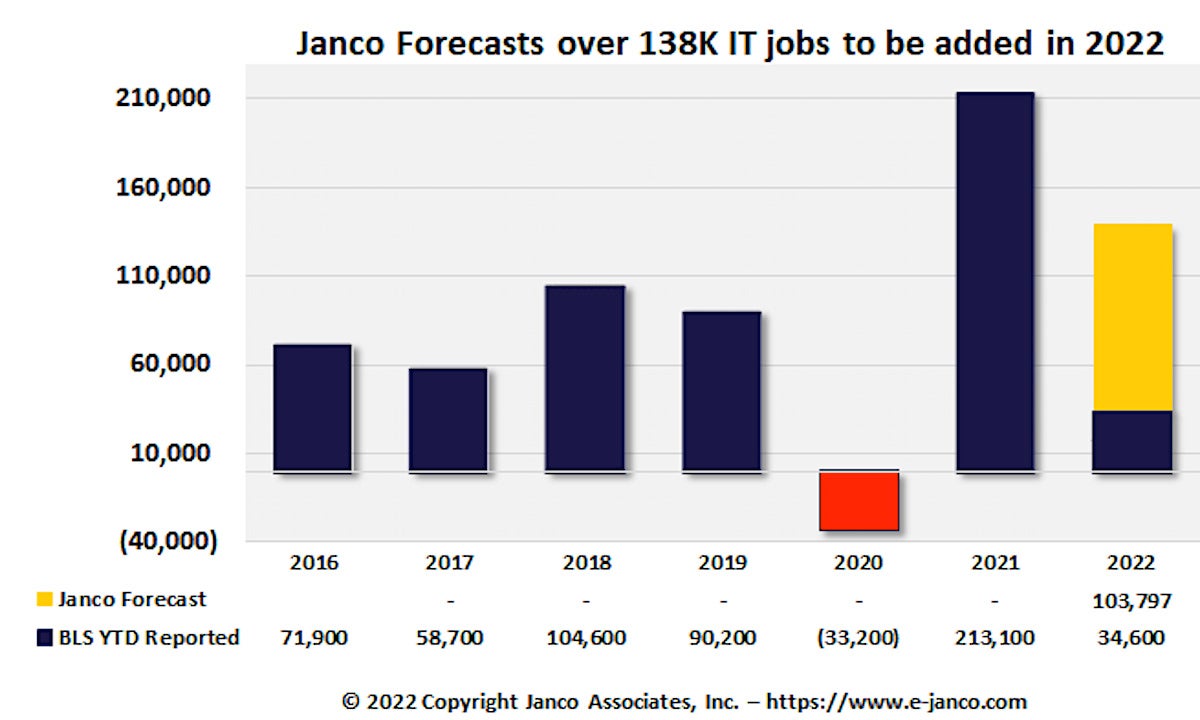 Janco
JancoIT job growth in recent years.
According to the BLS, employment in computer and information technology occupations is projected to grow 13% from 2020 to 2030, faster than the average for all occupations. IT is projected to add about 667,600 new jobs, with demand for those workers stemming from a greater emphasis on cloud computing, the collection and storage of big data, and information security, according to the BLS.
The median annual wage for computer and information technology occupations was $94,729 in January 2021, which was higher than the median annual wage for all occupations ($45,760). In January 2022, the median wage for IT positions had increased to $96,667 – an uptick of about 2.05%.
Conversely, new IT hires in the last quarter of 2021 were paid 5% to 6% more than existing staff, according to Janco.
“In conversation with several CIOs, we learned that increases for new hires in the 9% to 12% range were not uncommon,” Janulaitis said. “ It is not uncommon for IT pros who are highly skilled and experienced (over 10 years) to be offered salaries at $125,000 and above. Salary disparity is a driver of dissatisfaction and an increase in attrition rate among existing employees.”
December 2021
Hiring of IT professionals is at record pace with 197,000 more IT jobs so far this year than at the same time last year, according to the US Bureau of Labor Statistics (BLS).
There has been growth in the IT job market each of the past eight months, according to IT employment consultancy Janco Associates.
“Information-Technology leaders say they are boosting compensation packages and flexible work options to widen the pool of prospective job candidates, as demand surges for tech talent,” M. Victor Janulaitis, Janco’s CEO, stated on the company’s website.
To entice employees and retain existing tech staff, CIOs are offering flexible work options, such as a combination of in-office and remote work. The median salary for IT professionals is expected to grow to between $96,000 and $97,000, up from just over $94,600 in January and $95,600 in June, Janulaitis wrote.
“Most CIOs have not recruited at this rate before. Janco attributes the hiring push of some CIOs to meet their company’s goals to recruit talent related to security, compliance and cloud computing, Those IT jobs are difficult ones to fill,” he said.
In 2019, 90,200 new IT jobs were created. As a result of the global pandemic. By contrast, 33,200 were lost in 2020. In 2021, almost 150,000 jobs were added to the IT job market.
All job markets included, nearly 100 million working-age people were excluded from the labor force in November 2021, according to Janco Associates, which is based on BLS data. Most, of course, are still in school, retired ill or disabled and unable to work, according to the BLS data. But, those excluded from the labor force also include 471,000 “discouraged workers,” which represents an increase from 460,000 last month. Among the reasons cited for not re-joining the workforce were the continued impact of vaccine mandates, travel restrictions, and new virus variants.
Roughly 34.4 million people have quit their jobs this year as they reevaluate their work lives, according to job-search company Joblist. A survey of 26,000 employees recently published by Joblist showed nearly three-quarters of respondents said they were actively thinking about quitting. And, roughly 34.4 million people have quit their jobs this year during 2021 as they reevaluate their work lives.
About 46% of the remaining workforce is considering leaving work because they’re not being allowed to work remotely, according to the Work Trend Index study by Microsoft Corp.
“There are 94.438 million who just do not want work at all. That is a increase of almost 612,000 individuals from the same month last year,” according to Janco Associates’s website.
Baby boomers retiring is another factor in the continued fall in the Labor Participation rate.
Overall, though, the IT job market in the U.S. has added an average of about 13,000 positions during each month of 2021, up from a typical monthly average of between 5,000 and 8,000 jobs.
Job growth in the US IT industry had slowed and took a dip in October, adding just 4,800 positions, according to the BLS data that were included in the figures from Janco Associates. That was down from 8,900 positions added in the revised September figures.
In October, the overall growth in IT positions was even as the highly infectious delta variant of COVID-19 continued to hinder overall job growth, mainly due to slowdowns in the restaurant, entertainment, and service sectors.
The IT industry’s bigger challenge is finding qualified candidates for those IT jobs, Janulaitis said in a statement at the time. And the challenge won’t end soon, he said:
From data that we have reviewed, shutdowns resulted in fewer computer science candidates graduating from universities and trade schools. Those in the pipeline for those degrees were reduced as well. One of the drivers of that trend was that the closing of borders limited the number of foreign nationals who could qualify for that training and education.
Many of the new positions that CIOs are trying to fill are in new technologies. There is a shortfall of individuals who have the training and skills necessary. There are open positions that cannot be filled. … At the same, time attrition rates are on the rise in many IT organizations.
US IT job growth was stronger earlier in the year, before the delta variant and the talent shortage: August saw a surge of 25,400 new jobs on the heels of about 18,500 in June and 9,900 in July (all are revised figures), reflecting continuing business recovery from the pandemic. In fact, IT job growth has occurred for 15 consecutive months, though it was uneven through May. I has averaged 13,000 new jobs each month so far in 2021.
The IT job situation in the US continues to look very much like the pre-pandemic state: more positions than candidates. In fact, businesses would have filled more IT positions in September had they found enough qualified candidates, Janulaitis said. Finding web developers and cybersecurity and compliance pros remains the toughest task for CIOs, he said — and is causing HR to focus more on IT staff retention.
That talent shortage has put even greater pressure on businesses to increase salaries, Janulaitis said — and US IT salaries had already been trending up in 2021.
Janco still expects 2021 to have greater IT job growth — there were 189,000 new positions in 2021 as of Oct. 31, with two more months of hiring left in the year — than in any previous year, more than making up for jobs lost due to the pandemic. The last high was 2015, when 112,500 new positions were created. In 2018, 104,600 new IT positions were added; in 2019, the increase was 90,200; and in 2020, the industry lost 33,200 positions.
There are now 3.72 million IT pro jobs in the US, Janco estimates.
The monthly tech jobs report released by the CompTIA industry association also showed slower hiring growth in October. CompTIA calculated that there were 8,300 new US tech-sector jobs last month, down from September’s 18,700, August’s 26,800, July’s 10,700, and June’s 10,500 jobs. The US tech sector’s job numbers remain above their March 2020 peak of 4.76 million positions, nudging just past 4.81 million in October 2021, according to CompTIA data.
CompTIA calculates both technical and nontechnical positions at tech vendors, with roughly 44% being technical and 56% being nontechnical; Janco looks at IT positions, including software developers, in all industries.
CompTIA calculated the estimated unemployment rate for the tech sector at 2.1% in October, down from 2.2% in September but up from 1.5% in August and July. The current tech unemployment rate is within range of its 2018-19 lows, where it ranged from 1.2% to 2.4%. The national unemployment rate in October was 4.6%, down from 4.8% in September, according to the BLS.
October 2021
The job growth in the US IT industry slowed in September, adding 16,700 positions, according to US Bureau of Labor Statistics (BLS) data reported in the latest figures from IT employment consultancy Janco Associates. That’s down from 22,000 positions added in the revised August figures.
Overall growth in IT positions comes even as the highly infectious delta variant of COVID-19 continued to hinder overall job growth, mainly due to slowdowns in the restaurant, entertainment, and service sectors.
That August surge followed job growth of about 18,500 in June and 10,100 in July (both are revised figures), reflecting continuing business recovery from the pandemic in the US. In fact, IT job growth has occurred every month this year, though it was uneven through May, averaging 13,000 new jobs each month so far in 2021.
The IT job situation in the US continues to look very much like the pre-pandemic state: more positions than candidates. In fact, businesses would have filled more IT positions in September had they found enough qualified candidates for them, Janco CEO M. Victor Janulaitis said in a statement. Finding web developers and cybersecurity and compliance pros remains the toughest task for CIOs, he said — and is causing HR to focus more on IT staff retention.
That talent shortage has put even greater pressure on businesses to increase salaries, Janulaitis said — and US IT salaries had already been trending up in 2021.
Janco expects 2021 to have greater IT job growth — 145,000 to 152,000 new positions — than in any year since 2015, when 112,500 new positions were created. In 2018, 104,600 new IT positions were added; in 2019, the increase was 90,200; and in 2020, the industry lost 33,200 positions.
There are now 3.72 million IT pro jobs in the US, Janco estimates.
The monthly tech jobs report released by the CompTIA industry association also showed slower growth in September hiring. CompTIA calculated that there were 18,700 new US tech-sector jobs last month, down from August’s 26,800, but still a jump over both July’s gain of 10,700 and June’s gain of 10,500 jobs. The US tech sector’s job numbers remain above their March 2020 peak of 4.76 million positions, reaching 4.81 million in September 2021, according to CompTIA data.
CompTIA calculates both technical and nontechnical positions at tech vendors, with roughly 44% being technical and 56% being nontechnical, whereas Janco looks at IT positions, including software developers, in all industries.
CompTIA calculated the estimated unemployment rate for the tech sector at 2.2% in September, up from 1.5% in August and July, and the same as in June. The current tech unemployment rate is within range of its 2018-19 lows, where it ranged from 1.2% to 2.4%. The national unemployment rate in September was 4.8%, according to the BLS.
September 2021
The job growth in the US IT industry accelerated in August, adding 25,400 positions, according to US Bureau of Labor Statistics (BLS) data reported in the latest figures from IT employment consultancy Janco Associates. That growth in IT positions comes even as the highly infectious delta variant of COVID-19 slowed overall job growth, mainly due to slowdowns in the restaurant and entertainment sectors.
The August surge follows job growth of about 18,500 in June and 10,100 in July (both are revised figures), reflecting continuing business recovery from the pandemic in the US. In fact, IT job growth has occurred every month this year, though it was uneven through May.
The IT job situation in the US continues to look very much like the pre-pandemic state: more positions than candidates. In fact, businesses would have filled more IT positions in August had they found enough qualified candidates for them, Janco CEO M. Victor Janulaitis said in a statement. Finding web developers and cybersecurity and compliance pros remains the toughest task for CIOs, he said — and is causing HR to focus more on IT staff retention.
That talent shortage has put even greater pressure on businesses to increase salaries, Janulaitis said — and US IT salaries had already been trending up in 2021.
Janco expects 2021 to have greater IT job growth — 132,000 to 152,000 new positions — than in any year since 2015, when 112,500 new positions were created. In 2018, 104,600 new IT positions were added; in 2019, the increase was 90,200; and in 2020, the industry lost 33,200 positions.
There are now 3.7 million IT pro jobs in the US, Janco estimates.
The monthly tech jobs report released by the CompTIA industry association also showed a surge in August hiring. CompTIA calculated that there were 26,800 new US tech-sector jobs last month, a jump over both July’s gain of 10,700 and June’s gain of 10,500 jobs. The US tech sector’s job numbers have now exceeded their March 2020 peak of 4.76 million positions, reaching 4.79 million in August 2021, according to CompTIA data.
CompTIA calculates both technical and nontechnical positions at tech vendors, with roughly 44% being technical and 56% being nontechnical, whereas Janco looks at IT positions, including software developers, in all industries.
CompTIA calculated the estimated unemployment rate for the tech sector at 1.5% in August, the same as in July and down from 2.2% in June. The current tech unemployment rate is approaching its 2018-19 lows, where it ranged from 1.2% to 2.4%. The national unemployment rate in August was 5.2%, according to the BLS.
August 2021
The job growth in the US IT industry continued at a steady pace in July, adding 11,200 positions, according to figures from the US Bureau of Labor Statistics (BLS) reported in the latest figures from IT employment consultancy Janco Associates. June saw an increase of 11,400, reflecting continuing business recovery from the COVID-19 pandemic in the US. In fact, IT job growth has occurred every month this year, though it was uneven in the first five months of the year.
Today, the jobs situation looks very much like the pre-pandemic state: more positions than candidates. “With reopening, more organizations are actively recruiting,” Janco CEO M. Victor Janulaitis said in a statement. “In full-employment states, there are many positions for IT pros that remain unfilled due to the lack of qualified candidates.”
That’s put pressure on businesses to increase salaries.
Janco expects 2021 to have greater IT job growth — 108,000 new positions — than in any year since 2015, when 112,500 new positions were created. The year 2018 saw 104,600 new IT positions; 2019 saw 90,200; and 2020 saw a loss of 33,200 positions.
There are nearly 3.7 million IT pro jobs in the US, Janco estimates.
The monthly tech jobs report released by the CompTIA industry association calculated that there were 10,700 new US tech sector jobs in July, similar to June’s gain of 10,500 jobs and following gains the entire year. The US tech sector’s job numbers have now essentially matched their March 2020 peak of 4.76 million positions, according to the CompTIA data.
CompTIA calculates both technical and nontechnical positions at tech vendors, with roughly 44% being technical and 56% being nontechnical, whereas Janco looks at IT positions, including software developers, in all industries.
CompTIA calculated the estimated unemployment rate for the tech sector as 1.5% in July, down from 2.2% in June. The current tech unemployment rate is approaching its 2018-19 lows, where it ranged from 1.2% to 2.4%. The national unemployment rate in July was 5.4%, according to the BLS.
July 2021
The US IT industry has seen strong job growth so far in 2021, according to revised figures from the US Bureau of Labor Statistics (BLS) as reported in the latest figures from IT employment consultancy Janco Associates.
The BLS has adjusted its figures on job growth for all of 2021, bringing the total hires to 69,000 IT staffers through June. The agency had previously reported 47,700 jobs through May, a figure now revised upward to 57,100. June saw an additional 11,900 hires, and it’s possible the BLS could revise its figures again in future reports.
Janco also confirmed previously reported preliminary data on US IT salaries from its own surveys. As the jobs market remains steady in its post-COVID recovery, IT salaries have started to increase as organizations struggle to fill some positions.
That salary survey shows that IT execs in large enterprises are getting the largest salary boosts, with a median increase of 3.2%. Those in midsize enterprises are seeing median rises of 1.2%. For lower-level positions, IT pros do better at midsize enterprises than at large ones: Middle managers at large enterprises are seeing 0.6% boosts, while those at medium-sized firms are seeing 1.3% increases.
IT staffers are seeing the least improvement — an ongoing phenomemon across all company sizes, in which IT execs continue to be rewarded more. Staffers at large enterprises are realizing 0.4% gains; those at midsize enterprises are seeing 0.7% gains.
At its worst, more than 100,000 IT jobs were lost during the depths of the pandemic in spring 2020, though two-thirds of those came back as the year progressed. Still, 2020 ended with 33,200 fewer IT jobs in the US compared to 2019. With the 69,000 estimated job gains so far in 2021, the US IT job market at the end of June is at 16,700 ahead of the 2020 peak in February — and nearly 140,000 jobs ahead of the 2020 nadir in July.
There are more than 3.6 million IT pro jobs in the US, Janco estimates.
The monthly tech jobs report released by the CompTIA industry association calculated that there were 10,500 new US tech sector jobs in June, following gains in each previous month of 2021. The US tech sector’s job numbers have now essentially matched their March 2020 peak of 4.76 million positions, according to the CompTIA data.
CompTIA calculates both technical and nontechnical positions at tech vendors, with roughly 44% being technical and 56% being nontechnical, whereas Janco looks at IT positions, including software developers, in all industries.
CompTIA’s data does show a softening of hiring, with small reductions in job postings in several roles, such as for software developers and systems analysts, as well as in several cities, including Washington, D.C., Atlanta, and San Francisco. By contrast, postings grew for positions in San Jose, Calif. The data show more variability, indicating perhaps some settling of hiring activities.
CompTIA calculated the estimated unemployment rate for the tech sector as 2.2% in June, down from 2.4% in May. The current tech unemployment rate is approaching its 2018-19 lows, where it ranged from 1.2% to 2.4%.
June 2021
As the US IT jobs market remains steady in its post-COVID recovery, salaries have started to increase as organizations struggle to fill some positions. That’s based on a survey to be releasd June 15 by IT employment consultancy Janco Associates. Janco provided Computerworld a preview of that survey.
That salary survey shows that IT executives in large enterprises are getting the largest salary boosts, with a median rise of 3.2%. IT execs in midsize enterprises are seeing median rises of 1.2%. For lower-level positions, IT pros do better at midsize enterprises than at large ones: Middle managers at large enterprises are seeing 0.6% boosts, while those at midsize enterprises are seeing 1.3% rises.
IT staffers are seeing the least improvement — an ongoing phenomemon across all company sizes, in which IT execs continue to be rewarded more — with those at large enterprises registering 0.4% gains and those at midsize enterprises seeing 0.7% gains.
The US IT employment data from the Bureau of Labor Statistics (BLS) has been very volatile in 2021, with the agency reducing its prior-month estimates several times this year. The agency, for example, reduced its 2021 job gain count by 14,100 from earlier estimates. The BLS data shows a May rise in IT hires of 7,700, and — even with the downward BLS revisions for prior months — the net growth for US IT jobs this year stands at about 47,700, according to Janco’s analysis.
At its worst, more than 100,000 IT jobs were lost during the depths of the pandemic in spring 2020, though two-thirds of those came back as the year progressed. Still, 2020 ended with 33,200 fewer IT jobs in the US compared to 2019. With the 47,700 estimated job gains so far in 2021, the US IT job market at the end of May is at 13,500 more than the 2020 peak in February — and nearly 150,000 ahead of the 2020 nadir in July.
There are more than 3.6 million IT pro jobs in the US, Janco estimates.
The monthly tech jobs report released by the CompTIA industry association calculated that there were 10,500 new US tech sector jobs in May, following gains in each previous month of 2021. CompTIA calculates both technical and nontechnical positions at tech vendors, with roughly 44% being technical and 56% being nontechnical, whereas Janco looks at IT positions, including software developers, in all industries.
Still, the US tech sector’s job numbers have not yet matched their March 2020 peak of 4.76 million positions. As of last month, there were 4.74 million, a number that continues to grow.
CompTIA’s unemploment rate estimate for the tech sector stood at 2.4% in May, within its range over the last few months — versus 5.8% in May for the national rate for all industries. For previous months, CompTIA calculated a 2.5% tech unemployment rate in April, 1.9% in March, and 2.4% in February. The rise in the overall tech unemployment rate may reflect a loss of sales jobs in the tech sector, even as technologist jobs grew.
CompTIA also saw the number of tech-related job listings jump in May, to about 365,000 versus the 307,000 estimated for April. Job postings have grown by about 158,000 so far in 2021.
Software developers constituted the largest pool of listed openings at 112,200, with listings for IT support specialists coming in second at 28,200 and for system engineers and architects third at 27,200 — all represent significant increases from May.
The top sector for tech job postings in May was manufacturing, which had 70,970 positions open. Professional and technical services followed at 58,783, then finance and insurance at 31,054, and information services at 20,244.
The Washington, D.C. metro area had the most job postings, 21,611, followed by the New York metro area with 20,481; the Dallas metro area with 14,796; the Los Angeles metro area at 12,825; and the Atlanta metro area at 12,825. The San Francisco metro came in sixth at 11,918, just 117 more postings than in April. And the adjacent San Jose metro came in ninth at 8,746.
The Chicago metro had the greatest decline in postings, with 10,526 postings — down 1,025 from April. On the West Coast, slight declines in job postings were recorded in the Los Angeles area (205 fewer), the Seattle area (51 fewer, for 80,080 in May), and the San Jose metro area (466 fewer, wiping out the 117 gain in the adjacent San Francisco metro).
May 2021
Nearly all the US IT jobs lost in 2020 during the COVID-19 pandemic have come back, with IT employment enjoying eight straight months of growth. Of course, some of the replacement jobs were in IT specialties other than the jobs lost, as there has been a steady trend of declining data center and telecommunications positions in favor of software development jobs; that was true, even before the pandemic.
At its worst, more than 100,000 IT jobs were lost during the depths of the pandemic in spring 2020, though two-thirds of those came back as the year progressed. Still, 2020 ended with 33,200 fewer IT jobs in the US compared to 2019.
So far in 2021, 30,400 IT jobs have been added, nearly erasing the 2020 net losses.
And IT jobs in 2021 are set to continue to grow, according to the latest figures from IT employment consultancy Janco Associates. It expects another 70,000 IT jobs to be available this year. Janco’s numbers come from the US Bureau of Labor Statistics (BLS) monthly reports.
When adjusted for seasonality, March saw 6,500 new IT jobs, February saw 9,400, and January saw 14,400. The January and February numbers were revised up significantly from BLS’s original estimate of 8,500 and 6,000, respectively.
The Janco figures jibe with a report released by the CompTIA industry association. It calculated that there were 9,700 new US tech sector jobs in March, following a gain of 7,700 in February and 19,500 in January. CompTIA calculates both technical and nontechnical positions at tech vendors, whereas Janco looks at IT positions, including software developers, in all industries.
Using a much broader definition of IT, including sales positions, CompTIA estimated that 50,000 IT-related jobs were added in March across all industries, following a 178,000-job gain in in February and a 78,000-job gain in January. That reflects an unemployment rate of 1.9%, down from 2.4% in February 2021 and the lowest rate since August 2019.
Nationally, for all jobs, the US unemployment rate fell from 6.2% in February to 6.1% in March, according to the BLS. But the national unemployment rate is closer to 9% if those who have given up looking are included, estimates Oxford Economics; the BLS reports the level of these discouraged workers has remained steady.
CompTIA also saw the number of IT-related job listings grow by about 30,000 in March, passing 307,000. That follows a rise of 44,300 listings in February and 26,000 in January.
Software developers constituted the largest pool of listed openings at 93,000, with listings for IT support specialists coming in second at 25,800 and for system engineeris and architects third at 23,200.
April 2021
Nearly all the US IT jobs lost in 2020 during the COVID-19 pandemic have come back, with IT employment enjoying eight straight months of growth. Of course, some of the replacement jobs were in IT specialties other than the jobs lost, as there has been a steady trend of declining data center and telecommunications positions in favor of software development jobs; that was true, even before the pandemic.
At its worst, more than 100,000 IT jobs were lost during the depths of the pandemic in spring 2020, though two-thirds of those came back as the year progressed. Still, 2020 ended with 33,200 fewer IT jobs in the US compared to 2019.
So far in 2021, 30,400 IT jobs have been added, nearly erasing the 2020 net losses.
And IT jobs in 2021 are set to continue to grow, according to the latest figures from IT employment consultancy Janco Associates. It expects another 70,000 IT jobs to be available this year. Janco’s numbers come from the US Bureau of Labor Statistics (BLS) monthly reports.
When adjusted for seasonality, March saw 6,500 new IT jobs, February saw 9,400, and January saw 14,400. The January and February numbers were revised up significantly from BLS’s original estimate of 8,500 and 6,000, respectively.
The Janco figures jibe with a report released by the CompTIA industry association. It calculated that there were 9,700 new US tech sector jobs in March, following a gain of 7,700 in February and 19,500 in January. CompTIA calculates both technical and nontechnical positions at tech vendors, whereas Janco looks at IT positions, including software developers, in all industries.
Using a much broader definition of IT, including sales positions, CompTIA estimated that 50,000 IT-related jobs were added in March across all industries, following a 178,000-job gain in in February and a 78,000-job gain in January. That reflects an unemployment rate of 1.9%, down from 2.4% in February 2021 and the lowest rate since August 2019.
Nationally, for all jobs, the US unemployment rate fell from 6.2% in February to 6.1% in March, according to the BLS. But the national unemployment rate is closer to 9% if those who have given up looking are included, estimates Oxford Economics; the BLS reports the level of these discouraged workers has remained steady.
CompTIA also saw the number of IT-related job listings grow by about 30,000 in March, passing 307,000. That follows a rise of 44,300 listings in February and 26,000 in January.
Software developers constituted the largest pool of listed openings at 93,000, with listings for IT support specialists coming in second at 25,800 and for system engineeris and architects third at 23,200.
March 2021
As the overall US economy showed continued glimpses of recovery in February, the IT job market continued the rebound that began in the fall, though at a slower pace than in January.
Growth last month was 13,700, according to the latest figures from IT employment consultancy Janco Associates. January saw 8,600 new IT jobs. When adjusted for seasonality, February saw 6,000 new IT jobs, and January saw 10,900, down dramatically from the US Bureau of Labor Statistics’ (BLS’) original estimate of 18,200.
Still, the overall trend for IT — whose US jobs number 3.6 million — remains on an upward trajectory.
The Janco figures jibe with a report released by the CompTIA industry association. It calculated that there were 7,700 new US tech sector jobs in February, following a gain of 19,500 in January. CompTIA calculates both technical and nontechnical positions at tech vendors, whereas Janco looks at IT positions, including software developers, in all industries.
Using a much broader definition of IT, including sales positions, CompTIA estimated that 178,000 IT-related jobs were added in February across all industries, following a 78,000-job gain in January. That reflects an unemployment rate of 2.4%, down from 3.0% in December 2020.
Nationally, for all jobs, the US unemployment rate fell from an adjusted 6.3% in January to 6.2% in February, according to the BLS. But the national unemployment rate is closer to 9% if those who have given up looking are included, estimates Oxford Economics; the BLS reports the level of these discouraged workers has remained steady.
CompTIA also saw the number of IT-related job listings grow by about 44,300 in February, passing 277,000. That follows a rise of 26,000 listings in January. Software developers constituted the largest pool of listed openings at 88,000, with listings for systems engineers and architects coming in second at 22,700. But Janco CEO M. Victor Janulaitis expects that over the next several years, coders will find jobs scarcer as low-code development gains traction, even as demand for software developers overall increases.
February 2021
Even as the overall US economy struggled in January — adding just 6,000 private sector jobs and 49,000 jobs overall — the seasonally adjusted IT job growth last month was 18,200, according to the latest figures from IT employment consultancy Janco Associates. The past two months saw 55,000 new IT jobs, revised up from the 18,000 total reported a month earlier, based on revisions from the US Bureau of Labor Statistics.
Still, compared to January 2020, US IT jobs have decreased by 35,800, a loss of about 1%. Last spring, more than 100,000 IT jobs were lost due to the COVID-19 pandemic, representing about 3% of the IT workforce.
The Janco figures jibe with a report released by the CompTIA industry association. It calculated that there were 19,500 new US tech sector jobs in January. CompTIA calculates both technical and nontechnical positions at tech vendors, whereas Janco looks at IT positions, including software developers, in all industries.
Using a much broader definition of IT, including sales positions, CompTIA estimated that 78,000 IT-related jobs were added in January across all industry sectors. That reflects an unemployment rate of 2.4%, down from 3.0% in December 2020. Nationally, for all jobs, the US unemployment rate fell to 6.3% from 6.7%. But the national unemployment rate is closer to 9% if those who have given up looking are included, estimates Oxford Economics.
CompTIA also saw the number of IT-related job listings grow by about 26,000 in January, passing 232,000.
Over the coming decade, Janco CEO M. Victor Janulaitis expects 11% growth in US IT jobs. “Most of the growth in the IT job market will be with software developers, quality assurance, and testers,” he said in a statement. “This will be driven by [work from home] as it is will be embraced by more enterprises in normal operations and internet-centric applications are developed and deployed.
“The projected growth for that sector alone will be almost 18%,” he said.
January 2021
For the first time since the dot-com bust of 2000-2002, US IT salaries were flat in 2020, rising a negligible 0.08% to an average of $94,609 per year, according to the most recent survey of IT executives by management consultancy Janco Associates. The year also ended with 55,900 fewer jobs than the US IT industry had on Jan. 1, 2020 — a drop of 1.5% for the year. (Last week, the US Bureau of Labor Statistics [BLS] revised its figures for 2020, resulting in a revised drop of 55,900 versus the 81,100 reported previously.)
A separate survey by the industry association CompTIA, using BLS data, showed that the broad US tech industry showed job growth of 391,000 positions (22,000 of which were at tech vendors) in December 2020 — even as the US as a whole lost 140,000 jobs. About 44% of those tech sector jobs are for positions such as IT staff, software developers, and IT project managers; the rest are support positions such as sales, marketing, and management.
Janco’s survey focuses specifically on IT jobs, mainly people in a CIO’s organization, whereas the CompTIA survey looks at the entire tech sector.
The December growth in tech and IT jobs still left the broader tech sector below December 2019’s level, with 4.68 million jobs in December 2020, down from 4.73 million a year earlier. CompTIA’s survey shows a steady increase in tech jobs since July 2020, after a steep drop that began in March 2020 due to the COVID-19 pandemic.
The Janco survey showed that IT middle managers lost the most pay ground in 2020, with an average 0.08% salary reduction at large enterprises and 0.07% reduction at mid-sized enterprises. IT staff saw 0.03% average salary increases in large enterprises and 0.04% in medium enterprises. Executives did the best, of course: their salaries were up 0.59% in large enterprises and up 0.35% in medium ones.
April and May were the worst months for US IT jobs in 2020, Janco’s data shows. In those months, 116,000 IT pros lost their jobs due to COVID-19 pandemic shutdowns. Hiring partially recovered in later months, but the total of 3.58 million US IT jobs in 2020 remained below 2019’s 3.64 million (but slightly above 2018’s 3.54 million).
Janco notes that IT consulting and contract positions meant to augment IT staff were all but eliminated in 2020 and hiring growth stalled in the second wave of lockdowns that began in the fall as COVID-19 infections resurged. Those infection rates continue to grow in early 2021; Janco’s interviews with 101 US CIOs reveal that they don’t expect IT job or salary growth in 2021.
Still, IT was fortunate in 2020 compared to many other industries. The COVID-19 pandemic devastated many industries, eliminating jobs at an unprecedented scale in the travel, hospitality, entertainment, and events businesses. Retailers with physical stores faced massive job losses as well, though manufacturing has largely bounced back. The US overall had 9.4% fewer jobs as of June 30 (the latest data available) compared to 2019, the BLS reported. The tech unemployment rate has been roghly half that of the national rate throughout the pandemic, ending at 3% in December 2020 versus 6.7% for the economy as a whole, CompTIA reported.
Despite those massive losses in multiple industries, the average US salary rose 2.6% in 2020, according to the PayScale salary survey, which was last updated on Oct. 12. The latest data from the BLS, which covers the first half of 2020, showed an 8.6% average salary increase from a year earlier. Some of the salary increases reflect higher pay for grocery workers, delivery drivers, and warehouse workers whose jobs became more critical during the lockdowns and who were at greater risk of contracting the virus in their work.
Of course, people who lost their jobs aren’t included in salary surveys, so those figures reflect the pay of the still-employed.
CompTIA reports that software developers had the largest employment gains (4,700 hires) in December, triple that of the next-largest group, systems analysts (1,400 hires).
December 2020
After three months of rebound, the US IT job market reversed course in November, shedding 8,300 jobs. That loss follows a 9,300-job gain in October, a 13,500 gain in September, and a 4,500 gain in August. For the year, the net loss of US IT jobs now stands at 81,100, still down from a peak high of 102,900 job losses this year as of August, according to the most recent survey of IT executives by management consultancy Janco Associates.
In November, “the major loss of jobs for IT professions was in [small businesses] and consulting firms that service them; 7.5 million small to mid-size business are disproportionately impacted by shutdowns,” said Janco CEO M. Victor Janulaitis. He said many of these closures escape notice because they shut down before their debt levels require going through bankruptcy court.
Large companies have also shuttered or retrenched, he said.
Three quarters of the lost IT jobs in the US are concentrated in two segments, he said. One is data processing, hosting, and related services, the other is computer systems design and related services.
“Hiring of IT professionals has all but stopped due to the uncertainty about the recovery,” Janulaitis said. And the resurgence of the COVID-19 pandemic this fall, and the likelihood that vaccinations will be largely complete only in summer 2021, suggests that IT jobs will be at risk for the foreseeable future, he said, as many businesses continue to shrink and many others put off anchoring until there’s more economic certainty.
November 2020
IT jobs lost at the outset of the COVID-19 pandemic and its lockdowns continue to recover slowly, with an additional 12,700 US jobs added in October — bringing the total recovered jobs since August to 27,800. Those autumn gains bring the loss of US IT jobs to 75,100 for the year, down from a high of 102,900 job losses as of August, according to the most recent survey of IT executives by management consultancy Janco Associates.
The IT job market continues to struggle with the closure of many small- and medium-sized businesses and of many retail operations, in addition to broad cutbacks in all industries meant to preserve cash, said Janco CEO M. Victor Janulaitis.
In addition, the percentage of data center jobs has dropped from 10% of the US IT workforce to 9% since the pandemic began, indicating more severe cutbacks in back-end IT services as part of a shift to the cloud.
A separate report by Foote Partners, which conducts salary surveys on IT jobs and certifications, shows a mixed bag for IT pros in 2020, with some skills increasing in compensation despite (or because of) the pandemic, and others losing value. On average, though, IT compensation has held steady.
Gainers include a variety of positions involving security, Apache ZooKeeper distributed configuration, the Hbase SQL database, the Ethereum blockchain, Oracle Coherence caching, Marketo marketing automation, the Apache Flink stream-processing framework, natural language processing, master data management, and the Keras deep learning API.
Decliners include BusinessObjects and Cognos application development, Google App Engine and JSON web development, Oracle Application Server, SAP Enterprise Business Applications, SNA networking, mobile device management, Cisco’s UCCX call center platform, big data analytics, Windows NT, Suse Linux, and Tibco Enterprise Messaging Service.
October 2020
Although the IT and telecommunications job market in the US is still expected to shrink by 64,000 jobs this year compared to 2019, the recovery of IT jobs lost during the early days of the pandemic continued for a second month. The most recent survey of IT executives by management consultancy Janco Associates shows that about 12,200 IT jobs were added in September following a net gain of 6,900 in August.
At the outset of the pandemic, more than 105,000 US IT jobs were lost as companies retrenched in the face of COVID-19, more than erasing the 90,200 jobs added in all of 2019. Those losses have been partially addressed since through rehiring and new hires. As a result, over the last nine months, IT jobs were down by 85,000.
However, Janco doesn’t forecast a recovery in the IT job marked until spring 2021, as the US economy suffers new waves of infections that slow or even reverse prior gains. In October, an additional wave of IT layoffs is expected as airlines furlough tens of thousands of workers now that federal job subsidies have ended for that industry.
Companies are leery about expanding during uncertainties around government action, particularly the stalled stimulus efforts, said Janco president Victor Janulaitis. The November presidential election is another cause for companies to wait and see. “Spending for IT products and services has all but stopped as companies reevaluate the state of the economy globally as new waves of selected shutdowns occur,” he said.
September 2020
By Ken Mingis, Executive Editor, Computerworld
Although the U.S. IT and telecommunications job market is still expected to shrink by 64,000 jobs in 2020 versus 2019, the worst may be over – and about a third of the IT jobs lost during the COVID-19 pandemic are expected to have come back by 2021. That’s according to the most recent survey of IT executives by management consultancy Janco Associates.
For the first time in six months, August saw a net gain in the number of IT jobs: up 6,900. The U.S. Bureau of Labor Statistics also revised the number of IT jobs lost in July, showing 4,400 fewer jobs were lost than originally reported. Still, over the last 12 months, IT jobs fell by 81,800, nearly erasing the 90,200 jobs gained in 2019.
“IT hiring will remain soft but improving slightly. …Major many companies are resuming existing operations slowly, but are holding back on any expansion until after the [Nov. 3] election,” said Janco’s latest report.
But some sectors will continue to lose jobs, it noted, including the airline industry, which is poised to lay off tens of thousands of employees across all roles, not just IT, as federal COVID-related subsidies end on Sept. 30. Cities such as Portland, Ore. that have seen ongoing civil unrest due to protests over police killings of Black citizens will also see deferred hiring until the unrest subsides, Janco said.
IT organizations remain cautious on spending, with very few new initiatives or expansions of current efforts being funded beyond the initial rampup in work-from-home and social-distancing technology investments at the start of the crisis.
August 2020
Coronavirus spikes in parts of the U.S. in July have worsened hiring conditions for IT professionals, and management consulting firm Janco Associates now doesn’t expect any rebound in hiring until late this year or early in 2021.
Janco now estimates that just 25,000 new IT jobs will be created in 2020; there are now more than 163,000 fewer tech jobs than a year ago. In July alone, another 10,900 IT positions disappeared, the company said.
“We have found that a number of companies have already shuttered their doors or are expanding layoffs that impact the IT job market,” Janco CEO Victor Janulaitis said in a statement. “This includes oil and gas drillers like Whiting Petroleum and Diamond Offshore, retailers like J Crew, manufacturers like Briggs & Stratton, and grocers like Dean and DeLuca. As a result, IT professionals working for those companies are looking for new employment opportunities.
“Until after the election…, when the public feels [it] can go back to a normal life [and] more companies open their doors, hiring for new positions in IT will be limited at best,” he said. “In addition, the continued civil unrest is slowing confidence by the public, which in turn, hinders corporate confidence.”
He noted the stalemate in Washington, D.C. over new efforts to prop up the U.S. economy, as several states deal with increasing numbers of COVID-19 cases.
“Spending for IT products and services has all but stopped as companies reevaluate the state of the economy globally as new waves of selected shutdowns occur,” Janulaitis said. “With more companies adopting [work from home] to address ‘social distancing’ and avoid in-office contacts, fewer companies are taking an aggressive approach to any additional spending for IT products and services. It does not help that the U.S. Congress and the president are at a stalemate on pandemic relief.”
July 2020
The wave of IT layoffs caused by the COVID-19 pandemic did not end in May 2020 as expected, with June seeing 6,000 more layoffs as business uncertainties rose because of the increase in coronavirus infections in the U.S., according to new data from management consulting firm Janco Associates. The pandemic’s economic fallout had already led to about 117,000 job losses in U.S. IT positions in April and early May 2020.
The increase in COVID-19 infections across most U.S. states in June prompted the additional layoffs, and Janco’s June survey of U.S. IT organizations shows that further layoffs – though at the relatively small scale seen in June – are expected given business uncertainties. That survey also said that salary increases for IT staffers are “a thing of the past.”
The job losses were exacerbated by the extensive protests over the police killings of George Floyd and others, Janco said. That led to additional economic uncertainty, particularly in the retail industry hit by looting, leading to additional closings, deferred reopenings, and unexpected costs.
In addition, a Trump Administration decision last month to pause the use of H-1B visas, which are commonly used to fill IT positions, will not help U.S. IT pros in the near term, Janco noted. Because it applies to new hires it does little to free up existing positions.
IT organizations don’t expect to begin hiring again until late 2020 or early 2021, assuming that the infections are under control and the economic reopening interrupted in June can resume. Without a sustained reopening, companies won’t see demand for goods and services that provides the money for new and replacement hires.
Janco CEO Victor Janulaitis now expects the net number of new U.S. IT jobs in 2020 will be about 30,000, versus the 94,500 it had expected before the epidemic struck. In 2019, the U.S. IT job market grew by 90,200.
June 2020
The wave of IT layoffs caused by the COVID-19 pandemic has ended, according to new data from management consulting firm Janco Associates. The pandemic’s economic fallout resulted in about 117,000 job losses in U.S. IT positions in April and early May 2020.
But Janco’s May survey of U.S. IT organizations shows that further layoffs are largely not expected. But neither is much IT job growth. IT organizations don’t expect to begin hiring again until late 2020, assuming that the gradual economic reopening now in progress continues and demand for goods and services resumes, providing the money for new and replacement hires.
Janco CEO Victor Janulaitis expects that the net number of new U.S. IT jobs in 2020 will be about 35,000, versus the 94,500 it had expected before the epidemic struck. In 2019, the U.S. IT job market grew by 90,200.
May 2020
It’s not yet at the level of “Brother, can you spare a dime?” for IT workers, as it is for many workers in retail, entertainment, and hospitality. But as it becomes apparent the road to recovery from the COVID-19 pandemic will be take several years, IT pros are seeing layoffs in the U.S. and diminished prospects for future work, both as staff and as contractors.
In April 2020, IT pros saw 102,300 layoffs in the U.S., according to management consulting firm Janco Associates. And Janco has now more than halved the expected IT job growth in 2020 that it predicted just a month ago – to 40,000 versus the earlier prediction of 95,400 IT jobs.
Janco’s current projection for U.S. IT jobs this year is now 3.6 million, down from 2019’s 3.7 million U.S. IT jobs.
Companies have essentially stopped filling IT positions and halted new contract work, Janco CEO Victor Janulaitis said, based on conversations with CIOs and CFOs. That means IT pros who lose their jobs will have little prospect of employment or contract work in 2020.
“Until the public begins to feel they can go back to a normal lifestyle and companies open their doors, IT hiring will be nonexistent,” he said.
Janulaitis noted that there had been a surge in IT contract work at the beginning of the COVID-19 crisis to help set up work-at-home environments, from collabration tools to VPNs. “The demand for contractor help in this effort was high initially, but now is non-existent,” Janulaitis said. The tech startup sector is also in crisis.
Janulaitis does expect IT hiring to begin picking up at the end of the year. That’s in line with the current thinking for the economy as a whole; various U.S. Federal Reserve executives and economists have said they expect the current effective jobless rate of about 23% to fall back but still be about 10% in 2021. The official jobless rate stands at 14.7% – versus 3.5% in 2019 – but that count misses recent layoffs, laid-off people not looking for work during the crisis, and the self-employed.
Broadly, expectations of a V-shaped recovery have given way to expectations of a prolonged decline and then slow recovery, since there is no vaccine for COVID-19, treatments and testing are not available at meaningful levels to determine who can work safely, it’s not known whether infected people develop immunity, and the ramifications of the various efforts now under way to reopen parts of society and economy remains unknown.
The fate of IT positions is not immune from these general economic factors. “All of this has put IT professionals the same state as the rest of the labor market,”Janulaitis said.
5G, Careers, Financial Services Industry, IT Jobs, Remote Work, Salaries
Source:: Computer World
Apple’s Find My system is coming to Android

It is thought that Android users will soon gain access to Apple’s Find My network, enabling users on both Apple and Android platforms to find lost and stolen devices and protect against unwanted stalkers.
Apple’s three-year old Find My network isn’t perfect, but it does make it easier for people to track devices, family members, and certain items equipped with Find My support.
There are some problems. It can fail if a device isn’t detectible; law enforcement doesn’t always act when told the location of a stolen device; and stalkers have been known to use these devices to track people who don’t want to be tracked. That last concern should be improved once it is supported by Apple and on Android.
What did Apple and Google promise?
Apple and Google announced plans to work together to deal with unwanted stalkers using tracking services almost a year ago, and agreed to team up on the Find My network. They promised to develop a draft standard to prevent Bluetooth location-tracking devices from being used without authorization and a draft specification was filed with the Internet Engineering Task Force (IETF) with support from other manufacturers, including Samsung and Tile.
What this means
There are two pillars to this news:
- People attempting to track others without permission using AirTags or other compatibled evices will find it harder to do so, as victims will be warned that tracking is taking place. There have been complaints about this kind of activity since Apple introduced AirTags.
- It also means Android users will be able to track their devices using the Find My network, which will now be able to gather signals from both Android and Apple devices. This should benefit users on both platforms since it means the Find My network itself will grow. At present, it relies only on Apple devices.
How this works
“With the new Find My Device network, you’ll be able to locate your devices even if they’re offline,” an email from the company states. That email also explains how the system can be used to track lots of different compatible devices, and how it works. Android users can opt out of the tracking system if they wish.
Piecing together online reports, the system works like this: If you’re using a compatible device and it detects you are being tracked, you will receive a notification warning you. You’ll also be able to disable the tracker from your device. iPhone users will get this message: “This item isn’t certified on the Apple Find My network. You can disable this item and stop it from sharing its location with the owner. To do this, follow the instructions provided on a website by the manufacturer of this item.”
What Google said about Find My
“With the new Find My Device network, you’ll be able to locate your devices even if they’re offline,” an email from Google explains. That email also explains how the system can be used to track lots of different compatible devices, and how it works. Android users can opt out of the tracking system if they wish.
What isn’t yet clear is whether this support will extend across all Android devices or across all devices from all manufacturers, though it seems likely it will be supported by current devices running current iterations of the OS. The feature has been spotted in the wild by Android users running Google Play Services beta 24.12.14.
What happens next?
With almost a year’s work now done, it appears Find My is finally ready for cross platform take-off, with Google contacting some Android users to tell them the network will launch in “days.”
The long wait between last year’s announcement of the system and it becoming a shipping product reflects the deliberate nature of the standard specification process. News of the decision to work together on Find My was followed by a three-month period of review, updates to the original specification, and once that was set, work on the relevant device operating systems.
When will it be available?
Introduction of Find My support on Android might also require Apple’s own devices be updated to support the new specification. That suggests either that Apple will accelerate introduction of iOS 17.5 (unlikely, given that it was only recently made available in beta and is expected in May), or that it may have found some other way to introduce cross-platform support; perhaps it’s already in the system. iOS 17.5 is significant for two more reasons: Not only will it allow EU developers to sell software to iPhone users directly from their websites, but for enterprise users it will make it possible to enforce a beta version during automated device enrolment.
Please follow me on Mastodon, or join me in the AppleHolic’s bar & grill and Apple Discussions groups on MeWe.
Android, Apple, iOS, Mobile
Source:: Computer World
This ‘literacy pen’ instantly teaches you to read and write
The race is on to commercialise fusion energy. Europe could lead the charge
Top 10 Android Apps Not Available On Play Store
Snapchat Planets Guide 2024: What Do They Mean?
India is about to become Apple’s third-biggest market

Faced with maturing markets and political uncertainty across the world’s most developed economies, Apple chose to invest in the next boomtown — India. It’s looking like an insanely great move.
When it made the move, many people didn’t seem to understand the significance. I can still remember some of the prejudiced messages I received when I pointed out the significance of Apple CEO Tim Cook’s first visit to the nation and proselytized to the future opportunity.
The Shantaram
Now, less than a decade later, most of the bigger names in tech are now working to build their business there — with Apple on the cusp of creating its third-largest sales market.
Coming to grips with this, fresh Counterpoint analysis suggests the extent to which Apple’s move to engage with the sub-continent promises future rewards: by 2026, India is set to surpass both Japan and the UK as third-biggest iPhone market. That’s not at all unlikely, given the nation is expected to become the world’s third-largest economy by then.
This direction of travel is far from reality distortion: Even while the smartphone industry globally stayed flat in 2023, Apple generated its highest-ever smartphone sales there. It’s not just consumption, it’s also production. India produced 13% of all iPhones sold globally last year (soon to rise to 25%) and the company’s investment in the nation is generating rapid business growth.
EMEA – I = India
India’s iPhone market is finding its feet and seems on course to stand beside China and the US as Apple’s top markets. Europe and the UK markets seem destined to continue relative decline. Ultimately, India will occupy its own slot on the Apple financial reports, rather than being tucked tidily (if historically uncomfortably) inside the company’s EMEA business unit.
Counterpoint analyst Shubham Singh said: “Premiumization has started in the world’s second largest smartphone market and Apple has again got the timing right to benefit from this trend through its devices and financing offers.”
This is all good news for Apple, of course. But what might it mean for your company and what lessons can you pick up from Apple’s achievements here?
For most of us, those lessons are limited.
It was the sheer scale of Apple’s business that helped encourage India to offer the government subsidies and support that are enabling business extension there. Smaller, less powerful companies won’t be able to access the same degree of cooperation. Still, India remains incredibly focused on building up its tech industry, so even smaller start-ups might experience some positive results if they choose to move business there.
Building in, building out, building up
Apple isn’t just in the device business. It’s also in the accessories, services, and software businesses and has a pretty good track record for convincing its tribes of happy customers to purchase multiple products and services over time. Apple’s foothold with iPhone sales in India will become something more significant over time.
Like so many economies, India is also on an inexorable journey to digital transformation. One of India’s bigger software businesses is Zoho, a company that literally makes the software used by so many companies worldwide to digitize their business. As new tech businesses get into India, you’ll see them realize the big opportunity that digital-first processes always unleash in new markets. And while India’s tech economy is expected to grow at a slower rate in 2024, (thanks to global instability), it is still expected to become a $253.9 billion (net) business by the end of the year.
This is why any business that seeks to retain relevancy or build some form of future security should be searching for a foothold in India and other developing economies today. It’s also why they should perhaps have sought such a hold years ago, when Cook first visited the nation.
When the going gets tough…
History is a forward journey, of course, so it is also significant that last year Cook said, “All of these things bode well for India’s future, and we want to be a part of it. We want to be a part of it for all of ourselves, not just a part of it, from a marketing point of view. I can’t stress enough. We are all in…. India over time will be one of Apple’s largest markets…, the scale will be enormous.”
All in all, India won’t just be a highlight in Apple’s financial results in the coming years, it could also be a highlight of your own. India is not the only market on the cusp of rapid economic development, of course, from the Democratic Republic of the Congo to Vietnam, the times they are a changing. Are you?
Please follow me on Mastodon, or join me in the AppleHolic’s bar & grill and Apple Discussions groups on MeWe.
Apple, iPhone
Source:: Computer World
Top 3 Alternatives To Discord You Should Try In 2024
What Are Discord Loot Boxes? How To Open Them?
Appliances Statistics 2024 By Category, Manufacturers, Market Share and Region
By Barry Elad

Introduction
Appliances Statistics: The appliance industry is huge because hundreds of home and household appliances will be manufactured by leading global companies in 2024. As the demand for appliances is increasing enormously thus, the industry is gaining billions of dollars in business from every sale each year. Overall, the appliance market is forecast to grow in the coming years. This Appliances Statistics includes statistical analyses of all different appliances from several insights of recent years, and I hope you will get better ideas before investing in the market.
Editor’s Choice
- A report published by Statista states that by the end of 2028, the overall appliances market valuation will reach above $900 billion.
- Appliances Statistics further claims that the estimated revenue from home and household appliances worldwide will be $0.67 trillion by 2024.
- As of 2023, global revenue generated by major appliances was $399.46 billion, and it will reach $500.28 billion by 2028.
- In 2023, Midea Group Co. Ltd. was the largest household appliance company, with a sales revenue of $53 billion.
- The household appliance industry accounted for the largest market size in 2023, resulting in $0.72 trillion, and is supposed to grow at a 4.81% CAGR from 2023 to 2028.
- In the United States of America, the market value of household appliances is estimated to reach $70 billion from 2024 to 2028, an increase of 12.81%.
- The market for smart appliances is growing rapidly; in the U.S. alone, almost 17 million users (13% of U.S. households) own a smart appliance.
- According to Appliances Statistics, revenue in the ‘Smart Appliances’ segment has been continuously increasing, reaching $39.6 billion (+75.43%) from 2023 to 2028.
- The appliancesonline.com.au website, ranked by traffic in February 2024, received 1.8 million total visits, a decrease of 28.34% from last month.
- Organic search was the highest traffic source, with 39.43%, and YouTube had the highest social media referral rate, with a 42.91% share.
General Appliance Statistics
- From 2024 to 2028, global revenue generated by the ‘Microwave Ovens’ segment increased by $1.6 billion, or 16.68% market share.
- During the same forecasted period, the price unit in the ‘Grills and Roasters’ segment increased to $9.9 in the United States.
- In the United States, more than 80% of households are using a microwave and refrigerator.
- Appliances Statistics report published by Statista claimed that in the U.S., U.K., Russia, Italy, Turkey, and Spain, around 90% of households own cookers or microwaves in 2023.
- On the other hand, 75% of households in Austria, Germany, France, Sweden, and Spain own a coffee machine, whereas in South Africa, 27% of households use one.
- In the United States, at least one smart appliance is owned by men (82%) and women (49%) in 2023.
- American households have saved up to $98 per month after using smart appliances, which results in an annual savings of $1,180.
- Appliances Statistics has also analyzed that in 2023, Whirlpool Corporation generated $5.33 billion in sales revenue from refrigerators and freezers.
Appliances Revenue Statistics by Category (Analyses From 2018 to 2028)
(Reference: statista.com)
- Appliances Statistics further state that revenue generated by the major and small appliances are $0.4 trillion and $0.24 trillion, respectively.
- The revenue of major and small appliances is expected to be $0.42 trillion and $0.25 trillion, respectively, by 2024.
- Moreover, revenue earned by major and minor home and household appliances is going to increase in coming years such as 2025 ($0.44 trillion and $0.27 trillion), 2026 ($0.46 trillion and $0.28 trillion), 2027 ($0.48 trillion and $0.29 trillion), and 2028 ($0.5 trillion and $0.31 trillion).
Retail Unit Volume Appliances Statistics by Category

(Reference: statista.com)
- As of 2023, the global retail unit volume of major and small home and household appliances accounted for $0.76 billion units and $3.75 billion units, respectively.
- By the end of 2024, the retail volume unit is estimated to be major appliances ($0.77 billion units) and small appliances ($3.8 billion units).
- Meanwhile, in coming years, retail volume of major and small appliances are 2025 ($0.79 and $3.85 billion units), 2026 ($0.81 and $3.91 billion units), 2027 ($0.83 and $3.97 billion units), and 2028 ($0.85 and $4.03 billion units), respectively.
United States Household Appliances Statistics (Analyses From 2023 to 2028)

(Reference: consumeraffairs.com)
- As per research conducted by Consumer Affairs, revenue accounted by the U.S. major and small appliances industry in 2023 was $30.72 billion and $29.21 billion, respectively, in 2023.
- The estimated revenue amounts for the major and small appliances industries will be $31.49 billion and $30.19 billion, respectively, by 2024.
- In addition, in coming years, predicted revenue of the major and small appliances industry are 2025 ($32.24 billion and $31.37 billion), 2026 ($65.54 billion and $32.56 billion), 2027 ($33.74 billion and $33.82 billion), and 2028 ($34.49 billion and $35.11 billion).
Appliance Statistics by Manufacturers
L.G. Electronics
- According to Appliances Statistics, in 2023, annual revenue generated was $64.41 billion.
- The company deals with over 125+ operations globally.
- Appliances manufactured by the company are refrigerators, washing machines, dishwashers, cooking appliances, vacuum cleaners, air conditioners, T.V.s, audio and video systems, P.C.s, computer monitors, mobile devices, etc.
Panasonic
- As of 2023, Panasonic’s revenue accounted for $59.64 billion, which has decreased from the previous year.
- Panasonic owns around 520 consolidated companies.
Haier Electronics Group
- The annual sales revenue of Haier Electronics Group turned out to be $27.45 billion in 2023.
- In India, by the end of 2023, the company’s revenue hit Rs. 7K million and expected to reach $10K million by 2025.
- The most used appliances of the company are Haier refrigerators, washing machines, and wine cabinets.
Gree Electric Appliances
- As per the company’s latest financial report analysis, in 2023, the revenue made by Gree Electric Appliances was $27.91 billion.
- The best appliances of the company are electric fans, rice cookers, air cleaners, humidifiers, etc.
Whirlpool Corporation
- Whirlpool is an American appliance manufacturer that has approached $19.45 billion in revenue in 2023.
- This company is best for kitchen and laundry appliances.
The website traffic of Appliance Statistics

(Source: similarweb.com)
- As explained by Appliances Statistics in February 2024, Australia had 94.14% of total traffic on applianceonline.com.au.com, but it was reduced by 23.66% in total website visitors.
- Furthermore, other countries recorded the following contribution in total traffic: Singapore = 1.75 (+598.8%), the United States = 0.97% (-25.59%), New Zealand = 0.61% (-52%), and the United Kingdom = 0.41% (-10.27%).
- Other countries collectively made around 2.18% of visitor share.
By Demographics

(Reference: similarweb.com)
- The users shared by the website are male (59.59%) and female (40.41%).
- Appliances Statistics by age group states that the highest number of website users observed is between 25 and 34 years old, resulting in 22.11%.
- 20% of website users are aged from 45 to 54 years.
- 71% and 17.47% belong to 55 to 64 years and 35 to 44 years respectively.
- 19% of users are aged from 18 to 24 years.
- Nearly 13.52% of user shares contributed from the age group above 65 years.
By Traffic Source

(Reference: similarweb.com)
- The highest traffic rate towards appliancesonline.com.au was accounted for by organic search, with 39.43% in February 2024.
- 72% of the share is accounted for by direct search, while 23.84% is from Paid search from the website.
- Other traffic sources are referral search (2.62%), social search (1.12%), mail search (1.68%), and display search (1.58%).
By Social Media Traffic

(Reference: similarweb.com)
- YouTube recorded the highest social media referral rate, with a 42.91% share than other social networks.
- Facebook and Reddit contribute 34.13% and 11.35% of traffic share, respectively.
- Traffic sent by Facebook Messenger is 9.03%, and Twitter contributes 2.03% of traffic.
- Other social media networks have a nominal contribution, collectively making around 0.54%.
By Device

(Reference: semrush.com)
- com.au traffic share by device users is mobile (47.54%) and desktop (52.46%).
- 24% of total appliance users belong to Australia, resulting in 1.34 million. Out of these, 50.04% are desktop, and 49.96% are mobile users.
- The United States has 37.17K users, resulting in 2.61% of traffic, of which 100% comes from desktop devices.
- Out of the total players, 0.61% is from New Zealand, resulting in 8.72K, with 100% access to the desktop version.
- The United Kingdom and Belgium have around 6.3K and 4.69K users, respectively, which results in 0.44% and 0.33%.
Refrigerator Statistics
- Appliance Statistics stated that the global revenue from the refrigerator segment is supposed to increase to approximately $20.8 billion. From 2024 to 2028, with a growth rate of 17.25%.
- The market valuation of refrigerators was $117 billion in 2023 and will be $141 billion by 2028.
- However, revenue generated by the smart refrigerators segment was $3.5 billion in 2023 and will reach above $4.09 billion by 2028, with an annual growth of 3.14% CAGR from 2023 to 2028.
- In the United States, the refrigerator ownership rate is 81%.
- As of 2023, L.G. Electronics’ production volume of refrigerators approached 9.42 million units.
- The Asia Pacific region will dominate the household refrigerators and freezer appliance industry, resulting in a $34.67 billion market size by 2024.

(Reference: statista.com)
- In the United States, refrigerator brands shared in September 2023 are Frigidaire (17%), G.E. (17%), L.G. (12%), Samsung (11%), Whirlpool (11%), Kenmore (7%), Kitchen Aid (3%), Bosch (2%), Maytag (2%), Electrolux (1%), Haier (1%), Hitachi (1%), other (3%), and don’t know (12%).
Best refrigerator of 2024
- Samsung 183 L, 5 Star, Digital Inverter, Direct-Cool Single Door Refrigerator
- Whirlpool 235 L, NEO DF278 PRM
- Whirlpool 260 L Frost-Free Triple-Door Refrigerator
- LG 272 L 3 Star Frost-Free Smart Inverter Compressor GL-S312SPZX
- Samsung 256 L, 3 Star, Convertible fridge, RT30C3733BX/HL
Washing Machine Statistics
- The expected revenue earned by the washing machine appliance market in 2024 will be $67.38 billion, and it will grow annually at a CAGR of 3.91% from 2024 to 2028.
- This year, China will lead the global washing machine market with revenue of $17.12 billion, and the United States will account for around $6.83 billion.
- The appliance segment is predicted to make a volume growth of 2.2% by the end of 2025.
- The key players in the smart washing machine segment are LG, Whirlpool, Samsung, and Hitachi.
- In November 2023, these top four manufacturers hold a market share of 25%.
- China captured the largest market share of smart refrigerators, 35%, followed by Japan and the United States, 30%.

(Reference: hometechguide.net)
- Based on Washing Machine Appliance Statistics, in India 2023, L.G. is the best brand in this segment, with a market share of 29%.
- Other brand shares of this segment are Samsung (18%), Whirlpool (17%), Godrej (11%), Haier (8%), IFB (6%), BOSCH (2%), and others (9%).
Best Washing Machines of 2024
- Samsung 7 kg Fully-Automatic Top Loading Washing Machine
- G. 7 Kg 5 Star Wind Jet Dry Semi-Automatic Top Loading Washing Machine
- Samsung 6 kg, 5-star, Semi-Automatic Washing Machine
- Panasonic 6 Kg 5 Star Fully-Automatic Top Load Washing Machine
- LG 6.5 Kg 5 Star Fully Automatic Top Loading Washing Machine
Air Conditioner Statistics

(Source: giiresearch.com)
- The global estimated market size of Air Conditioner will reach around $199.53 billion by the end of 2024 and will reach $268.05 billion by 2029.
- However, in a report generated by Market Research Future, in 2023, Smart Air Conditioning generated revenue of $17.02 billion.
- Whereas, in the U.S., the A.C. market is worth $23.90 billion in revenue.
- The predicted global Smart A.C. market is going to be $23.5 billion, with a CAGR of 11.8% from 2021 to 2027.
- Appliances Statistics further state that 147.4 million air conditioning units will be sold in the Asian market by 2024.
Best-selling A.C. of 2024
- Panasonic 1.5 Ton 5 Star Wi-Fi Inverter Smart Split AC
- LG 1 Ton 5 Star, TS-Q14YNZE
- Carrier 1.5 Ton 5 Star AI Flexicool Inverter Split A.C.
- Cruise 1.5 Ton 5 Star Inverter Split A.C.
- Voltas 1.5 Ton 5 Star Inverter Window AC
Dishwasher Statistics
- As of 2024, the United States of America dominated the revenue generation of the dishwasher market, with a total revenue of $3.53 billion.
- The worldwide market is supposed to earn $27.06 billion by 2024, according to a report published by Statista.
- The highest segment is going to experience built-in dishwashers with a CAGR of 10.2% from 2021 to 2030.
- Depending on the distribution channel, the online retail segment will grow the fastest, with a CAGR of 11.2% in the forecasted period.
- The Asia-Pacific region will be the largest in adopting smart dishwashers, with an annual growth rate of 11.1%.
- Based on application, dishwashers’ market shares will be commercial (86.8%) and residential (13.2%) in 2023.
- The market is dominated by the North American region, with a major share of 47%.
- Besides, the free-standing segment of the dishwasher industry recorded $4.08 billion.
Best Dishwashers of 2024
- Bosch 300 Series SHE53C85N (best dishwasher) costs $999
- Maytag MDB8959SKZ (also great), $800
- Miele G7106 (Upgraded model), $1,749
Coffee Machine Statistics
- According to Appliances Statistics, revenue generated by the Coffee Machines market will project $12.63 billion by 2024
- The annual growth rate will experience a 2.59% CAGR from 2024 to 2028.
- The United States will dominate in revenue generation worldwide, resulting in $3,700 million in 2024.
- Currently, in the United States, nearly 66% of people prefer drinking coffee each day, which is approximately 491 million cups.
- From the last five years, coffee consumption in the United States has increased by 1.2% in 2023.
- Coffee machine usage by gender statistics is by women (68.8%) and men (31.2%) in the U.S.
- Based on age, the usage share of coffee machines is 20 to 30 years (51%), 30 to 40 years (12%), and above 40 years (3%).
- Meanwhile, industry shares of coffee machines are hospitality (26%), manufacturing (14%), retail (13%), fortune 500 (9%), health care (6%), education (6%), media (5%), professional (5%), technology (4%), start-up (3%), non-profits (3%), agriculture, transportation, finance, pharmaceutical, internet, and telecommunication (1% each).
Best Coffee Machines of 2024
- Bonavita Enthusiast 8-Cup Drip Coffee Brewer with Thermal Carafe
- Ninja 12-Cup Programmable Coffee Maker CE251
- Kalita Wave 185 Dripper
- Espro P3 French Press
- OXO Good Grips Cold Brew Coffee Maker
Microwaves Statistics
- The global Microwave industry is estimated to have a market size of $15.50 billion in 2024 and will reach around $21.67 billion by the end of 2033.
- The compound annual market growth of the industry will grow at a CAGR of 3.80% from 2024 to 2033.
- In the United States, revenue generated by the microwave industry was $4.38 billion in 2023.

(Reference: precedenceresearch.com)
- Moreover, Appliances Statistics mentioned that in 2023, North America held the dominating share with 46%.
- The other regions’ shares are followed by Europe (29%), Asia Pacific (19%), Latin America (4%), and the Middle East and Africa (2%).
- In 2023, based on products, the convection segment captured the largest market share with 43%.
- The built-in segment dominated the microwave market with a 69% share.
- Lastly, the e-commerce segment made a market share of 63%.
Best Microwaves of 2024
- Toshiba EM131A5C, ($129)
- Toshiba ML2-EM25PAE, ($119)
- Panasonic NN-SN67HS ($165)
Conclusion
The overall appliance market is growing enormously and is used by billions of people worldwide. Due to technological advancements, sustainability concerns, and increased customer demand, the appliance industry is becoming dynamic and ever-evolving in the 21st century. This article on appliance statistics has covered all details of market share and usage, as well as current analyses of the most used appliances in every house in recent days.
Source:: Coolest Gadgets
Opinion: Tech can’t cure the loneliness it causes


