


Physical & Compute Hardware Solutions for Your Needs.
Ever thought your tech might be slowing your business down? Many companies face hidden problems due to old or mismatched systems. Dependable technology infrastructure is key for success in today’s fast world.
Buying the right Physical & Compute Hardware is more than just new gadgets. It’s about building a strong base for growth, security, and daily work. When your gear matches your goals, you dodge the hassle and cost of quick fixes.
Knowing what you need helps you pick scalable solutions that grow with your business. The right hardware today keeps your team working well and ready for future tech hurdles. Let’s see how to create a lasting system that drives your success.
Understanding the Landscape of Physical & Compute Hardware
Exploring technology means looking at the hardware components that are key to today’s businesses. These parts are not just software; they are the physical tools that make things happen. They are vital for moving data quickly and for keeping innovation alive in all fields.
The history of these systems has changed fast. We’ve gone from huge mainframes in the 1940s to today’s efficient data centers. This change has made it possible for businesses to process information much faster than before.
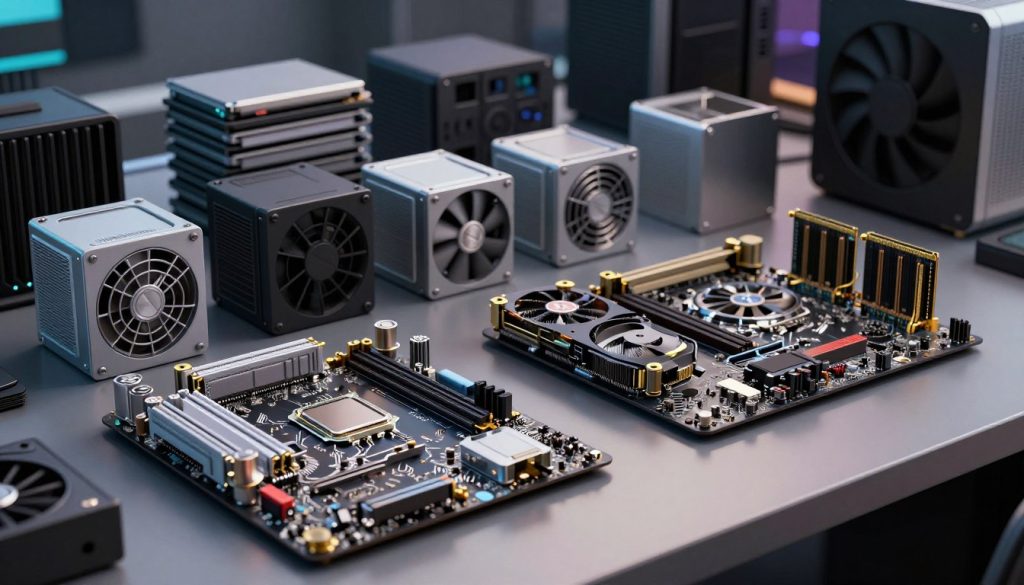
Today’s hardware components are built for power and dependability. They use new architecture to help companies stay ahead in a digital world. These systems keep things running smoothly and use less energy.
The choice of hardware components sets the limit of what you can do. Investing in top-notch infrastructure keeps your digital work flowing smoothly and safely. As tech keeps getting better, knowing about these physical parts is more important than ever for any business growing.
Essential Components for High-Performance Desktop PCs
Getting the most out of your computer starts with picking the right computer parts. A top-notch desktop is more than just pricey hardware. It’s a well-oiled machine where every part works together perfectly. By focusing on the internal setup, you can make a system that handles tough tasks fast.
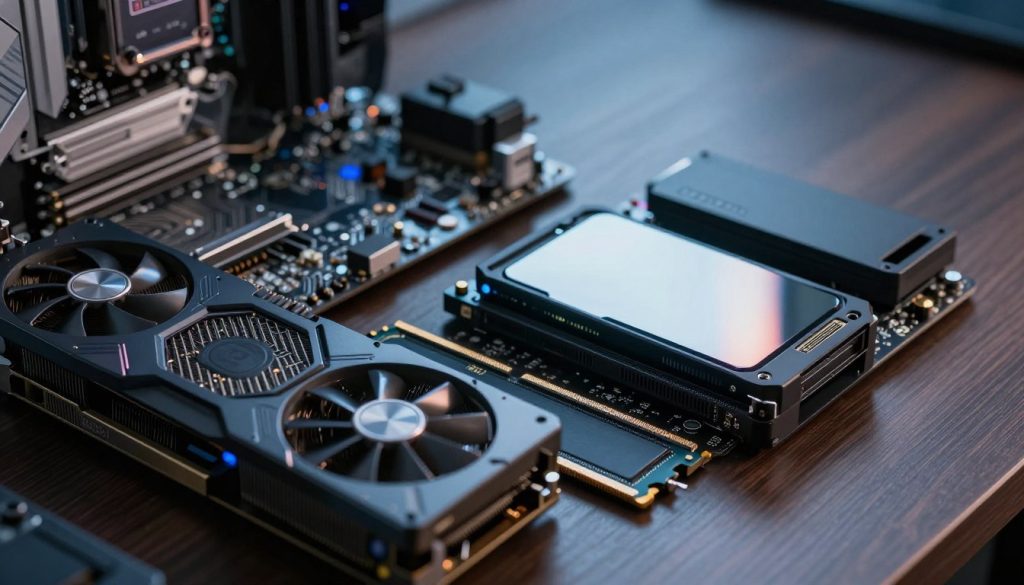
Selecting the Right Central Processing Unit
The CPU is your computer’s brain, handling instructions and complex math. When picking a processor, look at the number of cores and clock speed. Multi-threaded performance is key for tasks like video editing, while fast clock speeds help with single-threaded apps.
Choosing a modern processor keeps your system up-to-date for years. Strong thermal management is key, as fast CPUs get hot during heavy use. Make sure to pair your CPU with a good cooling system to keep it running smoothly.
Optimizing Memory and Storage Configurations
Memory, or RAM, is where your apps run temporarily. Having enough RAM lets you work on many things at once without slowdowns. For most work, we suggest at least 16GB of fast RAM to keep things running smoothly.
Storage speed is also key for quick system response. Switching from hard drives to NVMe solid-state drives cuts down on startup and file access times. A good balance of storage size and speed makes your digital space efficient for big projects.
Server Equipment Solutions for Small to Medium Businesses
Investing in top-notch server equipment is key for long-term success. Small to medium businesses need more stable hardware than regular devices. The right setup ensures smooth digital operations as they grow.
Rack-Mount vs Tower Server Architectures
Choosing between rack-mount and tower systems depends on your space and growth plans. Tower servers are perfect for smaller offices because they’re like desktops. They’re easy to set up and save money for businesses with small IT needs.
Rack-mount units are better for growing businesses. They let you stack many units in one cabinet. They need more upfront for cooling and housing but offer better airflow and cable management.
Redundancy and Data Protection Strategies
Keeping your business data safe needs more than one storage drive. Using redundancy strategies like RAID keeps data safe even if a drive fails. This is what enterprise-grade hardware is all about.
Having a solid backup plan is also key. Regular backups to safe, off-site places protect against hardware failure or hacking. These security measures make your business strong and keep it running smoothly.
Networking Devices for Seamless Connectivity
A stable digital environment needs seamless integration of networking devices. These parts are like the brain of your business. They make sure data moves well between computers, servers, and the internet. It’s key to pick the right gear to keep everything running smoothly and safe.
Enterprise-Grade Switches and Routers
Fast data transfer needs a strong backbone. Enterprise-grade hardware gives you that. It has better speed and management tools to avoid slowdowns. Brands like Cisco and Juniper are trusted for big office networks.
Routers control traffic between your network and the outside world. Switches handle talk between devices inside. Using managed switches lets IT folks control traffic. This is important for any growing business.
Wireless Access Points for Modern Workspaces
Today’s offices need flexible layouts with reliable Wi-Fi everywhere. Placing wireless access points right helps your team stay connected no matter where they are. These devices handle lots of users at once.
For the best results, think about where to put your access points. Modern Wi-Fi 6 technology is fast and strong for video calls and cloud work. A good wireless setup keeps your team productive as it grows.
Laptop Accessories to Boost Productivity
Choosing the right laptop accessories can make a big difference in your daily work. Portable computers are great, but they can lack the features needed for long tasks. Adding external hardware can turn a small device into a highly efficient workstation, just like a desktop.
Docking Stations and Port Replicators
Mobile workers often face challenges with cable management. A good docking station solves this by connecting multiple devices with one plug. This seamless connectivity lets you focus more on your work and less on cables.
Port replicators are also key for those needing access to old ports or fast data transfers. They keep your desk tidy while making sure your system is ready for any task.
Ergonomic Cooling Pads and Stands
Keeping your laptop cool is important, even for those running demanding software. Ergonomic cooling pads help by keeping the inside cool, preventing damage from heat. Protecting your internal components from heat is a smart way to make your laptop last longer.
Stands are also important for comfort during long work hours. They help keep your screen at eye level, reducing neck pain and promoting better posture. Using these accessories together ensures your laptop and your body stay comfortable.
PC Peripherals That Enhance User Experience
The right tools can make using your computer smooth and easy. Investing in top-notch pc peripherals boosts your work and comfort. These devices connect your actions to the digital world.
Choosing the best hardware cuts down on physical strain during long hours. Whether you’re coding, designing, or doing admin tasks, the right gear makes a big difference. It helps you work more efficiently.
Mechanical Keyboards and Precision Mice
Mechanical keyboards give you tactile feedback that regular keyboards can’t. This makes typing faster and more accurate, key for developers and writers. Precision mice add to this by letting you adjust sensitivity and fit comfortably in your hand.
These devices help prevent repetitive strain injuries. By picking high-quality pc peripherals, you’re looking after your health and work performance. They ensure every action is tracked accurately.
High-Resolution Monitors and Display Arrays
A high-resolution monitor is your digital workspace. It lets you see many apps at once, without needing to switch windows often. This is key for complex tasks that need maximum visibility and detail.
Display arrays, like dual or triple monitors, take your productivity up a notch. They keep all your info in sight, making your workspace more organized. Crisp image quality and true colors are must-haves for creative pros who need perfection.
Tech Gadgets for Modern Digital Workflows
Keeping up in today’s fast digital world depends on the tech gadgets you use every day. Whether you’re a creative pro or work from home, the right tools are key. They help you work smoothly and efficiently, no matter where you are.
External Capture Cards for Content Creation
For video makers or streamers, an external capture card is a must-have. It lets you record top-notch video from cameras or gaming consoles straight to your computer. This way, your recordings or streams stay smooth and look great.
Today’s capture cards handle fast action well, thanks to high frame rates. Paired with top-notch webcams, they make sure your videos or live streams are clear and professional. They’re also great for switching between different sources, perfect for any digital studio.
Portable Power Banks and Charging Hubs
For remote workers, having reliable power is a must. Portable power banks with big batteries are indispensable for those on the move or in places with no power. They keep your devices charged all day long.
Charging hubs with lots of ports are also a big plus. They let you charge many devices at once, which is super helpful for those with lots of gear. With these tech gadgets, you can work without worrying about running out of battery or losing connection.
Electronic Components for Custom Hardware Projects
Custom hardware projects start with electronic components that turn ideas into real things. The 1950s and 1960s were big for these technologies. They made systems smaller, more reliable, and easier for developers to use. Now, these parts help teams make special solutions for unique problems.
Using hardware components in a modular way lets businesses go beyond standard products. This way, they can design systems that meet specific needs. Innovation starts with choosing the right parts for a working whole.
Microcontrollers and Single-Board Computers
Microcontrollers and single-board computers are the heart of most custom projects. They have the power to handle complex tasks but are small. They’re key for making prototypes that can grow into full products.
These platforms help engineers make quick changes to their designs. Whether it’s a special controller or a custom server interface, they ensure top performance. They’re vital for fast prototyping.
Sensors and Prototyping Modules
Custom projects need sensors and special modules to interact with the world. These hardware components help machines gather data like temperature or light. Adding these sensors is key to making smart systems.
Prototyping modules make building easier by being easy to plug in. They let developers work on software, not just electrical stuff. This way, they can solve complex problems quickly and accurately.
Strategic Hardware Upgrades for Longevity
To keep your digital world running smoothly, you need a solid plan for hardware upgrades. By being proactive, you can get the most out of your investment. This way, your setup stays up-to-date with today’s software needs.
When to Replace Versus When to Upgrade
Choosing between upgrading or replacing can be tricky. If your systems are slow, crash a lot, or can’t run new software, it’s time to think about a change. Minor improvements like more memory might be enough for everyday tasks.
But if your motherboard or processor is old, upgrading won’t save you money. In such cases, getting a new system is the better deal. It avoids wasting money on parts that won’t really help.
Identifying Bottlenecks in Existing Systems
Performance problems often come from specific hardware issues. These can include not enough RAM or old hard drives. Finding these problems early helps you upgrade wisely and keep your gear running longer.
Watch how your system performs during busy times to find the main problem. If your CPU is always busy with simple tasks, it’s the weak link. Proactive monitoring helps you fix these issues before they cause big problems or downtime.
Best Practices for Hardware Maintenance and Care
Looking after your computer gear stops expensive downtime and makes your investment last longer. A regular routine keeps your business running smoothly. It’s all about keeping both the physical and digital parts of your IT in top shape.
Thermal Management and Dust Prevention
Keeping things cool is key to hardware longevity. Fans and heat sinks work hard to keep things cool during tough tasks. But, if dust blocks them, it can cause overheating.
Check your systems often to clean out dust from vents and inside. Compressed air is safe for cleaning without harming the tiny parts. Keeping airflow clear helps avoid damage to your computer’s heart and graphics.
Firmware Updates and Security Patching
It’s not just about keeping things clean; software updates are just as important. Manufacturers often release updates to make systems more stable and efficient. These updates can make your hardware work better over time.
Security patching is also vital to protect against cyber threats. Old firmware can leave your system open to hackers. Keeping your BIOS, drivers, and software up to date helps keep your systems safe from new dangers.
Navigating Supply Chains and Sourcing Quality Parts
Finding reliable hardware in today’s global market needs a smart plan. Companies must focus on keeping their supply chains strong. This ensures all equipment meets high standards.
By being open and checking sources, businesses can avoid risks from bad electronic components.
Verifying Authenticity of Electronic Components
Fake parts in the supply chain are a big danger. Using untested electronic components can cause system crashes and security issues. It’s key to only deal with trusted distributors and makers.
Having a strict check process is important. Look for the right papers, serial numbers, and maker stamps on new parts. Authenticity is key for a safe and reliable computer setup.
Balancing Budget Constraints with Performance Needs
Getting the right balance between cost and quality is hard. Cheap electronic components might save money upfront but cost more in the long run. Spending on quality parts upfront can save money and time later.
To save money, pick the right parts for your budget. Spend more on key parts that affect work and uptime. Making smart choices helps use your money well without losing performance.
Conclusion
Choosing the right computer hardware is key for your business’s success. It affects how well your team works and keeps your data safe. Every part you pick changes how you use digital tools every day.
Focus on picking hardware that grows with your business. This helps your team work better now and prepares for the future. It’s a smart move in a competitive world.
Look at your current setup to see what needs a boost. Working with trusted brands like Dell, HP, or Cisco keeps your tech on track. It makes sure your tech is an asset, not a burden.
Start checking your systems today. Talk to your IT team or a hardware expert. This will help your equipment match your business goals for the future.




No comments